|
Local Language Edinburgh Places, Words, Expressions |
|
|
The c o l o u r s in this index below match the background colours in the sections of this page. Please scroll down this page, or click on one of the links below: |
|
|
Index to Sections |
|
|
1. Edinburgh and Leith Places and People and a few people's names |
|
|
Here are colloquial names for some of the places in Edinburgh, many of them taken from emails that I have received, recording people's memories of growing up in Edinburgh. Perhaps somebody will tell me more about some of these places. Peter Stubbs: October 8, 2008 |
|
|
A |
|
|
This is how we used to pronounce Admiralty Street, Leith. (Note the extra 'i') Frank Ferri, Newhaven, Edinburgh: March 15, 2010 |
|
|
Marc who moved to Cadiz Street (pronounced Kay-deez Street) in Leith around 2000 confirms that the locals pronounced Admiralty Street as 'Admirality Street. Marc, Leith, Edinburgh: April 20, 2012 |
|
|
Aggie Kate |
The State Picture House Bob Sinclair, Queensland, Australia: March 8, 2010 |
|
The Alabam |
The Alhambra cinema "The Alabam or Bam (Alhambra cinema) was on the corner of Springfield Street , now gone." Pauline Cairns-Speitel, Old Town, Edinburgh; October 3, 2008 |
|
Albert's |
"A fish and chip shop at the top of Kirkgate, - black, green and white (I think) with a steady passage of customers. A great place for the Teddy Boys to hang around. The great thing is that it never stopped ordinary folk going in." Bob Sinclair, Queensland, Australia: December 6, 2009 |
|
The Allotments |
Waste ground between Beaverbank Place, Broughton Road and Logie Green Road "It was a g reat playground for kids , and I always remember a great big bonfire on Guy Fox Night which took weeks to gather all kinds of debris and wood that would burn. Jim Calender, Nanaimo, British Columbia, Canada: June 17, 2010 |
|
Andy Dam |
" This was the 'bridge crossing' section of Water of Leith at Anderson Place , a kids' fishing territory. " Frank Ferri, Newhaven, Leith: Sep 17 + Oct 2 + 4 , 2008 |
|
Angelosantas Was this 1 word or 2? |
"This was the shop for ice cream - but where was it? Bob Sinclair, Queensland, Australia: November 22, 2010 |
|
Thank you to Susan MacLeod who replied: "There is an ice cream shop in Lindsay Road that we always called ' Angelosantos ' when we were growing up. He had really great ice cream , and I think the same family still own the shop now. "
Susan Macleod, Leith, Edinburgh:
|
|
|
A meat shop on Leith Street. "When the place was a mess, people would s a y that it looked like Annaker's midden." Gordon Wright, Barnton, Edinburgh: July 22, 2014 |
|
|
Antaygi Street |
Antigua Street "When I grew up, Edinburgh folk didn’t seem too keen on words ending in ‘-ua’ or ‘-ue’ . Hence the pronunciations ‘Antaygi Street’ and ‘Montaygi Street’ . " Kim Traynor: Tollcross, Edinburgh: September 27, 2009 |
|
"An area in The Meadows fenced off for use by The Royal Company of Archers. It was somewhere between Jawbone Walk and the Paddling Pool ." Peter Butler, Hennenman, South Africa: February 25, 2011 |
|
|
"He lived Granton Medway and was a cairter for the Duke o' Buccleuch. His daughter, Jean, made fish nets in the backgreen." Dave Ferguson, Blairgowrie, Perth & Kinross, Scotland: February 12, 2012 |
|
|
" Auld Foley wi' his horse an cairt , that ' s where oor journey ends. " From Dave Ferguson's poem: 'Summer Days in Granton" |
|
|
"Auld Foley was definitely my great-uncle Frank . When I got my memory working , I remembered he had a daughter named Jean , mentioned in the first poem , 'Guid Times at Granton.'' Uncle Frank was commonly referred to as Old Fritz in the family , and his son Francis as Young Fritz. I think Uncle Frank worked for Edward Ferry the Contractor. His older brother , Peter , though definitely worked around the Middle Pier for the Duke of Buccleuch until into his seventies. " Archie Foley, Joppa, Edinburgh: February 15, 2012 |
|
|
Edinburgh Given this name from the time when the many crowded houses in the Old Town burnt wood and coal. reekie = smoky Peter Stubbs, Edinburgh: January 13, 2009 |
|
|
"I always thought the name referred to the reek from its many domestic chimneys as some early photographs would suggest. It appears other authorities differ; they ascribe ' smell' (disgusting is implied) as its meaning from association with the in sanitary practice of 'gardyloo! ' when the cadgers ( porters) had failed to call for the refuse " George T Smith, Nanaimo , British Columbia, Canada : Jan 13, 2009 |
|
|
"It is said that the Fifers * could tell it was dinner time from the smoke or reek of Edinburgh as the fires were banked up for the evening meal." * Fifers were people who lived in Fife, across the Firth of Forth from Edinburgh. Stuart Burgess, Devon, England: September 17, 2009 |
|
|
Auld Reekie could mean either 'Old Smoky' or 'Old Smelly'. The comments above refer to 'Old Smoky'. That's Edinburgh as I remember it when I first arrived here in the 1960s. However , David Waddell reminded me of why Edinburgh was known as Auld Reekie in the 18th century. David wrote: " It was because there was no sewage system and people used to empty their chamber pots into the streets (Edina’s Roses * ) at 10 o’clock in the evening ." Dave Waddell, Houston, Texas, USA: December 29, 2010 * 'Edina's Roses' is how the slops, tipped into the street, morning and nightly, were referred to in the poem, 'Auld Reekie' by Robert F Fergusson (1750-74). This poem ends:
'
Then, with
an Inundation Big as
|
|
|
Aunties |
" This was a shop in Viewforth frequented by Boroughmuir school pupils). It sold Vantas, an aerated fruit-flavoured drink." George T Smith, Nanaimo , British Columbia, Canada : January 13, 2009 |
|
B |
|
|
Back Canongate |
" Holyrood Road was always called the 'Back Canongate'." Bob Henderson, Burdiehouse, Edinburgh: October 7, 2008 |
|
The Balconies |
The Balconies were houses with balconies on the west side of Dumbiedykes Road, opposite The Big Green. Jean Rae, who has sent memories of Dumbiedykes to the EdinPhoto web site used to live in The Balconies, at 34 Dumbiedykes Road. Jean Rae (née Aithie), South Side, Edinburgh: April 2006 |
|
The Bam |
The Alhambra cinema "The Alabam or Bam (Alhambra cinema) was on the corner of Springfield, now gone." Pauline Cairns-Speitel, Old Town, Edinburgh; October 3, 2008 |
|
The Alhambra Picture House, on the corner of Springfield Street and Leith Walk, now demolished. Frank Ferri, Newhaven, Edinburgh: March 17, 2010 |
|
|
Banana Flats, Banana Block |
Cable Wynd House Leith A 9-storey local authority housing block in Leith: 204 flats, first occupied 1962 - so named because of its curved shape. "Parliament Square in Leith used to be where the Banana Block is now." John Stewart, Livingstone, West Lothian, Scotland: Nov 16, 2009 |
|
"The Banana Flats at Leith won an award, albeit that it was the chunkies (toilets) that overlooked the Forth. Could others please add to this?" Bob Sinclair, Queensland, Australia : December 21, 2009 |
|
|
"This was the area of the Shore between the dock gates and Bernard Street Bridge - so called by se amen who'd visit the place of the same name in San Francisco. " Frank Ferri, Newhaven, Edinburgh: March 15, 2010 |
|
|
" Yes indeed, the eccentric owner of Fairley's did have a puma during the pub ' s Go-Go dancing era of the 1970s . Incidentally, that area of pub life on the Shore at Leith, was once known as the Barbary Coast (after a similar 'Red Light' nautical district in San Francisco) and/or The Jungle, a name that the old King's Wark pub acquired for many years." Frank Ferri, Newhaven, Edinburgh: June 10, 2008 |
|
|
Barrie's Trip |
An outing from the
Grassmarket Mission
" I'd like to find some photos of the Barrie's Trip. This was an annual outing for 'pare bairns' (poor children) to Spylaw Park or Colinton Dell, run from the Grassmarket Mission. We even had a song: A'm no gaun tae Barrie's trip A'm no gaun again A'm no gaun tae Barrie's trip Fur it ayways comes oan rain." J Kelly: March 28, 2009 |
|
Robert McGrouther also remembers chanting this song on Barrie's bus trips. Acknowledgement: Robert Mcgrouther, Munlochy, Black Isle, Ross & Cromarty, Scotland May 14, 2009 |
|
|
The Bassy |
The Embassy Picture House at Pilton Bob Sinclair, Queensland , Australia: November 29, 2009 |
|
The road across Leith Links. Jean, who attended Links Primary School in the late-1950s wrote: "The road that runs between the two halves of Leith Links was known as the Bay of Biscay - I don't know why. I remember when a whole fleet of dockers - seemed like hundreds - used come cycling up it at teatime on their way home from work. Years later, I watched the men march in silence along Junction Street, drooping flags and slow drums, when they closed the docks. Very very sad." Jean, Leith, Edinburgh: August 31, 2013 |
|
|
A small woodland area to the south of the water of Leith beside Rockheid Path that leads from Arboretum Avenue, Inverleith to Canonmills. " At the foot of our street (Colville Place, Stockbridge Colonies) ran the Water of Leith , which, for some unknown reason, was always called ‘The Dam’. It was called that in my mother’s day, too. We kids would have great fun down the Dam in late spring or early summer: if we weren’t guddling for minnows, sticklebacks or tadpoles, we’d be building a makeshift dam ourselves, then using improvised rafts to cross the water. I don’t think we ever crossed without at least one of us falling in! " Bob McLean, Buckinghamshire, England: November 8, 2013 |
|
|
Bennetts' |
" We had our bonfire too , and it was set up in Bennett's' , a large bit of waste ground within Wilkie Place , Leith David Barrie, Adelaide, South Australia, December 22, 2008 |
|
The Bev |
The Beverley Picture House Bob Sinclair, Queensland, Australia: March 8, 2010 |
|
"The Wee Canyon and the Big Canyon. These were shale bings (unofficial adventure playgrounds!) on the Lang Loan * and at Straiton." * The Lang Loan ran from Straiton to Edgehead. David Bain: Rotherham, South Yorkshire, England: September 21, 2009 |
|
|
A field that used to be behind 'The Anchor Inn' at West Granton Road, Granton, shown on this aerial view. " Davo and Mr Walker , his neighbour , made a huge kite taller than a man with a div o t on the tail. They flew it in the big field , as we knew it , right behind the Anchor Inn, it took three grown men to control it. " Dave Ferguson, Blairgowrie, Perth & Kinross, Scotland: March 3+5, 2012 |
|
|
"Happy times they really were fer men an' growin' laddies, Fitba' in the big field then hame tae mince an' tatties ." From Dave Ferguson's poem: 'Sundays at Granton" |
|
|
The Big Green |
" The Big Green was the area in front of 'The Balconies' housing in Dumbiedykes Road" Jean Rae (née Aithie), South Side, Edinburgh: April 2006 |
|
The Big Hotel |
Saughton Prison "A facility where a number of persons whose behaviour had varied from the rules of society were housed, justifiably or otherwise." Bob Sinclair, Queensland, Australia: January 21, 2010 |
|
See The Mixie |
|
|
Inverleith Park " As we got older, on those days when we couldn’t be bothered to go up to ‘ The Big Park’ (Inverleith Park) to play football, we’d have a kickabout in the Bellsie , although if you ever knocked the ball into the water, you had to go in yourself and fetch it, no matter how far it had floated downstream. " Bob McLean, Buckinghamshire, England: November 8, 2013 |
|
|
Blackie |
" Blackfriars Street was known as 'Blackie' to anyone who lived there or who had friends who lived there. " Bob Henderson, Burdiehouse, Edinburgh: October 7, 2008 |
|
" You mentioned that Blackfriars Street was known to the locals as 'Blackie. Well, here are the 'Blackie Boys'.' " Eric Robinson: December 19, 2010 |
|
|
The Blackies |
Blackford Hill Paul Anderson: October 8, 2007 I |
|
Bloody Mary's Close |
A long steep close behind Chessel's Court in the Royal Mile. "When I lived at No 8 Chessel's Court, the only access to the rear was by a corner staircase between No 8 and the next house (I think, 8b) which led under the building to a long steep close known as Bloody Mary's Close. This was about six or eight feet wide with high stone walls on either side and led all the way down to Holyrood Road. When I attended St Patrick's School this was a short cut, rather than go by the main roads, up the Canongate and down St Mary's Street." Tony Ivanov, Bo'ness, West Lothian, Scotland: July 16, 2009 |
|
However, George T Smith tells me that he found an entry on the RCAHMS web site saying that Bloody Mary's Close was one of several alternative names for Plainstone's Close, the other names being: - Bonnie Mary's Close - Thomson's Close - Year's Close George T Smith, Nanaimo , British Columbia, Canada : July 16, 2009 |
|
|
" Blue Halls cinema , West Port" Frank Ferri, Newhaven, Edinburgh: April 20, 2012 |
|
|
An area between Couper Street and North Junction Street , Leith Bob Sinclair, Queensland, Australia: December 31, 2011 |
|
|
" Bonnington Road School, Leith" Frank Ferri, Newhaven, Edinburgh: April 20, 2012 |
|
|
Boys from Bothwell Street "I remember, when it was bonfire time, that the boys in Albion Road had battles with the boys from Bothwell street (who we named 'the Bosiannas') who we always blamed for stealing our wood for the bonfire. They in turn blamed us!!!" Kathleen Knox (née Kinghorn), Juniper Green, Edinburgh: 7 December 2016 |
|
|
The Botanics |
Royal Botanic Gardens, Goldenacre " We spent a lot of time in the summer at 'The Botanics' having a roam around and a picnic for free, even although picnics were banned." EdinPhoto Guest Book: G M Rigg, April 7, 2009 |
|
Bow Tow |
A resident of Newhaven Bob Sinclair, Queensland , Australia: November 27, 2009 |
|
"Although I am not a Bow Tow (Newhavener) as a resident of Newhaven, I have used Mr Crolla's store in Main Street for over 50 years." Frank Ferri, Newhaven, Edinburgh: March 6, 2010 |
|
|
The Brae |
Arthur Street, Dumbiedykes "My mates included guys from Eastie, Middle Arthur Place and the Brae." J Kelly: March 28, 2009 |
|
Breadalbaney Street |
This is how we used to pronounce Breadalbane Street, Leith. (Note the extra 'y') Frank Ferri, Newhaven, Edinburgh: March 15, 2010 |
|
The Brickies |
" The Brickies were houses, made of bricks, beside 'The Big Green' in Dumbiedykes Road." Jean Rae (née Aithie), South Side, Edinburgh: April 2006 |
|
The edge of The Brickies can be seen on the extreme left of this photo. Peter Stubbs: April 2006 |
|
|
The Broad Pavement |
" Parliament Square, Henderson St opposite The Vaults , at Leith" Frank Ferri, Newhaven, Leith: Sep 17 + Oct 2 + 4 , 2008 |
|
The Broadie The Broady |
The Broad Pavement, Parliament Square, Leith "To us, this was 'The Broady'. We used this name as children, all those years ago, and took it from our parents." John Stewart, Livingston, West Lothian, Scotland |
|
Mary McLeod used to live at 'The
Broadie'Please click here to read her
Mary McLeod (née Wilkie): August 28, 2011 |
|
|
Brown Mountain |
A mound in London Road Gardens "London Road Gardens was also our playground. The two mounds at the east end we called purple (the highest) and brown (the lowest) mountain. I tried finding them a couple of years ago, but they were well and truly hidden. They were in fact gunnery mounds used by Cromwell when he besieged Leith and Edinburgh. " Ronald Stout, Denmark: October 10, 2010 |
|
Shops at West Granton " I lived in West Pilton Road from 1968 to 1979. There were a lot of shops in these days . The shops down West Granton were often nicknamed ' the budgies ' because there was a back garden next to them with a hut where some man kept his budgies in."
David Blackburn, also known as Davy,
Blackie and Tony,
|
|
|
The Bughouse |
"Our name for The Blue Halls (later the Beverley picture house) Others may have given the name to their local flea pit." Bob Sinclair, Queensland, Australia: March 8, 2010 |
|
" The Bungalow ('The Bughouse') was directly opposite my House. The first picture I saw there was John Steinbeck's 'Of Mice and Men' starring Burgess Meredith and, I think, Lon Chaney jun. It was shown in sepia." Jim Smart, Bournemouth , Dorset, England: September 5, 2010 |
|
|
The Bunkey |
The North British Rubber Co . It used to be at Fountainbridge Paul Anderson: October 8, 2007 I |
|
Burry |
Boroughmuir School " I always thought I had missed the photographic sessions at Burry, but there I am, large as life ..." George T Smith, Nanaimo , British Columbia, Canada : May 17, 2010 |
|
C |
|
|
"As an incomer to Leith around 2000, my street was Cadiz Street, which I presumed to be pronounced 'Kah-diz'. But it had to be pronounced 'Kay-deez' if one was to be accepted as a local. I soon amended my pronunciation." Marc, Leith, Edinburgh: April 20, 2012 |
|
|
Caledonian Place, Dalry My grandfather had a garage in Duff Street Lane where I used to play. Once , I was given a tyre to roll . When I took it back to 'Caley' all my pals wanted a shot with it. George Ritchie, North Gyle, Edinburgh: August 21, 2014 |
|
|
Caley Station |
Princes Street Station (built in 1893 for the Caledonian Railway) below the Caledonian Hotel at the West End of Princes Street. "Till the day it closed, in 1965, I never heard the station referred to by its British Railways name - 'Princes Street Station'." David Scott, Doha, Qatar: October 19 , 2009 |
|
" On the way back from a visit to the Meedies (Meadows) , I used to call in to the Caley Station for a bit of free entertainment. " Bob Sinclair, Queensland, Australia,: January 6, 2010 |
|
|
Calton Hill "After playing in the Dobbies , we'd head along to the Calties (Calton Hill) and climb up on Edinburgh ' s answer to the Greek Acropolis .
Tam
McLuskey
,
Shannon Lake, British Columbia, Canada
|
|
|
Candles Close |
Tolbooth Wynd "Somebody remembered her grandmother calling it that." Bob Sinclair, Queensland, Australia: March 8, 2010 |
|
The Capitol Picture House Bob Sinclair, Queensland, Australia: March 8, 2010 |
|
|
"The Capitol Cinema, now a bingo h all at Gordon/Manderson Streets . It was famous in the 19 50s for its Capp i Concerts and talent contests on a Sunday night , and Kiddies' Film Club on Saturday mornings ." Frank Ferri, Newhaven, Leith: Sep 17 + Oct 2 + 4 , 2008 |
|
|
" On Saturday mornings, there was 'The Capp i' , the cinema between Easter Road and Leith Walk . You could get in with a jam jar, I think - or maybe it was tuppence. The rowdy boys sat at the front, the rest of us behind. I thought Flash Gordon was wonderful. " Jean, Leith , Edinburgh: August 29, 2013 |
|
|
"The Cappi Club was the Saturday morning kids' cinema matinee, with its own song that the kids sang. On their birthday, each child received a card giving them free admission." Frank Ferri, Newhaven, Leith: February 22, 2011 |
|
|
The Cat's Nick |
Rocks at Salisbury Crags in Holyrood Park |
|
" The Cats Nick , which is immediately above The Giant Steps which are accessed just up towards Jimmy’s (James Clark School) about 200 yards from the Holyrood roundabout. " Jack Craig, Silverknowes, Edinburgh: March 2, 2009 |
|
|
" We roamed over every inch of the park, the vast majority of times unaccompanied by an adult. We were really rather wild and adventurous pre-1950. To be able to call yourself 'one of the gang' you had to scale the Crags at the 'Cats Nick'. " Bob Henderson, Burdiehouse, Edinburgh |
|
|
The Channel |
Kirkgate, Leith Frank Ferri, Newhaven, Edinburgh: March 15, 2010 |
|
The Chapel, St Patrick's school. "I've just read about The Pineapple below. At St Pat's we used to call the chapel the 'Chippet Apple' (Chipped Apple). Bob Henderson, Burdiehouse, Edinburgh: October 7, 2008 |
|
|
Anthony White spoke of the time when he lived in Keir Street, Lauriston: "Our bonfire (a bonny, in the vernacular) took place in a bit of wasteland known as 'T he Lane ' which included a ruined piece of property that looked a little like an old fort and was gloriously named ' Chuckaboombas' - I suppose because it was a good vantage for throwing (chucking) stones. " Anthony White, Edinburgh: November 29, 2011 |
|
|
The old stone quarry behind Granton gas works. It was used as a tip for waste from the gas plant. "We used to glean the coke from the tip." Dave Ferguson, Blairgowrie, Perth & Kinross, Scotland: February 12, 2012 |
|
|
" Guiders strong , an barries tae . W e pulled them up the Eli Brae fu' o' coke tae stoke the fire , a' brocht hame frae the cinder mire. " From Dave Ferguson's poem: 'Summer Days in Granton" |
|
|
The old stone quarry the gas works used as a tip for waste from the retorts. Dave Ferguson, Blairgowrie, Perth & Kinross, Scotland: February 14 2012 |
|
|
"
Doon tae the cinder
quarry we’d aften gae
From Dave Ferguson's poem: "When We Were Lads" |
|
|
Clan House Dance Hall, Tollcross "Across the road from the Clanny was a barb e r shop . I think it was called something like Dino's . Lots of us Teds used to go to get our DAs done. "
Margaret Cooper, London, England.
|
|
|
The Coalie |
" Down Coburg Street, 100 yards on the right, formerly a coal yard used by a coal merchant. It's now part of Water of Leith Walkway. Locals still use the term." Frank Ferri, Newhaven, Leith: Sep 17 + Oct 2 + 4 , 2008 |
|
Cockie Dudgeons |
A yard at Broughton, approximately where Lothian Buses' Central Garage is now, at Annandale Street. |
|
"It was a big yard off East London Street, always full of old vehicles, mainly army if I remember correctly." Archie Bell, Broughton History Society (BHS) Newsletter, Summer 2009 |
|
|
"In my boyhood, it was occupied by a contractor called Cockburn, who gave his name to Cockie Dodgies." Albert Mackie, Evening News, quoted in BHS Newsletter, Summer 2009 |
|
|
"In his poem, 'Fitbaw in the Street' written when he was a student in 1926, Robert Garioch* described boys, dodging away from the Police, going via Cockie Dudgeons, the Sandies and the Coup on their way to Puddocky." * Full name Robert Garioch Sutherland John Dickie, Broughton History Society Newsletter, Dec ember 200 8 |
|
|
"It was Cockie-Dodgies to me. I knew it because it was behind what was then Cramond's Garage, owned by a cousin of my father." Ronnie Cramond, Broughton History Society Newsletter, Summer 2009 "No-one we've heard from recognised the name 'Cockie Dudgeons'." John Dickie, Broughton History Society Newsletter, Summer 2009 |
|
|
The coal yard off George Street at Leith. " We went into the collie***, along the back of the posh Dudley houses, pinching apples. We'd put them up ure jumper, then run for ure lives. " John Carson, Edinburgh: February 27, 2013 |
|
|
The terraces of houses in Stockbridge that were built in up/down style with ground floor access from the street on one side and upper from the street on the other side of the houses. To confuse non-residents, the Colonies are named as buildings, not streets. David Scott, Doha, Qatar: October 18, 2009 |
|
|
In fact, as well as the Stockbridge Colonies, there are seven other groups of colonies houses in Edinburgh. They are at :
-
Abbeyhill
Peter Stubbs: October 18, 2009 |
|
|
Thank you to Gloria Rigg for responding to my comments above. Peter Stubbs, Edinburgh: 2 November 2017 Gloria wrote: "The details given above seem to incomplete. In total 10 sites were built between 1850 and 1910, they were at: - Abbeyhill. - Dalry Place (Haymarket), - Leith Links (Leith), - Lochend Road (Lochend), - North Fort Street (Leith), - Shaw Colonies (Pilrig off Leith), - Rosebank Cottages (Fountainbridge), - Shandon, - Slateford and - Stockbridge. They were built for artisans and skilled working class families. Characteristically, each flat originally had 4 rooms, a separate external toilet and a garden. Colony houses were built as double flats, upper and lower, with the upper flat's front door on the opposite side to the lower flat's front door, allowing each flat to have a front garden." Gloria Rigg, New Zealand: 30 October 2017 |
|
|
The Commy |
Roal Commonwealth Pool , a large swimming pool at Dalkeith Road, built for the Commonwealth Games in Edinburgh in 1970.
Paul Anderson: October 8, 2007
I
and
|
|
Commando Buildings |
" These buildings were in East Cromwell Street , off Coburg Street , which was blocked off at both ends by a high brick wall . The the old disbanded tenements there were used during the war for war games by the Home Guard ." Frank Ferri, Newhaven, Leith: Sep 17 + Oct 2 + 4 , 2008 |
|
44 Bristo Street "We lived at 44 Bristo Street, 'The Coort' a 4--storey tenement with open balconies. We were all quite poor and most of our mothers went out to work as char-ladies, dinner-ladies, etc - but they were happy times. " Peter Butler, Hennenman, South Africa: January 18, 2011 |
|
|
"I remember the coort as a play area, for football, tig, hide and seek , etc. There was a Mr Wilson, ex policeman, who lived in the coort. He would bang his window when we were getting a bit to loud. In those days you paid heed and sca rpered, because he knew everybody's mum and dad." Stewart Connolly, West Highlands, Scotland: August 19, 2011 |
|
|
"Imagine walking down towards Chapel Street from Parkers Store. Half-way down on your left-hand side (east) is where the coort was. It had a proper name (something-Entry?) but I can't remember, what it was. To us, it was always: ' Ah'm ower by the coort, playin .' " Stewart Connolly, West Highlands, Scotland: August 21, 2011 |
|
|
"I remember the coort as a play area, for football, tig, hide and seek, etc. There was a Mr Wilson, ex policeman, who lived in the coort. He would bang his window when we were getting a bit to loud. In those days you paid heed and scarpered, because he knew everybody's mum and dad." Davie Taylor: 2 March 2016 |
|
|
" This ran from Annandale Street to Macdonald Road. " Gordon Wright, Barnton, Edinburgh: July 22, 2014 |
|
|
Copeland's Restaurant, Portobello " Copeland's restaurant was commonly called Copey ' s. We used it more for the bakery which was wonderful. It was just two doors along from 246 High St. where we lived. . .. If I recall, the baker was called '' W ee Eck ' ..."
Sylvia (née Deffley), Ontario, Canada
|
|
|
Coppie or The Coppie |
Corporation buildings OR a play area between Corporation buildings. The 'coppie' in this photo was at Sheriff Brae beside Leith Hospital. The photo was taken in 1982, prior to demolition of the housing. John Stewart, Livingston, West Lothian, Scotland: October 6, 2009 |
|
“ This referred to the Corporation housing at the foot of Mill Lane/ Sheriff Brae ." Frank Ferri, Newhaven, Leith: Sep 17 + Oct 2 + 4 , 2008 |
|
|
“My mother's family, Jean, John and Janet (Nettie) Livingstone, lived in the Coppie Buildings. They went to St Mary's and St Anthony's schools. "
Lynda Kelly, Leith, Edinburgh
|
|
|
"The school that was at the top of Pennywell Road has moved and the spare ground looks like it looked in the 1950s. The part where I played was called 'The Corn Field' . Does anyone remember the RAF huts over the corn field ? When we were kids, we could see search lights, but they are gone now." Maurice Dougan, Edinburgh: September 11, 2009 |
|
|
Cornwall Lane "We used to sneak in to the seats in the side balcony of Poole's Synod Hall cinema in Castle Terrace, via the fire escape door in Cornwall (Corny) Lane after a game of 'shapes' ** against the boiler house gate of the Lyceum Theatre . Happy days!" Sandy Cameron, Edinburgh: May 9, 2013 ** I asked Sandy how 'Shapes' was played. He provided the 2nd definition here: Shapes . Thank you, Sandy. |
|
|
Corry |
Corstorphine Maurice Dougan, Edinburgh: September 11, 2009 |
|
Corr ie Woods |
"The 'Corrie Woods' at Corstorphine were great for adventures - no parental or adult supervision, so you could make fires and boil water for tea and climb trees and play soldiers or cowboys and indians. " Stuart Burgess, Devon, England: September 17, 2009 |
|
Corstorphinny |
See ' Pronunciations ' below Bob Sinclair, Queensland, Australia,: December 21, 2009 |
|
The Cut |
From Trinity down to the back of the Peacock Inn in Newhaven. Bob Sinclair, Queensland, Australia: March 8, 2010 |
|
The Coup |
Somewhere in the Broughton area |
|
"In his poem, 'Fitbaw in the Street' written when he was a student in 1926, Robert Gairloch described boys, dodging away from the Police, going via Cockie Dudgeons, the Sandies and the Coup on their way to Puddocky." John Dickie, Broughton History Society Newsletter, Dec 200 8 |
|
|
"This may be The Destructor - i.e. the Corporation Refuse Dept at Powderhall" Alex Dow, Broughton History Society Newsletter, Summer 2009 |
|
|
Crummel Street |
This is how we used to pronounce Cromwell Street, Leith. Frank Ferri, Newhaven, Edinburgh: March 15, 2010 |
|
The Cut |
This is the name we gave to the section of Craighall Road linking Newhaven with Stanley Road. It called 'The Cut' because the terrain was steep and had to be excavated to reduce the gradient prior to the road link. Frank Ferri, Newhaven, Edinburgh: March 17, 2010 |
|
D |
|
|
David Kirkpatrick's Secondary School, Leith " After attending Dr Bell ' s Primary School in Leith, I was the only one out of a class of 35 who went on to Leithie ( Leith Academy ) . Others went to Bellvue or David Kilpatricks - aka DK or the Daft Kids !! " Ian Smith, Ayr, Ayrshire, Scotland: 13+25 November, 2015 |
|
|
Part of the Water of Leith, close to The Colonies houses at Stockbridge. " At the foot of our street ran the Water of Leith , which, for some unknown reason, was always called ‘The Dam’. It was called that in my mother’s day, too. We kids would have great fun down the Dam in late spring or early summer . If we weren’t guddling for minnows, sticklebacks or tadpoles, we’d be building a makeshift dam ourselves, then using improvised rafts to cross the water. I don’t think we ever crossed without at least one of us falling in! " Bob McLean, Buckinghamshire, England: November 8, 2013 |
|
|
Danger Woods
|
The Danger woods were in area 4 of this map of Craigmillar. Johnni Stanton recalls when he lived nearby in the 1960s: "Across from Craigmillar Castle Avenue , looking towards Craigmillar Castle , is the present Craigmillar Country Park . This used to be the Danger Woods, where there were huts holding the last of the fireworks from the gunpowder factory that used to there. Hence the name ' Danger ' . We found lots of gunpowder an d a Verey pistol there . " Johnni Stanton, Craigmillar, Edinburgh; October 31, 2008 |
|
Near St Leonard's Hill Bob Sinclair, Queensland, Australia: December 31, 2011 |
|
|
The Deanies |
Dean Woods, half way along the Lang Loan * * The Lang Loan ran from Straiton to Edgehead. David Bain: Rotherham, South Yorkshire, England: September 21, 2009 |
|
The Dell |
Colinton Dell Maurice Dougan, Edinburgh: September 11, 2009 |
|
Diggers' Bar |
"A popular bar at the point of Angle Park Terrace, Ardmillan. Its correct name is 'Athletic Arms', also sometimes called 'The Sportsman Bar' But, of course, a sports bar today is a bit different now, with non-stop football on TV." Danny Callaghan, Falkirk, Stirlingshire, Scotland: November 4, 2009 |
|
"Diggers was the bar between two cemeteries, Dalry and North Merchiston. It was a frequent haunt of the grave diggers." Danny Callaghan, Falkirk, Stirlingshire, Scotland: November 8, 2009 |
|
|
Dirty Dick's is now a pond at Straiton Local Nature Reserve. "W hen I was a boy in the late -1940s and early-1950s, it was a working sandpit. It had very steep high sides with a steep sloping mass of loose sand at the bottom of the sheer drop. We used to jump from the top down into the slopes. I sometimes wonder how we survived to tell these tales!" Bob Henderson, Burdiehouse , Edinburgh: August 12, 2011 |
|
|
"My Father ran the pond as a private trout fisheries circa 1961 and it was then known as the Lang Loch. My fathers Christian name was Richard, however was abbreviated down to Dick, and he himself had something a reputation with the ladies during this time, the rest is history." Mark Connell: March 6, 2017 |
|
|
The Ditch |
Waste land between Beaverbank Place and Logie Green Road at Broughton " Looking at your photos of the land being redeveloped behind Beaverbank Place takes me back to my childhood years when I lived in Beaverbank Place In the 1960 s , we played on that wasteland which was dubbed , 'T he Ditch '. it was also known as 'T he Dump ' because ash from the old coal fires was used as landfill , as you can see in the photo. " Donnie Graham, Zwickau, Germany: June 14, 2010 |
|
The Dizzy |
This was somewhere near Powderhall Stadium. (See below.) "Powderhall Stadium is where most boys who lived in the Broughton area went , to watch the greyhound racing . We did this , usually , by climbing the fence at St Marks park or at the bottom of the Dizzy." David Flucker, Kirknewton, West Lothian, Scotland: June 16, 2010 |
|
DK's |
David Kilpatrick's school, North Junction Street, Leith Frank Ferri, Newhaven, Edinburgh: April 20, 2012 |
|
David Kirkpatrick's Secondary School, Leith " After attending Dr Bell ' s Primary School in Leith, I was the only one out of a class of 35 who went on to Leithie ( Leith Academy ) . Others went to Bellvue or David Kilpatrick ' s - aka DK or the Daft Kids !! " Ian Smith, Ayr, Ayrshire, Scotland: 13+25 November, 2015 |
|
|
"This was an Edinburgh expression for Davidson's Mains. " Malcolm Finlayson, Arbroath, Angus, Scotland: November 29, 2013 |
|
|
"I prefer the earlier name by which Davidson's Mains was known - 'Muttonhole'. " Peter Stubbs, Edinburgh: November 30, 2013 |
|
|
Doak Place |
This is how we used to pronounce Dock Place, Leith. Frank Ferri, Newhaven, Edinburgh: March 17, 2010 |
|
The Dobbies |
Regent Road Park " Holidays were great times . We played for hours in the Dobies ( Regent Road Park ) or the Lundies ( London Road Park ) . I think we climbed every rock on the crags at some point or other ." John Welsh, Gracemount, Edinburgh: September 5, 2008 |
|
" Kids would make their way through the bushes in the Dobies, to a stone parapet overlooking the eastern end of the Calton Tunnel. Steam locomotives leaving Waverley Station would suddenly emerge with their steam shooting upwards into the open air. The driver or fireman would almost always wave to the watching youngsters. It seemed a secret place and, because of the drop, was more dangerous than any of us realised at the time. " Kim Traynor, Tollcross, Edinburgh: September 24, 2009 |
|
|
" I remember many , many great times that we kids enjoyed playing in the Dobbies. W e would go through the fence at the bottom of where all the nice grass grew and play hide and seek and cowboys and Indians , and of course roll the easter eggs in the nice grassy area ."
Tam
McLuskey
,
Shannon Lake, British Columbia, Canada
|
|
|
Kenny Robertson wrote: " I was brought up in the Abbeyhill area and sometimes played in Regent Road Park in the 1960s. We always called it Dobbies, but nobody can tell me why. Could it have been named after the garden centre of the same name? On a recent visit to the garden centre, I noticed a picture of a Dobbies building. I did not recognise it, but the address was Edinburgh 7. Was there a Dobbies nursery at Regent Road Park at some time. Kenny Robertson, Prestonpans, East Lothian, Scotland: June 7+8, 2012 If you can help to answer Kenny Robertson's question, please email me . Thank you. |
|
|
Reply 1: Mary Graham wrote: " My own personal theory is that the name 'Dobie' came from the Indian word 'Dhobi' for a laundry person. Regent Road Park was just across the road from the wash house." Mary Graham, The Shore, Leith, Edinburgh: June 28, 2013 |
|
|
Reply 2: " Regent Road Park may have been called Dobbies after Dobbies' Nursery. I think there was a Dobbie's Nursery down Portobello Road on the right hand side." Lily Dunn, Edinburgh: July 14, 2013 Comment: " I've checked the trade directory for 1950-51 and found Dobbie & Co, seedsmen, nurserymen and florists listed with an address in Portobello Road, at 48 Moira Terrace. But that's quite close to Portobello and a long way from Regent Road Park. I was interested to read the company's contact details: Telegraph: 'Pansies'." Peter Stubbs, Edinburgh: July 14, 2013 |
|
|
Kenny Robertson wrote: " I've read 'Reply 1' above , but I must admit I am not convinced that there is a connection with the wash house. I still think that the name is connected to Dobbies nursery. You were right . Dobbies had a nursery on Portobello Road , where Moira Park sheltered housing is now. I remember the nursery. You could see the greenhouses from Fishwives Causeway ." Kenny Robertson, Prestonpans, East Lothian, Scotland: July 16, 2013 |
|
|
Dr Bell's school , Great Junction street, Leith Frank Ferri, Newhaven, Edinburgh: March 17, 2010 |
|
|
Docky Bell's |
Dr Bell's school , Great Junction street, Leith Bob Lawson, England: May 26, 2012 |
|
The Dom |
The Dominion Cinema in Morningside Maurice Dougan, Edinburgh: September 11, 2009 |
|
Doubties |
Madame Doubtfire's Rag and Bone Shop " Further up the hill at Stockbridge, was Doubties . It stank of cats' pee and wet old clothes !! " Keith Main, London: December 20, 2008 |
|
The Dough School |
Edinburgh College of Domestic Science "The Dough School was a fond name given to the Edinburgh College of Domestic Science which was at 1-4 Atholl Crescent, until it moved to Clermiston in the late-1960s and changed its name to Queen Margaret College." Danny Callaghan, Falkirk, Stirlingshire, Scotland: November 11,2010 |
|
Cottages built in the 1830s on the Duke of Buccleuch's land at Lower Granton Road, to the east of Granton Square, for workers building Granton Harbour. John Stevenson, Trinity, Edinburgh: November 20, 2012 |
|
|
The Dumbies |
Dumbiedykes "In 1951, we came to live in the Dumbies" Vince McManamon, Darlington, Durham, England: July 19, 2010 |
|
The Dum by |
" The Dumbies is a shortened version of Dumbiedykes" Bob Henderson, Burdiehouse, Edinburgh: October 7, 2008 |
|
Edinburgh and Dumfriesshire Dairy Paul Anderson: October 8, 2007 I |
|
|
" We also knew the dairy as 'The Dummy D" Bob Sinclair, Queensland, Australia: April 23, 2010 |
|
|
The Dummy D |
See 'The
Dummy
' above
Bob Sinclair, Queensland, Australia: April 23, 2010 |
|
" This was the name for the steps going down from Saxe Coburg Street to Glenogle Road and Stockbridge Colonies. They were called after the Deaf and Dumb school at the top of the lane - no longer politically correct. A Fortune, North Berwick, East Lothian, Scotland: May 16, 2010 |
|
|
Steps were immediately to the east of Glenogle Swimming Baths ('Glennies'). "On either side of Glenogle Swimming Baths s , there were routes up to Saxe Cobourg Place. The route on the west side of the baths was the ‘Dummy Steps’ . The route on the east side of the baths was the ‘ The Snakey’ - or ‘ The Snekkie’ as we tended to call it. Bob McLean, Buckinghamshire, England: November 8, 2013 |
|
|
The Dump (1) |
Corporation Rubbish Tip "In the 1940s and 1950s, 'The Dump' was a large hole filled in by the Corporation with the city rubbish, in those days mainly ashes from coal fires. When it was completed, top soil was added and grass seed sown and trees were planted around the sides. I was one of the many pupils at Broughton Secondary School who planted trees in 1953 to celebrate the Coronation. It is now known as St Mark's Park. " Jim Suddon: February 20, 2009 |
|
Waste land between Beaverbank Place and Logie Green Road at Broughton " Looking at your photos of the land being redeveloped behind Beaverbank Place takes me back to my childhood years when I lived in Beaverbank Place In the 1960 s , we played on that wasteland which was dubbed , 'T he Ditch '. it was also known as 'T he Dump ' because ash from the old coal fires was used as landfill , as you can see in the photo. " Donnie Graham , Zwickau, Germany: June 14, 2010 |
|
|
A Hall at Greenside "I lived at Greenside until I was 10. My Mum used to go to The Dump for Ladies' Nights. It was a hall, run by the church, I think." " Cathy Robertson, Brunstane, Edinburgh: August 16, 2013 |
|
|
T he Edinburgh Council facility at Gorgie used for stabling the horses and carts required to uplift the daily refuse collection. This site has now become Gorgie Farm Ian Harding, Gorgie, Edinburgh: April 15, 2011 |
|
|
The Dungeons |
The area around the front of the old Royal High School in Regent Road, that was generally forbidden to pupils David Scott, Doha, Qatar: October 18, 2009 |
|
E |
|
|
Eagle Gates |
These were gates close to the western end of West Granton Road. They were at the eastern entrance to Muirhouse Mansion, a large house in Marine Drive. They were gates with gate pillars surmounted by griffins.
See comments from several contributors
in
|
|
Eastie |
" East Arthur Place, Dumbiedykes." Bob Henderson, Burdiehouse, Edinburgh: October 7, 2008 |
|
Eckybank |
Newington Cemetery Paul Anderson: October 8, 2007 I |
|
An area to the side of Dalkeith Road at Newington David Bain, Rotherham, South Yorkshire, England: December 30, 2008 |
|
|
Edinbru |
Portobello Bob Sinclair, Queensland, Australia: April 23, 2010 |
|
The Edinburgh Riviera |
The State Picture House Bob Sinclair, Queensland, Australia: October 23, 2010 |
|
Eldo |
The Eldorado Dance Hall, Leith "The Eldo , as we knew it had dances and other functions , I think wrestling in more recent times ." Bob Sinclair, Queensland, Australia: November 29, 2009 |
|
Eldorado - a two-part auditorium in Mill Lane, holding wrestling and dancing functions, since demolished. Frank Ferri, Newhaven, Edinburgh: March 17, 2010 |
|
|
A shortcut from West Granton Road to Shore Road Dave Ferguson, Blairgowrie, Perth & Kinross, Scotland: February 12, 2012 |
|
|
"Then, fleein' on another bit we passed the Eli Brae" From Dave Ferguson's poem: 'Summer Days in Granton" |
|
|
Embi |
"This was our name for the Embassy Cinema in Boswall Parkway." Dave Ferguson, Blairgowrie, Perth & Kinross, Scotland: February 12, 2012 |
|
"Off tae the Emby we did go tae see Roy Rodgers in a picture show. " From one of Dave Ferguson's poems: 'Summer Days in Granton" |
|
|
"I remember re-enacting yesterday ' s 'pickchur' at 'The Embi' on the green. " Peter Gallacher (formerly Royston Mains Green): December 1, 2012 |
|
|
F |
|
|
The Fence |
" Opposite Towerbank School, at Portobello, there was an enclosed area. This was our playground. It was know as 'The Fence' . There was a solitary tree there, which gradually died, as it was used for everything, including: - a goal post - a viewing platform for the Umpires for 'Cycle Speedway' ." Jim Smart, Bournemouth , Dorset, England: September 5, 2010 |
|
The Figgy |
" Figgate Pond or 'The Figgy' as we used to know it in he 1950s, was the pond down behind St. John’s school in Portobello . " Paul Anderson: October 8, 2007 I |
|
The Figgie Burn |
Figgate Burn, Portobello Bob Sinclair, Queensland, Australia: March 8, 2010 |
|
Fire Brigade Street |
Junction Place, Leith. We called it Fire Brigade Street because the fire station was there. It is still there now, but has been converted into housing. Frank Ferri, Newhaven, Edinburgh: March 17, 2010 |
|
Fishy Tamson |
William Thomson, Fishmonger
and Fruitier,
Ian Thomson, Lake Maquarie, New South Wales, Australia : March 23, 2009 |
|
Fit o' The Walk |
The foot of Leith Walk.
Peter Stubbs: September 21, 2010 |
|
A large rock at St Leonard's Terrace George Hughes, Edinburgh: Message posted in EdinPhoto Guest Book, May 15, 2007 |
|
|
" The Salon on Baxter Place, we called it the flea pit but it could well have been known as Scabby Alan's as it's sort of rhyming slang with Salon. I spent many a happy time there watching cartoons. "
GM Rigg, New Zealand:
|
|
|
"I believe that 'The Flea Pit' was a name that was commonly used for several of Edinburgh's smaller cinemas." Peter Stubbs, Edinburgh: , January 31, 2012 |
|
|
Forbie |
Forbes Street "I could probably give you a yard by yard account of what was where in 'Forbie' and St Leonard's Lane." John Preece: July 21, 2010 |
|
The Forth |
"The Firth of Forth, but usually just called the Forth" Bob Sinclair, Queensland , Australia: January 2, 2010 |
|
The Foundies |
" People who lived in East Pilton might know this better than others. It was the foundations that were laid for the school which was eventually erected - Ainslie Park School or College. We used to leap from a single brick wall to another wall and think it was exciting. Not recommended. " Bob Sinclair, Queensland , Australia: November 27, 2009 |
|
Front Street |
" Nicolson Street was always called the 'Front Street'." Bob Henderson, Burdiehouse, Edinburgh: October 7, 2008 |
|
"The main road from South Bridge to South Clark Street is known by 'Southsiders' as the Front Street." Paul Anderson: October 8, 2007 I |
|
|
G |
|
|
The Gaff |
The County (originally 'The Rio ' ) Cinema and Bingo Hall, Wauchope Avenue, Niddrie. Joe Currie, West Lothian, Scotland, 7+8 December 2007 |
|
Gampers |
Those who attended The Gamp disco in the Royal Mile. " Does anyone know Sanders , George Kelly , Graham Gourley , Black Eddy , Tommy or Big Davie who went off to India , all of them Gampers ? They all used to start from the Wee Windaes bar on the High Street before going to the Gamp. " Lyndsay (formerly Linda) Montgomery, Old town, Edinburgh: Oct 25, 2008 |
|
Gang Hut |
Our gang hut was an Anderson Shelter which was built during the war to protect from falling bombs. There were lots of places with them. It was a place where you could meet in secret , away from parental view , and plan daring deeds. Everybody tried to secrete things from the house , bits of rope or food and the like. I think the g ang hut sprang up from watching movies about American youngsters. Bob Sinclair, Queensland, Australia: December 7, 2009 |
|
" The tip at the bus garage in Annandale Street . This is where everyone went to get their prized ball bearings for their guiders>" Gordon Wright, Barnton, Edinburgh: July 22, 2014 |
|
|
Waste ground opposite Orwell Terrace, Dalry " There was a large area of waste ground , about 100 x 200 meters, opposite Orwell Place, where there is a statue of two men rolling the whisky cask today. We called it the ' The Garricks ' . The older boys built a cycle speedway track there, and from time to time there were fun fares there. It was not until many years later that I heard it was originally the site of a company, the Garrick Crane Works. (Maybe this could be verified.)" George Ritchie, North Gyle, Edinburgh: August 21, 2014 |
|
|
Rab Lettice wrote: "Does anyone know where Ghosty Valley was?" Rab Lettice, Leith, Edinburgh: March 20, 2011 |
|
|
Reply from Rab Lettice "The Ghosty Valley was a small bridge near to the Swedish houses in Ferry Road Drive at West Pilton. Trains used to run under the bridge. There was a short path from the Ghostly Valley to Ainsley Park School. If you walked on, there was a scout hut then another bridge that you could go under to the school, but that's been filled in now. If we were caught playing there, we were brought before Mr Murchison, our Headmaster as it was dangerous because of the trains." Rab Lettice, Edinburgh: March 21, 2011 |
|
|
The Giant Steps |
Steps, close to James Clark School on the west side of Holyrood Park "Many a time, while living in Montague Street, as a 10 year old, I and my friends would climb The Giant Steps then up The Cat's Nick. If only Mother had known, she would have killed me." Jack Craig, Silverknowes, Edinburgh: March 2, 2009 |
|
Giant's Brae |
The larger of the two small hills on Leith Links. Bob Sinclair, Queensland, Australia: March 8, 2010 |
|
The Glassworks Stair |
"The first tenements along Rossie Place was 'The Glassworks Stair', inhabited by staff of the Edinburgh Crystal Works in Edina Place." Eleanor Dzivane, January 27, 2009 |
|
Glenogle Swimming Baths,
Glenogle Road,
"At the top of our street were ' Glennies ' (Stockbridge Baths, later renamed Glenogle Baths). Like almost all Colonies kids , I became a strong swimmer and I loved going to the baths, particularly in winter when it was virtually empty and you could go in at 7pm and stay until 10 pm . " Bob McLean, Buckinghamshire, England: November 8, 2013 |
|
|
Goodals |
A place at Abbeyhill where items collected for bonfires were stashed. " We used to collect all kinds of things for our bonfire on Nov ember 5. We stashed them at the back of the greens in a place called ' Goodals '. Then, we made the fire on the wall of the school. " Ella: January 26+27, 2010 |
|
She lived at 21 West Granton Road, most older people will remember her from her hut shop next to Sheriff's chemical store on the shore road at Royston beach. |
|
|
Auld granny Smith remember her
?
From Dave Ferguson's poem: "When We Were Lads" |
|
|
The Grassy |
Grassmarket "I'm surprised no-one has given the colloquial name for the Grassmarket ' The Grassy ' and Tollcross as ' Toley ' . Surely we were not the only family to use them?"
Anita
Razzell
(née
Canale
)
,
Qualicum Beach, British Columbia, Canada
:
|
|
Waste land where children used to play at Fort, Leith "Further up from Jimmy Clark's was Doig's the Dairy and opposite that was a vacant overgrown site - a bombsite? - which we kids called the ' Grassy Green ' which had the remains of an old sandstone wall" Bob Leslie, Glasgow: July 21, 2013 |
|
|
The Refractory (the canteen) at the old Royal High School in Regent Road. "The Art Room extension along with the nearby Refractory (also known as ‘The Grubby’) was built in 1911." Brian Weld, 18 October 2016 |
|
|
H |
|
|
" I lived at 36 Royston Mains Crescent from 1954 to 1979. My house was in front of a grassy area that we called the ' half moon ' . We played a lot of games on that area. " David Aberdour, Message posted in EdinPhoto guest book: November 26, 2010 |
|
|
One of two tenement buildings down Leith Wynd. (Leith Wynd used to be a street leading from the Canongate to Calton - the first part of the route to Leith. " The Happy Land and the Holy Land were down Leith Wynd. The latter , from what I gather , was a refuge for down and outs , rogues and prostitutes Perhaps the Happy Land was for drunks. From what I can gather the two were tenement buildings ." Bob Sinclair, Queensland, Australia: April 10, 2012 |
|
|
An area where hens used to be kept at the end of Heriot Mount, beside Holyrood Park. " You asked the question: 'What is the ornate structure in the corner with four steps leading to it?' Well, I'm happy to tell you, it led round to the back green, or the 'Henny' as we kids called it. I believe it was called this because they used to keep hens there years before." Joyce Ritchie, London, England, September 18, 2005 |
|
|
Hermie |
Hermiston Park Primary School " The Centenary of Hermitage Park Primary School comes up in May 2010 . Does anybody know of any early photos of 'Hermie'?" Brendan Pollitt, Edinburgh: December 6, 2009 |
|
Hermitage Place Stockbridge; now re-named Raeburn Street to avoid confusion with Hermitage Place, South Leith.. " I was born in 1950 in a wee street off the main Raeburn Place in Stockbridge , Hermitage Place or 'Hermie', as we called it. . I was actually born in the front room of no 3 on top of some old copies of The Daily Mirror! Lol !" Liz Karr (née Elizabeth Henderson), South Africa: August 12, 2015 |
|
|
The railings beside the steps that led down to Granton Square. Henner refers to the somersaults that the boys did as the swung on these railings. Kenneth Williamson, Silverknowes, Edinburgh: Discussion, March 23, 2011 |
|
|
High Street |
Raeburn Place, Stockbridge "Our family used to play a game whereby we tried to remember all the shops of Raeburn Place (the High Street to folk from 'Stockaree' as we called Stockbridge ) " Keith Main, London: December 20, 2008 |
|
High Street Pictures |
" The New Palace, High Street, never got its full name. It was always just 'High Street Pictures'." Bob Henderson, Burdiehouse, Edinburgh: October 7, 2008 |
|
Hole in the Wall |
There were several of these : - One was in Bristo Place (in a pub?) - One was in Pilton . It led to West Pilton and Muirhouse flats . - One was in Leith. Others might be able to add to this list. Bob Sinclair, Queensland , Australia: November 27, 2009 |
|
" Th is was a long, narrow pedestrian tunnel under Leith Central Railway Station , prior to the demolition of the station and erection of Scotmid. It made a short - cut from Leith Walk via the tunnel entrance at Crown Place to Glover Street (now demolished), Ferrier St (now demolished), Manderston Street and Gordon Street. " Frank Ferri, Newhaven, Leith: Sep 17 + Oct 2+ 4 , 2008 and Mar 18, 2010 |
|
|
Holy City |
" This was the name we gave to Mount Lodge , a small council estate adjacent to Windsor Place , Portobello, because of the allegedly thousands of Catholics who lived there. It was part of one of my 'rounds' ." Jim Smart, Bournemouth , Dorset, England: September 5, 2010 |
|
Holy Corner |
The junction of Morningside Road, Colinton Road and Chamberlain Road, a crossroads near Church Hill with a church on each corner. Bob Sinclair, Queensland, Australia: March 8, 2010 |
|
One of two tenement buildings down Leith Wynd. (Leith Wynd used to be a street leading from the Canongate to Calton - the first part of the route to Leith. " The Happy Land and the Holy Land were down Leith Wynd. The latter , from what I gather , was a refuge for down and outs , rogues and prostitutes Perhaps the Happy Land was for drunks. From what I can gather the two were tenement buildings ." Bob Sinclair, Queensland, Australia: April 10, 2012 |
|
|
Bankfield Cottages, The Wisp, near Portobello. "Bankfield Cottages on Lady Wauchope estate at The Wisp, were commonly known as 'The Huts' because of their wooden construction." Dick Martin, Borders, Scotland: August 21, 2014 |
|
|
I |
|
|
One of the onion sellers from Brittany who used to travel around Edinburgh with strings of onions on their old black bikes, selling the onions from door to door. Bryan Gourlay, Biggar, Lanarkshire, Scotland: March 25, 2012 |
|
|
The Institute |
GM Rigg wrote: "The WAAF-run restaurant that I referred to as The Institution (2) below might, in fact, have been 'The Institute'."
GM Rigg, New Zealand:
|
|
The Institution |
(1) Melville College " When I was a boy in the 1930s, Melville College was called 'The Institution' . It's really only in recent years that the connotation of 'Institution' meaning 'Reform School' appeared, and people started referring to the school as 'Melville College' rather than 'The Institution'." Alastair Berry, Nanaimo, Vancouver Island, British Columbia, Canada: January 2 8 , 2012 |
|
GM Rigg wrote: (2) " I am curious about ' The Institution ' , the only place I ever knew being referred to as ' The Institution ' ( in inter-family chit chat) was the name given to a restaurant on Princes Street which ran during WW2 and was managed by one of my aunties. I beleive it was for Officers only, but I'm not sure. Any clues on this one ?"
GM Rigg, New Zealand:
|
|
|
The Ire |
" The passage underneath the back green outside Katie Burge's shop in East Arthur Place was called 'The Ire'. An Ire was a small close under a building. We had plenty in the Dumbiedykes and there would be dwellings in them too. But as time moved on, they closed the wee house up, people threw their rubbish in the Ire and it became rat-infested. When it rained heavily, the Ire would flood, and we would see rats hanging onto bits of wood and debris (ha ha ha ha)." Eric Gold: East London: November 21+24 2010 |
|
J |
|
|
Jackie's Backie OR Jacey Backys |
An area of waste ground near Henderson Street, Leith. |
|
"We weren't allowed bonfires in Henderson Street, but used to have a huge one on waste ground over from Shades (potato merchants) that we called Jackie's Backie." Willie Hutton, Edinburgh: January 14, 2009 |
|
|
" I lived at No 18 Fort lace, for the first ten years of my life, from 1968. This was a ground floor flat with a livingroom/kitchen, toilet, coal cupboard and bedroom. We used to play opposite on scrap bit of land we called Jacky Backys. " Annie (née Richardson): March 12, 2009 |
|
|
Half way down the Vennel, on the west side " Granny Gillies used to tell us stories of the Vennel. She told us that the area half way down the steps, on the west side, near the portal gateway, was called Jewsy because there had been a Jewish temple there. " Don Johnston, St Mary's , New South Wales, Australia: 22 February 2011 |
|
|
"There was a derelict plot on the north west corner of Keir Street and Graham Street that I think used to be a synagogue or something similar – at any rate it was always referred to as 'The Jewsy' and was treated as an adventure playground by us kids. I ended up in casualty on more than one occasion after falling from the walls! Steve Collier, Edinburgh: 19 April 2017 |
|
|
" At Binns Warehouse ( ? ) a lovely man we called 'Jimmy the Juice Bottle Man ' used to collect all his workmates ' bottles and stash them for us behind the rubbish bins. " Lydia Markham: Dalry Recollections : February 12, 2012 |
|
|
Jimmy's |
James Clark School, St Leonard's " I went to Castlehill from 1945 until the school closed. I then went to Jimmie's until 1955 . " John McCall: February 20, 2009 |
|
The Jungle (1 + 2) |
1. This was the area of the Shore between the dock gates and Bernard Street Bridge. 2. It was also the name for King's Wark Pub. Frank Ferri, Newhaven, Edinburgh: March 15, 2010 |
|
1. This was the the name by which an area of the ponds at Inverleith Park was known. "We used to go to Inverleith Park and play in the Jungle (the swan refuge). We gained access via the tunnel from the pond." Sandy Philip, Edinburgh: 12 February 1017 |
|
|
K |
|
|
Kaydae Street |
This is how we used to pronounce Cadiz Street, Leith. Frank Ferri, Newhaven, Edinburgh: March 17, 2010 |
|
My wife, who is a Leither, tells me that when they talked about Cadiz Street, they called it Kaydae Street. Bob Sinclair, Queensland, Australia: March 15, 2010 |
|
|
The Keepie (1) |
The keep left sign at junction of West Granton Road. Pilton Drive North and Granton Crescent. Dave Ferguson, Blairgowrie, Perth & Kinross, Scotland: February 12, 2012 |
|
" We balanced on a single skate went fleein' doon the street . W e started at the Keepie so we could get some speed ." From Dave Ferguson's poem: 'Summer Days in Granton |
|
|
The Park Keeper's (or Parkie 's) house. Eric Bower, Comely Bank, Edinburgh: February 20, 2012 |
|
|
" At the bottom off the brae (Arthur Street) just inside Queen's Park , was the Parkie's Hoose (park keepers house) . My mum would say that the bogyman lived there , and if you don't come up the brae and in to the house by a certain time he will come out and catch you and put you in a bag . By God that myth always worked for us kids." Eric Gold, East End, London: February 2 to 19, 2006 |
|
|
Jane Street , Leith Bob Henderson, Burdiehouse, Edinburgh: December 15, 2008 |
|
|
Springfield Street , Leith "Bob Henderson remembers the ' Khyber Pass ' as being Jane Street. Shurely Shome Mishtake, as big ' Tam ' Connery might have said. Springfield Street, as I recall, just round the corner from where I used to live, was the Khyber Pass. Springfield street had a high proportion of Asian tenants, and, whereas in most places, clothes were dried in the back green, in Springfield Street, there were washing lines across the street, on which I remember saris and turban cloths being dried in the summer . It was an exotic riot of colour in the sun. Is this perhaps a false memory? Springfield Street is the one street in Leith that I can ' t remember ever having ventured into . I only looked down it from Leith Walk. It seemed like another country ! " Bob Lawson, England: August 29, 2012 |
|
|
Jane Street, Leith "When I worked in Anderson Place, Leith in the late - 1960s and early -19 70s , my workmates and I always referred to driving from Bonnington Road along Tennant Street through Jane Street and on to Leith Walk as "going through the Khyber Pass". This was entirely due to the high number of Asian families who lived in those streets. Today giving those streets that name for that reason would probably be considered to be racist. Some of the visitors to your site may be interested to learn that the seaside town of Whitby in North Yorkshire actually has a street called Khyber Pass. It's a very steep hill leading from Pier Road up to the West Cliff area where some of the town's Hotel and Bed & Breakfast businesses used to be located during it's most popular period as a holiday destination." Donald Grant , Penicuik, Midlothian, Scotland : July 18, 2014 |
|
|
Kimly Bink |
This was how some people pronounced Comely Bank (not far from Stockaree). Bob Sinclair, Queensland, Australia: March 15, 2010 |
|
The Kinnegars |
"There was a place close to Chester's farm, near Rosewell, which we called 'The Kinnegars' . There, we used to pick brambles, raspberries, strawberries, blackcurrants , which all grew wild. We also used to collect rosehips and sell them to our school Headmaster, Mr Hector MacPherson, a formidable gentleman, who gave us 6d per pound." Pat Reid, Edinburgh: Message in EdinPhoto guest book: Dec 7, 2008 |
|
The Kin g's Park |
Holyrood Park "A lot of people now call the park, the Queen's Park. I remember people calling it the King's Park until long after the 1953 Coronation." Kim Traynor, Tollcross, Edinburgh: September 2, 2009 |
|
The Klondike |
Grand tenements at the corner of Hawthornvale and Lindsay Road, Newhaven - so christened because the date they were build related to the Canadian Gold Rush Frank Ferri, Newhaven, Edinburgh: March 17, 2010 |
|
L |
|
|
Land's End |
The end of Granton Western Breakwater and Pier, close to the harbour entrance. (It's a long walk to get there from the shore!) "Here is a picture of 'Gregor Paton' returning to Granton in mid-1960s, showing one of the West Pier steam cranes at Land's End" John Dinwoodie, Granton, Edinburgh: April 6, 2009 |
|
There appear to have been at least two places known as The Lane. See the messages below : |
|
|
The Lane - 1 "Someone mentioned a bonfire (a bonny, in the vernacular). These events took place in a bit of wasteland known as 'The Lane'. That was the area between the blocks of houses in Kerr Street, Heriot Place and Lauriston Place." Anthony White, Edinburgh: November 29+30, 2011 |
|
|
The Lane - 2 "In the 1950s, 'The Lane' to us was the opening between Pitlochry Place and the tenements in Salmond Place at Abbeyhill. We spent mony a happy day playing ' make believe ' there , as there was an echo! This led round to the ' back ' of Pitlochry Place, right beside the railway and the back of Millers' Foundry. My Grandad was a goods train driver and I can just remember how he would ' toot ' the horn as he passed our kitchen window , coming from the St Margaret's depot . " Eleanor Dzivane, Falkirk, Stirlingshire, Scotland: December 1, 2011 |
|
|
A road at Abbeyhill "At the top of Rose Lane * and on the right was a road down to the laundry building. We called it Laundry Brae." Jim Wilson, Livingston, West Lothian, Scotland: October 25, 2011 * Rose Lane was the hill leading down from London Road to Abbeyhill, It has now been re-named Abbey Lane |
|
|
The Laurie Street |
"The old cinema behind Woolworths at Leith . It had several names, one being the Salamander. Up until the mid-1940s, you could get entry for a jam jar. It was a bit of a flee pit. Frank Ferri, Newhaven, Leith: Sep 17 + Oct 2 + 4 , 2008 |
|
Lawrie's |
'The Bowler's Arms' a pub at the corner of Elbe Street and Mitchell Street, Leith, owned by the former Hibs player, Lawrie Reilly. " Lawrie was a genial mine host and had a wealth of anecdotes about his days as a footballer and some of the characters he played with and against. He always had time for a blether whether he was behind his bar or at a function or match at Easter Road. The last time I had the pleasure of speaking to him was some years ago now, at the official opening of the Hibs training centre at East Mains." Donald Grant, Penicuik, Midlothian, Scotland: 9 November, 2015 |
|
Leith Provident Co-op " That's a fancy sugar/tea tin that Bryan has. It must have been bought at Binns, not the Leith Provy. Maybe Brian has a collectors' item!" Jim (Jimmy) Little, Winnipeg, Manitoba, Canada: 11 February 2016 |
|
|
Leither |
A person from Leith Johnni MacKenzie-Anderson, Craigmillar, Edinburgh: November 8, 2009 |
|
Leith Academy "This was the only school that I knew that had a nickname." Bob Sinclair, Queensland, Australia,: December 21, 2009 |
|
|
Leith Academy school, Duke Street, Leith Frank Ferri, Newhaven, Leith: April 20, 2012 |
|
|
Leith Academy " After attending Dr Bell ' s Primary School in Leith, I was the only one out of a class of 35 who went on to Leithie ( Leith Academy ) . Others went to Bellvue or David Kilpatrick ' s - aka DK or the Daft Kids !! " Ian Smith, Ayr, Ayrshire, Scotland: 13+25 November, 2015 |
|
|
Libby |
Liberton " As a youngster in Arthur Street, Dumbiedykes, I remember getting the No 7 or 37 tram to Libby Dams . It seemed like going to the other side of the world. " Bob Henderson, Burdiehouse, Edinburgh: December 5, 2007 |
|
Lieberton |
See ' Pronunciations ' below Bob Sinclair, Queensland, Australia,: December 21, 2009 |
|
Little Texas |
Near Caroline Park, there was a rail line in front of the shore. It had sidings, one of which was covered with trees. For years, this was known as 'Little Texas', and is still fondly remembered as such, even now. William Dutton, Colinton, Edinburgh: September 7, 2010 |
|
The Loan |
Grange Loan (Edinburgh South Side) Frank Wilson, Golden Beach, Queensland, Australia: Feb 26, 2010 |
|
Lockies |
The playing fields to the north of Wardie School (on the East side of Granton Road) were known as Lockies in the 1970s. This was the site of Lochinvar Camp, a naval training establishment in the 1940s. The camp was passed to Edinburgh Council in 1946 and was used for the next ten years to house homeless families who did not qualify for council housing. Peter Stubbs, Edinburgh: November 15, 2008 |
|
A back green at Dalry, used for games " I have memories from the age of 5 (in 1945 ) to 15 of growing up in Caledonian Place , Dalry. As children , we played all the usual street games as , elsewhere , but there was one big bonus , the Back Green. After the Air-raid shelters were taken down , a long strip of land was left . It was affectionately known as ''T he Longie '. It served as a Football, Cricket and Rounders pitch. " George Ritchie, North Gyle, Edinburgh: August 18, 2014 (2 emails) |
|
|
Lorne Street Primary School Bob Lawson, England: May 26, 2012 |
|
|
Low Road |
"Here is a photo taken on the 'Low Road', the area at the front of Upper View craig Row . I was born in 32 Upper Viewcraig Row in 1949 and lived there for eight years." Bob Hunter, Edinburgh: December 30, 2008 |
|
The Lundies |
London Road Park " Holidays were great times . We played for hours in the Dobies ( Regent Park ) or the Lundies ( London Road Park ) . I think we climbed every rock on the C rags in King's Park at some point or other . John Welsh, Gracemount, Edinburgh: September 5, 2008 |
|
" This was the perfect place for playing ‘Robin Hood’ after seeing one of his adventures at the Eastway or the Regent cinemas. Incidentally, up until it was banned at the time of the Reformation, a ‘Robin Hood’ pageant was held annually on the slopes of Greenside below the Calton Hill. He was as popular up here as in Nottinghamshire" Kim Traynor: September 25, 2009 |
|
|
M |
|
|
Madearie Street |
"This is how we used to pronounce Madeira Street, Leith." Frank Ferri, Newhaven, Edinburgh: March 17, 2010 |
|
Niddrie Marischal Secondary School "My three brothers and I went to the Marischal."
Dave McKinlay< New Zealand:
|
|
|
The Market |
The Grassmarket "I was raised in the Market in the 1950s and early-1960s. We lived at 17 Grassmarket next to the Vennel." Frank Ferri, Newhaven, Edinburgh: March 17, 2010 |
|
The Meedies |
The Meadows Paul Anderson: October 8, 2007 I |
|
" On the way back from a visit to the Meedies , I used to call in to the Caley Station for a bit of free entertainment. " Bob Sinclair, Queensland, Australia,: January 6, 2010 |
|
|
" Living in Bristo Street, as I did, I spent many hours at the Meedies, especially during the school holidays when we would be packed off with a 'piece' ." Peter Butler, Hennenman, South Africa: February 25, 2011 |
|
|
North Merchiston Primary School " I went to Merchie from 1944. The main door and the infants' playground and entrnce were in Bryson Road. The girls entered from Tay Street and the boys from Watson Crescent. Elizabeth Serle: May 4, 2014 |
|
|
"The Merry was a nickname for a large common area at Niddrie that was surrounded by houses. It had some swings and a few steel bars you could swing on. There were small trees around this common area and when it rained we used these for shelter until the rain went off. Sometimes we would have a few sneaky cans of Tennents lager in the trees, hoping nobody would notice." Stewart Fraser, Niddrie: 6+7+ 18 September 2013 |
|
|
"Can anyone remember 'T he Meti Pen '? It was a close , I think in the Grassmarket . I remember the words coming out my mouth on occasions, but for the life of me, I cannot remember where it was. I have a feeling it may have been Wardens close which was at the far east end of the market close , to the well." Ian McArthur, Melbourne, Victoria, Australia: October 15, 203 |
|
|
The back court at Chessel's Court, Canongate. " I preferred adventuring around the back court which, if memory serves, was generally referred to as the ' midden ' but was not literally a midden , though the waste bins were there. Hence the reference. The bins were not individual domestic bins, but huge (to me as a boy) ' Saladin ' bins used by all on a communal basis . The bins were emptied by trucks like American dumpster trucks which lifted the bins over the cab, and emptied the contents into the truck body before returning the bin for reuse. Watching the truck, and playing in the court were infinitely preferable to being indoors. " Bob Lawson, England: August 29, 2012 |
|
|
Middlie |
" Middle Arthur Place, at Dumbiedykes." Bob Henderson, Burdiehouse, Edinburgh: October 7, 2008 |
|
The Mighty Block
|
A cycle route, near Craigmillar " We would take the road from Craigmillar Crossroads, along Peffermill Road, turn left up Bridgend into Old Dalkeith Road, continue up to Edmonstone, then turn left along towards the road up to where the City Bypass is now . We'd then turn left again, up the Wisp Road, continuing down to the Wisp Crossroads , then turn left along Niddrie Mains Road and back to Craigmillar Crossroads. For a bunch of 10 - year - olds who just built their first bikes from parts scavenged at the City Dump on Old Dalkeith Road , that was a good long trip round the 'block'!" Johnni Stanton, Craigmillar, Edinburgh; October 31, 2008 |
|
" The Big Mixie (or 'The Mixie) was an area of land on the west side of Orchard Brae, across the road from the Wee Mixie . The Big Mixie was bigger than the Wee Mixie an d much more overgrown and therefore thrilling wasteland - totally undeveloped circa 1962. I got lost in it as a wee boy and a police search was instigated! When I was located, oblivious to any fuss, my dad was so furious with me Keith Main, London: December 19+20, 2008 |
|
|
"I played in a piece of waste ground between Orchard Brae and Learmonth Avenue in the ‘50s known as the ' Mixie ' . Does anyone remember it?" Lindsay Russell, Edinburgh: November 6, 2008 |
|
|
"I lived at 10 Learmonth Crescent from 1957 until 1989. The waste ground between Orchard Brae and Learmonth Avenue was s called the Mixie . I think it was called Mixie because all the building products for the building of the Comely Bank/Learmonth houses were mixed roughly in that area . I have copies of maps dated 1914 and 1933 which show cranes in what appears to be a compound at the west end of Comely Bank Grove. I can also remember there being an area of compacted sand which we played in as kids. " Ian Young, Hawick, Borders, Scotland: September 18, 2009 |
|
|
"My children always played at the Mixie when coming back from Flora Stevensons school in Comely Bank in the 1960s and 19 70 s. But a very elderly neighbour of mine , who had lived in Belgrave Crescent Mews in the early years of the century , said that this was the site of ' Mick's farm ' and that there had been a stream there in her childhood. " Anne Fortune, North Berwick , East Lothian, Scotland: May 16, 2010 |
|
|
Recalling the time when she attended Flora Stevenson School at Comely Bank, Ruth Holloway wrote: " I remember the Gang Hut in the Mixie , and going there with the boys! I was very quiet to begin with, but became quite a tomboy." Ruth Holloway, New Town, Edinburgh: October 13, 2013 (2 emails) |
|
|
Montaygi Street |
Montague Street "When I grew up, Edinburgh folk didn’t seem too keen on words ending in ‘-ua’ or ‘-ue’ . Hence the pronunciations ‘Antaygi Street’ and ‘Montaygi Street . ’" Kim Traynor: Tollcross, Edinburgh: September 27, 2009 |
|
Morningsaid |
See ' Pronunciations ' below Bob Sinclair, Queensland, Australia,: December 21, 2009 |
|
The Mound |
" This photo , taken at the Low Road, Viewcraig, Dumbiedykes The wall on the left was round what we called 'the mound'. I don't know what its purpose was but I suspect it harboured an air raid shelter during the war. It certainly was somewhere we played on quite a lot. " John (Iain) McEvoy, Craigentinny, Edinburgh: Jan 6, 2009 |
|
The Muir |
Boroughmuir School "I attended the Muir from 1952 until 1958 Margaret Kortas, British Columbia, Canada: October 17,2010 |
|
The first verse of the Boroughmuir school Song begins:
"We are
Vassals
of the 'Muir,
|
|
|
"An early name for Davidson's Mains. Peter Stubbs, Edinburgh: November 30, 2013 |
|
|
N |
|
|
The sloping ground to the north of Granton Road, looking down on Lower Granton Road, where goats were once kept. Andrew Boath, Granton, Edinburgh (Chairman, Granton History Group), 2010 |
|
|
The Nash |
The New International Club, a dance club in Princes Street "When I was a lad , back in the early -1970s, we used to almost live in the International Club on Princes Street . By that time , it had been renamed the ' NEW International Club ' or simply ' The Nash ' . Every Saturday night we would be there as soon as the pubs closed at 10pm . " David Sanderson, Lake Forest, California, USA: May 22, 2009 |
|
" I was one of the roadies with Reflection from 1967-69 and we played the Nash almost every Saturday night. Usually the last spot after a wonderful couple of hours playing the Top Storey!!! "
Bob Jenkins, Mayfield, Edinburgh
|
|
|
An area of land at Newhaven close to Victoria School, where nets were repaired. "I remember the net park, with clothes poles. It was behind the school, near the Peacock Hotel, at Newhaven. The women mended the nets and we, children, earned 3d or 6d for cutting string into short lengths for them." John Stevenson, Trinity, Edinburgh - May 2005 |
|
|
Niddron |
A person from the Greater Craigmillar area. "The term ' Niddron ' was coined by myself and Alice Henderson (Craigmillar Festival Society Assistant Organising Secretary - Planning) back in the 19 70s and refers to any and everyone from the Greater Craigmillar area. I use it a lot - but imagine my surprise to find that it's commonly used by lots of Niddrons these days! " Johnni MacKenzie-Anderson, Craigmillar, Edinburgh: November 8, 2009 |
|
O |
|
|
Young Brothers' vehicle yard , close to Middle Arthur Place, Dumbiedykes . "I think the lads here are in Oakfield. That's where Young Brothers' vans were loaded for deliveries. It was at the rear of Middle Arthur Place, looking onto West Arthur Place." We played there and looked for cakes and buns when the vans were away. " Tom Harrison, Buckstone, Edinburgh: September 2, 2013 |
|
|
The Op |
The Operetta House cinema, Chambers St Bob Henderson, Burdiehouse, Edinburgh: March 11, 2010 |
|
P |
|
|
Pally (1) |
Palais de Dance, dance hall at Fountainbridge " We danced the nights away at Bungies, Top Storie and of course the old Pally in Fountain bridge." Sandra Hartland (née Reid), Florida, USA: |
|
Leith Palace Cinema (at the foot of Leith Walk) " This photo shows nearly all of the Leith Palace Cinema (on the right hand side of the photo), including the side exit beyond the post office in Constitution." Jim Macfarlane, Edinburgh: January 23, 2012 |
|
|
The Edinburgh Palladium, Fountainbridge "The Palladium , or Pallydoodlum as he called it , was a great favourite of my grandfather . " David Bain, Rotherham, South Yorkshire, England: August 19, 2012 |
|
|
Paps of Fife |
East and West Lomond (hills in Fife, seen from Edinburgh) "Opposite Edinburgh, on the other side of the Firth are the 'Paps of Fife' I don't know if that was an Edinburgh name for the hills or a general geographical reference as in the 'Paps of Jura'. " Stuart Burgess, Devon, England: September 17, 2009 |
|
Park Keeper Allan Dodds, Nottingham, Nottinghamshire, England |
|
|
"The Parkie – the park-keeper, from the days when the Council employed retired men to guard public parks, including swing-parks. They wore a black uniform and peaked-cap, and looked to all the world like prison warders. In my local swing-park in Montgomery Street, the Parkie had to ensure the equipment was not abused and the ' No Ball Games! ' rule obeyed. Kids were often cruel in the way they would taunt the Parkie until they drove him to distraction." Kim Traynor, Tollcross, Edinburgh: September 2, 2009 |
|
|
The Peffy |
Peffermill school " I attended Peffy as it was then called. The Peffy burnt down in 2003."
Tam Smith, Germany: July 31,
2011
|
|
The Pend |
Part of Gorgie Road "From about 1942 until about 1955, I lived in what we called the 'pend' right next to Davie's Café, which is now the kids farm in Gorgie Road. " Alex McEwan, Australia: June 4, 2008 |
|
A large stone in the water at Seafield "For more distant adventuring, there was the big stone called the Penny Bap at Seafield , now gone. If you took a running jump, you could scramble up it. If you didn't jump far enough, you slithered down and ended knee-deep in the seaweed/sewage pool at its foot. We used to watch the men burning wee piles of sewage. Happy days!" Jean, Leith, Edinburgh: August 29, 2013 |
|
|
" Our homes (penny tenements) were classed as single - ends and consisted of a single room with a sink and a fireplace. My parents had 3 children when we were living there, so things were a bit tight. When my mum had her fourth child we were moved to a housing scheme in Craigmillar. A penny tenement was used to house the families of returned servicemen. I never asked my parents what this meant but I worked it out that they paid a very low rent until they could find better accommodation. " |
|
|
Here, Bob Henderson writes with a different explanation of how the Penny Tenements got their name. Bob wrote: " I have always understood that the Penny Tenements were so called because they were sold for a penny , because they were not profitable and it would have cost a fortune to make them properly habitable . As you will gather from some of the stories on the web site , they were never properly maintained. Sitting here writing this and thinking back , they were pretty disgusting , but in spite of this we mostly had a wonderful childhood . Hence all the great memories. I can ' t remember who told me about this transaction but I do believe it to be true ." Bob Henderson, Burdiehouse, Edinburgh: October 7, 2008 |
|
|
Little France " I'm proud to have been born on 'Little France Farm' in July 1958. It also used to be known as 'Petty France', possibly a corruption of Petite France, home for Mary Queen of Scots' French servants, while she lived at nearby Craigmillar Castle in the 16th century."
Robert Thomson, Vancouver, British
Columbia, Canada
|
|
|
The Picky |
The Picturedrome " T he Picturedrome was a cinema in Easter Road. We called it we called 'The Picky '. That's where we went for the Saturday matinee. We were pushed along a wooden form as far as possible to get us all on. " Ella: January 26+27, 2010 |
|
" A large piece of waste ground at the foot of Ballantyne Road , probably so named because at one time were kept here in the 17th/18th century. Ballantyne Place overlooked this piece of waste ground , prior to the demolition and rebuilding of Ballantyne Road. Just after the war, Wingy Robertson fenced it off and used it to store Government excess military vehicles that he sold off" Frank Ferri, Newhaven, Edinburgh h: Sep 17 + Oct 2 + 4 , 2008 |
|
|
"The Piggery was a safe area. In summer, we held our own Olympic Games there, competing with our neighbours from Bowling Green Street (when we were not fighting with them). We used: - any piece of brick or wood lying about for makeshift hurdles and high jumps from . - railing spikes as javelins - roof slates as the discus and - big Yawkers (large stones) for the shot-put. Frank Ferri, Newhaven, Edinburgh: March 18, 2010 |
|
|
Parsons' Green School " I had uncles who also attended 'Pigs' Greasy Sausages' . I'd better not confess to the mischief I and classmates got up to!" Elizabeth Bell (née Gall), Murray Bridge, South Australia, Australia: October 14, 2014 |
|
|
"Amongst so me of the Catholic families, there were members of our street football team. We used to sneak into 'The Pineapple ' , the Roman Catholic Church in Brighton Place , to tell them to hurry up with their 'Hail Mary's as the tide was coming in and we would have only an hour to play ." Jim Smart, Bournemouth , Dorset, England: September 5, 2010 |
|
|
Thank you to Tom Inglis who added: " I've just stumbled across your site and have been having great fun reading through it. As a native of Clydebank, I can assure you that 'The Pineapple' is not unique to Edinburgh and its environs. It is, of course, rhyming slang for chapel, and is (was?) used pejoratively by those who are not of the Roman Catholic persuasion." Tom Inglis, formerly Clydebank, Scotland: January 1, 2013 |
|
|
"This photo was taken around 1963. The van in the photo belonged to an old character from Loanhead. He was known as 'Piper Thamson'. He was an old soldier who made a living collecting cardboard for recycling, and collecting the old wooden tomato boxes which he sold to the local gardening nurseries" Dave Ferguson, Blairgowrie, Perth & Kinross, Scotland: March 17, 2012 |
|
|
"I don't know how it got its name, but The Planny was the area of grass between Bingham Place and the Broadway. It is the land in the background of this picture . The Planny is where we always played football, or sometimes we would go up to the circle , a bricked wall area in the shape of a circle , great for keeping the ball in , which was in the new houses across from Bingham Road, just to annoy the residents." John Aird, Fife, Scotland: May 20, 2012 |
|
|
The Plantations (1) |
The Plantations were an area of trees, on the western edge of Holyrood Park, close to Dumbiedykes Road. The Plantations can be seen on this picture, and are just visible between the houses at the left-hand side of the photograph of The Big Green (above). "I remember running down Dumbiedykes Lane (the road that leads straight ahead in the top picture, opposite). The road then turned left and went to Holyrood Square. We used to dreep over the wall into the plantations. " Jean Rae (née Aithie), South Side, Edinburgh: April 2006 |
| Woodland at Slateford "Through the Slateford aqueduct at ground level led (with wet schoolboy feet) to what we called "The Plantations" where we swung from a rope strung from one of the trees in this forgotten woodland. Access to this sylvan retreat was either through the cattle sidings at the back of the cattle market or via Hutchison Loan. Interesting that there was Inglis Green Laundry backing on to the Water of Leith near where the old maps show bleaching fields. Tradition dies hard doesn't it?" George Smith , British Columbia, Canada | |
|
The Play Centre at Royston School in the 1960s. Lizzie Stenhouse: February 17, 2012 |
|
|
The Plowt |
"This was a nickname for Fleshmarket Close . " Pauline Cairns-Speitel, Old Town, Edinburgh; August 29, 2008 |
|
" No-one knows why this was a nickname for Fleshmarket Close . It may have been because it was muddy at the bottom of the close." Kim Traynor, Tollcross, Edinburgh: December 27, 2009 |
|
|
Poaly Oaly Close |
"This was our name for Old Fishmarket Close " Jane Jones, Cambridgeshire; August 15, 2008. |
|
Redhall Public Park " John Stevenson ran the Dry Cleaners at Longstone. His brother, Cyril , ran the laundry. They had the two big houses beside the footpath into the Redhall Public Park. We called it the 'Polly Park'. "
Robert Laird, Longstone, Edinburgh
|
|
|
A shop in Easter Road, Leith. " I lived at 350, Easter Road, Leith , from 1940 until 19 43. Opposite , there was a small shop (still functioning) which we affectionately knew as ' Pollywonskie's '. The owner , I guess , was Polish. I remember his cat in the window and the sales offers that he wrote in white chalk across the glass. Frank Ferri, Newhaven, Edinburgh: July 30, 2011 |
|
|
"This was the colloquial name given to the low density housing part of the Leith Fort housing estate. It's taken from the TV series, 'Bonanza', but the reasoning defeats me." Frank Ferri, Newhaven, Edinburgh: July 30, 2011 |
|
|
1. Portobello " I remember the Figgy Burn at Porty " Jim Irvine: January 12, 2009 |
|
|
2. Portobello Beach Frank Ferri, Newhaven, Edinburgh: April 20, 2012 |
|
|
Porty Pool |
Portobello Bathing Pool. An open air pool with a 'wave machine', situated beside Portobello Power Station. It opened in 1936 and was demolished in 1980. "I have great memories of Porty Pool. I'm sure, in the '50s and '60s, there was no time limit. You took your towel and sandwiches and sunbathed on the terraces." Danny Callaghan, Falkirk, Stirlingshire, Scotland: November 12, 2009 |
|
Powdie |
Powderhall dog track Keith Barker Main: December 19, 2008 |
|
The Provvy |
Leith Provident Coop "Aitken & Niven were outfitters to a lot of the schools in Edinburgh but , as my wife informed me , not to Leith Academy whose school uniforms were sourced from the Provvy ." Bob Sinclair, Queensland, Australia: November 27, 2009 |
|
I expect most people never saw this name written down. Contributors have come up with a variety of spellings, including: Puddockie , Puddocky, Puddicay, Puddicky Puddiky, Pudducky, Puddockie Park |
1. " The Puddock ie was that part of the Water of Leith at Canonmills. My mother used to talk about collecting frogs’ spawn here, so there must have been a large frog population! " Lindsay Russell, Edinburgh: November 6, 2008 |
|
2 . "Puddockie Park furnished kids with frog spawn or tadpoles, that your mother promptly disposed of when you took them home." EdinPhoto Guest Book: G M Rigg, April 7, 2009 |
|
|
3. "This photo was taken at 'Puddockie' , at the bottom of Logie Green Road. The boys in the photo are Jimmy Callender , Davey Callender , George (Doddie) Thompson and Billy Paton ." Jim Callender, Nanaimo, British Columbia, Canada: April 9, 2007 |
|
|
4. "Water of Leith at Canonmills , home to puddocks " Jim Duncan, New Brunswick, Canada,: May 22, 2009 . |
|
|
5. " What we called fishing, at that young age, was going to Puddockie (a section at the Water of Leith, just over the bridge and near the old allotments) with our nets and jars for sticklebacks." John Welsh, Gracemount, Edinburgh: September 5, 2008. |
|
|
6. " On the Water of Leith at Warriston Road. It was kids' fishing for tiddlers ' territory. It was where the bridge crossed a section of the Water of Leith, just past Warriston cemetery." Frank Ferri, Newhaven, Leith: Sep 17 + Oct 2 + 4 , 2008 |
|
|
7. " The word Puddockie is most likely to come from the old Scots word for toad or frog which is a Pudduck . " David Flucker, Kirknewton, West Lothian, Scotland: June16, 2010 |
|
|
8. "I was caught skinny dipping at Pudducky with my best pal, a wee red-haired boy called Patrick, when we both lived at Heriot Hill Terrace and were both aged under 5. Andi Kirkpatrick, Toronto, Ontario, Canada: April 1, 2013 |
|
|
9. Comments above refer to 'The Puddocky as being at Warriston, close to Logie Green Road and the B&Q store (formerly 'Dodge City') but the comment below places it further to the west, near Stockbridge Colonies. " At the far end of the Colonies was Bell Place, which led to the wooden bridge, the ‘Puddocky’, over the river then on to a small park, ' The Bellsie' . Bob McLean, Buckinghamshire, England: November 8, 2013 |
|
|
10. "Puddocky was what we always called the wooden bridge, as did my mother and her contemporaries as well as everyone else living in the area at the time. " Bob McLean, Buckinghamshire, England: November 12, 2013 |
|
|
11. " Further to my note above re 'the Puddicky ' , it's quite possible there were quite a few areas rejoicing in that name , as 'puddocks', as I recall, was our word for tadpoles etc, which we used to catch in stiller stretches of the river. " Bob McLean, Buckinghamshire, England: November 12, 2013 |
|
|
Purple Mountain |
A mound in London Road Gardens "London Road Gardens was also our playground. The two mounds at the east end we called purple (the highest) and brown (the lowest) mountain. I tried finding them a couple of years ago, but they were well and truly hidden. They were in fact gunnery mounds used by Cromwell when he besieged Leith and Edinburgh. " Ronald Stout, Denmark: October 10, 2010 |
|
Q, R |
|
|
The Rat Trap |
A pub in Nicolson Street. (Which one?) ANSWER: See below Bob Sinclair, Queensland, Australia: April 5, 2010 |
|
The Rat Trap was the name given to the Empire Bar. I had my first pint there , bought for me by my grandfather . It was on the corner of Nicolson Square , opposite the Surgeons ' Hall. Incidentally above it was the room where the first - timers to the Central School of Ballroom Dancing were introduced to their first ' 123 , 123 ' . Bob Henderson, Burdiehouse, Edinburgh: October 7, 2008 |
|
|
The Rat Trap was the Empire Palace Bar, on the corner of Nicholson Street and Nicholson Square. It must have been good; my grandad, who was severely hampered by rheumatoid arthritis and Paget's Disease , would travel there from Craigmillar for a pint or two! David Bain, Rotherham, South Yorkshire, England: April 6, 2010 |
|
|
A play-area close to Pennywell Primary School " I remember the wee roly-poly hills , just off Pennywell Road . Jim Little, Winnipeg, Manitoba, Canada: October 31, 2011 |
|
|
The Assembly Rooms, Leith, a popular Dance Hall until the late-1960s, now flats. Opposite Nobles Bar, Constitution Street, Leith. Frank Ferri, Newhaven, Edinburgh: March 17, 2010 + April 20, 2012 |
|
|
The round house |
The front section, upstairs on a tram " On the top deck at the front of the tram was a small section , which we called the round house . It had a sliding door which could be shut . So we used to go in there and lock the door if it had a snib. " Bob Sinclair, Queensland , Australia: December 20, 2009 |
|
S |
|
|
St Francis School (RC school at Niddrie Mains Road, Craigmillar "I went to St Frannie's school. All my mates went to Castlebrae." Jimmy Dickson, Easter Road, Edinburgh: April 10, 2011 |
|
|
St Tam's |
St Thomas of Aquin's High School "St Tam's is a long established (since 1880s) High School." Ian Stewart: November 12, 2009 |
|
1. The Salvation Army HQ in Bangor Road. Frank Ferri, Newhaven, Edinburgh: March 17, 2010 |
|
|
2. Baxter Place Frank Ferri, Newhaven, Edinburgh: April 20, 2012 |
|
|
Samson's Ribs |
"Our name for the basalt rock columns on the roadside above Duddingston Loch in Holyrood Park." Bob Henderson, Burdiehouse, Edinburgh: October 7, 2008 |
|
The Sandy Hills |
"The 'cobbled street, off Rodney Street, north of the shops, leading to elevated waste ground was Heriothill Terrace, and the waste ground was 'The Sandy Hills'." Jim Duncan, New Brunswick, Canada: May 22, 2009 |
|
"In his poem, 'Fitbaw in the Street' written when he was a student in 1926, Robert Gairloch described boys, dodging away from the Police, going via Cockie Dudgeons, the Sandies and the Coup on their way to Puddocky. Elsewhere, Robert Gairloch, describes his family's allotment as 'a poor bit of ground named 'The Sandies' , opposite our house (109 Bellevue Road), a disused sandpit." John Dickie, Broughton History Society Newsletter, Summer 2009 |
|
|
The Scabby Alan |
"I recall the Salon Picture House in Baxter's Place, opposite Union Street, being known as the ' Scabby Alan ' . I also recall that we were always thrown out the side door at exactly the point in the main feature, B film or cartoon at which we were admitted. I never fully understood the logistics of keeping track of the entry point so many children !" James McEwan: April 6, 2009 |
|
Scabbie Alice |
The Palace Picture House, at the foot of 'The Walk'. Bob Sinclair, Queensland, Australia: March 8, 2010 |
|
Scaybie La La |
"Th e La Scala cinema was always called the Scabby Lala by us street urchins." Bob Henderson, Burdiehouse, Edinburgh: October 7, 2008 |
|
" We called the La Scala cinema, Nicolson Street, 'Scaybie La La'. It always was a pretty run down cinema " Frank Ferri, Newhaven, Edinburgh: April 20, 2012 |
|
|
Photo 1. Before 'the scheme' Photo 2. Part of 'the scheme' about to be demolished |
T he housing scheme, i.e. housing estate QUESTION: Did 'scheme' refer especially to an estate comprising rented corporation houses, rather than privately owned houses? Photo 1 was sent to me by Paul Sutherland who wrote: " I came across this aerial views of the breweries at Craigmillar, taken obviously before the building of the ' dreaded scheme' ." Photo 2 shows some of the houses that were built in 'the scheme ' at Craigmillar from around 1930 onwards. I took this photo in 2007, when the houses were about to be demolished. Paul Sutherland, Glasgow, Scotland: September 5, 2013 |
|
The Scotchie |
"This was the waste ground behind the Pleasance Trust, where we Arthur Street keelies played footie. I've never seen or heard an explanation of this name" Bob Henderson, Burdiehouse, Edinburgh: October 7, 2008 |
|
The Sheepa |
" The waste ground between Learmonth Ave. and Orchard Brae was called the Mixie and the area across Orchard Brae towards Jeffrey’s Nursery in front of Daniel Stewarts was called the Sheepa." Ian Young, Hawick, Borders, Scotland: September 18, 2009 |
|
New Assembly Close " The close in the High Street that had the children's shelter was New Assembly Place. That was one of our play areas when we were young. When when you went through the close, there was a wooden structure to the right which was handy when it rained. We would have played there in the late-1940s and early-1950s, although i can never recall seeing any children there. The close is New Assembly Close, although we called it The Shelter Close for obvious reasons, or Wee Windaes Close because of the pub that was there at the time. " James A Rafferty, Falkirk, Stirlingshire, Scotland: October 10, 2012 |
|
|
Shirrie Brae |
"We used to pronounce Sheriff Brae in Leith, the road that links Mill Lane and Coal Hill, as 'Shirrie Brae'." Frank Ferri, Newhaven, Edinburgh: March 17, 2010 |
|
Sheriff Brae "Many old Leithers to this day, still refer to Sheriff Brae as 'Shirra Brae'. Frank Ferri, Newhaven, Edinburgh: January 28, 2011 |
|
|
" The building on the right , partly shown in this photograph of 67 Lochend Drive, was known as 'The Shore Block' because the people who lived there all came from The Shore, down at Leith docks. " Ian Hastie, Coventry, Warwickshire, England: June 28 + July 13, 2011 |
|
|
The Shuch |
New Broughton "I was reminded , just recently , of the name ' The Shuch ' - a local name for New Broughton in the 1930’s and which my brother always used when talking of where he came from. "
Elizabeth Fraser (née Betty Simpson,
Sydney, New South Wales, Australia:
|
|
Skinny Woods
|
The Skinny Woods were in Area 9 of this map of Craigmillar. Johnni Stanton describes the land lying to the south of the eastern end of Craigmillar Castle Avenue in the 1960s: " Across from that part of the Avenue were Sandy's Boys Club, and a cornfield leading to Greendykes along the old Skinny Woods. " Johnni Stanton, Craigmillar, Edinburgh; October 31, 2008 |
|
" I remember Cheyne Street , Stockeree, and 'The Slanty', the section of wall where boys would dare one another to walk across it . " Alex Dick, May 5, 2014 |
|
|
The Slidey Stane OR The Slippery Stane |
A large flat stone that children played on close to the St Leonard's border of Holyrood Park. It lies between the site of Jeannie Deans' Cottage and the entrance to the park beside the Royal Commonwealth Pool. Several people have sent their memories of this stone to the EdinPhoto web site, including Tam Croal, the boy on the left in the photograph opposite. Tam Croal, Edinburgh: February 26+27, 2009 |
|
A small stream near Granton Gasworks "T his was a ,burn' that ran from the side of Granton Gasworks past a railway box and crossed the road that ran down to the foreshore heading in the direction of Caroline House. Every time you went down to the beach, which had more pebbles than sand, you walked past that junction as quickly as possible. I often wondered what was in the water but could never find anybody to ask." Bob Sinclair, Queensland, Australia: May 1, 2013 |
|
|
Smokey Brae |
Restalrig Road South " So named because of the railway bridge over it and the adjoining railway yard at Meadowbank. The steep slope was great for guiders " Kim Traynor, Tollcross, Edinburgh: September 24, 2009 |
|
"Kim Traynor's comments ( above ) about Smokey Brae are generally quite right . However, the ' railway yard ' mentioned was in fact the old St Margaret's steam locomotive depot at Meadowbank/Restalrig/Piershill." Laurie Thompson, Chipping Sodbury, Gloucestershire, England: Jun 27, 2014 |
|
|
The Snakey The Snekkie |
"The curving footpath from Saxe Coburg Place to Glenogle Baths." Keith Main, London: December 19, 2008 |
|
"On either side of Glenogle Swimming Baths s , there were routes up to Saxe Cobourg Place. - The route on the west side of the baths was the ‘Dummy Steps’ . - The route on the east side of the baths was the ‘ The Snakey’ - or ‘ The Snekkie’ as we tended to call it. " Bob McLean, Buckinghamshire, England: November 8, 2013 |
|
|
Soldiers' Hill |
The slope on the western side of Arthur's Seat, Holyrood Park, facing Dumbiedykes. "The park, when I was young, was the most magical of play grounds, with soldiers marching up and down what we called the soldiers' hill, and using live rounds at the Hunters Bog firing range. " Bob Henderson, Burdiehouse, Edinburgh: March 1, 2009 |
|
"Helen Wagstaff lived at No.6 South Ocky, and I lived at No.4. Our our houses were back-to-back and our mothers used to communicate through the pantry wall. When toddlers, Helen and I were baby sat together. " Robert Sharp, Kelowna, British Columbia, Canada: 28+29 December 2015 |
|
|
1. Granton Square "This name was used by people who lived fairly near to Granton Square." Bob Sinclair, Queensland, Australia: December 5, 2013 |
|
|
2 . St Andrew Square " I was interested to read that ' The Square ' referred to Granton Square. Back in the 19 50s, those of us living in the West of Edinburgh knew St Andrew Square as ' The Square ' , probably because that was where all the SMT buses departed from
Mike Cheyne, London, England
|
|
|
A person who lived in Holyrood Square, Old Town, Edinburgh - near Holyrood Palace. Speaking of her mother, who lived to the age of eighty-three, Margaret Gunda wrote: "My mother, June Weddell, was very proud of being a 'squarey'. " Margaret Gunda (née Cassie), Edinburgh: December 2, 2012 |
|
|
St Mary's school, Henderson Street, Leith - now moved to Links Place. Frank Ferri, Newhaven: April 20, 2012 |
|
|
There is a road at Portobello, officially named Station Brae. However, there was also one at East Pilton, Edinburgh that was unofficially known as Station Brae. Read about it here: Station Brae Douglas Roberts, New Town, Edinburgh: July 22, 2015 |
|
|
Public Laundry "In Henderson Row, just before the Edinburgh Academy, there was a place my Mother used to call ' The Steamie ' . Women in headscarves and a 'fag' (cigarette) hanging from the lower lip, wheeling pram (perambulator) frames containing tin tubs full of dirty laundry, used to frequent it. " Allan Dodds, Nottingham, Nottinghamshire, England: October 21, 2008 |
|
|
Silvermills Lane " This was one of the routes to Edinburgh Academy. The lane had an open sewer. " Ian Lutton, Trinity, Edinburgh: August 23, 2010. (This was mentioned by Ian in a talk on 'The Smells of Edinburgh' that he gave at Lauriston Castle in Aug 2010.) |
|
|
Stockaree
|
Stockbridge
Keith Main, London: December 20,
2008 and
and .Alex Dick: May 5, 2014 |
|
The Store |
"St. Cuthbert's Co-op (later, Scotmid) was always referred to as 'The Store'. Ask anyone over age 40 from Edinburgh, their mum's store number. I bet they still know it!" Mary Frances Merlin (née Monteith), France: October 6, 2008 |
|
Strangs |
Annex to St Anthony's School, Leith " We both later attended Leith St Anthony's school. They kept Joe in the main school in Lochend Road. He was top of his class. T hey moved me to 'Strangs', the annex in Hawkhill Avenue where, just before I left, I was the top of the lowest class!" Eric Gold: East London: June 26, 2010 |
|
Street of a Thousand Smells |
Fountainbridge "The canal, Mackay's sweet works, the brewery, etc. Just lovely." Bob Sinclair, Queensland, Australia: October 23, 2010 |
|
"Wooden Houses on Ferry Road Drive, West Pilton" Rab Lettice, Edinburgh: March 21, 2011 |
|
|
T |
|
|
The Tally Toor or T he Tally Tower |
A defence tower built on the shore during the Napoleonic Wars, just east of Imperial Dock. Frank Ferri, Newhaven, Edinburgh: March 17, 2010 |
|
The Martello Tower Bob Sinclair, Queensland , Australia: November 27, 2009 |
|
|
"Annandale Street, running to the bus garage . It was probably called this because it was one of the first roads to have tar on it. We ran our guiders on it because it was relatively smooth , and was very fast." Gordon Wright, Barnton, Edinburgh: July 22, 2014 |
|
|
Teapot Close |
A small street off Drum Street, Gilmerton "I have found out more on 'Teapot Close'. The story behind it is that, when the men had finished their meals and went off to work the women went down to the close and emptied their teapots down a drain that was there . Hence the name." Archie Young, Moredun, Edinburgh: May 1, 2008 |
|
The Tiv |
Tivoli cinema, Dalry Road Stuart Burgess, Devon, England: September 17, 2009 |
|
The Tinny |
The washhouse "At Gorgie, I used to use Davie ' s Café a lot when I was younger. I also went to Tynecastle School and used ' The Tinny ' (washhouse).
Janet Porteous
(née
Janet Horne Cleland Eagle):
|
|
A pupil of Trinity Academy
"
TA=Toffee Apple
Malcolm J B Finlayson, Arbroath, Angus: July 28, 2013 |
|
|
Toley |
Tollcross "I'm surprised no-one has given the colloquial name for the Grassmarket ' The Grassy ' and Tollcross as ' Toley ' . Surely we were not the only family to use them?"
Anita
Razzell
(née
Canale
)
,
Qualicum Beach, British Columbia, Canada
:
|
|
The Toll X |
A Picture House at Tollcross, opposite Glen Street. I went there once, to the cheap seats which were wooden forms. I didn't fall asleep. Bob Sinclair, Queensland , Australia: November 29, 2009 |
|
or Tony's |
St Anthony's RC Secondary School, Lochend Road, Leith. |
|
"After St Mary's RC Primary School in York Lane, I went to St Anthony's Sec (Toni's)." Danny Callaghan, October 19, 2009 |
|
|
" So much for my non - education at Tony ' s. I ' m sure others will have had similar experiences at that ehhhhhhhhhhhhm School??. " Ron Goldie, Peine Germany: August 8, 2009 |
|
|
St Anthony's school, Lochend Road Frank Ferri, Newhaven, Edinburgh: April 20, 2012 |
|
|
Too Tat Tootat |
" 'Too Tat' or 'Tootat' was young and not-so-young kids' 'smart speak' for the Edinburgh Military Tattoo." Bob Sinclair, Queensland, Australia,: December 22, 2009 |
|
The unnatural looking large depression in Bruntsfield Links between Whitehouse Loan and Bruntsfield Place. Is there any substance to the scary rumours of plague-graves in that area? David Scott, Doha, Qatar: October 18, 2009 |
|
|
"Does anyone remember when all us school kids went to the meadows to a spot near Bruntsfield called Tumbles Hollow to stick sixpenny saving stamps on a Lancaster Bomber."
Margaret Cooper, Tollcross, Edinburgh:
|
|
|
The Tunnel
|
" In the 1950s and early 1960s, we called the railway bridge at Bingham ' the tunnel through to Letty’s' . We were sent there many times by our mum when she desperately needed sugar or soap or something, Just after the tunnel on the right was a tiny shop, Letty’s. It was very handy in an emergency and luckily she always had sweeties too, like the 'Penny Dainty', much loved by us all. " Mary Frances Merlin (née Monteith), France: October 6, 2008 |
|
Tynecastle School "I attended Tyney from 1955 to 1958. I had so many Maths teachers, I forgot all their names . Each had a different way of teaching Maths. Hence , I failed Maths on leaving Tyney in 1958 . Kenny Maxwell,, October 18, 2014 |
|
|
U |
|
|
There were many small streets or rows of tenements in Edinburgh that were known as 'Up the Pend'. See: - 0 below, for comments - 1, 2, 3 below, for examples. Peter Stubbs, Edinburgh: October 17, 2013 |
|
|
0. A pend was an archway under a house. There used to be one along Bread Street . One of my pals used to talk about going ' up the pend ' . T he flat or house above looked as though it was hanging there. I've an idea that there was also one near South Clerk Street. " Bob Sinclair, Queensland, Australia: May 8, 2010 |
|
|
1. There were a lot of pends some of the older parts of Edinburgh and Leith. They are shown on large-scale Ordnance Survey maps by a cross through the building. I see that 14 pends are marked in the Old Sugarhouse Close area of Leith on this extract from an 1894 OS map. Peter Stubbs: May 11, 2010 |
|
|
2. into Connell's Close , Leith "To get to Connell’s Close, you went through the arch from St Andrew Street and it came out in Tolbooth Wynd, almost opposite Michael’s Café and Annie’s. I used to live in St Andrew Street and used it all the time, although we used to say we were, ‘going up the pend’ Jan Brown: June 15, 2009 |
|
|
3. into Tynecastle Place, off Gorgie Road " My book titled 'Up the Pend' has 21 chapters. The subjects include : - The People who lived 'Up the Pend' - Shops on Gorgie Road - Dalry School - The Wash House - Gorgie Personalities - The Co-op Dividend and various other memories."
Louisa Clark, Edinburgh: October 12,
2013
|
|
|
Up the Woods |
to Wauchope Estate " I also remember going "up the woods" to play. This was , of course , the Wauchope estate. We used to think a witch lived in the big house. Whoever lived there must have been sick of us kids shouting 'Auld granny witchy; yer bums awfy itchy'."
Elliot
Laing, Broxburn, West Lothian, Scotland:
|
|
" To the City Centre, e.g. to go shopping there, as opposed to going to the village " Malcolm Finlayson, Arbroath, Angus, Scotland: November 29, 2013 |
|
|
V |
|
|
The Vantie |
"The Confectionery shop in East London Street was known as 'The Vantie'. It had a machine on the counter which was for the purpose of making V ant a s drinks. I never had one myself , but we used to buy V ant a s cubes which we sucked. " Jim Suddon, Morningside, Edinburgh : October 17 , 2008 |
|
A children's play area at Craigmillar. (Is this, perhaps, an abbreviation of 'Adventure Playground'?)
'The Venchie' is taken from the title of a photograph shown to me by
|
|
|
" I played in the Venchie for years. I used to go there every day: - we built huts out of doors - we played pool - we went to the disco. The whole complex was called 'The Venchie'. This included the indoor activities. Stewart Fraser, Niddrie: 6+7+ 18 September 2013 |
|
|
Victoria Park " One lady in my group recalls many of the Leith Parks especially Victoria Park ( Vicki , or should it be Vicky , Park as the locals call it!)" Liz Hare: September 10, 2014 |
|
|
Victoria Swimming Pool, Leith " Vickies was like the other pools: - 25 yard s long. - 8 lane s. - 7ft deep at the deep - end . - 3ft deep at shallow - end. - Cubicles around side of pool. - Plunge baths upstairs. - Diving boards and a spring board. - Carbolic soap in chunks,
-
W
hat seemed like boiling water coming
Ian Smith, Ayr, Ayrshire, Scotland: 13+25 November, 2015 |
|
|
The Dundee Arms "The local pubs in Fountainbridge in the early - 1990s were the Dundee Arms and Clancy's . I know that the Dundee Arms was very rough . It and it was named 'The Vietnam ' by locals - but i t' s now a posh bar. " Graeme Martin, Glasgow, Scotland: November 4, 2013 |
|
|
Graeme added: " The pub was nicknamed 'The Vietnam ' after a man was killed there with an ashtray, over an argument about a pool table. That was before I was born though."
Graeme Martin, Glasgow, Scotland: November 4, 2013
|
|
|
The southern end of Restalrig Road South, near the church at Restalrig. "I have no idea why this particular area was always known as 'The Village'." (Perhaps somebody else will know.) Rob Fender, England: August 11, 2011 |
|
|
G M Rigg wrote: " 'The Village' at Restalrig Road South was, in days gone by, a genuine small village with just a few farms and cottages around the church. As kids, We always referred to it as 'Restalrig Village' rather than just 'The Village' . These expressions are derived from Edinburgh being a conglomeration of villages, so I assume that the phrase would have been quite common in all parts of the city.
GM Rigg, New Zealand:
|
|
|
" My mother used to tell me 'We're gong to the village to go shopping'. This meant either Barnton or Davidson's Mains. When we moved to Craigleith, Blackhall or Stockbridge became 'the village'. Malcolm Finlayson, Arbroath, Angus, Scotland: November 29, 2013 |
|
|
W |
|
|
The Walk |
'Scabbie Alice' (The Palace Picture House) was at the foot of 'The Walk'. Bob Sinclair, Queensland, Australia: March 8, 2010 |
|
Wash Hoose |
Same meaning as steamie above Bob Sinclair, Queensland , Australia: December 4, 2009 |
|
The Watchie's Hut |
"These structures were to be found at various places in Edinburgh where buildings were under construction." Bob Sinclair, Queensland , Australia: November 27, 2009 |
|
"The West End Cafe, Shandwick Place., was a wonderful place to go to listen to jazz in the early-1950s. We always referred to it as 'The Wecky'. (My spelling may be wrong!) " Ken Murdie (age 85), Ottawa, Ontario, Canada: October 7, 2018 |
|
|
"The Wee Canyon and the Big Canyon. These were shale bings (unofficial adventure playgrounds!) on the Lang Loan * and at Straiton." * The Lang Loan ran from Straiton to Edgehead. David Bain: Rotherham, South Yorkshire, England: September 21, 2009 |
|
|
' Wee Eck |
The baker at Copey's , Portobello.
Sylvia (née Deffley), Ontario, Canada
|
|
An entrance to houses in East Arthur St. Joe Jordan, in a message for Jackie Hamilton's 87-year-old mother who used to live in East Arthur Street (Eastie) wrote: "O ne thing your mother would remember was that the entrance to the two houses was over a walkway with railings on either side. This is what we called 'The Wee Eerie' . There were only two stairs like that , Nos 6 and 14. "
Joe Jordan, Gracemount, Edinburgh:
|
|
|
A field that used to be behind 'The Anchor Inn' at West Granton Road, Granton, shown on this aerial view. Dave Ferguson, Blairgowrie, Perth & Kinross, Scotland: March 3+5, 2012 |
|
|
"We ( the Hammy Boys) used to store our bonfire materials in a space between the tenement in Hamilton Street and the Fort wall, known to all as the "wee hole", to keep it safe from the marauding hordes of raiders from Wilkie Place and Lapicide Place. We used to light our bonfires at Bathfield." John Cavanagh, County Durham, England: December 27, 2008 |
|
|
" An area off the east side of Orchard Brae, off Learmonth Crescent. This was smaller than the Big Mixie on the other side of Orchard Brae. " Keith Main, London: December 19+20, 2008 |
|
|
New Assembly Close " The close in the High Street that had the children's shelter was New Assembly Place. That was one of our play areas when we were young. When when you went through the close, there was a wooden structure to the right which was handy when it rained. We would have played there in the late-1940s and early-1950s, although i can never recall seeing any children there. The close is New Assembly Close, although we called it The Shelter Close for obvious reasons, or Wee Windaes Close because of the pub that was there at the time. " James A Rafferty, Falkirk, Stirlingshire, Scotland: October 10, 2012 |
|
|
West ie |
" West Arthur Place, Dumbiedykes." Bob Henderson, Burdiehouse, Edinburgh: October 7, 2008 |
|
Whale Brae |
The hill at the north end of Newhaven Road, leading down to Main Street, Newhaven. "T here is a tradition that the Whale Brae got its name from a school of seventeen whales which grounded itself there." Tom McGowran in his book 'Newhaven-on-Forth' |
|
" When I worked at Liberton Filtration Plant in the late-1960s, 'Willie the Scythe', a retired man of about seventy-five years of age who came out of his retirement each summer to do casual work. " Allan Dodds, Nottingham, Nottinghamshire, England: November 28, 2011 |
|
|
Woolworths store It traded for 100 years until 2008.
"He
knocked that oot o' Woolies
."
Terry Cox, Fairmilehead, Edinburgh: December 22, 2008 |
|
|
West Crosscauseway "I am enjoying the old photos of WX, added to the EdinPhoto web site."
David Gordon, Old Town, Edinburgh: July 20, 2011
|
|
|
X, Y, Z |
|
|
'The Y' |
The YWCA at St James' Square "Although it was a young women’s club, it was a very mixed bunch who went to the YWCA . Some of us met our life partners there. We had dancing , t able tennis, discussions, concerts and day trips to Gullane etc. It was cheap and cheerful for us all." Betty Simpson, Sydney, New South Wales, Australia: December 28, 2010 |
|
An area in The Palais Dance Hall where the airmen from Kirknewton air base used to congregate.
Margaret Cooper, Tollcross, Edinburgh:
|
|
|
Yairdheeds |
This is how we used to pronounce Yardheads, Leith - the street running from Cables Wynd to Henderson Street, parallel with Great Junction Street. Frank Ferri, Newhaven, Edinburgh: March 17, 2010 |
|
The Yards |
The tarmac area between the back of old Royal High School in Regent Road and the Calton Hill retaining wall. David Scott, Doha, Qatar: October 18, 2009 |
|
Numbers |
|
|
92 |
"St Cuthbert's Office Building used to be at 92 Fountainbridge. It was simply referred to as '92'." Paul Anderson: October 8, 2007 I |
|
121 |
Head Office of the Church of Scotland is, at 121 George Street. 'The Scotsman ' newspaper referred to "The corridors of power at 121. " Peter Stubbs, October 8, 2008 |
|
Corstorphinny
|
"As youngsters we used to have a go at the posh by saying the the places where they lived, differently. It might have gone thus : " Eh think she has gone to Morningsaid or Lieberton or Corstorphinny , but aim not sure which" Bob Sinclair, Queensland, Australia,: December 21, 2009 |
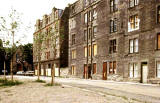
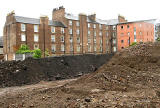
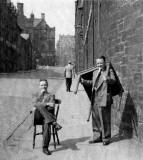
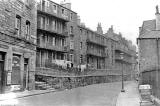
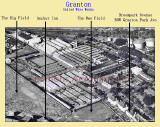
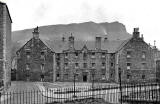
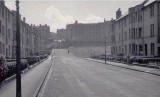
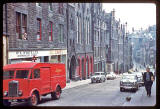
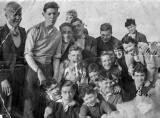
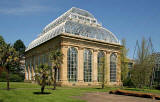
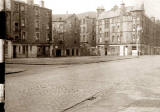
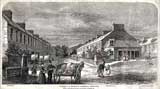
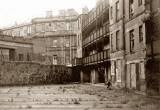
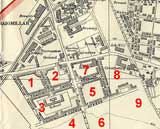
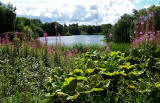
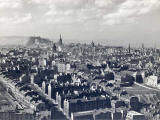
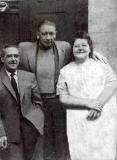
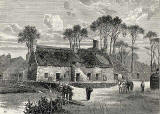
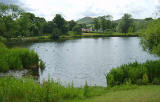
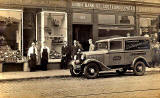
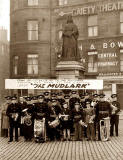
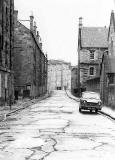
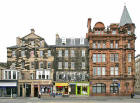
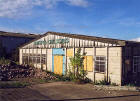
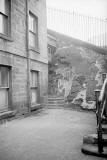
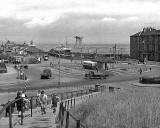
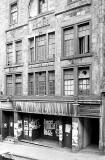
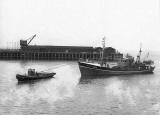
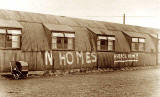
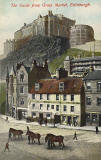
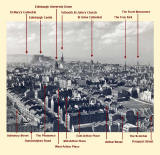
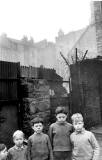
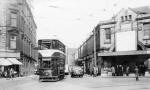
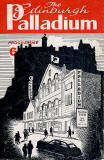
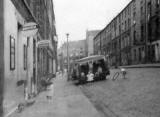
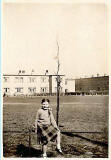
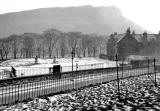
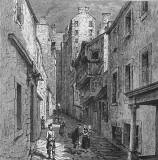
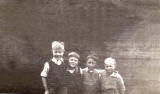
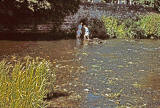
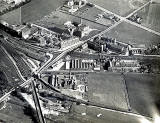
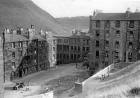
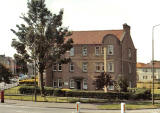

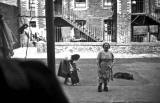
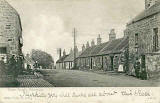


|
2. Edinburgh Words and Dialect |
||||||||||||||
|
Comments - 2008 This section originally started with a small collections of 'Slang' words and expressions. Over the years it has expanded and now includes a lot of Scots words, commonly used in Edinburgh. Hamish Scott wrote:
"The words you list under
slang are not slang.
So, I have changed the heading of this section: - from 'Edinburgh Slang' - to 'Edinburgh Speech and Slang'. Peter Stubbs: October 8, 2008 |
||||||||||||||
|
Comments - 20 11 There are still one or two people who do not feel comfortable with any reference to 'Slang' in this heading, so I've now adopted a simpler heading. I've changed the heading: - from 'Edinburgh Speech and Slang' - to 'Edinburgh Words and Dialect'. However, the content of this section remains the same as before. Many, but not all, of the words listed are Scots words that have been in common use in Edinburgh. Peter Stubbs: April 9, 2011. |
||||||||||||||
|
A |
||||||||||||||
|
a ba' hair |
a very small amount, possibly less than half a millimetre "I remember tradesmen saying this, meaning make just a tiny amount of." adjustment to a fitting" Allan Dodds, Nottingham, Nottinghamshire, England: January 1, 2010 |
|||||||||||||
|
accumulators "These were electric batteries for wirelesses, etc. that you got charged. They were heavy. The containers were made of glass and full ov acid. There was a shop at the foot of Blackfriars Street that we took them to to be re-charged." Andy Sinclair, Edinburgh: 26 January 2016 |
||||||||||||||
|
affrontit |
'affrontit', usually accompanied by the modifier , "I was fair (right) affrontit", or "I was sair (sorely) affrontit", meant "I was offended". Affrontery refers to something said to the face without regard for the feelings of the recipient. Allan Dodds, Nottingham, Nottinghamshire, England: April 1, 2010 |
|||||||||||||
|
afore |
before Bob Sinclair, Queensland, Australia: February 2, 2010 |
|||||||||||||
|
" 'Afore ye go' used to be a whisky advert for Bell's Distillery." Allan Dodds, Nottingham, Nottinghamshire, England: February 4, 2010 |
||||||||||||||
|
anaw |
as well " You can add this to your list anaw" Maurice Dougan, Edinburgh: September 11, 2009 |
|||||||||||||
|
in front of Frank Wilson, Golden Beach, Queensland, Australia: Feb 26, 2010 |
||||||||||||||
|
about "I always thought 'anent' was the Scottish word for 'about' - as in so many Kirk Reports" Brian, near Edinburgh, 2 September 2013 |
||||||||||||||
|
I've checked in my Scots Dialect Dictionary (compiled by Alexander Warrack) . It appears that Frank and Brian are correct. That dictionary gives all the following meanings to 'anent': - opposite to; in front of; over against; side by side with; about; concerning; in competition with. Peter Stubbs, 4 September 2013 |
||||||||||||||
|
The house 'doon the area' was the section of the house below pavement level. "I got my piece from my Gran who lived in a hoose doon the area in Gayfield Square." Gordon Wright, Barnton, Edinburgh: July 18, 2014 |
||||||||||||||
|
ashet |
serving plate "From the French, 'assiette'." David Bain, Rotherham, South Yorkshire, England: December 30, 2008 |
|||||||||||||
|
argy-bargy |
squabbling "We used to hear our Dad say, sometimes, when coming into a room where several of us were squabbling about things: 'Stop all that argy - bargy'." Mary Frances Merlin, née Monteith, France: January 14, 2009 |
|||||||||||||
|
arty farty |
someone who was regarded as a bit limp wristed or a bit posh. "Seen that yin. He's a bit arty farty ." Bob Sinclair, Queensland, Australia: December 17+30, 2009 |
|||||||||||||
|
Auld Leerie |
the gas lamp lighter Keith Main, London, England: December 30, 2008 |
|||||||||||||
|
away wi' the fairies |
not mentally sound John Gray, Portobello, Edinburgh |
|||||||||||||
|
Is that right? e.g: a response to hearing some surprising news. Bob Sinclair, Queensland, Australia: December 24, 2011 |
||||||||||||||
|
awfully, terribly Bob Sinclair, Queensland, Australia: November 19, 2011 |
||||||||||||||
|
B |
||||||||||||||
|
ba' heid |
fat-faced person Keith Main, London: December 30, 2008 |
|||||||||||||
|
" I believe that ba' heid = ball-head. " Douglas Beath, Burnie, Tasmania, Australia: January 2, 2009 |
||||||||||||||
|
backie |
1.
A
ride
on the back of a bike.
Bob Henderson, Burdiehouse, Edinburgh: January 17, 2009 |
|||||||||||||
|
"The bike rider stood and pushed the pedal. You (having the backie) sat on the seat with your legs hanging out." Bob Sinclair, Queensland, Australia: December 25, 2009 |
||||||||||||||
|
2. back green " I enjoyed the film on Arthur Street . I saw the backie w h ere our cat, Toodles, would kill the rats ." Eric Gold, East London, England: March 27+28, 2009 |
||||||||||||||
|
baccy |
tobacco "He's awa doon the road for some baccy for his pipe." Bob Sinclair, Queensland, Australia: December 23, 2009 |
|||||||||||||
|
back green |
grass area behind the houses or tenements Bob Sinclair, Queensland, Australia: January 17, 2010 |
|||||||||||||
|
" The 'back passage' referred to the interior of a tenement on the ground floor that led to the 'back green' or communal drying green to give it it's proper name. I remember a joke about a man going to the doctor's and being prescribed suppositories which he was told to take up 'the back passage'. " Allan Dodds, Nottingham, Nottinghamshire, England: October 15, 2008 |
||||||||||||||
|
baffies |
down-at-heel shoes or slippers "This takes me back to the late-1950s when we would visit my grandparents in Harewood Drive, Craigmillar. My grandparents were scornful of those local ladies who would make their early morning visit to the shops in dressing gown, curlers, rolled-down stockings and baffies. I can see them now, their cigarettes permanently in the corners of their mouths! " David Bain, Rotherham, South Yorkshire, England: December 30, 2008 |
|||||||||||||
|
bagwash |
launderette Bob Sinclair, Queensland, Australia: February 28, 2010 |
|||||||||||||
|
bahookie |
butt, bottom, backside "Be nice or I'll skelp your bahookie! " George T Smith, Nanaimo , British Columbia, Canada : January 9, 2009 |
|||||||||||||
|
See also "Ma bahookie" below. Kim Traynor, Tollcross, Edinburgh: February 4, 2010 |
||||||||||||||
|
bairn |
child "From my recollection , even in St Leonards and Dumbiedykes in the 19 30s , adults were careful not to use sweary wurds in front o' bairns . " George T Smith, Nanaimo , British Columbia, Canada : Dec 19, 2008 I |
|||||||||||||
|
There was discussion of use of the words 'bairn' and 'wean', some time ago on the EdinPhoto web site. Thank you to Kim Traynor for following up by sending me this quote from David Murison, Editor of the Scottish National Dictionary , when it was completed in the 1976. “If you hear someone speak of boys and girls as loons and quines , you can tell ... that he comes from the Aberdeen area; otherwise he would have said laddies and lasses ; for children generally, he will say bairns as most folk do up and down the east coast, whereas in the west they say weans , shortened from wee anes . " Acknowledgement: Kim Traynor, Tollcross, Edinburgh, May 15, 2010 |
||||||||||||||
|
baith |
both " He held it in baith hands." " Bob Sinclair, Queensland, Australia,: January 16, 2009 |
|||||||||||||
|
baldy |
a type of hair cut, usually on the short side Bob Sinclair, Queensland, Australia: April 20, 2010 |
|||||||||||||
|
balup |
the fly on men's trousers "Dae yer ballup up right ' fore ye gang oot . " George T Smith, Nanaimo , British Columbia, Canada : January 9, 2009 |
|||||||||||||
|
" My father, who was born at Lady Lawson Street and is now aged 83, tells me that in his time, this was pronounced balup (i.e. 'bal up' rather than 'ball up'.) " Dave McDougall, Edinburgh: December 8, 2009 |
||||||||||||||
|
baloney |
nonsense "That's Baloney = you are misinformed" "What he was telling me was a right load of baloney" Bob Sinclair, Queensland, Australia: November 29, 2009 |
|||||||||||||
|
balup |
See ballup above |
|||||||||||||
|
bampot barmpot |
idiot Forbes Wilson, near Guildford, Surrey, England: January 29, 2009 |
|||||||||||||
|
idiot, originally a drunk People would drink barm, the skimmings from fermenting liquor, which was used to leaven bread. David Bain: Rotherham, South Yorkshire, England: September 21, 2009 |
||||||||||||||
|
bamstick |
crazy person Theresa Lapping, Cork, Ireland: April 7, 2009 |
|||||||||||||
|
Bangladesh |
McEwans Special (Spesh) "This is rhyming slang used today." Jim Cairns , Dunfermline, Fife, Scotland: Dec 20, 2008 |
|||||||||||||
|
Barleys! Barley / Parley |
"The childhood expression ' Barleys! ' was used with the accompaniment of two thumbs - up signs, to indicate that one was no longer playing a game such as tig. " Allan Dodds, Nottingham, Nottinghamshire, England: October 15, 2008 |
|||||||||||||
|
"Barley or Parley (from French, parlez = you speak) used mainly by children at play to call a halt usually because one side is not playing to the traditional rules , so a 'Parley' is called to settle mutually acceptable rules." George T Smith, Nanaimo , British Columbia, Canada : Dec 5, 2008 I |
||||||||||||||
|
barrie |
good, enjoyable "That wis a barrie night oot." Terry Cox, Fairmilehead, Edinburgh: December 18, 2008 |
|||||||||||||
|
"Here a re a few mair barrie wurds!" - said by David Bain when he sent m e some new words for this page. David Bain: Rotherham, South Yorkshire, England: September 20, 2009 |
||||||||||||||
|
batter |
on the batter = out drinking Keith Main, London, England: December 30, 2008 |
|||||||||||||
|
"The word batter was also used when talking about giving someone a hiding , e.g. 'They battered him senseless'." Bob Henderson, Burdiehouse, Edinburgh: January 1, 2009 |
||||||||||||||
|
bauchle |
1. wee man Keith Main, London: December 19, 2008 |
|||||||||||||
|
2. shambling awkward person "He was a wee bauchle of a man." George T Smith, Nanaimo , British Columbia, Canada : January 9, 2009 |
||||||||||||||
|
bauchle along |
move in a clumsy shambling way George T Smith, Nanaimo , British Columbia, Canada : January 9, 2009 |
|||||||||||||
|
bap |
roll or bun "Mum can ah hiv a bap fur supper?" Bob Sinclair, Queensland, Australia: November 29, 2009 |
|||||||||||||
|
bare feet
"Bright an sunny mornin’s, up early wis
the game,
This is the first verse of his poem:
'Gaun Fishin' Tae Newhaven'
|
||||||||||||||
|
A Scottish ha'penny " a s in a ballad that we used to enjoy at The World's End bar in Edinburgh , upstairs on a Friday night, of which the first verse runs:
"I bought a wife in Edinburgh for a bawbee
Allan Dodds, Nottingham, Nottinghamshire, England: December 19, 2009 |
||||||||||||||
|
bawbees |
coppers, pennies Keith Main, London: December 30, 2008 |
|||||||||||||
|
bawl |
cry or shout "The bairn was bawlin'." "He was bawlin' at her over the back green fence." Bob Sinclair, Queensland, Australia: April 27, 2010 |
|||||||||||||
|
beam, beaming |
1. push somebody on a swing. "One young girl would sit on the swing the other girl would place her foot between her legs and beam her to the highest point and brankle her over the bar backwards!!" Vince McManamon, Darlington, Durham, England: July 19, 2010 |
|||||||||||||
|
To beam was to stand up on the seat of a swing and make the swing go as high as possible. See also brank Bob Henderson, Burdiehouse, Edinburgh: May 30, 2011 |
||||||||||||||
|
beaut pronounced 'byoot' |
a really fine example, as in "that car's a beaut". Kim Traynor, Tollcross, Edinburgh: September 22, 2009 |
|||||||||||||
|
bed closet |
a small room with a bed, adjoining the main bedroom. Eric Gold, East London; October 8, 2008 |
|||||||||||||
|
"Bed closets varied in location: - in our Canonmills flat, the bed closet was off the best room. - In our Morningside flat, it was located off the hallway." Allan Dodds, Nottingham, Nottinghamshire, England: January 14, 2010 |
||||||||||||||
|
fester, turn septic Gordon Wright, Barnton, Edinburgh: July 18, 2014 |
||||||||||||||
|
very angry, about to explode Gordon Wright, Barnton, Edinburgh: July 18, 2014 |
||||||||||||||
|
beetlecrushers |
a certain kind of footwear worn by Teddy Boys. This one had a ribbed sole. Bob Sinclair, Queensland, Australia: February 28, 2010 |
|||||||||||||
|
beezer |
a really hard winter's day "It's a right beezer today" Bob Sinclair, Queensland, Australia: Nov 29 + Dec 30, 2009 |
|||||||||||||
|
Allan Dodds replied: " The words 'beezer' and 'brammer' were interchangeable in my day. They each meant a superlative exemplar of a type and could be applied to almost anything, not just weather . " Allan Dodds, Nottingham, Nottinghamshire, England: January 4, 2010 |
||||||||||||||
|
Bob Sinclair added: "In my years in Auld Reekie, I never heard of the words 'beezer' and 'brammer ' as being interchangeable. I never heard of a biting east wind being referred to as a brammer! As I remember it, a brammer was something which was really good. The word may have been a Glasgow immigrant." Bob Sinclair, Queensland, Australia: May 17, 2010 |
||||||||||||||
|
Allan Dodds replied: " I still believe that the words 'beezer' and 'brammer' were interchangeable . From my research I learn that 'beezer' is of Irish origin and it means a 'cracker' or something exceptional. (There was a comic called 'The Beezer'.) 'Beezer' and 'brammer' have probably been replaced by 'cool' in today's parlance. Allan Dodds, Nottingham, Nottinghamshire, England: May 30, 2010 |
||||||||||||||
|
a boil or pimple on the point of bursting Peter Butler, Hennenman, South Africa: February 25, 2011 |
||||||||||||||
|
belt |
See get the belt below Kim Traynor, Tollcross, Edinburgh: September 23, 2009 |
|||||||||||||
|
ben |
through e.g. answering: "Where is he?"
"He's ben the room."
=
Maurice Dougan, Edinburgh: September 11, 2009 |
|||||||||||||
|
Bertie Auld |
cauld (cold) "This is rhyming slang used today." Jim Cairns , Dunfermline, Fife, Scotland: Dec 20, 2008 |
|||||||||||||
|
besom |
a girl who was a brat,
Jean Lennie, Edmonton, Alberta, Canada: Aug 4, 2009 |
|||||||||||||
|
"Women called other women a ‘besom’ all the time, a kind of euphemism for ‘bitch’" Collins dictionary gives ‘besomrider’ as an old term for a witch. For ‘besom’, it says ‘term of reproach’, implying slatternliness, laziness, impudence .' I recall people saying it about others after arguments. The ‘besom’ had had the cheek to talk back or had perhaps been foul-mouthed. I think it was also used if the woman had done something sneakily, behind one’s back. The most common usage was ' She’s a right besom! ' " Kim Traynor, Tollcross, Edinburgh: September 22, 2009 |
||||||||||||||
|
bevvied |
totally drunk "I was bevvied on Friday night Kim Traynor, Tollcross, Edinburgh: December 27, 2009 |
|||||||||||||
|
bevvy |
alcoholic drink (beer, not spirits) "Are you going for a bevvy?" Kim Traynor, Tollcross, Edinburgh: December 23, 2009 |
|||||||||||||
|
bide |
stay, wait, watch " Ah'm just biding here till ma man comes back." "Ah'm just biding ma time, till he comes back." "Ah'm just biding ma time, keeping an eye on the clock. - In the first sense, the woman is just staying until her husband returns. - In the second sense, she has been waiting too long, and her man will get it in the neck when he returns. - In the third sense, she is waiting, possibly for an appointment. Bob Sinclair, Queensland, Australia: January 8, 2010 |
|||||||||||||
|
bing |
spoil heap of waste material from mining or quarrying Peter Stubbs, Edinburgh: September 26, 2009 |
|||||||||||||
|
birl |
spin round "Ma heid wis birling, ah had sae much tae drink" or "H e birled me round the dance floor". George T Smith, Nanaimo , British Columbia, Canada : Dec 8, 2008 I |
|||||||||||||
|
bissies |
plain clothes police, or CID Eric Gold, East London; October 8, 2008 |
|||||||||||||
|
Jan McGuire wrote: "I think the use of ' bit ' to describe someone's home might be unique to the Edinburgh area. We still say ' Come round to my bit for a drink before we go out ' . I Googled the use of ' bit ' in this way and was amazed to find no hits! " Jan McGuire, Gorgie, Edinburgh: January 5, 2012 |
||||||||||||||
|
bissies |
plain clothes police, or CID Eric Gold, East London; October 8, 2008 |
|||||||||||||
|
black Jock |
black mucus in the nose " All of Edinburgh was coated with soot and coal dust. Centuries of coal fires clogged chimneys. The air is heavy with dirt. Breathing covered teeth with grit . Even the snot in your nose was black. Gran pointed out descending black mucus. ‘Ye’ve got a ‘black Jock ' !’ All children g o t Black Jocks. Those with handkerchiefs got them stained black with Edinburgh filth. " Jim Vandepeear, York, Yorkshire, England: April 1, 2010 |
|||||||||||||
|
blether |
friendly chat Eric Gold, East London; October 9, 2008 |
|||||||||||||
|
chatter aimlessly,
"Och stop blethering", "Ignore him, he's just a blether Kim Traynor, Tollcross, Edinburgh, September 23, 2009 |
||||||||||||||
|
blizzie |
" To 'have a blizzie' was to encourage the chimney to flare up to save having it swept. " George T Smith, Nanaimo , British Columbia, Canada : Dec 5, 2008 I |
|||||||||||||
|
Strike extremely hard Gordon Wright, Barnton, Edinburgh: July 18, 2014 |
||||||||||||||
|
hammer " When I was young, 'blooter' meant a hammer. Hence, 'blootered' meant hammered or drunk. Allan Dodds, Nottingham, Nottinghamshire, England: July 19, 2014 |
||||||||||||||
|
blootered |
uncontrollably drunk. "I was reminded of the word 'blootered' after reading the word 'stocious' (similar meaning) in tonight's Evening News." Bob Henderson, Burdiehouse, Edinburgh: December 15, 2008 |
|||||||||||||
|
(See also boke ) |
gag, throw up "It was so mingin it would gaur ye boak"
mingin = disgusting
George T Smith, Nanaimo , British Columbia, Canada : January 13, 2009 |
|||||||||||||
|
bob |
shilling Allan Dodds, Nottingham, Nottinghamshire, England: December 19, 2009 |
|||||||||||||
|
boddie |
person Bob Sinclair, Queensland, Australia: February 1, 2010 |
|||||||||||||
|
bogey man |
A bad man where children were concerned. "If you don't go to bed, the bogey man will get you" See also ' The bogey man'll get you! ' below. Bob Sinclair, Queensland, Australia: December 23+30, 2009 |
|||||||||||||
|
boggin' |
smelly Keith Main, London: December 30, 2008 |
|||||||||||||
|
boiling |
A small portion of potatoes given to 'tattie howkers'. " I n the late -1940s and early -1950s, we used to be excused school to go to the t atties. It was a great shock to the system to have to work at what was a back - breaking job. We also used to be allowed a boiling (a small bag of potatoes) to take home every night ." Bob Henderson, Burdiehouse, Edinburgh,: November 15, 2008 |
|||||||||||||
|
(See also boak ) |
vomit "That's a bad smell; it fairly makes ye boke" or "That's sickeningly sentimental. It disnae half make ye want to boke!" Kim Traynor: Tollcross, Edinburgh: September 27+28, 2009 |
|||||||||||||
|
bonny bonie |
bonfire. "Bonfires were held on Victoria Day* and 5 November ." Victoria Day in Edinburgh is the last Monday before 24 May, the Official Birthday of the reigning Monarch. "Boneys were always being raided by other gangs. These raids might end up in 'stone fights' ie stone throwing . Stone fights were rarely dangerous, although some kid would go home with a lump on his head and his mother would sort us out regardless of which side we were on." Stuart Burgess, Devon, England: September 17, 2009 |
|||||||||||||
|
Anthony White spoke of the time when he lived in Keir Street, Lauriston: "Our bonfire (a bonny, in the vernacular) took place in a bit of wasteland known as 'T he Lane ' which included a ruined piece of property that looked a little like an old fort and was gloriously named ' Chuckaboombas' ." Anthony White, Edinburgh: November 29, 2011 |
||||||||||||||
|
" It was great fun collecting for the ' bonie ' anything that would burn from all the shops and businesses around Dalry. " George Ritchie, North Gyle, Edinburgh, September 23, 2014 |
||||||||||||||
|
bonny |
pretty Keith Main, London, England: December 30, 2008 |
|||||||||||||
|
marbles Jim Di Mambro, South Africa: December 5, 2008 |
||||||||||||||
|
"I used to wear an old pair of sannies that had a hole in the toe up near the big toe area. To my eternal shame I became very adept at puggy ing another person's 'bools' by slick use of the hole in my sannies and a quick flick of the leg backwards to where I retrieved it and 'stashed' it in my pocket whilst innocently helping the person to look for their bool." Dougie Cormack: January 8, 2011 |
||||||||||||||
|
skint, short of money
"This is rhyming slang:
Maurice Dougan, Edinburgh: September 11, 2009 |
||||||||||||||
|
skint, having no money
rhyming slang
Boracic lint was commonly used on cut knees, etc. on our frequent visits to the Deaconess Hospital. Bob Henderson, Burdiehouse, Edinburgh: October 10, 2008 |
||||||||||||||
|
bowdie legged |
bow legged "There's Hamish coming down the road. He's that bowdie legged you could drive a 19 bus through the gap." Bob Sinclair, Queensland, Australia: Nov 29 + Dec 30, 2009 |
|||||||||||||
|
box player |
accordionist "On the first flat was Davie McIntosh, a popular box player." J Kelly: March 28, 2009 |
|||||||||||||
|
Brahms and Liszt |
inebriated, (rhyming slang) Bob Sinclair, Queensland, Australia: December 23, 2009 |
|||||||||||||
|
"This is definitely Cockney, and may have been picked up from the TV programme, 'Steptoe & Son'. I don't think many folk around here would regard it as Edinburgh speech." Kim Traynor: Tollcross, Edinburgh: December 27, 2009 |
||||||||||||||
|
"If expressions such as this were fairly widely used as slang in Edinburgh, then I'm happy for them to be included on this list (with an appropriate note about their likely source). However, the list could become unwieldy, and lose its Edinburgh focus, if I were to include all such expressions that people had heard or read." Peter Stubbs, Edinburgh, December 27, 2009 |
||||||||||||||
|
something outstanding " It was a brammer " George T Smith, Nanaimo , British Columbia, Canada : January 9, 2009 |
||||||||||||||
|
Allan Dodds added : " The words 'beezer' and 'brammer' were interchangeable in my day. They each meant a superlative exemplar of a type and could be applied to almost anything . " Allan Dodds, Nottingham, Nottinghamshire, England: January 4, 2010 |
||||||||||||||
|
Bob Sinclair added: "In my years in Auld Reekie, I never heard of the words 'beezer' and 'brammer ' as being interchangeable. I never heard of a biting east wind being referred to as a brammer! As I remember it, a brammer was something which was really good. The word may have been a Glasgow immigrant." Bob Sinclair, Queensland, Australia: May 17, 2010 |
||||||||||||||
|
Allan Dodds replied: " I still believe that the words 'beezer' and 'brammer' were interchangeable. From my research I learn that 'beezer' is of Irish origin and it means a 'cracker' or something exceptional. (There was a comic called 'The Beezer'.) 'Beezer' and 'brammer' have probably been replaced by 'cool' in today's parlance. Allan Dodds, Nottingham, Nottinghamshire, England: May 30, 2010 |
||||||||||||||
|
" I remember using this word 'bammer' to mean very good, ie - ' peachy ' - ' hubba ', - 'b raw" - ' a wfy bonnie ' - etc. More recently , I have heard that it came from the Brammah ( I'm not sure how to spell that one) Steam Hammer. This was reckoned to be the best in the world at the time. Well , it's a thought." Harry Hunter, Kirkcaldy, Fife, Scotland (but still a Leither): Oct 1, 2013 |
||||||||||||||
|
" I wonder if the word 'brammer' might have derived from the very high-quality locks (supposedly burglar-proof) manufactured by Joseph Bramah in the late-1890s. I've no evidence to support this, though. " Laurie Thompson, Chipping Sodbury, Gloucestershire, England: May 20, 2014 |
||||||||||||||
|
brank , branking |
Branking a swing entailed first beaming th en stepping off the swing whilst it was at the bottom of its arc and going forwards with the aim of propelling it fast enough to complete the circle and go over the bar This was not only very dangerous but also made the swing unusable until the Parky came along and unwrapped it. Bob Henderson, Burdiehouse, Edinburgh: May 30, 2011 |
|||||||||||||
|
brankle |
[see quote below for meaning] "One young girl would sit on the swing the other girl would place her foot between her legs and beam her to the highest point and brankle her over the bar backwards!!" Vince McManamon, Darlington, Durham, England: July 19, 2010 |
|||||||||||||
|
brassic |
See boracic above |
|||||||||||||
|
braw |
fine "It's a braw day." Terry Cox, Fairmilehead, Edinburgh: December 18, 2008 |
|||||||||||||
|
" I believe that braw relates to the Scandinavian bra = good, well. (Several, probably many, Scottish words show this connection.) Douglas Beath, Burnie, Tasmania, Australia: January 2, 2009 |
||||||||||||||
|
trousers Annette McDonald, Montana, USA: July 4, 2014 |
||||||||||||||
|
trousers, knickers, undergarments Gordon Wright, Barnton, Edinburgh: July 18, 2014 |
||||||||||||||
|
lunge (to inflict a punch) "The drunk made a breenge at the Polis." Annette McDonald, Montana, USA: July 4, 2014 |
||||||||||||||
|
"My mother used to use the word 'breenge' but it didn't mean 'punch'; rather it meant 'barge' as in '"She just breenged in'." Allan Dodds, Nottingham, Nottinghamshire, England: July 6, 2014 |
||||||||||||||
|
dive headlong "make a breenge" Gordon Wright, Barnton, Edinburgh: July 18, 2014 |
||||||||||||||
|
brew |
See buroo below |
|||||||||||||
|
briquettes |
"My wife and her mother used to queue up at Leith Station to get a bag of brickettes (compressed coal dust I believe) In appearance they were like small bricks, but black. Each person was allowed one bag , which they transported back on the bus, under the stairs, to their destination. Those who had a few older youngsters scored. In my wife's case , she had to carry them up the street , then up four flights of stairs. " Bob Sinclair, Queensland, Australia: December 21+30, 2009 |
|||||||||||||
|
" In my day, these were spelled 'briquettes'. This is a French word meaning cakes. My school French Dictionary (1934) also gives 'patent fuel' as a translation." Allan Dodds, Nottingham, Nottinghamshire, England: January 5, 2010 |
||||||||||||||
|
To headbutt somebody on the
nose
Terry Cox, Fairmilehead, Edinburgh: May 22, 2014 |
||||||||||||||
|
bridie |
A pastry , generally in the shape of a semicircle, the most famous coming from Forfar. "Hey, let's go to the bakers for a bridie." Bob Sinclair, Queensland, Australia: December 25+30, 2009 |
|||||||||||||
|
briquettes |
See brickettes above |
|||||||||||||
|
bronco |
"Playing on the swings in the local Keddie Park, off Ferry Road, was another way to pass the time on a warm summer’s day. We did 'broncos' - standing on the swing and making it go as high as you could, then jumping off. Many a bang on the head was received if you did not clear the swing fast enough." Frank Ferri, Newhaven, Edinburgh: March 18, 2010 |
|||||||||||||
|
dead "Ah see Wullie's brown breid." . Terry Cox, Fairmilehead, Edinburgh: May 22, 2014 |
||||||||||||||
|
bru |
See buroo below |
|||||||||||||
|
buckie |
whelk Bob Sinclair, Queensland, Australia: February 1, 2010 |
|||||||||||||
|
bull |
See recollections of Edinburgh Police Boxes, below. " The b ox comfortably seated two , but I have enjoyed parties in the box with five of us drinking ' bull ', the drained wood alcohol from the empty barrels of whisky in the Docks. " David Legge (Ex PC 96 - D) , Colinton, Edinburgh: July 5, 2011 |
|||||||||||||
|
bully |
a term used in conkers . See below. " Individual conkers were rated according to the number of wins notched up . After 10 wins, the best conkers became ' bullies ' . Further wins were recorded as ' a bully 5 , a bully 8 ' etc. " Kim Traynor: Tollcross, Edinburgh: September 27+28, 2009 |
|||||||||||||
|
boast, brag, a conceited person Gordon Wright, Barnton, Edinburgh: July 18, 2014 |
||||||||||||||
|
bum-bee bumbee |
1. bumblebee Bob Sinclair, Queensland, Australia: December 29, 2009 |
|||||||||||||
|
2. not authentic "I remember my mother referring to modern plaid designs as 'bumbee tartan' - in other words not an authentic clan tartan. " Joyce Lamont Messer, Whanganui, North Island, New Zealand , January 21, 2010 |
||||||||||||||
|
mottled pattern on flesh, from sitting too close to the fire. "Her legs were aw bumbee tartan." Terry Cox, Fairmilehead, Edinburgh: May 22, 2014 |
||||||||||||||
|
backside "My mother would say: 'Sit doon on yer bumbelerie'." Allan Dodds, Nottingham, Nottinghamshire, EnglandRay |
||||||||||||||
|
Ray Melville added: "I remember a children's song by the Corries, also attributed on Google to Jeanie Robertson: 'One, two, three, O'leary, I saw Maurice Beery Sitting on his bumbelerie, Kissing Shirley Temple'." Ray Melville, Rosyth, Fife, Scotland: August 8, 2014 |
||||||||||||||
|
uneven, ruffled "Pull the blanket ower your way; it's all bumphled = could you straighten the blanket out? It's all uneven" Bob Sinclair, Queensland, Australia: June 5, 2015 |
||||||||||||||
|
bumps |
(with reference to skipping) " When the ropes were cawed sometimes the lasses would jump and try to hold themselves in the air whilst the rope went under them twice. That was called bumps. QUESTION: What was it called when you crossed arms and cawed the ropes as a single skipper? " Bob Sinclair, Queensland, Australia: February 28, 2010 |
|||||||||||||
|
bunce |
share the cost " When we came out of the Victoria Baths at Leith, we always bought an Oxo Cube. We were convinced it warmed us up. Well , usually we ' bunced ', i . e . shared the cost and the thing." Harry Hunter, Kirkcaldy, Fife, Scotland: September 20, 2010 |
|||||||||||||
|
bunker |
a kitchen top where the coalman would put the coal Eric Gold, East London; October 8, 2008 a kitchen worktop or draining board Keith Main, London: December 19, 2008 |
|||||||||||||
|
bunnet |
a type of cap When I was young, I often heard the older men sayi ng, "Gie's ma bunnet, ah'm away tae the match . " Bob Sinclair, Queensland, Australia: April 25, 2010 |
|||||||||||||
|
Some have spelt it: the brew or the bru |
the dole Keith Main, London: December 30, 2008 |
|||||||||||||
|
" T he bru / on the brew (re dole payments) is a mispronounced reference to the employment bureau." Douglas Beath, Burnie, Tasmania, Australia: January 2, 200 |
||||||||||||||
|
"Brew should be rendered ‘buroo’ because it comes from signing on at the National Assistance Bureau = buroo during the 1930s Depression " Kim Traynor, Tollcross, Edinburgh, September 1, 2009 |
||||||||||||||
|
C |
||||||||||||||
|
cadge |
borrow "He wis tryin' to cadge a fag from me." Bob Sinclair, Queensland, Australia: Nov 29, + Dec 30 2009 |
|||||||||||||
|
caller herrin' |
Fresh herring "Who will buy my caller herrin'?" Bob Sinclair, Queensland, Australia: December 29, 2009 |
|||||||||||||
|
This is an old term that comes from the song, "Caller Herrin' ". The song begins:
"
Wha'll buy my
herrin’
?
I've no idea if anybody said that in modern times. Kim Traynor, Tollcross, Edinburgh: December 29 +31 , 2009 |
||||||||||||||
|
Allan Dodds replied: "My grandmother used to sing this song, accompanying herself on the piano. It was composed by Lady Nairn in 1821, to go with a tune by Nathaniel Gow composed in 1798. My great grandmother, a fisherwoman from Musselburgh, would not have used the local term "caller", and in any event, the term had died out by the 1890s when my great grandmother was alive. At the corner of the Lawnmarket and the Mound (just outside Deacon Brodie's) a fisherwoman in traditional Newhaven fisherwoman's dress with a creel used to sell fresh fish and mussels in the 1960s. She may well have used the cry , Caller herrin', but I doubt it as I don't recall it." Allan Dodds, Nottingham, Nottinghamshire, England: January 3+17, 2010 |
||||||||||||||
|
See snotter Allan Dodds, Nottingham, Nottinghamshire, England: November 28, 2009 |
||||||||||||||
|
canny |
careful, gentle, etc. Bob Henderson, Burdiehouse, Edinburgh: October 7, 2008 |
|||||||||||||
|
canny Anny |
a bumblebee with a white rear which did not sting. " W hen I was a boy in Arthur Street, in our summer forays into the King ' s Park, or the allotments in the Meadows, we used to catch these in a jam jar with a few daisies or cowslips which we called ' sookie soos '." Bob Henderson, Burdiehouse, Edinburgh: January 6, 2009 |
|||||||||||||
|
canter |
hang on to a vehicle, such as a coal lorry Eric Gold, East London; October 7, 2008 |
|||||||||||||
|
" Another form of potentially hazardous entertainment was ' the canter’. This involved hanging around Magoni’s shop until one of the older open-backed buses came along. I f the conductor wasn’t at the bottom of the stairs, you would jump on and get a hurl for about fifteen feet or so and you jumped off before the bus got up to full steam. Donny Coutts, East Lothian, Scotland: August 3, 2010 |
||||||||||||||
|
catchy |
a game played with a ball (See below.) "Our local pig s' bin stood near a lamp post, about outside No 321 in Pilton Avenue. Our bin was used to stot balls of off . Being round, this was great fun for catchy, a game where you had to catch the ball before it hit the ground ." Bob Sinclair, Queensland, Australia: January 14+17, 2010 |
|||||||||||||
|
cat's cradle |
" A game that children used to play with a bit of string. The string was fashioned into a cradle by transferring it from one person to another . It came out in what was called a cat's cradle " Bob Sinclair, Queensland, Australia: December 29 2009 |
|||||||||||||
|
cobble stones "I'm fawin on the cosies = I'm falling down on the cobble stones. ." Andy Sinclair, Edinburgh: 26 January 2016 |
||||||||||||||
|
caw |
1. See ' caw canny ' below Bob Sinclair, Queensland, Australia: December 29 2009 |
|||||||||||||
|
2. turn a rope over "In Street games , mainly played by girls, the ones on the end of the rope did the cawin'. There was a game that used two ropes being cawed , but I can't remember what it was called (Switchy?)" Frank Wilson, Golden Beach, Queensland, Australia: Feb 26, 2010 |
||||||||||||||
|
"Chainy Tig was a game of tig, but if caught you had to link on to whoever was het, until a whole line stretched behind them ." Jean, Leith, Edinburgh, August 29, 2013 |
||||||||||||||
|
champ (1) |
mash Bob Sinclair, Queensland, Australia: December 29 2009 |
|||||||||||||
|
champ (2) |
" At 'Grassy Green' there was the remains of an old sandstone wall . We would bash together wee bits of the sandstone that had fallen off the wall to make a powder that we called 'champ' . We would pretend it was gold dust as we played at Cowboys. " Bob Leslie, Glasgow: July 21, 2013 |
|||||||||||||
|
champit tatties |
mashed potatos "D'ye fancy some champit tatties fur dinner?" Bob Sinclair, Queensland, Australia: December 17+30, 2009 |
|||||||||||||
|
chancer |
con man "See that Angus. He's a right chancer." Bob Sinclair, Queensland, Australia: December 17+30, 2009 |
|||||||||||||
|
chap |
knock " There's somebody chappin' at the door. " Bob Sinclair, Queensland, Australia: December 7, 2009 |
|||||||||||||
|
" C hap Door Run was a great game . We tied two door handles of opposite houses together, knocking on the doors and hiding in the bushes , watching the people trying to open the ir doors, was great fun . omg , if my boys had done that when they were young, they would have been grounded for life ."
Tricia Mcdonald (née Thomson):
|
||||||||||||||
|
chapped hands |
sore hands, usually in winter time Bob Sinclair, Queensland, Australia: December 29, 2009 |
|||||||||||||
|
" Chapped hands were hands cracked by the cold. That's redolent of balaclavas, wellies, sledging, etc." Kim Traynor, Tollcross, Edinburgh: December 29, 2009 |
||||||||||||||
|
cheese cutter |
equipment in children's playground " It was a beam hung from 2 double arms that swung back and forth in a frame. The beam had metal bicycle saddle shaped seats and a metal grip to hold onto. The brave kids would take an end each and stand holding the arms and they would ' beam ' (boost) the riders higher and higher, as far and as fast as they could." There was a cheese cutter, a c hute or two, a witch's hat, a spider's web and a couple of roundabouts and swings in the playground where I played on my way back from London Street School. " EdinPhoto Guest Book: G M Rigg, June 12, 2009 |
|||||||||||||
|
chennah wallies |
false teeth Keith Main, London: December 19, 2008 |
|||||||||||||
|
chewie |
a stick of chewing tobacco Bob Sinclair, Queensland, Australia: March 22, 2010 |
|||||||||||||
|
China |
mate:
"Hello my old China"
" Th is, and other rhyming slang originated around the 1960s . It may have represented a transient linguistic phenomenon, but we used these terms all the time and possibly invented a few of our own. Some possibly came from television programmes such as Coronation Street, but they were avidly adopted by us in Edinburgh, and used as a sign of being ' with it' ." Allan Dodds, Nottingham, Nottinghamshire, England: November 13, 2009, |
|||||||||||||
|
chippie |
fish 'n' chip shop "In the 1950s, my local chipp ie was Miele’s in Easter Road where you could buy a pie supper for 1/3d (one shilling and thruppence ) on your way home from the Speedway at Meadowbank. " Kim Traynor, Tollcross, Edinburgh: September 25, 2009 |
|||||||||||||
|
chippie sauce |
a brown sauce for fish and chips. " This is made to a recipe apparently only known in Edinburgh" . Kim Traynor, Tollcross, Edinburgh: September 25, 2009 |
|||||||||||||
|
Chiselchin |
Nickname given to one of the local policemen in the Cowgate " Talking about Basher Thompson , can anyone remember the other local Policeman , the one we used to call Chiselchin? " Ron McGrouther, Prudhoe, Northumberland, England , May 18, 2009 |
|||||||||||||
|
chittery bite |
"A chittery bite (some called it a shivery bite) was what you had to eat on the bus after a visit to the swimming baths at Dalry or Infirmary Street. Both baths very cold, as I recall." Stuart Burgess, Devon, England: September 17, 2009 |
|||||||||||||
|
chiv |
a knife This is related in some way to the verb 'chivvy', meaning to annoy or aggravate. Allan Dodds, Nottingham, Nottinghamshire, England: November 29, 2009, |
|||||||||||||
|
choarie |
steal, pockle " He choried it frae Woolies. " Terry Cox, Fairmilehead, Edinburgh: May 22, 2014 |
|||||||||||||
|
steal "Stall yer mangin gadgie and deek at the groanie av jist choaried . " Jim Di Mambro, South Africa: December 5, 2008 Jim added that he is not sure about the spelling.
|
||||||||||||||
|
" If you got caught choarieing, yer paw would gie you laldie ." Maurice Dougan, Edinburgh: September 11, 2009 |
||||||||||||||
|
"This word is a kid's diminutive of 'to chore' so the spelling should be 'chorie'." Kim Traynor, Tollcross, Edinburgh: September 20, 2009 |
||||||||||||||
|
"We had a family friend who had spent a great deal of her life in Borneo. She was surprised when she overheard me using the words 'chorie and 'shottie' (spelling doubtful!). 'Chore' was native for steal and 'shote' for lookout. Perhaps they were brought back by servicemen" Ian Young, Hawick, Borders, Scotland: July 22, 2010 |
||||||||||||||
|
chuckie stanes |
1. a game using small stones. "Chuckie stanes or five stanes was a game we played as kids. The object of the game was to throw stones in the air and catch them on the back of your hand . Any that dropped , you had to pick up by throwing a stone in the air , pick ing up your targeted stone , then catch ing the stone you had just thrown before it fell on the ground . I think you had to progress to throwing two stones in the air , picking up your target stone, then again catching both the stones previously thrown and so on." Graeme Fulton, Ormiston, East Lothian, Scotland: July 15, 2009 |
|||||||||||||
|
2. white pebbles "These were sometimes translucent. If you struck two together in the dark, you'd get a sort of spark. Try it and you'll see what I mean." Stuart Burgess, Devon, England: September 17, 2009 |
||||||||||||||
|
2. white pebbles "That sounds like flint." Kim Traynor, Tollcross, Edinburgh: December 23, 2009 |
||||||||||||||
|
chunky |
Toilets "The banana flats at Leith won an award, albeit that it was the chunkies that overlooked the Forth." Bob Sinclair, Queensland, Australia, December 21, 2009 |
|||||||||||||
|
churls |
" Churls were small, washed lumps of coal sold in factory-sealed, thick-brown paper bags weighing 28lbs. I collected one bag weekly from a local general store in West Granton Road when I lived in Royston Mains Avenue in the mid-1960s. The bag was big for a small teenager, so I had to carry it over my shoulder. " Kim Traynor, Tollcross, Edinburgh: December 11, 2009 |
|||||||||||||
|
chute |
equipment in children's playground " It was a ladder and slide . They could be quite high up and we discovered that if you could get a bread wrapper (the wax paper kind) turn it inside out the n sit on it with the inside down on the slide , it helped to polish or lubricate the metal slide , increasing the speed at which you could whiz z down and off the end." There was a cheese cutter, a chute or two, a witch's hat, a spider's web and a couple of roundabouts and swings in the playground where I played on my way back from London Street School. " EdinPhoto Guest Book: G M Rigg, June 12, 2009 |
|||||||||||||
|
claes |
garments worn on the body, clothes Bob Sinclair, Queensland, Australia: February 1, 2010 |
|||||||||||||
|
1. flatten (as in example below) "'Do n't clap yer hair intae yer heid like that' meant 'Don't matt your hair into your head like that'. This was often said to the son when he had flattened his hair to his skull with water. " Bob Sinclair, Queensland, Australia: March 24, 2014 |
||||||||||||||
|
2. a certain kind of footwear worn by Teddy Boys. This one had a ribbed sole. Kim Traynor, Tollcross, Edinburgh, September 23, 2009 |
||||||||||||||
|
1. rubbish "In the 1960s, we used the word 'yad' to mean 'rubbish' or 'clart'." Allan Dodds, Nottingham, Nottinghamshire, England: December 11, 2009, |
||||||||||||||
|
2. someone who is dirty, filthy, clarty Gordon Wright, Barnton, Edinburgh: July 18, 2014 |
||||||||||||||
|
dirty " Look at your hands. They're clarty! " Terry Cox, Fairmilehead, Edinburgh: December 30, 2008 |
||||||||||||||
|
In my family, they said: ' You're clarty behind the ears. ' Kim Traynor, Tollcross, Edinburgh, October 4, 2009 |
||||||||||||||
|
clairty, clairty |
See clarty below. "We used to shout "clairty, clairty" indicating the unclean." Bob Sinclair, Queensland, Australia: December 4, 2009 |
|||||||||||||
|
cleg clegg |
big flea Keith Main, London, England: December 30, 2008 |
|||||||||||||
|
"To me and my comrades, a clegg was the horrible black creature that inhabited what I think was called cuckoo spit (that looked like frothy spit ) on some long grasses . I believe these creatures had the ability to bite ." Bob Henderson, Burdiehouse, Edinburgh: January 17, 2009 |
||||||||||||||
|
horsefly "They certainly could bite." David Bain, Rotherham, South Yorkshire, England: March 12, 2009 |
||||||||||||||
|
'Cleg' is a Norse word for horsefly. Someone told me , just recently , that they were being bitten by these insects on holiday and were taken aback when they heard Swedes using the same word as we use in Scotland. Kim Traynor, Tollcross, Edinburgh: September 20+30, 2009 |
||||||||||||||
|
cleip |
See clype below |
|||||||||||||
|
clipe |
See clype below |
|||||||||||||
|
Clippie |
bus conductress
"Come on, let's go upstairs. The
Clippie's coming
."
Bob Sinclair, Queensland, Australia: December 4+30, 2009 |
|||||||||||||
|
clipshear |
earwig " O ld fence posts were usually crawling with clipshears. They also got on the rope left outside to hang the laundry. " Ken Smith, Calgary, Alberta, Canada: December 31, 2008 |
|||||||||||||
|
earwig "This word seems unknown outside Edinburgh. I've been given many a puzzled look when I 'v e used the word." Stuart Burgess, Devon, England: September 17, 2009 |
||||||||||||||
|
"For years , I thought clipshears and earwigs must be separate species. I had seen plenty clipshears, but I was waiting to see my first earwig! I remember feeling great trepidation at the prospect because of the old wives’ tale that other s must know - that it had a habit of entering your ear while you were asleep, burrowing through your brain and coming out the opposite side. That gave me many a sleepless night, especially since I didn’t know what it looked like! " Kim Traynor, Tollcross, Edinburgh: September 21, 2009 |
||||||||||||||
|
cloaker |
"a big black ground beetle. (Interestingly, the Russian word for beetle is 'clocha'.)" David Bain, Rotherham, South Yorkshire, England: December 30, 2008 |
|||||||||||||
|
cloot |
cloth, e.g. dish cloth Jean Lennie, Edmonton, Alberta, Canada: Aug 4, 2009 |
|||||||||||||
|
"I remember a childhood delicacy a ' clootie dumpling '. This was like a Christmas fruit cake mix but put in a clean pillow case and boiled. When cooked , it would be dried in front of the open fire, all the while being turned to get an even , smooth , shiny surface all round. When it was cool and sliced it was sometimes fried in butter - a heart attack waiting to happen , but wonderful Bob Henderson, Burdiehouse, Edinburgh: September 21, 2009 |
||||||||||||||
|
a rich dark fruitcake "My Gran made clootie dumplings. The mix was put in a pillow slip and boiled or steamed in an equally big pot. It was wonderful! On special occasions, there were tanners or silver three-pennies in it. I remember seeing big slices of dumpling on sale in some shops." Gordon Wright, Barnton, Edinburgh: July 18, 2014 |
||||||||||||||
|
close |
passage that led to a stair "Your faither's waitin' fur you up the close. Oh no!" Bob Sinclair, Queensland, Australia: December 17+30, 2009 |
|||||||||||||
|
clout |
slap, hit "I often used to hear also another version of an upcoming slap. Mum’s would warn: ' Ye'll get a clout around the ear if ye’r no careful'.” Mary Frances Merlin, née Monteith, France: January 14, 2009 |
|||||||||||||
|
cludgie |
outside loo Keith Main, London: December 30, 2008 |
|||||||||||||
|
cleip clipe |
to tell tales. "'He wis aye clyping oan his pals . " A clype was someone who did it. "Away, ya wee clype . " Terry Cox, Fairmilehead, Edinburgh: December 22, 2008 |
|||||||||||||
|
to rat on someone Jean Lennie, Edmonton, Alberta, Canada: Aug 4, 2009 |
||||||||||||||
|
betray trust "Yer a clype " or "Yea clyped on me" meaning that someone you know had betrayed your trust and told somebody (usually your parents) that you'd done something wrong.
Forbes Wilson, near
Guildford, Surrey, England: January 29, 2009
|
||||||||||||||
|
"Some people have spelt the word 'kleip' or klipe' but the correct spelling is 'clype' ." [I have changed the spelling above to agree with Kim's comments here. ] Kim Traynor, Tollcross, Edinburgh: September 20, 2009 |
||||||||||||||
|
" A 'tell-tail-tit'. One who spilt the beans when they were not supposed to." Bob Sinclair, Queensland, Australia: December 7, 2009 |
||||||||||||||
|
coal cellar |
a cupboard in the lobby where the coal was kept, if you never used the bunker. Eric Gold, East London; October 8, 2008 |
|||||||||||||
|
colliebuckie |
being carried on another kid's back Keith Main, London: December 19, 2008 |
|||||||||||||
|
"A colliebuckie is a piggyback.
Stuart Burgess, Devon, England: September 17, 2009 |
||||||||||||||
|
" C ollie buckie comes from the idea of carrying coals on your back, as coal merchants did when they delivered it in sacks." Kim Traynor, Tollcross, Edinburgh: September 20, 2009 |
||||||||||||||
|
piggy back "When you felt tired . you might ask a friend ' G awn , gees a collie buckie . ' We sometimes used to have collie buckie races." Brian Gourlay, Biggar, Lanarkshire Scotland: September 3, 2013 |
||||||||||||||
|
coorie doon |
Snuggle down between the sheets at bedtime. "My mother used to say this to me when I was very small." Allan Dodds, Nottingham, Nottinghamshire, England: November 30, 2009 |
|||||||||||||
|
"When I was visiting my grannie and getting tired, she used to tell me to come to her and coorie doon." Bob Sinclair, Queensland, Australia: March 16, 2010 |
||||||||||||||
|
coorie in |
Cuddle up to keep warm "My mother used to say this to me when I was very small." Allan Dodds, Nottingham, Nottinghamshire, England: November 30, 2009 |
|||||||||||||
|
coo's lick |
1. "This seemed to apply mostly to boys who had a stubborn tuft of hair hanging down over their forehead – which would stubbornly resist any attempt by mothers to comb it or brush it in a backwards direction. Brylcream only worked for a few minutes before the tuft stubbornly resumed its rightful place. The only thing that could overcome the will of the tuft (for a while) was the white concoction hairdressers insisted on putting on young boys’ hair – a bit like wallpaper paste which went instantly brick-hard . I don’t know what the link is with a cow or, for that matter, a cow’s lick or tongue. " Brian Gourlay, Biggar, Lanarkshire Scotland: October 8, 2008 2. "The expression 'coo's lick ' was also used as below : After washing your face , your mother would say ' that ' s a coo ' s lick '. In other words , ' get back and wash it properly '." Andy Duff, Maryborough, Queensland, Australia: October 19, 2008. |
|||||||||||||
|
corn beef corned beef |
deaf (rhyming slang: deif ) "Ye can say what ye want. He's corn beef." Bob Sinclair, Queensland, Australia: December 17+30, 2009 |
|||||||||||||
|
corned tiger |
corned beef "My mother always referred to corned beef as corned tiger." George Ramsay, Spain + UK: October 5, 2011 |
|||||||||||||
|
The Corpo |
Edinburgh Corporation Transport Dept " I was a ' Parcel Boy ' from 1957 until I started my Apprenticeship as a Fitter and Tuner with the 'Corpo' in 1958. " Jim Paton, Australia: November 5, 2009 |
|||||||||||||
|
The Corpy |
Corporation buses, as distinct from SMT David Scott, Doha, Qatar: October 19 , 2009 |
|||||||||||||
|
corrie dukit corrie joukit |
left- handed "Aye, ye notice he's corrie joukit?" Keith Main, London: December 30, 2008 |
|||||||||||||
|
"corrie joukit (I'm not sure how you spelt it) meant 'left- handed '." Bill Sinclair, Queensland, Australia: December 21, 2009 |
||||||||||||||
|
cowp |
empty by turning over " I heard at a posh wedding once, wee kids saying to their grandad, on seeing the beautiful big round silver soup spoons “ W hit dae ye dae wi that?” Their grandad replied: 'Jist cowp it ower , son ' meaning just tip it over (into your mouth). " Mary Frances Merlin, née Monteith, France: January 14, 2009 |
|||||||||||||
|
cowp over |
fall "Ah hear Andra cowped over" Bob Sinclair, Queensland, Australia: December 29, 2009 |
|||||||||||||
|
crackin' on |
imparting some news "What wis he sayin'? "He wis crackin' on aboot the minister." Bob Sinclair, Queensland, Australia: February 1, 2010 |
|||||||||||||
|
craik |
make a noise, especially a bairn "Away and stop that bairn craiking." Maurice Dougan, Edinburgh: September 11, 2009 |
|||||||||||||
|
creamy tartered |
cremated "Did he get buried? Naw, he was creamy tartered." Bob Sinclair, Queensland, Australia: December 21+30, 2009 |
|||||||||||||
|
crick |
a neck disorder "It was most common in my day to get 'a crick in your neck', either to the left or the right, if you went upstairs in the Poole ' s Synod Hall picture house. You came out with a crick because you had to view the film with your head at an angle of 45 degrees off - centre. It was a bit like looking at a tennis match but only looking at the player at one end. " Bob Sinclair, Queensland, Australia: May 8, 2010 |
|||||||||||||
|
1. call or
name,
2. summon,
Allan Dodds, Nottingham, Nottinghamshire, England: December 21, 2009, |
||||||||||||||
|
a ride on the crossbar of a bicycle Allan Dodds, Nottingham, Nottinghamshire, England: January 15, 2009 |
||||||||||||||
|
Bob Henderson wrote: "It just goes to show how some of these words were very local indeed. T o me, a 'croggie', would be a 'hurl on your bar '. Being allowed to mount behind the cyclist would be a 'backie'. Bob Henderson, Burdiehouse, Edinburgh: January 17, 2009 |
||||||||||||||
|
cuddy |
horse " While playing cowboys and Indians , the cowboys were often heard shouting ' gee up , ma cuddy ' whilst slapping themselves on the bottom to get up to a gallop." Bob Henderson, Burdiehouse, Edinburgh: October 7, 2008 |
|||||||||||||
|
" M y Mother used to sing :
'
Hi-gee-wo ma
cuddy,
She also used to sing :
'
Mat
t
hew,
Mark, Luke and John,
She had many original versions of hymns and national anthems, none of which flattered either the church or the royal family. She was a woman ahead of her time! " Joyce Lamont Messer, Whanganui, North Island, New Zealand: January 17, 2008 |
||||||||||||||
|
cuddy heel |
an iron heel on a boot or shoe " The real treat came when the shoes needed soled and heeled. The Store (St Cuthberts) shoe repairer, at the beginning of West Richmond Street, used to put on quite thick, leather soles and heels then would also whack in a few rows of round studs in the sole with built-in, steel tips on the heel. My mother wouldn’t let me have the full steel, wrap-round ‘cuddy heel’. " Brian Gourlay, Biggar, Lanarkshire, Scotland: October 9, 2009 |
|||||||||||||
|
cuddy wecks |
a type of curlers "Look at that yin she's still got her cuddy wecks in!" "I thought this was rhyming slang for specs , but I am informed by another that these were in fact curlers which women used to put in their hair and had bits of paper stuck in them. I'm happy to be corrected . " Bob Sinclair, Queensland, Australia: December 20+30, 2009 |
|||||||||||||
|
cuff |
See ' I'll give you a cuff on the lugs ' Bob Sinclair, Queensland, Australia: December 29, 2009 |
|||||||||||||
|
cudgel |
children's name for any stick that they carried, usually the branch of a tree or an old piece of furniture like a chair leg. I don’t remember them being used aggressively. They were more for self-protection and show Kim Traynor, Tollcross, Edinburgh: September 21, 2009 |
|||||||||||||
|
"I asked my 'stairman', today, if he knew what a cudgel was. He did. He said he never remembered hitting anyone with one. He thinks he carried his when he was outside his own area in case another gang attacked his group. I am reporting on the 1950s. He is talking about the 1970s, after which Fountainbridge began to disappear . It shows that a remarkable continuity existed while these old communities remained intact. " Kim Traynor, Tollcross, Edinburgh: September 25, 2009 |
||||||||||||||
|
cushie cushie doo |
woodpigeon "When I was on holiday in Haddington, East Lothian, a woodpigeon was referred to as a 'cushie doo' or simply a cushie'. I don't know if that term was currency in Edinburgh."" Allan Dodds, Nottingham, Nottinghamshire, England: January 3, 2010 |
|||||||||||||
|
culliecode |
piggyback. "We called it a colliebuckie' but a friend from Bo'ness calls it a 'culliecode'. " Stuart Burgess, Devon, England: September 17, 2009 |
|||||||||||||
|
D |
||||||||||||||
|
sponge on "In a conversation about Dubbin (for football boots) last night I said that I used to dab my boots with it. Margaret said that when she got a skinned knee playing hockey , she would dob her knee with a hanky to stop the blood. Bob Sinclair, Queensland, Australia: September 9, 2013 |
||||||||||||||
|
Question Bob added: P.S. What was Dubbin made of , and was it a trade name?" Bob Sinclair, Queensland, Australia: September 9, 2013 Reply " This Wikipedia page explains that Dubbin consists of wax, oil and tallow, and that the name 'dubbin' is a contraction of the the word 'dubbing' meaning the action of applying wax to leather. I believe that 'Dubbin' was a trade name. " Peter Stubbs, Edinburgh: September 20, 2013 |
||||||||||||||
|
Please see also: 'That's the very dab' . |
||||||||||||||
|
daein' |
doing "Whidye daein'?" "Ah'm nae daein' nothin'." Bob Sinclair, Queensland, Australia: March 15, 2010 |
|||||||||||||
|
1. stroll "I'll take a dander" Bob Sinclair, Queensland, Australia: December 22,, 2009 |
||||||||||||||
|
1. stroll "In my day, this was pronounced 'daunder' " Allan Dodds, Nottingham, Nottinghamshire, England: November 29, 2008 |
||||||||||||||
|
1. stroll "It seems that 'dander and 'daunder' are both acceptable spellings for this word." Peter Stubbs, Edinburgh: December 30, 2009 |
||||||||||||||
|
2. dandruff Allan Dodds, Nottingham, Nottinghamshire, England: December 30, 2009 |
||||||||||||||
|
3. See also the expression : "He's got his dander up." Peter Stubbs, Edinburgh: December 30, 2009 |
||||||||||||||
|
The Dandy Ninth |
The Royal Scots, 9th Battalion " They were nicknamed ‘The Dandy Ninth’ because of the kilts they wore. They were a Territorial Battalion based at the drill hall in East Claremont Street, Edinburgh." Evan Reid, Ayrshire, Scotland: November 4+7+8, 2009 |
|||||||||||||
|
daud |
bit "He gave me a daud o' putty." Bob Sinclair, Queensland, Australia: December 17, 2009 |
|||||||||||||
|
daunder |
See ' dander ' (sense 1) above |
|||||||||||||
|
day |
See the day below |
|||||||||||||
|
dead Alan sent me some recollections of working at Brown Bros., Edinburgh, from 1955 onwards. He hoped that some of his workmates from that era might respond. When I told him. When I told him that there had been no response, he replied: "Maybe they are all DEED" Let's hope not! Alan Johnson, Stonehaven, Aberdeenshire, Scotland: 6 January 2016 |
||||||||||||||
|
dee-hi horrors |
diarrhoea "After a sound emitting from the lower rear parts of a child, the comment was made: 'He's got the dee-hi-horrors. Ah'm glad it's no' me.' " Bob Sinclair, Queensland, Australia: January 10, 2010 |
|||||||||||||
|
deek |
look Jim Di Mambro, South Africa: December 5, 2008 |
|||||||||||||
|
deid |
dead "Aye, he's deid, right enough. They got the death certificate." Bob Sinclair, Queensland, Australia: December 6+30 2009 |
|||||||||||||
|
dicht |
1. blow "Gie it a dicht." 2. quick wipe with a cloth "Gie your face a dicht." Bob Sinclair, Queensland, Australia: December 22, 2009 |
|||||||||||||
|
didnae |
did not "It wasnae me. Ah didnae dae it." Bob Sinclair, Queensland, Australia: March 15, 2010 |
|||||||||||||
|
dinnae |
don't Bob Sinclair, Queensland, Australia: April 13, 2010 |
|||||||||||||
|
the mid-day meal. i.e. The meal that some of the southern / posh English people called lunch. See also tea above Kim Traynor, Tollcross Edinburgh: December 28, 2009 |
||||||||||||||
|
dippit |
stupid, not the full shilling, not the full ticket, as in: 'Awa son, stop acting as if yer dippit!' Terry Cox, Fairmilehead, Edinburgh: April 2, 2009 |
|||||||||||||
|
divi |
coop dividend Keith Main, London: December 20, 2008 |
|||||||||||||
|
" I remember our new school uniforms being bought each year out of my mother's ' divi ' . Like everyone of a certain age , I can still remember my mum's store share number. David Bain, Rotherham, South Yorkshire, England: December 30, 2008 |
||||||||||||||
|
divot |
lump of turf "Ye'll hiv tae replace the divot . " (often heard on the golf course.) Bob Sinclair, Queensland, Australia: December 22+30, 2009 |
|||||||||||||
|
sponge on "In a conversation about Dubbin (for football boots) last night I said that I used to dab my boots with it. Margaret said that when she got a skinned knee playing hockey , she would dob her knee with a hanky to stop the blood. In later speech, of course, you would 'dob somebody in', but that use would b e UK-wide, I suppose." Bob Sinclair, Queensland, Australia: September 9, 2013 |
||||||||||||||
|
doddle |
See ' It's a doddle.' below. Bob Sinclair, Queensland, Australia: December 22, 2009 |
|||||||||||||
|
A ball game, but how was it played? Bruce Johnstone wrote: "Can anyone help? While playing ball games with my grandchildren, I mentioned that we, in the 1950s, used to play dodge-ball and king-ball. I can't remember how, apart from catching the ball with our clenched hands, then throwing at friends. Any suggestions? "
Bruce Johnstone, Haddington, East
Lothian, Scotland: January 16, 2011
|
||||||||||||||
|
dodgie |
A street game where by use of a tennis ball the one who was het (it) had to hit someone else with the ball. Those who were hit were out and the last one standing was the winner. Bob Sinclair, Queensland, Australia: December 25+30, 2009 |
|||||||||||||
|
doliker dollicker dolliker |
"' A large marble, bigger than the standard size If it was a steel ball-bearing it was called a steelie . " Terry Cox, Fairmilehead, Edinburgh: December 22, 2008 |
|||||||||||||
|
donnert |
a bit thick Allan Dodds, Nottingham, Nottinghamshire, England: November 29, 2008 |
|||||||||||||
|
doo |
pigeon "Other families I remember in Eastie are the MacKenzies, MacMillans, ... , Reids and Phillips, the doo man." J Kelly: March 28, 2009 |
|||||||||||||
|
dook |
swim "Are you goin' for a dook?" Bob Sinclair, Queensland, Australia: December 22, 2009 |
|||||||||||||
|
dookin' (for apples) |
" At Halloween parties, you would kneel on a kitchen chair with the back of the chair in front of you. You ' d then lean over apples floating in a metal basin or pail filled with water and try to spear them by dropping a fork from your mouth . If this proved too difficult, an alternative was to get down on one’s knees and try to bite into the apples and then lift them out of the water. Neither method was easy for wee folk. By the end, the floor was ‘swimming’ and I remember being absolutely soaked from the splashes every time I did it." Kim Traynor, Tollcross, Edinburgh: September 21, 2009 |
|||||||||||||
|
"My wife now tells me that sitting on the floor with your hands behind your back is 'proper dookin’. The dropping the fork variant was, she assures me, an attempt to make it easier for the bairns to get an apple by spearing it. Yet I remember the procedure happening in the reverse order . " Kim Traynor, Tollcross, Edinburgh: September 22, 2009 |
||||||||||||||
|
doolally tap |
"a bit mental, a bit radge" Terry Cox, Fairmilehead, Edinburgh: April 2, 2009 'Doolally tap' is not a particularly Edinburgh expression, but it is one that my father used quite regularly in Edinbrugh. Terry Cox, Fairmilehead, Edinburgh: April 2, 2009 |
|||||||||||||
|
For comments on the derivation of 'doolally tap', please see tappy below. George T Smith, Nanaimo , British Columbia, Canada : Dec 19, 2008 I |
||||||||||||||
|
crazy "If you don't stop pounding that piano, I'll go doolally." Annette McDonald, Montana, USA: July 4, 2014 |
||||||||||||||
|
" I'm not sure which war this expression related to , but I think I think it would have been World War 2 . as i remember it being used . The expression , 'doolally' or 'doolally tap' , was used to describe someone 'not right in the head' '. I remember reading , many years after hearing these expressions , that soldiers in India were sent to a place called Deollally (spelling?) for mental treatment . The origins of words quite often get lost or forgotten , don't they? "
Elizabeth
Fraser
(née
Betty Simpson),
|
||||||||||||||
|
" Deolali is a town in India; the difference from Elizabeth's story is that those posted there would need mental health care. The place is incredibly hot, dry and, to squaddies, boring." D avid Bain, Rotherham, South Yorkshire, England: 9 November 2015 |
||||||||||||||
|
doorstep doorstop |
a very high-stacked piece (sandwich)
"What's that you have
Charlie?"
Bob Sinclair, Queensland, Australia: January 19, 2010 |
|||||||||||||
|
dottery |
unstable "Well that's what happens when ye get auld ; ye get a bit dottery" Bob Sinclair, Queensland, Australia: December 22+30, 2009 |
|||||||||||||
|
a dottle |
a wee person Keith Main, London: December 30, 2008 |
|||||||||||||
|
dottled |
becoming senile, 'a bit past it' "My mother used to use this term" Allan Dodds, Nottingham, Nottinghamshire, England: January 6, 2010 |
|||||||||||||
|
dounce (rhymes with bounce) |
lose something (a ball or a kite) up a tree or on a flat roof or in a rhone. "It's dounced" was a common cry and it usually meant that the object was visible, but inaccessible without taking risks. In other words, it was to all intents lost, but you could sometimes pick up a dounced ball after a windy day : " Finders keepers, losers greeters!" Stuart Burgess, Devon, England: October 8, 2009 |
|||||||||||||
|
doup |
1. rubbish heap "That's rubbish. Take it to the doup." 2. buttocks "I remember a song that began: 'Kiltie, kiltie, called up Couldnae play a drum.' I'm not sure what the next lines were." George T Smith, Nanaimo , British Columbia, Canada : November 25, 2009 |
|||||||||||||
|
Apparently, children used to shout
:
Peter Stubbs, Edinburgh: November 28, 2009 |
||||||||||||||
|
doup skelper |
A school master given to beating the buttocks of stupid children. George T Smith, Nanaimo , British Columbia, Canada : November 25, 2009 |
|||||||||||||
|
dour |
sullen Bob Sinclair, Queensland, Australia: December 25, 2009 |
|||||||||||||
|
Example:
Kim Traynor: Tollcross, Edinburgh, December 27, 2009 |
||||||||||||||
|
dout / dowt |
"In the 19 5 0s, this was the name given to a cigarette that had been 'nicked', ie had the burning tip flicked off and whose remainder was kept (usually behind the ear) for smoking later on. It was sometimes known as a 'nick' as well. " Allan Dodds, Nottingham, Nottinghamshire, England: September 5, 2010 |
|||||||||||||
|
dismal "He's one o' those drab men: drab clathes, drab hoose, drab wife. What a life!" Bob Sinclair, Queensland, Australia: July 24, 2014 |
||||||||||||||
|
drappie |
a small amount "Aye, a'll have a wee drappie" Bob Sinclair, Queensland, Australia: December 22, 2009 |
|||||||||||||
|
dreep (1) |
"The verb 'dreep' was always used to describe the act of hanging from a wall with one's hands and letting go." Allan Dodds, Nottingham, Nottinghamshire, England: October 14, 2008 |
|||||||||||||
|
" Dreepin' the wa' meant getting off a wall by lowering oneself to full stretch while hanging on in order to reduce the length of fall. Finding oneself too high up for comfort, one might say, ' Let’s just dreep it! ' A friend told me recently that there is a wall opposite South Morningside School in Comiston Road where the ground rises on one side and falls away on the other. Kids would shimmy along the wall to see how far they could reach before they dreeped it. " Kim Traynor, Tollcross, Edinburgh: September 2, 2009 |
||||||||||||||
|
" We would walk on the wall by our school, St Ignatious', then hold onto the wall and let our hands go so that we landed in the back green on the other side. When I was back home in Edinburgh, we saw the wall again, and it didn't look like a long dreep, but I was so much younger then. I'm sure that the kids who went to school there will be able to remember dreeping the wall." Margaret Williamson (née Hay), Moline, Illinois, USA: April 7, 2013 |
||||||||||||||
|
dreep (2) |
Dreep could also refer to an appendage hanging from the end of one's nose. Bob Sinclair, Queensland, Australia: November 29, 2009 |
|||||||||||||
|
dreich |
damp and wet Keith Main, London: December 30, 2008 |
|||||||||||||
|
drivel |
(talking) utter rubbish "See you man. You're talking pure drivel." Bob Sinclair, Queensland, Australia: December 1+30, 2009 |
|||||||||||||
|
drookit |
soaked through Allan Dodds, Nottingham, Nottinghamshire, England: November 30, 2009 |
|||||||||||||
|
thirst "Alan Neil, on his Penicuik Slang page , cites 'drooch' as an adjective meaning dry. In Edinburgh we used to say that we had a 'drouth', meaning a thirst, presumably from the word 'drought '." Allan Dodds, Nottingham, Nottinghamshire, England: December 1, 2009 |
||||||||||||||
|
dry reach |
wanting to throw up, but nothing will come. "Poor man, he was dry reachin'. Nothin' was comin' up, ye ken." Bob Sinclair, Queensland, Australia: December 25+30, 2009 |
|||||||||||||
|
dub |
puddle "Bobby, dinnae stand in that dub; ye'll spoil yer shoes." Bob Sinclair, Queensland, Australia: December 22+30, 2009 |
|||||||||||||
|
duck's arse |
" a men's hair style where the hair on the back and sides of the head was left long and swept across towards the back centre where, with the assistance of a liberal dose of Brylcream, it remained, aspiring to the admiration of the opposite sex . It was the antithesis of the 'short back and sides' which was the wartime standard haircut at Canonmills' barbers in the late 1940s and early 19 50s ." Allan Dodds, Nottingham, Nottinghamshire, England: November 30, 2009 |
|||||||||||||
|
dug |
dog - a 'watch dug' was one kept on commercial premises" Eric Gold, East London; October 8, 2008 |
|||||||||||||
|
dukes
or jukes
|
1. fists Bob Sinclair, Queensland, Australia: November 29, 2009 |
|||||||||||||
|
Kim Traynor replied: "I guess that 'dukes' comes from the idea of fisticuffs according to the Duke of Queensberry’s rules, because you said to your opponent, 'Put up your dukes!' when initiating a fist-fight." Kim Traynor, Tollcross, Edinburgh: December 23, 2009 |
||||||||||||||
|
2. piles
"rhyming slang
Allan Dodds, Nottingham, Nottinghamshire, England: November 30, 2009 |
||||||||||||||
|
dumps (1) |
See down in the dumps below . |
|||||||||||||
|
dumps (2) |
See gie him/her the dumps below . |
|||||||||||||
|
dunch |
" Dunchin' was the practice of standing on the swing and swinging sideways into the next swing. This was done by 'bad boys' to get other kids off the swings, or to bully specific kids. The practice was usually policed by older kids. There wasn't any adult supervision as such, unless of course a kid ran hame crying tae his mum, then the mother would drag 'little Jimmy' kickin' and screamin' back tae the park - ' Richt, whae wuz it? Which yin did it? C'mon oot wae it. ' " John Paul Carr, Australia: May 20+27+31, 2010 |
|||||||||||||
|
a dunnerheid |
a fool Keith Main, London: December 30, 2008 a fool Bob Sinclair , Queensland, Australia: April 23, 2010 not stupid , but not very bright Margaret Williamson (née Hay), Moline, Illinois, USA: April 7, 2013 |
|||||||||||||
|
a ba' hair |
a very small amount, possibly less than half a millimetre "I remember tradesmen saying this, meaning make just a tiny amount of." adjustment to a fitting Allan Dodds, Nottingham, Nottinghamshire, England: January 1, 2010 |
|||||||||||||
|
dunt |
t hump - (recollections of a Primary 1 pupil at Castle Hill school: " I was dunted in the back going downstairs and was only saved by rugby-tackling one of the female teachers. Very embarrassing! '" Jim Cairns, Dunfermline, Fife: Edinburgh Old Town recollections |
|||||||||||||
|
dwam |
dream or vacant state "He was in a dwam and didn't let on when I spoke to him." Allan Dodds, Nottingham, Nottinghamshire, England: August 29, 2010 |
|||||||||||||
|
E |
||||||||||||||
|
ecky kecky fu |
I'm ecky kecky fu = I think I might have overindulged. "I'm sorry missus. Ah couldnae eat any more. I'm ecky kecky fu." "This phrase might have migrated from Glasgow, but I've heard it in Edinburgh" Bob Sinclair, Queensland, Australia: December 5+30, 2009 |
|||||||||||||
|
eeksy-peeksy |
fifty-fifty "How do you feel about it?" "Oh, I'm eeksy-peeksy." Bob Sinclair, Queensland, Australia: December 22+30, 2009 |
|||||||||||||
|
a home that the tenant had the right to live in only whilst employed by his organisation. "When I was a wee boy at Wardie Primary, I overheard the neighbours saying that the school Jannie had a tied hoose. I passed that house every day and it never seemed to be tied to anything. Eventually, in later years, it was explained to me. It seemed that quite a lot of Edinburgh and Leith had tied hooses, in places like the Dock Commission and tied cottages here and there." Bob Sinclair, Queensland, Australia: May 26, 20130 |
||||||||||||||
|
bottom, posterior, arse "This expression came out of left field yesterday when an auld toon associate said: 'Sit doon on yer erky erky.' " Bob Sinclair, Queensland, Australia: May 28, 2013 |
||||||||||||||
|
erse |
posterior Bob Sinclair, Queensland, Australia: December 22, 2009 |
|||||||||||||
|
efternin |
afternoon Bob Sinclair, Queensland, Australia: March 16, 2010 |
|||||||||||||
|
F |
||||||||||||||
|
fag |
cigarette "see's a fag, eh! I'm gaspin'." Bob Sinclair, Queensland, Australia: December 22+30, 2009 |
|||||||||||||
|
"I can remember smokers in my day half-finishing a fag, stubbing it out (real men did it in their hand) and sticking the remainder behind one ear. QUESTION: Did the half - finished fag have a colloquial name? *** I also mind of one man who had a habit of having one fag stuck behind his ear while he smoked another. Maybe the other was somebody else's, or was he just forgetful. Bob Sinclair, Queensland, Australia: February 28, 2010 |
||||||||||||||
|
*** ANSWER: See fag-end below. |
||||||||||||||
|
half-finished cigarette, butt of a cigarette "Bob Sinclair asked, above, if a half-finished fag had a colloquial name. It certainly did. It was called a 'fag end'. The butt - the bit that ended up in the ashtray - was also called a 'fag-end'. I suppose it depended on how stingy or how poor you were as to what you threw away, or what was reclaimed off the grund." John Paul Carr, Australia: June 2, 2010 |
||||||||||||||
|
See also: dout/dowt above |
||||||||||||||
|
Fairground prizes "In Lorne Street, we knew the plaster of Paris ornaments given as fairground prizes (fairings) as 'stookies'. They were not great quality, but broken up. they made useful chalk for peevers beds." Bob Lawson, Kettering, Northampton, England: August 29, 2012 |
||||||||||||||
|
faither |
father Maurice Dougan, Edinburgh: September 11, 2009 |
|||||||||||||
|
"The Chief Librarian at the Scottish Central Library in the Lawnmarket was always known as 'faither' by the junior staff there ." Allan Dodds, Nottingham, Nottinghamshire, England: November 29, 2009 |
||||||||||||||
|
faither's faither |
"Ma faither's faither was my grandfather on my father's side." Bob Sinclair, Queensland, Australia: December 6, 2009 |
|||||||||||||
|
overly ornate, too fancy by half "Did ye see her hat? Far too fantoosh for a funeral!" George T Smith, Nanaimo , British Columbia, Canada : January 1, 2009 |
||||||||||||||
|
This one has resonances, as my Mother used it now and again. It may be derived from the French 'fantoche', meaning , figuratively , a weathercock, or an unreliable person. Someone who was fantoosh meant to my Mother someone who was a dedicated follower of fashion, a weathercock of current trends but not to be relied upon for solid opinion on fundamental issues. The 'auld alliance' has much to answer for linguistically. " Allan Dodds, Nottingham, Nottinghamshire, England: December 4, 2009, |
||||||||||||||
|
fash |
upset "My Grandmother frequently used to tell me as a young child: " Dinna fash yersel " , ie ' Don't get upset ' , from the French ' se facher ' meaning to get angry " Allan Dodds, Nottingham, Nottinghamshire, England: October 14, 2008 |
|||||||||||||
|
feart |
afraid "Ye'r no' feart o' him!" Bob Sinclair, Queensland, Australia: February 1, 2010 |
|||||||||||||
|
fearty-gowk |
someone who was unnecessarily afraid of something Allan Dodds, Nottingham, Nottinghamshire, England: November 29, 2009, |
|||||||||||||
|
feechy |
dirty " Stay away from that, it's feechy." Terry Cox, Fairmilehead, Edinburgh: December 30, 2008 |
|||||||||||||
|
feechy dirty |
very dirty "'That stair is feechy dirty, it'll need washing." ' Terry Cox, Fairmilehead, Edinburgh: December 30, 2008 |
|||||||||||||
|
fusspot "Ach, nothin pleased him - the tatties were no mashed right , there was too much pepper in the neeps , there wasnae enough haggis . Your man's a right fike" Bob Sinclair, Queensland, Australia,: January 16, 2009 |
||||||||||||||
|
finicky, pernickity "My father used to describe a person as fikey if they paid inordinate attention to detail. Such a person would be regarded today as a fusspot - difficult to please." Allan Dodds, Nottingham, Nottinghamshire, England: March 2, 2011 |
||||||||||||||
|
See also fike above. Incidentally, I see the Urban Dictionary on the internet that gives the meaning 'really cool' to fikey. e.g. That car is fikey. Peter Stubbs: March 5, 2011 |
||||||||||||||
|
Finnan huddie Finnan-haddie |
haddock "I've got a nice finnan huddie for tea." Bob asked: "Did finnan mean smoked?" Bob Sinclair, Queensland, Australia: Nov 30, + Dec 30, 2009 |
|||||||||||||
|
"Yes : a Finnan-haddie was a haddock , split and cured with smoke. It takes its name from the village of Findon in Kincardineshire . Peter Stubbs , Edinburgh: November 30, 2009 |
||||||||||||||
|
firbye |
See forbye below Bob Sinclair, Queensland, Australia: December 6, 2009 |
|||||||||||||
|
See tartan legs . Bob Henderson, Burdiehouse, Edinburgh,: May 1, 2012 |
||||||||||||||
|
first footin' |
" A Scottish custom of going to see neighbours on Hogmanay. The first person across the doorway was considered the first foot and was expected to be dark and handsome and carry a gift (coal in the old da ys)." "Are ye goin' first footin'?" Bob Sinclair, Queensland, Australia: December 20, 2009 |
|||||||||||||
|
fish supper |
fish and chips - though not necessarily sold at supper time. Bob Sinclair, Queensland, Australia: December 5+30, 2009 |
|||||||||||||
|
fitba' fitbaw |
football |
|||||||||||||
|
" I played fitba wi' him." Rob Duncanson: Sunbury, Victoria, Australia: January 14, 2009 |
||||||||||||||
|
"As a wee boy of seven, and fitbaw mad. Carrick Knowe Park was where we tuned our skills, often playing into darkness, even after the Parky's whistle and locking the gates, escaping over the pailings." Ian Thomson, Lake Maquarie, New South Wales, Australia : March 5, 2009 |
||||||||||||||
|
A free issue of boots from the Police. They had five holes in the tongue. This stood for 'Do not pawn these boots', a message known to all pawn brokers. David Ferguson, Perth & Kinross, Scotland: February 15, 2012 From Dave Ferguson's poem: 'Winter Time at Granton" |
||||||||||||||
|
flair |
floor Eric Gold, East London; October 7, 2008 |
|||||||||||||
|
a floor in a tenement building " By the way, we called tenement houses, ' houses '. The 'flats' were the storey they were on. So I lived on the first flat, third house on the left. It made things much clearer. A house is a house is a house. " Jean, Leith, Edinburgh: August 29, 2013 |
||||||||||||||
|
"a horrible cinema , alive with fleas , such as the New Palace , High Street" Eric Gold, East London; October 7, 2008 |
||||||||||||||
|
local cinema Keith Main, London, England: December 30, 2008 |
||||||||||||||
|
local cinema "We're goin' ti the flea pit in the High Street." Keith Main, London, England: December 30, 2008 |
||||||||||||||
|
flet |
apartment (in Morningside) Andy Sinclair, Edinburgh: 26 January 2016 |
|||||||||||||
|
flex |
electric leads Andy Duff, Australia: November 3, 2008 |
|||||||||||||
|
flicks |
cinema
Kim Traynor, Tollcross, Edinburgh: September 3, 2009 |
|||||||||||||
|
flit |
move house 'He says they're flittin to Pilton next weekend'. This is a Scandinavian word. You'll see it on removal vans in Norway. Kim Traynor, Tollcross, Edinburgh, September 23, 2009 |
|||||||||||||
|
fly |
cunning "He's a fly yin, that yin." Bob Sinclair, Queensland, Australia: December 6+30, 2009 |
|||||||||||||
|
fond ... |
must really like or enjoy ... . Usually, this was a cynical remark. e.g. "He's fond toast", when a wee laddie was reaching out for his seventh slice of toast." Bob Sinclair, Queensland, Australia: October 1, 2012
|
|||||||||||||
|
foo |
full "I canna eat nae mair; ah'm foo." Bob Sinclair, Queensland, Australia: December 17+30, 2009 |
|||||||||||||
|
fousty fustie |
something past its 'sell by' date, stale, rotten. "This is a word that I used as a lad." Davy Turner, Craigmillar, Edinburgh: January 30, 2010 |
|||||||||||||
|
"This was said of something that di d n't quite taste right - something, mouldy or damp. For us, it was chocolate that had this taste." Margaret Williamson (née Hay), Moline, Illinois, USA: April 2, 2014 |
||||||||||||||
|
foozhnless * * Allan adds: "I've never seen this word spelt, so I can only give the phonetic rendering. |
bland, lacking in flavour "My father would often often offend my mother by saying that a dish she had prepared was 'guy foozhnless'." Allan Dodds, Nottingham, Nottinghamshire, England: August 29, 2010 |
|||||||||||||
|
firbye |
"Usually this mean s besides, but could also mean past or beyond , or out of the usual " "I canna go to the match, firbye ma Auntie's comin' doon." Bob Sinclair, Queensland, Australia: December 6+30, 2009 |
|||||||||||||
|
Commenting on some stone insets in Anderson Place, John Stewart wrote: "In my recollection, the insets were always of stone. Forbye, if you look at the surface of these stone in serts, you can see that they have been worn by use." John Stewart, Livingston, West Lothian, Scotland: December 10, 2009 |
||||||||||||||
|
"This was a word used by my father to describe food that was tasteless. (I never did see it printed)" Allan Dodds, Nottingham, Nottinghamshire, England: December 20, 2011 |
||||||||||||||
|
forpit |
1. fourth part, especially a quarter of a stone in weight. "I was sent for a forpet o' tatties, which was three and a half pounds or a quarter of a stone." Terry Cox, Fairmilehead, Edinburgh: December 30, 2008 |
|||||||||||||
|
2. a quarter of a stone (fourth part) "My mother would always buy a 'forpit' of potatoes when she 'went the messages'." Stuart Burgess, Devon, England: September 17, 2009 |
||||||||||||||
|
3. "The word 'forpit' is described above as meaning a quarter of a stone , i .e. three and a half pounds . But there is an older measure of that name for oatmeal and such, which was the equivalent of one and three quarter pounds. I served a customer once in the 1950s , with three and a half pounds of oatmeal, when he asked for a forpit and he apologised for using a measure which was no longer in use. "
Matilda
Martin
(née Tillie
Kelly
)
,
Coventry, Warwickshire, England
|
||||||||||||||
|
frae |
from "Where's he frae?" "Loanhead" "Aye" Bob Sinclair, Queensland, Australia: December 6+30, 2009 |
|||||||||||||
|
fur |
going "Where' are ye fur?" "I'm away tae The Match." Bob Sinclair, Queensland, Australia: February 8, 2010 |
|||||||||||||
|
G |
||||||||||||||
|
gaddin' about |
wandering somewhere "Is Agnes no' home yet, Sandy?" "Naw, her and her sister are gaddin' about Princes Street." Bob Sinclair, Queensland, Australia: April 27, 2010 |
|||||||||||||
|
gadgie |
Romany/gypsy term for a non-gypsy : also used as slang in Edinburgh when referring to other guys. "Living in North Merchiston you certainly got to know a lot of gadgies. I only remember one 'bad un'." Ian Simpson, Richmond, Surrey, England: March 10+11, 2009 |
|||||||||||||
|
mate, friend , "Aaweritegadgy? (Are we all right, mate?)" Jim Di Mambro, South Africa: December 5, 2008 |
||||||||||||||
|
hair cut Does anyone remember a barber in the 1950s-60s, somewhere in Craigmillar or Niddrie , called Gaegi ? It's pronounced 'Gaygie', but I'm not sure of the spelling. My brothers and I would say when we went for a haircut: 'I'm am going for a Gaegi' or 'I'm going for a Gaegi Special'. Still, today, when we meet each other, we will say: 'Where did you get the Gaegi?' Jimmy Cunningham, Gracemount, Edinburgh: September 28, 2009 |
||||||||||||||
|
I remember him as being called Tannery Gaygie as he used to charge a tanner (sixpence) * for a bowl crop cut . He never had a shop , as far as I am aware . Some local kids used to go to his house in the Niddrie / Wauchope area , if i remember correctly Davy Turner, Craigmillar, Edinburgh: October 1, 2009 |
||||||||||||||
|
gaf gaff |
an establishment which was either low class or had seen better days. "Yer no goin' tae Fairley's. That's a right gaf." Bob Sinclair, Queensland, Australia: December 22+30, 2009 |
|||||||||||||
|
gallivant |
play about "I'll never forget the day when I was gallivanting with a few wee laddies from Arthur Street in Jerome's studio in Leith Street, and the pillar fell down. We were all good customers, but I bet the photographer was glad to see us all depart the studio." Eric Gold, East London; October 8, 2008 |
|||||||||||||
|
brave, cocky Keith Main, London, England: December 30, 2008 |
||||||||||||||
|
fun,
"She was really gallus" Annette McDonald, Montana, USA: July 4, 2014 |
||||||||||||||
|
"My mother used this word to mean cocky, bold or reckless. I believe that 'gallus' is derived from 'gallows' or hangman's noose. or the gallus person, risk was always involved. In our family, gallus always meant being bold to the point of recklessness. Being astutely bold was referred to as being 'spunky'. Allan Dodds, Nottingham, Nottinghamshire, England: July 7, 2014 (2 emails) |
||||||||||||||
|
galluses |
braces for trousers
George T Smith, Nanaimo , British Columbia, Canada : January 13, 2009 |
|||||||||||||
|
galoot |
big, oafish and lazy, acting the goat Bob Henderson, Burdiehouse, Edinburgh: October 7, 2008 |
|||||||||||||
|
gander |
look "Have a gander at this." Bob Sinclair, Queensland, Australia: December 22, 2009 |
|||||||||||||
|
gar / gaur |
make, induce or compel "It was so mingin it would gaur ye boak" boak = throw up mingin = disgusting George T Smith, Nanaimo , British Columbia, Canada : Jan 13, 2009 |
|||||||||||||
|
gasper |
fag, cigarette (in the 1960s) Allan Dodds, Nottingham, Nottinghamshire, England: October 29, 2010 |
|||||||||||||
|
gaspin' for |
dying for "I'm gaspin for a fag." (Not with mouth open in surprise as would be the usual meaning) Bob Sinclair, Queensland, Australia: February 16, 2010 |
|||||||||||||
|
going "Ah wisnae gaun" = "I was not going" Bob Sinclair, Queensland, Australia: November 19, 2011 |
||||||||||||||
|
gawk |
stare "Are ye goin' go gawk at that aw day?" Bob Sinclair, Queensland, Australia: December 22+30, 2009 |
|||||||||||||
|
The Gay Gordon |
Gordon Smith, who played for Hibs FC, and later for Hearts FC Bob Sinclair, Queensland, Australia: March 8, 2010 |
|||||||||||||
|
gey dreich |
"My Grandmother used to s ay that the weather was "g e y dreich", meaning dull, cold and about to start drizzling with rain." Allan Dodds, Nottingham, Nottinghamshire, England: October 14, 2008 |
|||||||||||||
|
gie |
give See gie him lallachy below Bob Sinclair, Queensland, Australia: December 14, 2009 |
|||||||||||||
|
geit |
A first year pupil at the Royal High School. This was used even in official school announcements. This ancient word was not uses after the school's move to Barnton in 1968 David Scott, Doha, Qatar: October 18, 2009 |
|||||||||||||
|
Geits are still going strong at the Edinburgh Academy. Kim Traynor, Tollcross, Edinburgh: December 28, 2009 |
||||||||||||||
|
gigot chop |
"A piece of the sheeps leg but I never heard it referred to as such anywhere else I travelled." Bob Sinclair, Queensland, Australia: January 2, 2010 |
|||||||||||||
|
Alan Dodds replied " This is from the French, 'gigot' meaning leg. " Allan Dodds, Nottingham, Nottinghamshire, England: January 3, 2010 |
||||||||||||||
|
'Gigot' is certainly derived from the French, but it also appears to have been accepted as a Scottish word. I don't know in what parts of Scotland. It is one of the words listed as 'not Scottish parentage, but imported from abroad' in my 'Scots Dialect Dictionary. Ref: Scots Dialect Dictionary: (Alexander Warwick), Lomond Books Peter Stubbs, Edinburgh: January 3, 2010 |
||||||||||||||
|
gipsy |
piss
" Th is, and other rhyming slang originated around the 1960s . It may have represented a transient linguistic phenomenon, but we used these terms all the time and possibly invented a few of our own. Some possibly came from television programmes such as Coronation Street, but they were avidly adopted by us in Edinburgh, and used as a sign of being ' with it' ." Allan Dodds, Nottingham, Nottinghamshire, England: November 13, 2009 |
|||||||||||||
|
a ramshackle bike. I believe the original meaning was a steel hoop which kids propelled with a stick David Bain: Rotherham, South Yorkshire, England: September 21, 2009 |
||||||||||||||
|
A hoop to roll up the street. Dave Ferguson, Blairgowrie, Perth & Kinross, Scotland: February 14 2012 |
||||||||||||||
|
"Remember
the girds
an guiders we had
?
From Dave Ferguson's poem: "When We Were Lads" |
||||||||||||||
|
a girder |
a vodka and Irn Bru Keith Main, London: December 30, 2008 |
|||||||||||||
|
girn |
grumble, complain "Away and shoogle the pram to stop the bairn girning . " George T Smith , Nanaimo, British Columbia, Canada : January 9, 2009 |
|||||||||||||
|
glaikit |
foolish |
|||||||||||||
|
" W hen I was very young , after there had been a fight in the Middleton’s pub in Edina Street, I think I heard someone say: ' It wisnae just a stooshie, it wis a real stramash! ' I remember feeling a bit glaikit as I tried to process mentally what it meant. I had a vision of beer glasses smashed and blood on the floor. " Kim Traynor, Tollcross, Edinburgh: September 21, 2009 |
||||||||||||||
|
"If my mother thought a person was of low intelligence , she would confidently describe them as ' glaikit ' . " Allan Dodds, Nottinghamshire , England: October 16, 2008 |
||||||||||||||
|
" Kim Traynor puts a slightly different slant on 'glaikit'. Thinking back on it, my Mother would have agreed that it meant 'being slow on the uptake', another way of expressing the same thing. But as a neuropsychologist, this to me is a sure sign of low intelligence!" Allan Dodds, Nottinghamshire , England: December 1, 2009 |
||||||||||||||
|
glassie |
glass marble " Marbles was played along the street gutters , glassie chasing glassie to click into it, and become yours. Always , one player stood with feet at ' ten to two ' ahead of the sivors to save any glassie or steelie from a watery end in Edinburgh’s street drains. " Jim Vandepeear, York, Yorkshire, England: April 1, 2010 |
|||||||||||||
|
glaur |
mud " He fell into the canal and came up to his oxters in glaur." " George T Smith, Nanaimo , British Columbia, Canada : January 1, 2009 |
|||||||||||||
|
Glesga |
Glasgow "Can anyone remember my mum, Marion Pugh, from the Lawnmarket, small woman, Glesga extraction ? " Isobel Pillatt, Doers, Highland, Scotland: November 12, 2009 |
|||||||||||||
|
glour |
stare " Dinnae glour at me, son! " Bob Sinclair, Queensland, Australia: April 25, 2010 |
|||||||||||||
|
gob |
mouth e.g. "Shut yur gob" = be quiet." Maurice Dougan, Edinburgh: September 11, 2009 |
|||||||||||||
|
spit OR more precisely, spittle formed in the mouth and expelled downward. "That bairn on the bridge just gobbed on me. " Maurice Dougan, Edinburgh: September 11, 2009 |
||||||||||||||
|
"act as look-out (fur the polis)" Keith Main, London: December 19, 2008 |
||||||||||||||
|
goin' off |
This was used in many ways 1. She was goin' off at him = She was impinging on the ears of her husband with considerable venom. 2. Are they goin' off tomorrow? = Are they taking their summer vacation? 3. The milk is goin' off = The milk is turning sour. 4. He was goin' off his rocker = He was heading towards the realms of unreality. 5. The siren was goin' off (as below) "At Pilton, opposite the Embassy cinema, there was a Police Box (I never saw Dr Who there!) which had a wartime siren on top, and it was always goin' off. Surprisingly, it was still goin' off years after the war finished." Bob Sinclair, Queensland, Australia: December 7, 2009 |
|||||||||||||
|
"I read , recently , that sirens were installed during the Cold War with its threat of a nuclear strike. So, perhaps the sirens that Bob heard ‘goin’ off’ (5 above) were being tested in the 1950s. " Kim Traynor, Tollcross, Edinburgh: December 23, 2009 |
||||||||||||||
|
goonie |
nightshirt Maurice Dougan, Edinburgh: September 11, 2009 |
|||||||||||||
|
granny |
the rotating part at the top of a chimney pot. See "There's smoke comin' out yer granny" below Eric Gold, East London; October 8, 2008 |
|||||||||||||
|
grate |
fireplace Eric Gold, East London; October 8, 2008 |
|||||||||||||
|
The Saturday evening sports edition of the Edinburgh Dispatch. It was printed on green paper. See also The Pink . Andy Duff, Australia: November 3, 2008 |
||||||||||||||
|
As kids, we referred to 'The Green' as 'The Hibs Paper' and 'The Pink' as 'The Hearts Paper'. Bob Sinclair, Queensland, Australia: January 17, 2009 |
||||||||||||||
|
greetin' |
crying "T he bairn ' s greetin' = the baby is crying " Andy Duff, Australia: October 19, 2008 |
|||||||||||||
|
greetin' fu |
tired and emotional Allan Dodds, Nottingham, Nottinghamshire, England: November 29, 2008 |
|||||||||||||
|
gregories |
specks
"rhyming slang in the 1960s
David Bain, Rotherham, South Yorkshire, England: December 30, 2008 |
|||||||||||||
|
groanie |
ring
Jim Di Mambro, South Africa: December 5, 2008 Jim added that he is not sure about the spelling. |
|||||||||||||
|
groozie |
"My Gra ndmother used to say that she " felt groozie" , meaning that she was sickening for an illness." Allan Dodds, Nottingham, Nottinghamshire, England: October 14, 2008 |
|||||||||||||
|
gubbed |
tired, as in 'done in'. Keith Main, London, England: December 30, 2008 |
|||||||||||||
|
hit "presumably in 'the gub' or mouth Jim Duncan, New Brunswick, Canada,: May 22, 2009. Jim added:
"Here French Canadians and Acadians are amazed
|
||||||||||||||
|
thrashing " What I do remember about St Patrick's school is that they had a top notch football team. They gave us Preston Street types a gubbing on more than one occasion. " Bryan Gourlay, Biggar, Lanarkshire, Scotland: April 3, 2012 |
||||||||||||||
|
hit "presumably in 'the gub' or mouth Jim Duncan, New Brunswick, Canada,: May 22, 2009. Jim added:
"Here French Canadians and Acadians are amazed
|
||||||||||||||
|
guddle |
tickle "When we went on holiday to Haddington I learned to ' guddle ' trout , ie to tickle them into complacency before ' howking ' them, ie scooping them, out of the water. Allan Dodds, Nottingham, Nottinghamshire, England: October 14, 2008 |
|||||||||||||
|
guffie |
a guy who promises lots but is full of nonsense. "This is one of the slang words that was used regularly when I stayed at Craigmillar in the 1960s. e.g. 'He talks loads of rubbish. He's a guffie'." Jimmy Cunningham, Gracemount, Edinburgh: June 10, 2009 |
|||||||||||||
|
a worthwhile or satisfying item or activity
"It's a guid-goin wee caur he has"
Bob Sinclair, Queensland, Australia: March 12, 2010 |
||||||||||||||
|
guider |
go-cart made from a box and pram wheels Keith Main, London: December 19, 2008 |
|||||||||||||
|
home - made wooden sledge, fitted with old pram wheels - usually designed for 1 or 2 people Forbes Wilson, near Guildford , Surrey, England: January 12, 2009 " I have many a good memory of exploring the streets of Gilmerton Dykes on my guider. The trick was always to get a friend who'd sit on the back facing backwards and propel the guider by pushing their feet on the ground, leaving you to do the important task of driving. " Forbes Wilson, near Guildford , Surrey, England: January 12, 2009 |
||||||||||||||
|
"cart made from a bit of wood and old pram wheels with a bit of string for guiding it, something like a box cart." Maurice Dougan, Edinburgh: September 11, 2009 |
||||||||||||||
|
"Collecting for the (usually non-existent) Guy at Halloween See 'Please tae help the guisers' below." Kim Traynor, Tollcross, Edinburgh: September 21, 2009 |
||||||||||||||
|
Allan Dodds wrote: "Kim (above) accurately describes guising. We used to guise by knocking on a door singing: ' Please tae help the guisers, the guisers, the guisers, Please tae help the guisers, we'll sing ye a bonny wee song .' We would then sing and await financial reward. If the householder found our voices melodious, we might be asked to sing further, and we always had a repertoire of three songs in anticipation of this. When we moved to Nottingham, we naively assumed that the English also engaged in guising at Halloween. They did not, but the local children all joined in when our children went guising and we soon established the custom down here in the Midlands. This lasted for abut a decade, but then died out when we moved to another area. Now , guising has died out here and has been reimported as 'trick and treat' from the USA with pumpkins being used for lanterns rather than 'neeps or tumshies'. "
Allan Dodds, Nottingham,
Nottinghamshire, England:
|
||||||||||||||
|
gurders |
a game with the rim of a wheel. "The spokes were removed from a push bike wheel. The rim we used to roll down a hill guiding it with a stick. The first one to reach the wall at the bottom of the grove (or any another goal we set) was declared the winner." Graeme Fulton, Ormiston, East Lothian, Scotland: July 15, 2009 |
|||||||||||||
|
guttery |
a game of marbles that we played in the gutter on the way home from school - which was usually why we arrived home late. Bob Sinclair, Queensland, Australia: November 22, 2010 |
|||||||||||||
|
gutty |
catapult "The girls played peevers and peeries. The boys all had gutties." Stuart Burgess, Devon, England: September 17, 2009 |
|||||||||||||
|
a first year pupil at the Royal High School. This was used even in official school announcements . This ancient word was not use d after the school's move to Barnton in 1968 James Morton-Robertson, Sevenoaks, Kent, England: October 4, 2009 |
||||||||||||||
|
H |
||||||||||||||
|
an East of Scotland mist - a cross between mist, dampness and fog "There's a right haar comin' in from the Forth." Bob Sinclair, Queensland, Australia: December 22+30, 2009 |
||||||||||||||
|
"This is a fantastic Norse word. It has become very much an Edinburgh word, used to describe a fog that rolls in from the Firth of Forth. It’s probably also heard right up the east coast." Kim Traynor, Tollcross, Edinburgh: December 27, 2009 |
||||||||||||||
|
a split in the skin " When I was a child , people including myself used to suffer from 'hacks', usually in the winter. A hack was a split in the skin, usually the thumb, which took about a week to heal up. Hacks were very painful but there was no known remedy. Ye jist had tae thole them! " Allan Dodds, Nottingham, Nottinghamshire, England: August 8, 2014 |
||||||||||||||
|
hackett |
a lassie who is not the best looking. "This is one of the slang words that was used regularly when I stayed at Craigmillar in the 1960s. e.g. I saw the lassie around the corner. She's a hackett." Jimmy Cunningham, Gracemount, Edinburgh: June 10, 2009 |
|||||||||||||
|
save "My paternal grandmother used to say: ' A penny hained is a penny gained '. " Allan Dodds, Nottingham, Nottinghamshire, England: December 1, 2009 |
||||||||||||||
|
whole "Did he eat the fish supper himsel'?" "Aye, he ate the hale lot." Bob Sinclair, Queensland, Australia: December 23, 2009 |
||||||||||||||
|
half a crown (or 2s 6d in old money) "This goes back to the days when the exchange rate was 4 US Dollars to the Pound (or 1 dollar = 5s od.) Frank Ferri, Newhaven, Edinburgh: April 11, 2013 |
||||||||||||||
|
"In my day, we didn't ask for a loaf of bread. It was a half loaf. It was probably baked as two parts joined together. This was the loaf, but it was too large for the shopping bag, so the baker split it in two. Later, it was asked of you. "A plain or a pan (loaf), the pan being the higher of the two. Bob Sinclair, Queensland, Australia: May 21, 2010 |
||||||||||||||
|
My generation still call a loaf of plain bread a half loaf . I don't know why . In the baker at the foot of our stair in Arthur Street , there were at least six of these loaves baked together in a batch. I often saw these as I used to have to collect the bread from the shop whilst it was still hot . The baker just peeled one off the end of the batch. Bob Henderson, Burdiehouse, Edinburgh: May 21, 2010 |
||||||||||||||
|
halfie |
half day's holiday "At Castle Hill school, i f it was very wet, all of the pupils would march about in the rain at playtime chanting : ' We want a halfie, we want a halfie!' ." Jim Cairns, Dunfermline, Fife: Edinburgh Old Town recollections |
|||||||||||||
|
hansel |
a gift for luck. "I remember my brother's christening in South Leith Parish Church in 1945. My mother made a piece up of bread and cheese, and it was given to the first woman we met. There was also the hansel, a silver coin, which was always placed under the pillow of a new baby, for luck both to the baby and the giver."
Christine Muir, Orkney, Scotland
|
|||||||||||||
|
Hank Marvin |
starving "This is rhyming slang used today." Jim Cairns , Dunfermline, Fife, Scotland: Dec 20, 2008 |
|||||||||||||
|
Hannan Swaffer |
the Gaffer "This was rhyming slang that my Dad used to use. " Jim Cairns , Dunfermline, Fife, Scotland: Dec 20, 2008 |
|||||||||||||
|
hansel |
See handsel / hansel above |
|||||||||||||
|
hap |
1. cover and warmth " M y mother used to say of some woollen garment like a shawl or a cardigan 'its a fair hap' meaning it is really warm and cosy . I think it would have had to be large and enveloping to qualify as a 'hap'. " Joyce Lamont Messer, Whanganui, North Island, New Zealand: January 11, 2008 |
|||||||||||||
|
2. tarpaulin " The expression ''to hap something up' is still very in very common use today, meaning to cover it with a tarpaulin." Bob Henderson, Burdiehouse , Edinburgh: October 20, 2008 |
||||||||||||||
|
ha'penny |
halfpenny "I'm goin' to get a ha'penny cone." Bob Sinclair, Queensland, Australia: December 22+30, 2009 |
|||||||||||||
|
yard or open space. Has anybody else come across this use of the word? This is the reply that I received from George Gowans when I asked him about the use of his word in an email that he sent to me:
|
||||||||||||||
|
Harry Wraggs |
fags, cigarettes. "This was rhyming slang that my Dad used to use. " Jim Cairns , Dunfermline, Fife, Scotland: Dec 20, 2008 |
|||||||||||||
|
haun |
hand "Gie's a haun wi' this, Sandy." Bob Sinclair, Queensland , Australia: February 28, 2010 |
|||||||||||||
|
haver |
to talk drivel or to go on and on about something "Stop yer haverin' " Allan Dodds, Nottingham, Nottinghamshire, England: January 15, 2009 |
|||||||||||||
|
ALSO KNOWN AS Jambos Jam Tarts Maroons |
Heart of Midlothian Football Club, ground at Tynecastle, Edinburgh David Scott, Doha, Qatar: October 18, 2009 |
|||||||||||||
|
Hearts' Players - Gay Gordon = Gordon Smith also played for Hibs + Scotland - King Willie = Willie Bauld - Twinkletoes = Jimmy Wardhaugh also played for Hibs Bob Sinclair, Queensland, Australia: January 7, 2012 |
||||||||||||||
|
heather loup |
springing step Allan Dodds, Nottingham, Nottinghamshire, England: November 30, 2009 |
|||||||||||||
|
Heidie |
Headmaster "The Heidie at South Bridge School" email from Ian Mackay, Edinburgh: September 24, 2008 |
|||||||||||||
|
hee-haw |
nothing "Look at that. It's worth hee-haw." Terry Cox, Fairmilehead, Edinburgh: December 30, 2008 |
|||||||||||||
|
a boss, someone in charge Gordon Wright, Barnton, Edinburgh: July 18, 2014 |
||||||||||||||
|
heid the ba' |
nutter "No doubt brain damaged from too frequent playing 'wee heedies'." George T Smith, Nanaimo , British Columbia, Canada : January 13, 2009 |
|||||||||||||
|
heidies heidie-uppy |
" A competitive version of 'Keepie Uppy'' or keeping a ball in play with your head." Jim Duncan, New Brunswick, Canada,: May 22, 2009. Jim added:
"Here French Canadians and Acadians are amazed
|
|||||||||||||
|
"We had a version of ' H eidies' which we simply called ' Headers '. It was played with two players a side. The idea was similar but we had an imaginary line which lay north south and about six inches higher than the tallest player . A square siver in the middle of the road was the centre of everything. If there was a challenge to a win (when the other side let the ball hit the ground) the 'Play it again ' cry rang out , and the point was replayed. The game usually ended when somebody's mother called them in for tea." Bob Sinclair, Queensland, Australia: January 16, 2010 |
||||||||||||||
|
helter skelter |
careering along at a fast pace "He wis goin' doon the road helter skelter on that bike o' his." Bob Sinclair, Queensland, Australia: December 22+30, 2009 |
|||||||||||||
|
hen |
"Women were called 'hen'." Allan Dodds, Nottingham, Nottinghamshire, England: October 14, 2008 |
|||||||||||||
|
hen toed |
Someone whose toes on the left foot tend to point towards the toes on the right foot and vice versa. "They mak a guid pair, her hen toed an him splay fitted . " Bob Sinclair, Queensland, Australia: April 17, 2010 |
|||||||||||||
|
henner |
Question Pauline Cairns-Speitel also wrote: " Do you remember 'henner'? For me it meant doing somersaults on railings and the likes. You could also 'have henners ' or 'take henners '. This is what your mother did when she saw the state of your clothes after you had been doing henners. Does that mean anything? The earliest example of 'henner' that I know of comes from Caithness in 1939 but thereafter seems to be very local to Edinburgh. " Pauline Cairns-Speitel, Old Town, Edinburgh; October 3, 2008 |
|||||||||||||
|
Answer 1 Bob Henderson replied: "HENNERS: I am still doing them even though I am 70. Pauline is right. Although we now call the version my 2-year-old and 4-year-old grandsons do at Tumbletots, forward rolls, for me these were henners ." "TAKE A HENNER: Pauline ' s expression , to take a henner , for me and my compatriots , meant to stumble and go flying ( ' A over T ' ) head over heels. " Bob Henderson, Burdiehouse, Edinburgh: October 7, 2008 |
||||||||||||||
|
Answer 2 Bob Henderson replied: " DOING A HENNER was a commonplace for either an intentional handstand or similar gymnastic or simply falling off one's bike : ' Did a henner o'er his handlebars ' . " George T Smith, Nanaimo , British Columbia, Canada : Oct 7, 2007 |
||||||||||||||
|
Answer 3 Paul Anderson replied: "I think henner is very much a local word and could mean various things eg. 'he went for a henner' I think means he fell down." Paul Anderson: October 8, 2007 I |
||||||||||||||
|
Answer 4 Kim Traynor replied: " The Concise Scots Dictionary says that a 'henner' is a gymnastic feat, and comes originally from a word meaning 'dare'." Kim Traynor, Tollcross, Edinburgh: September 20, 2009 |
||||||||||||||
|
het |
it, See 'you're het' below. Bob Sinclair, Queensland, Australia: December 21, 2009 |
|||||||||||||
|
het up |
hot and bothered, flustered "My Mother used to say that she was getting 'het up'." Allan Dodds, Nottingham, Nottinghamshire, England: January 12, 2009 |
|||||||||||||
|
a yell when dancing, especially reels and such Gordon Wright, Barnton, Edinburgh: July 18, 2014 |
||||||||||||||
|
Hibernian Football Club. For further details, see Hibs . |
||||||||||||||
|
Hibees |
Hibernian Football club, ground at Easter Road, Edinburgh David Scott, Doha, Qatar: October 18, 2009 |
|||||||||||||
|
Hibs' Players - Gay Gordon = Gordon Smith also played for Hearts + Scotland - Twinkletoes = Jimmy Wardhaugh also played for Hearts Bob Sinclair, Queensland, Australia: January 7, 2012 |
||||||||||||||
|
the high heid yin |
the boss Keith Main, London: December 30, 2008 |
|||||||||||||
|
high jinks |
devilment " On the stag night they got up to some rare high jinks ." Bob Henderson, Burdiehouse, Edinburgh: January 11, 2009 |
|||||||||||||
|
high shooder |
||||||||||||||
|
piggyback. " Being carried by a chum, sitting on his shoulders, rather than sitting on his back. That would be a colliebuckie." Stuart Burgess, Devon, England: September 17, 2009 |
||||||||||||||
|
hing hing oot |
" Ladies used to ' hang (or hing) oot the windie ' to discuss the affairs of the day - usually found in tenements on a summer 's day/evening. Real 'Hingers oot' would place a cushion on the windowsill before starting the gossip. " George T Smith, Nanaimo , British Columbia, Canada : Dec 19, 2008 |
|||||||||||||
|
walk with a limp e.g. I was hirplin' because my new shoes give me a blister on my heel. "My mother used to use this word. It's almost an amalgam of hobble and cripple, but I don't know its origin" Allan Dodds , Nottingham, Nottinghamshire, England: July 21, 2012 |
||||||||||||||
|
"The word 'hirple' is very descriptive. It was often used by my mother. Our family still keep the word alive, here in New Zealand, along with shelpit , shoogly , fantoosh and other words and expressions that just come into your mind when the time is right. Stop hirplin' along', I said to my grandchild." Joyce, Lamont Messer , Whanganui, North Island, New Zealand : July 27, 2012 |
||||||||||||||
|
hoddin grey |
the usual colour of men's clothes - worn either to work or at home Bob Sinclair, Queensland, Australia: December 22, 2009 |
|||||||||||||
|
A thing-a-me-bob It was used when you could not remember the correct name of something. Bob Sinclair, Queensland, Australia: May 29, 2014 |
||||||||||||||
|
hoor |
a woman of low morals (whore) " She's a right hoor" Allan Dodds, Nottingham, Nottinghamshire, England: November 9, 2009 |
|||||||||||||
|
This had nothing to do with clocks! It was a man who went with women of loose morals. "See him? He's nothing but a hoormaister." Terry Cox, Fairmilehead, Edinburgh: May 22, 2014 |
||||||||||||||
|
hoose |
house " I enjoyed the film on Arthur Street . I saw my hoose and my Granny’s hoose " Eric Gold, East London, England: March 27+28, 2009 |
|||||||||||||
|
horse |
fart
" Th is, and other rhyming slang originated around the 1960s . It may have represented a transient linguistic phenomenon, but we used these terms all the time and possibly invented a few of our own. Some possibly came from television programmes such as Coronation Street, but they were avidly adopted by us in Edinburgh, and used as a sign of being ' with it' ." Allan Dodds, Nottingham, Nottinghamshire, England: November 13, 2009, |
|||||||||||||
|
howff |
place where people meet "My Auntie Jeannie sold coal from a howff beneath the picture house."
George Brodie, Bonnyrigg, Midlothian,
Scotland:
|
|||||||||||||
|
a regular meeting place, especially a pub Gordon Wright, Barnton, Edinburgh: July 18, 2014 |
||||||||||||||
|
crowded or overrun Gordon Wright, Barnton, Edinburgh: July 18, 2014 |
||||||||||||||
|
howfin |
rotten Keith Main, London: December 30, 2008 |
|||||||||||||
|
howk |
1. scoop "When we went on holiday to Haddington I learned to ' guddle ' trout , ie to tickle them into complacency before ' howking ' them, ie scooping them, out of the water. Allan Dodds, Nottingham, Nottinghamshire, England: October 14, 2008 |
|||||||||||||
|
2. hook or catch ( something ) "As in 'Stop howkin' your nose. Everyone will see ye.' I wonder if that expression was used more in 'respectable' Edinburgh than elsewhere. " Kim Traynor, Tollcross, Edinburgh: December 23, 2009 |
||||||||||||||
|
howkit up |
entangled "Oh Agnes, ah wis sair affrontit. Ma ring got howkit up in ma jumper" Bob Sinclair, Queensland, Australia: December 17+30, 2009 |
|||||||||||||
|
"A term used by my contemporaries in Edinburgh in the 1950s. Hubba meant good or exciting ; a term of approval. Any Herioters of a certain age watching will immediately identify with this word!" Allan Dodds, Nottingham, Nottinghamshire, England: March 24, 2015 |
||||||||||||||
|
hud |
hold "Hud that till I get my specks and see." Bob Sinclair, Queensland, Australia: December 22, 2009 |
|||||||||||||
|
hudnae |
had not "I hudnae any money." Bob Sinclair, Queensland, Australia: March 15, 2010 |
|||||||||||||
|
huggerty muggerty |
dishevelled " I remember my aunt saying about another woman coming into view: 'Here she comes, huggerty muggerty. The woman had her bottom button done up into her second button hole, her hair was all over the place and her specs were squint." Bob Sinclair, Queensland, Australia: December 7, 2009 |
|||||||||||||
|
hum |
smell See My feet are hummin'! below Bob Sinclair, Queensland, Australia: December 22+30, 2009 |
|||||||||||||
|
humph |
See take the humph below . |
|||||||||||||
|
humphy-backit |
"hunchbacked, but not so severe as that caused by TB spine. Probably better translated as round-shouldered." Allan Dodds, Nottingham, Nottinghamshire, England: December 11, 2008 |
|||||||||||||
|
Humpty Gocart |
Kids'' rhyming slang for Humphrey Bogart. Bob Sinclair, Queensland, Australia: April 15, 2010 |
|||||||||||||
|
hunkers |
See get down on yer hunkers below . |
|||||||||||||
|
Hunty Gout |
"When we played April Fool jokes, someone would shout: 'Hunty Gout'. If it was after 12 noon, then the person on whom the trick was being played would shout back@
'Hunty Gout's past,
you silly ass
Bob Henderson, Burdiehouse, Edinburgh: December 15, 2008 |
|||||||||||||
|
' Hunty Gowt ' is a corruption of 'Hunt the gowk' or 'Hunt the fool'. i.e. look for someone simple enough to fall for your ruse. |
||||||||||||||
|
hurdies |
hips or buttocks "If yer goin' to lift that, ye'd better get doon on yer hurdies." Bob Sinclair, Queensland, Australia: December 22+30, 2009 |
|||||||||||||
|
lift or journey in someone else's conveyance " Gie's a hurl in yer new car daddy." George T Smith, Nanaimo , British Columbia, Canada : January 9, 2009 |
||||||||||||||
|
Here is another example, meaning "Can I ride your bike for a while?" "Can I hurl a wee shot on your bike?" Margaret Williamson (née Hay), Moline, Illinois, USA: April 7, 2013 |
||||||||||||||
|
"throw (or throw up)" Jim Duncan, New Brunswick, Canada,: May 22, 2009. Jim added:
"Here French Canadians and Acadians are amazed
|
||||||||||||||
|
smells awful. "e.g. He's hutchen." Margaret Williamson (née Hay), Moline, Illinois, USA: April 7, 2013 |
||||||||||||||
|
I |
||||||||||||||
|
ilk |
like "I'm no sure, but it's something o' that ilk." Bob Sinclair, Queensland, Australia: December 22+30, 2009 |
|||||||||||||
|
ilka |
each, every "When ilka lad comes doon, she aye wants to meet him." Bob Sinclair, Queensland, Australia: December 22+30, 2009 |
|||||||||||||
|
underneath "It's in ablow the bed." Bill Hall, Musselburgh, East Lothian, Scotland: November 30, 2010 |
||||||||||||||
|
Ingin Johnny |
" Usually a Frenchman who came round the suburbs with strings of onions hanging from his bicycle. I think the man may have picked the onions up from the Docks ." Bob Sinclair, Queensland, Australia: November 27, 2009 |
|||||||||||||
|
"Believe it or not, these men came all the way from Brittany on boats carrying cargoes of onions. They cycled round the town, returning to the boat to pick up a further supply , when needed. It’s hard to imagine them making a big profit, but they must have - a bit like the huge Dutch lorries that arrive nowadays carrying tulips. Presumably, they too make a profit that makes the journey worth their while." Kim Traynor, Tollcross, Edinburgh: December 23, 2009 |
||||||||||||||
|
isnae |
is not Bob Sinclair, Queensland, Australia: March 16, 2010 |
|||||||||||||
|
itchy coo |
a natural form of itching powder "This was t he seed from rose hips We used to put this down ins i de the back of our friends ' clothes . I can t e ll you from experience that the little hairs on these seeds really did make you itch and were the very devil to get rid of. " Bob Henderson, Burdiehouse, Edinburgh: September 25, 2009 |
|||||||||||||
|
J |
||||||||||||||
|
jag |
vaccination, injection "The teacher says we're going for jags next Friday!" "I'm scared o' jags" Kim Traynor, Tollcross, Edinburgh, September 23, 2009 |
|||||||||||||
|
jakey |
a member of the street drinking fraternity, possibly homeless. "Up the Pleasance a little , there was a large recess which went back to what I take was the Flodden W all . I would guess this recess was about 30 feet wide and there were two or three benches in it , used by the local winos , or jakeys as we called them . They sat there and drank methylated spirit." Bob Henderson, Burdiehouse, Edinburgh: October 30, 2009 |
|||||||||||||
|
to jalouse |
1. to suspect 2. to guess George T Smith, Nanaimo, British Columbia, Canada : January 7, 2009 |
|||||||||||||
|
Heart of Midlothian Football Club. For further details, see Hearts |
||||||||||||||
|
Heart of Midlothian Football Club. For further details, see Hearts |
||||||||||||||
|
Jannie |
School Janitor Eric Gold, East London; October 8, 2008 |
|||||||||||||
|
jawin' |
talking "She never stops jawin' away tae that wumman upstairs." Bob Sinclair, Queensland, Australia: February 11, 2010 |
|||||||||||||
|
jecko |
1. " My father often used the term 'jecko' . "Are we all jecko then ?" he'd said as we packed the car before leaving for one of the frequent family camping trips which he loved and we dreaded as he was an impractical man and not suited to the outdoors, tho ' he thought he was. " Joyce Lamont Messer, Whanganui, North Island, New Zealand: January 11, 2008 |
|||||||||||||
|
2. jecko / jocose = cheerful George T Smith , Nanaimo, British Columbia, Canada : January 13, 2009 |
||||||||||||||
|
jeelie |
car
" Th is, and other rhyming slang originated around the 1960s . It may have represented a transient linguistic phenomenon, but we used these terms all the time and possibly invented a few of our own. Some possibly came from television programmes such as Coronation Street, but they were avidly adopted by us in Edinburgh, and used as a sign of being ' with it' ." Allan Dodds, Nottingham, Nottinghamshire, England: November 19, 2009, |
|||||||||||||
|
tram car "This was used by kids where I lived in Edinburgh , as rhyming slang for a tram car." Bob Sinclair, Queensland , Australia: January 2, 2010 |
||||||||||||||
|
jam "A piece was a sandwich or slice of bread, usually with jam (jeely) on it for a packed lunch." Gordon Wright, Barnton, Edinburgh: July 18, 2014 |
||||||||||||||
|
jeely jar
|
jam jar "Ma, can I have a jeely jar to go fishin'?" "We used to hold sticklebacks and minnows that we caught in Inverleith Pond in a jeelie jar." Bob Sinclair, Queensland , Australia: December 7+30, 2009 |
|||||||||||||
|
jam jar " I recall Sunday jaunts to Newhaven Harbour with jeely jars for sticklebacks. We used to get on the tram outside the zoo, upstairs in the front compartment, then back home , absolutely starving . Few minnies survived the tram journey or the hike up to Carrick Knowe Hill . " Ian Thomson, Lake Maquarie, New South Wales, Australia: October 11, 2010 |
||||||||||||||
|
jam jar "Does anyone else remember that you could collect some jilly jars and use them as currency to get into the fle a pit to watch a movie or , we would say , we were going to the pictures." Andy Sinclair, Edinburgh: 26 January 2016 |
||||||||||||||
|
jigging |
dancing "are you gaun to the jigging the night?" Jean Lennie, Edmonton, Alberta, Canada: Aug 4, 2009 |
|||||||||||||
|
jink |
dodge "I saw the polis coming but I jinked up a close and they missed me . " George T Smith, Nanaimo , British Columbia, Canada : January 1, 2009 |
|||||||||||||
|
Joe Baxi |
taxi "This is rhyming slang used today." Jim Cairns , Dunfermline, Fife, Scotland: Dec 20, 2008 |
|||||||||||||
|
Johnny Awthings |
An establishment that carried anything from sweeties to rope, and much more besides, A sort of general store of its times Bob Sinclair, Queensland, Australia: December 17, 2009 |
|||||||||||||
|
carry-oot
" 'Judas' is a term that had evoved by the 1960s. If one had been invited to a party after closing time it was essential to have purchased a ' Judas ' in advance , in order to gain admission ' Whae's got the Judas? ' This was an expression of anxiety , lest some member of the invited party had : - forgotten to purchase it - been refused service in the pub after last orders, or - consumed it surreptitiously, leaving only a bag of empty cans to present to the host, whereupon admission was no longer guaranteed"
Allan Dodds, Nottingham,
Nottinghamshire, England:
|
||||||||||||||
|
jukes (or dukes) |
fists Bob Sinclair, Queensland, Australia: November 29, 2009 |
|||||||||||||
|
Jukeyembra |
" Many slang words are mangled English created by elision . An Edinburgh example might be ' jukeyembra ' or Duke of Edinburgh ." George T Smith , Nanaimo, British Columbia, Canada : Oct 8, 2007 |
|||||||||||||
|
Also, seen in a school magazine: ' Chookie Embra '. Peter Stubbs: October 8, 2008 |
||||||||||||||
|
K |
||||||||||||||
|
keecher keeker |
black eye Keith Main, London: December 19, 2008 |
|||||||||||||
|
"keeker is the correct spelling." Kim Traynor, Tollcross, Edinburgh: September 20, 2009 |
||||||||||||||
|
quick look "Gies a keek at your paper to see the fitba' results . " George T Smith, Nanaimo , British Columbia, Canada : January 1, 2009 |
||||||||||||||
|
look/peek " Thi s comes straight from the Dutch, with whom Edinburgh had a long trading history. I think the Swedish is close, too." Bob Lawson, Kettering, Northampton, England: August 29, 2012 |
||||||||||||||
|
keeka boo |
peeka boo, a game played with babies hiding then appearing again Bob Henderson, Burdiehouse, Edinburgh: July 15, 2010 |
|||||||||||||
|
keeker |
black eye Bob Henderson, Burdiehouse, Edinburgh: July 15, 2010 |
|||||||||||||
|
keelie |
A youth who was very rough in manner and who usually engaged in rough language, usually associated with certain districts in Edinburgh. A young blaggard. "Dinnae go down there. There's some right keelies there." Bob Sinclair, Queensland, Australia: December 6+30, 2009 |
|||||||||||||
|
keep a look-out John Gray, Portobello, Edinburgh |
||||||||||||||
|
keepie uppie |
a ball game, keeping the ball from touching the ground by using the head and the knees. Allan Dodds, Nottingham, Nottinghamshire, England: November 30, 2009 |
|||||||||||||
|
know David Bain, Rotherham, South Yorkshire, England: March 12, 2009 |
||||||||||||||
|
" He was in today, ye ken" Bob Sinclair, Queensland, Australia: December 4 2009 |
||||||||||||||
|
know " Di yi ken" = "Do you know, Do you recall" " Ah kent that " = " I knew that" Andy Sinclair, Edinburgh: January 26, 2016 |
||||||||||||||
|
kent |
knew "Oh, ah kent him, right enough" Bob Sinclair, Queensland, Australia: March 15, 2010 |
|||||||||||||
|
The term 'keps' was used during a game of marbles. It referred to the practice of getting someone to stand behind the target bool with their heels together and feet splayed. This was to keep the marble from shooting off and getting lost down a siver. It probably refers to 'keeps' as in 'keeper'. Allan Dodds, Nottingham, Nottinghamshire, England: April 6, 2010 |
||||||||||||||
|
"Keppies was where you stood behind a group of marbles , or in peevers stood behind a square on one of the peever y bed s . Your feet were placed in true military style, sticking out from the heels to form an angle of about 90 degrees. This was to stop the tin if it went behind the square and send it back to the next player - as we played it. What Allan said under Keps was virtually the same for marbles just a slightly different way of naming the game. " Bob Sinclair, Queensland, Australia: August 4, 2013 |
||||||||||||||
|
kurby |
a game played at the pavement with a football . "We played a game of kurby . You stood on the edge of the pavement and had to try to hit the edge so the ball would return to you. "
Garry McGravie, Wodonga,
Victoria, Australia
:
|
|||||||||||||
|
" A kid would stand on the opposite pavement, and would throw a football at the kerb, hoping it would bounce back to them. If not, the other person got their turn!
You can't
really play it nowadays as too many parked cars and too much traffic
While sitting, waiting my turn to play (we only had one ball!!) I used to enjoy cleaning in between the cobbles on the road with an ice lolly stick!" Annie (née Richardson), Edinburgh: March 16, 2009 |
||||||||||||||
|
kerfuffle |
a 'to-do', a stramash " There was a right kerfuffle in the stair, the day." Terry Cox, Fairmilehead, Edinburgh: December 22, 2008 |
|||||||||||||
|
kinfolk |
family Bob Sinclair, Queensland, Australia: December 6, 2009 |
|||||||||||||
|
A ball game, but how was it played? Bruce Johnstone wrote: "Can anyone help? While playing ball games with my grandchildren, I mentioned that we, in the 1950s, used to play dodge-ball and king-ball. I can't remember how, apart from catching the ball with our clenched hands, then throwing at friends. Any suggestions? "
Bruce Johnstone, Haddington, East
Lothian, Scotland: January 16, 2011
|
||||||||||||||
|
King Willie |
Willie Bauld of Hearts FC Bob Sinclair, Queensland, Australia: March 8, 2010 |
|||||||||||||
|
kippin' |
sleeping Jim Duncan, New Brunswick, Canada,: May 22, 2009. |
|||||||||||||
|
kipping |
truanting, skipping school "We used to talk of ' kipping ' school . A s the bearer of a kipping book whilst at high school, I know what I am talking about. If you were caught truanting several times, and I was, your mother would get a visit from the truant officer and the offender would thenceforth have to carry a small register with him to school. This would have to be signed by your register teacher and the teacher who took your last class of the day. It then had to be signed by a parent that night. Unfortunately for me, at the time, I was the only boy in the school who had one of these terrible black marks against him , and all of my teachers who had to sign the book for me were horrified . Bob Henderson, Burdiehouse, Edinburgh: December 15, 2008 |
|||||||||||||
|
kist |
Chest for keeping goods in.
Bob Sinclair, Queensland, Australia: December 29, 2009 |
|||||||||||||
|
knock |
steal
"He
knocked that oot o' Woolies
."
Terry Cox, Fairmilehead, Edinburgh: December 22, 2008 |
|||||||||||||
|
conkers "At Fort Place, Leith, we played bows and arrows, kites, kongers, girds and marbles." John Carson, Edinburgh: February 27, 2013 |
||||||||||||||
|
kye |
See up a kye below Bob Sinclair, Queensland, Australia,: February 2, 2010 |
|||||||||||||
|
kurby |
See kerby above. |
|||||||||||||
|
L |
||||||||||||||
|
lair |
cow's udder " A butcher near the Pleasance use to sell lair. It was usually bought sliced.." Allan Dodds, Nottinghamshire , England: December 31, 2008 |
|||||||||||||
|
laldie |
a row, punishment " If you got caught choarieing, yer paw would gie you laldie ." Maurice Dougan, Edinburgh: September 11, 2009 |
|||||||||||||
|
gie it
laldie
=
"The party was great. they gave it laldie" Maurice Dougan, Edinburgh: September 11, 2009 |
||||||||||||||
|
" 'Laldie' means whip. i.e. originally, you were punished." Kim Traynor, Tollcross, Edinburgh: September 20, 2009 |
||||||||||||||
|
landing |
The area outside your door if you lived in a tenement. "Just leave it on the stair landing." Bob Sinclair, Queensland, Australia: December 23+30, 2009 |
|||||||||||||
|
a key which gave entry to Edinburgh tenement stairs. " These were often hung round the neck of the child by a piece of string, so they wouldn’t lose them. Newspaper boys would be given latch-keys to enable them to make their deliveries. " See also latch key kids below. Kim Traynor, Tollcross, Edinburgh: September 25, 2009 |
||||||||||||||
|
lavvy |
toilet - ' inside and outside lavvy '. Eric Gold, East London; October 8, 2008 |
|||||||||||||
|
legless |
inebriated "No, he couldna argue. He wus legless." Bob Sinclair, Queensland, Australia: December 23+30, 2009 |
|||||||||||||
|
licht o' day |
daylight "He's that tight, his money has nivir seen the licht o' day." Bob Sinclair, Queensland, Australia: December 23+30, 2009 |
|||||||||||||
|
1. list "When I was sent to the shop for vegetables the shopkeeper used to ask me if I had a line - i.e. h ad my mother given me a list of what she wanted? " Bob Sinclair, Queensland, Australia: December 5, 2013 |
||||||||||||||
|
2. medical note from a doctor "Another type of line , to be a bi t more specific, was a doctor ' s line or letter excusing you work (employment). Bob Sinclair, Queensland, Australia: December 5, 2013 |
||||||||||||||
|
landing |
The area outside your door if you lived in a tenement. "Just leave it on the stair landing." Bob Sinclair, Queensland, Australia: December 23+30, 2009 |
|||||||||||||
|
links |
A sand grass flat near the sea shore, as in 'Leith Links' Bob Sinclair, Queensland, Australia: December 23, 2009 |
|||||||||||||
|
lino |
linoleum, a floor covering based on jute and linseed by-products "My mother used to say, ' I'll have to polish the lino'." Allan Dodds, Nottinghamshire , England: December 2, 2009 |
|||||||||||||
|
lintie |
linnet " I attended the Grassmarket Band of Hope, for the jam pieces and gifts at Christmas. Before receiving these, we had to sing like linties ." Robert Mcgrouther, Munlochy, Black Isle, Ross & Cromarty, Scotland May 14, 2009 |
|||||||||||||
|
Allan Dodds wrote: "My Great Grandmother apparently used to refer to her side or hip as her 'lisk', but only my Mother could have vouched for that and I have never heard the word used in everyday speech. " Allan Dodds , Nottingham, Nottinghamshire, England: July 24, 2012 |
||||||||||||||
|
Allan: My ' Scots Dialect Dictionary ' ( by Alexander Warwick) gives the definition: lisk : the groin, flank Peter Stubbs, Edinburgh: July 24, 2012 |
||||||||||||||
|
loath |
reluctant, unwilling "Well, I wud tell ye aboot her, but I'm loath to say. Still, and don't breath this to another soul, ..."" Bob Sinclair, Queensland, Australia: December 23+30, 2009 |
|||||||||||||
|
lobbie |
"hallway in a house " . When I lived in Arthur Street, it was a hallway to the homes in a landing." Eric Gold, East London; October 8, 2008 |
|||||||||||||
|
low door |
house at ground level in a tenement block. "Fancy Helen leaving Forrest Road!" "Aye, but she got a low door in Temple Park Crescent, so she'll no' have tae climb them stairs." Bob Sinclair, Queensland, Australia: January 21, 2010 |
|||||||||||||
|
long tail |
rat Eric Gold, East London; October 8, 2008 |
|||||||||||||
|
louping |
jumping 1. louping a dyke = jumping a wall
2. More frequently used as:
meaning that the boy has fleas. Terry Cox, Fairmilehead, Edinburgh: February 4, 2009, 2008 |
|||||||||||||
|
" ' Crawling ' or 'heaving ' was another way to describe someone with fleas." 'Kim Traynor, Tollcross, Edinburgh: September 20, 2009 |
||||||||||||||
|
louping stane |
a stone or short set of steps for jumping onto a horse. Terry Cox, Fairmilehead, Edinburgh: February 4, 2009, 2008 |
|||||||||||||
|
"If anyone should want to see an example of a louping stane , they'll find one , just as described , at the entrance to Duddingston Kirk ." Bob Henderson, Burdiehouse, Edinburgh: February 4, 2009, |
||||||||||||||
|
ludgin' hoose |
a shelter, mainly for men, like the Grassmarket Mission. Bob Sinclair, Queensland, Australia: December 17, 2009 |
|||||||||||||
|
lug |
ear "D'ye want yer lug skelped?" See ' I'll give you a cuff on the lugs ' Bob Sinclair, Queensland, Australia: December 23+30, 2009 |
|||||||||||||
|
lum lumb |
chimney See "lang may yer lum reek" below Malcolm Lamb, Canada: December 15, 2008 |
|||||||||||||
|
lummy |
chimney fire " One day , in Oxford Street, we saw clouds of black smoke billowing from the rooftops. We ran from Lutton Place to see a fire. No, not a fire, a lummy . We all ran around the street, shouting ‘A lummy, a lummy ’. " Jim Vandepeear, York, Yorkshire, England: April 1, 2010 |
|||||||||||||
|
M |
||||||||||||||
|
ma |
my, "I skint ma knee " Maurice Dougan, Edinburgh: September 11, 2009 |
|||||||||||||
|
most "It's the maist ah've seen him tak oot o' his pocket." Bob Sinclair, Queensland, Australia: November 23, 2016 |
||||||||||||||
|
maither |
mother Bob Sinclair, Queensland, Australia: December 21, 2009 |
|||||||||||||
|
maither's faither |
"Ma maither's faither was my grandfather on my mother's side." Bob Sinclair, Queensland, Australia: December 21, 2009 |
|||||||||||||
|
manky |
dirty and smelly, somewhat distasteful "Yer clothes are manky." Bob Sinclair, Queensland, Australia: December 23+30, 2009 |
|||||||||||||
|
Jambos |
Heart of Midlothian Football Club. For further details, see Hearts |
|||||||||||||
|
Heart of Midlothian Football Club For further info, see Hearts Bob Sinclair, Queensland, Australia: January 7, 2012 |
||||||||||||||
|
massel' |
myself " I 'm goin' there massel " Bob Sinclair, Queensland, Australia: April 13, 2010 |
|||||||||||||
|
The Match |
the football game "It was common in my young days in Edinburgh to be asked: 'Are ye fur The Match?' Generally it was asked by those who supported the same team as yourself." Sometimes I heard 'Are ye goin' tae the Fitba?', but the former was the one that I knew." Bob Sinclair, Queensland, Australia: December 22+30, 2009 |
|||||||||||||
|
maun get |
must get "Ye maun get me some baccy when yer doon the road." Bob Sinclair, Queensland, Australia: December 23+30, 2009 |
|||||||||||||
|
meal |
usually the flour from grinding oats or barley. "I remember seeing it in a dealer's shop near the Foot of The Walk." Bob Sinclair, Queensland, Australia: December 23, 2009 |
|||||||||||||
|
mealy pudding |
"Exactly what did this delicacy comprise? Bob Sinclair, Queensland, Australia: December 24, 2010 |
|||||||||||||
|
a white pudding "Meal referred to the oatmeal in the pudding. We used to get a white pudding supper in the chippie." Gordon Wright, Barnton, Edinburgh: July 18, 2014 |
||||||||||||||
|
Means Test Man |
" A person from the Social Security who came to your house to evaluate what you had before paying you benefits’" Eric Gold, East London; October 8, 2008 |
|||||||||||||
|
"A group of housewives organising money for Christmas or another event."
Eric Gold, East London; October 7,
2008
|
||||||||||||||
|
" Menages were usually associated with Parker ' s store situated in the mock-Tudor building at Bristo. A group would get together and the amount of the weekly menage was set according to the size of the group 20 people would mean a £20 weekly kitty and this would be paid back over twenty weeks. Or if there there were 40 people in the group they might set the weekly payment at 10/- . The weekly kitty would still be £20 but repayments would be paid over 40 weeks. The trouble with this system was that there had to be a lottery for the week you would get your turn. Someone would get £20 the first week and someone would have to wait forty weeks for their turn" Bob Henderson, Burdiehouse, Edinburgh: October 10, 2008 |
||||||||||||||
|
" A Menage was an informal sort of credit union, a means for people to buy on credit to meet household demands. It was pronounced MENage with the ' age ' soft, as in the French 'ména ge', a word relating to housekeeping and economy. I wonder if it was a relic of our auld alliance with France. " George T Smith, Nanaimo, British Columbia, Canada: Oct 8, 2007 |
||||||||||||||
|
" In Glasgow, the pronunciation was 'menodge'." Kim Traynor, Tollcross, Edinburgh: September 2, 2009 |
||||||||||||||
|
Allan Dodds asks: "Was this a colloquial expression in Edinburgh or simply one of my father's Solicitors' office anecdotes from Charlotte Square ? He would regularly refer to certain people as being 'mental gymnasts', meaning that they were always jumping to conclusions rather than considering the evidence. Allan Dodds, Nottingham, Nottinghamshire, England: January 10, 2013 |
||||||||||||||
|
merry dancers |
T he Aurora Borealis or Northern Lights Bob Sinclair, Queensland, Australia: December 23, 2009 |
|||||||||||||
|
Merry-Matansie Merry-metanzie merry matanzie |
A girl's game . "I am not sure whether it was a skipping game or what . I heard it from my mothers moo but it was never explained to me ." Bob Sinclair, Queensland, Australia: December 23, 2009 |
|||||||||||||
|
"Merry-ma-tanzie is a Scottish version of ' Here we go round the Mulberry Bush' . Girls join hands in a circle with one in the middle . At one stage , the girl has to cover her face, while the circle moves slowly round, singing verses that feature the girl’s name , then a guess at the suitor’s name . The girl has to show her face when her true love is revealed, At the end, the circle opens a gate for the bridal couple to pass through. " Kim Traynor, Tollcross, Edinburgh: December 27, 2009 ***
** Above are a few brief extracts
from a much longer description
|
||||||||||||||
|
"I have found two more versions of this game: 1. A game for girls where a ring is formed and one girl dances round the ring hitting each girl in turn with a hankie. After singing the rhyme , she throws the hankie at one in the circle and they have to repeat the performance. 2. A girl's game where a ring is formed and the girls dance round two by two singing the rhyme then as they break, they continue singing the rhyme while performing laundry acts (washing, ironing etc.) . This appears to have been encouraged in schools. " Bob Sinclair, Queensland, Australia: December 29, 2009 |
||||||||||||||
|
"Reading the comments above brings to mind a phrase my mother used to use when I was being too clever as a child: 'You're leading a right merry matanzie'. I know now what the phrase means." Simon Capaldi, Sheriffhall, Midlothian, Scotland |
||||||||||||||
|
messages |
shopping Eric Gold, East London; October 7, 2008 See also "go the messages" below |
|||||||||||||
|
an obnoxious contemptible person "He's a right messan" Gordon Wright, Barnton, Edinburgh: July 18, 2014 |
||||||||||||||
|
Mick Jagger |
lager Terry Cox, Fairmilehead, Edinburgh: December 22, 2008 |
|||||||||||||
|
mickle |
small "The saying was, as one added pennies to the penny bank : 'Mony a mickle maks a muckle'." George T Smith, Nanaimo , British Columbia, Canada : January 10, 2009 |
|||||||||||||
|
midden |
a dump Keith Main, London: December 30, 2008 |
|||||||||||||
|
a woman of untidy appearance Kim Traynor, Tollcross, Edinburgh: September 20, 2009 |
||||||||||||||
|
midge |
flea " A clegg is bigger than a midge" Keith Main, London, England: December 30, 2008 |
|||||||||||||
|
infernal small biting fly " The midges were murder." Jim Duncan, New Brunswick, Canada,: May 22, 2009. |
||||||||||||||
|
mind |
'mind' was used in many ways. 1. I will mind the bairn = I will look after the child 2. I don't mind that = I don't remember that 3. if I mind right = If I remember correctly 4. I put my mind to it = I thought about it 5. Not that I mind = I really don't care (emphasis on 'I') 6. Mind the step = Look out in case you trip on the step. 7. D'ye mind! = Excuse me! Bob Sinclair, Queensland, Australia: December 7, 209 |
|||||||||||||
|
minded |
looked after "Eddie's wife minded a shop round in Brougham place ." Bob Sinclair, Queensland, Australia: October 27, 209 |
|||||||||||||
|
mingin |
disgusting, usually from a smell "It was so mingin it would gaur ye boak"
boak = throw up
George T Smith, Nanaimo , British Columbia, Canada : January 13, 2009 |
|||||||||||||
|
mockett |
a lassie who is not the cleanest. "This is one of the slang words that was used regularly when I stayed at Craigmillar in the 1960s. e.g. I saw the new lassie around the corner. She looks pretty, but is a bit mockett." Jimmy Cunningham, Gracemount, Edinburgh: June 10, 2009 |
|||||||||||||
|
moo |
mouth "Wipe yer moo." Bob Sinclair, Queensland, Australia: December 23+30, 2009 |
|||||||||||||
|
mooch |
pick up things on the sly "I have pleasant memories of 'mooching' biscuits from the ladies working in Westons." James McDougall, Currumbin, Gold Coast, Queensland, Australia: September 4, 2010 |
|||||||||||||
|
tomorrow " Yesterday, today and tomorrow were always referred to as 'yesterday, the day and the morn'." Terry Cox, Fairmilehead, Edinburgh: December 22, 2008 |
||||||||||||||
|
in the morning, tomorrow morning Bob Sinclair gave this example: " When's he comin'?" "The morn." "The morn?" "Aye" Bob Sinclair, Queensland, Australia: December 23+30, 2009 |
||||||||||||||
|
the morn's morn |
tomorrow morning (pronounced, 'the mourn's mourn') Allan Dodds, Nottingham, Nottinghamshire, England: November 28, 2009 |
|||||||||||||
|
the mom's nicht |
tomorrow evening Allan Dodds, Nottingham, Nottinghamshire, England: November 28, 2009 |
|||||||||||||
|
monkey box |
the upstairs compartments with sliding doors at the front and rear of a tram. "These were presumably so-called because they were preferred by school children (little monkeys)." Allan Dodds, Nottingham, Nottinghamshire, England: January 13, 2010 |
|||||||||||||
|
moo |
mouth Bob Sinclair, Queensland, Australia: December 23, 2009 |
|||||||||||||
|
moocher |
someone who was always on the borrow with no intention of paying a loan back "mooching a fag" Bob Sinclair, Queensland, Australia: December 23, 2009 |
|||||||||||||
|
moonlight |
Bob Sinclair, Queensland, Australia: December 23, 2009 |
|||||||||||||
|
muckle |
big Keith Main, London: December 30, 2008 |
|||||||||||||
|
multi-storey tower blocks (of what would be called flats (in England) or apartments (in USA). [speaking of houses around Leith Links]: " Pirniefield was a much bigger scheme, but again nothing like the ' multis ' that came later. " Jean, Leith, Edinburgh: August 29, 2013 |
||||||||||||||
|
N |
||||||||||||||
|
'Nae Bairns' |
' No Children Allowed' - used in pubs and especially for weddings when they were advertised in the paper. Eric Gold, East London; October 8, 2008 |
|||||||||||||
|
nae mair |
no more "We'll huv nae mair o' that, young man!" Bob Sinclair, Queensland, Australia: February 28, 2010 |
|||||||||||||
|
nan |
grandmother Kim Traynor, Tollcross, Edinburgh: September 20, 2009 |
|||||||||||||
|
nantie |
"I like the word nantie
.
'
Gie it nantie!
'
meant
'
I
got nantie from my Mother
'
mean
t
Jim Cairns, Dunfermline: January 24, 2009 |
|||||||||||||
|
nash |
1. S e e also dae a nash below . Kim Traynor, Tollcross, Edinburgh: September 20 , 2009 |
|||||||||||||
|
2. rush 'Dinnae nash' or 'Dinnae nash yersel' meant slow down' Kim Traynor, Tollcross, Edinburgh: December 23, 2009 |
||||||||||||||
|
Nat King Cole |
dole (rhyming slang) "I'm on the Nat King Cole" Allan Dodds, Nottingham, Nottinghamshire, England: December 19, 2009 |
|||||||||||||
|
little chat See "We were just having a wee natter over the back fence." Bob Sinclair, Queensland, Australia: December 23+30, 2009 |
||||||||||||||
|
neb |
nose "She was aye stickin' her neb into somebody else's affairs." Bob Sinclair, Queensland, Australia: Nov 29 + Dec 30, 2009 |
|||||||||||||
|
ned |
yob Keith Main, London, England: December 30, 2008 |
|||||||||||||
|
non-educated delinquent George Ferguson, Saginaw, Michigan, USA |
||||||||||||||
|
"This is what is known as a 'bacronym'. i.e. some wag has worked backwards by fitting words to the letters of an existing word of unknown origin." Kim Traynor, Tollcross, Edinburgh: December 23, 2009 |
||||||||||||||
|
neeger |
head the ball Frank Wilson, Golden Beach, Queensland, Australia: Feb 26, 2010 |
|||||||||||||
|
neeps |
turnips Bob Henderson, November 15, 2008 |
|||||||||||||
|
potatoes from the Lanarkshire valley "At certain times of the year , everybody in our neighbourhood wanted new potatoes as soon as they came in. They had a wonderful taste. " Bob Sinclair, Queensland, Australia: December 5, 2013 |
||||||||||||||
|
nick |
"In the 19 5 0s, this was the name given to a cigarette that had been 'nicked', ie had the burning tip flicked off and whose remainder was kept (usually behind the ear) for smoking later on. It was sometimes known as a ' 'dout / dowt ' as well. " Allan Dodds, Nottingham, Nottinghamshire, England: September 5, 2010 |
|||||||||||||
|
nicky tams |
pieces of string or twine, used to tie farmworkers' trousers below the knee to keep them clear of the mud. David Bain: Rotherham, South Yorkshire, England: September 21, 2009 |
|||||||||||||
|
nip |
A measure of alcoholic spirit "Are ye goin' fur a nip or a pint?" Bob Sinclair, Queensland, Australia: December 21+30, 2009 |
|||||||||||||
|
nixy |
nothing "You're getting nixy." Terry Cox, Fairmilehead, Edinburgh: December 30, 2008 |
|||||||||||||
|
nock |
clock (rhyming slang) "I can remember my grandad saying this." David Bain: Rotherham, South Yorkshire, England: September 21, 2009 |
|||||||||||||
|
nuggets |
drunk "Here's a selection of words for drunk: steaming, steamboats, nuggets, wrecked - as in 'Boy, you were nuggets last night' . " Terry Cox, Fairmilehead, Edinburgh: December 22, 2008 |
|||||||||||||
|
numpty |
idiot Keith Main, London, England: December 30, 2008 |
|||||||||||||
|
nyaff |
an unimportant man Keith Main, London: December 30, 2008 |
|||||||||||||
|
O |
||||||||||||||
|
on the panel |
off work , sick Eric Gold, East London; October 7, 2008 |
|||||||||||||
|
on the brew |
unemployed and on the dole Eric Gold, East London; October 7, 2008 |
|||||||||||||
|
on the slate |
on tick, credit with a local shop. " Shop keepers once kept a note of the credit written in chalk on a slate." Kim Traynor, Tollcross, Edinburgh: September 20, 2009 |
|||||||||||||
|
on tick |
credit . One would run up a bill with a local shop. Eric Gold, East London; October 7, 2008 |
|||||||||||||
|
oobit |
caterpillar "I've just returned from holiday in Wigtownshire where we saw many black hairy caterpillars. I recall that my father used to call them 'hairy oobits', but I don't know what species they might be. " Allan Dodds, Nottingham, Nottinghamshire, England: October 24, 2010 |
|||||||||||||
|
ooze (ouze) |
" When someone hadn't swept under the bed for a while, lots of ooze (ouze) would gather. It was little balls of dust, hair, carpet dirt etc. " John Clark, Canada: December 29, 2008 |
|||||||||||||
|
orra |
odd, outstandingly different George T Smith, Nanaimo , British Columbia, Canada : January 1, 2009 |
|||||||||||||
|
oxter |
armpit " He fell into the canal and came up to his oxters in glaur." " George T Smith, Nanaimo , British Columbia, Canada : January 9, 2009 |
|||||||||||||
|
P |
||||||||||||||
|
Paddy's Mairkit |
dump
"His hoose looks like
Paddy's Mairkit."
Keith Main, London, England: December 30, 2008 |
|||||||||||||
|
pagger |
fight "This was used at my school at Scotus Academy, Edinburgh in the early 1970s" Simon Capaldi, Sheriffhall, Midlothian |
|||||||||||||
|
fight, give someone a paggering "The word's origin is Spanish Pagar meaning to Pay back, Pay for, Lash out, Settle . So its not to difficult to understand the relationship to Scottish term. Just like the Armed services, many terms were brought back by Merchant Seamen especially in Leith" Frank Ferri, Newhaven, Edinburgh: March 18, 2010 |
||||||||||||||
|
pan loaf |
posh, said of someone who got a bit above themselves. " A certain kind of accent and outlook, such as that of Morningside, was known as ' pan loaf ' as in ' She's very nice, but a bit pan loaf ' , meaning either posh or thinking she's a bit better than she is. " Stuart Burgess, Devon, England: September 17, 2009 |
|||||||||||||
|
See also half loaf above. |
||||||||||||||
|
panel line |
doctor's sick note to stay off work. Eric Gold, East London; October 8, 2008 |
|||||||||||||
|
para |
paraletic - as in drunk Keith Main, London: December 30, 2008 |
|||||||||||||
|
paraletic |
The worst form of being inebriated "He came back last night, paraletic" Bob Sinclair, Queensland, Australia: December 25+30, 2009 |
|||||||||||||
|
partit |
parted Bob Sinclair, Queensland, Australia: March 15, 2010 |
|||||||||||||
|
"As a kid, working as a butcher's messenger boy, 'pauchel' used to mean a small parcel of food, sausages, mince etc, given free gratis as a bonus, or gift if you like , from your employer It's more often now used as a term to purloin, 'five finger discount ' or steal . " Frank Ferri, Newhaven , Edinburgh: March 15, 2010 |
||||||||||||||
|
Pauchel also seemed to have a similar meaning in connection with trawling at Granton. " Our family had table radios with a ' Trawler Band '. We used to listen for ' Big Geordie ' as he came up the Forth. I was sent to meet the boat and bring home the ' 'pauchel ', usually a decent sized cod. " Ian C Purves, Waterdown, Ontario, Canada: October 3, 2011 |
||||||||||||||
|
" We used to go down to the fishmarket at 12 o'clock on a Saturday to be given a pauchle o' damaged fish. by the market boys." John Stevenson, Trinity, Edinburgh - May 2005 |
||||||||||||||
|
" Something that someone takes home from work, as a perk or through theft. " Gordon Wright, Barnton, Edinburgh: July 18, 2014 |
||||||||||||||
|
pauchle |
pocket money Keith Main, London, England: December 30, 2008 |
|||||||||||||
|
A cigarette made up of dog ends picked up from the pavement Bob Sinclair, Queensland, Australia: December 31, 2011 |
||||||||||||||
|
paw |
dad " If you got caught choarieing, yer paw would gie you laldie ." Maurice Dougan, Edinburgh: September 11, 2009 |
|||||||||||||
|
pawkies |
"Like a glove, but had no covering on the fingers, only the thumb - as opposed to mittens which had partial covering on the fingers. Neither were very great when making snowballs" Bob Sinclair, Queensland, Australia: December 27, 2009 |
|||||||||||||
|
pawky |
"My mother used this term to describe a particular type of humour that she liked. The closest I can get from the context at the time is 'dry / told with a straight face / intellectual'. My mother had a very pawky sense of humour herself." Allan Dodds, Nottingham, Nottinghamshire, England: December 4, 2009, |
|||||||||||||
|
pawny |
pawnbroker See " Ah cannae give ye much on it " |
|||||||||||||
|
pechin' |
out of breath Keith Main, London, England: December 30, 2008 |
|||||||||||||
|
pecht oot |
puffed, winded Allan Dodds, Nottingham, Nottinghamshire, England: December 28, 2009 |
|||||||||||||
|
dandelion " Our name for dandelions was 'pee the beds'. They were said to cause night time incontinence in us children." Bob Henderson , Burdiehouse, Edinburgh: January 6, 2009 |
||||||||||||||
|
dandelion from the French ' pis-en-lits' George T Smith , Nanaimo, British Columbia, Canada : January 13, 2009 |
||||||||||||||
|
"The French nickname for dandelion is "pis-en-lit" . This is a direct translation of the Edinburgh term (or maybe it's the other way round) - a throwback to The Auld Alliance, possibly, stemming from a shared experience of the diuretic properties of the plant?"
Lurie Thompson, Chipping Sodbury,
Gloucestershire,
|
||||||||||||||
|
peekie |
off colour
"You look a bit peekie.
Bob Sinclair, Queensland, Australia: February 28, 2010 |
|||||||||||||
|
peely wally |
"My m other used to say that I was looking a bit ' p eely wally ", meaning pale or ' off colour '." Allan Dodds , Nottinghamshire , England: October 16, 2008 |
|||||||||||||
|
spinning top George T Smith, Nanaimo , British Columbia, Canada : January 13, 2009 |
||||||||||||||
|
" As far as I am aware , 'peerie' only applied to the variety of top which was driven by a whip. In the mid / late -1940s, the favourite peerie of us not - so - well - off was a screw top stopper from which we had removed the rubber ring seal, and whose top we had decorated with coloured chalk. The whip was fashioned from a short thin stick and a leather boot lace. We used the rubber seals as the propulsion element of simple match stick firing guns. The matches were collected from the streets . With a kirby grip , the rubber ring and a suitable bit of stick we made what would now , I suppose , be called dangerous weapons ." Bob Henderson, Burdiehouse, Edinburgh: October 7, 2008 |
||||||||||||||
|
peerie hat |
"I have heard the term 'peerie hat' Perhaps this was a conical hat like a policeman's helmet or simply referred to a tassel on a bonnet? " George T Smith, Nanaimo , British Columbia, Canada : January 13, 2009 |
|||||||||||||
|
peeries |
the game of " whip and top" "This, like peevers, was a common game for girls, though boys occasionally had a go, so long as they did not appear to enjoy themselves." See also peerie above Stuart Burgess, Devon, England: September 17, 2009 |
|||||||||||||
|
the game of hopscotch "Peevers was a common game for girls, though boys occasionally had a go, so long as they did not appear to enjoy themselves." Stuart Burgess, Devon, England: September 17, 2009 |
||||||||||||||
|
"The lay-out of the numbers in a game of Peevers (each chalked on the ground within square) was:
You began peevers by skidding your boot polish tin along the ground into square 1. You then hopped and jumped through all squares, except the one that had the tin in it, landing on one foot at a time except for squares '5+4' and '7+8' (2 feet together). You then hopped and jumped back, landing in '9', '7+8', '6', '4+5', '3', '2' picking up the tin as you passed '1'. You continued by skidding the tin into square '2', hopping and jumping over all the squares except the one with the tin in it, and back. etc." Carol Stubbs, Edinburgh: August 4, 2013 |
||||||||||||||
|
peever beds |
Squares drawn on the ground, often in chalk, for the game of peevers (see above) " In Dundee Street there was a yard. It was a 'Plaster Molding' type place. It was good for getting our chalk for our Peevery Beds ." Betty Hepburn (née Boland), Waikanae, Kapiti Coast, New Zealand: October 9, 2011 |
|||||||||||||
|
" The layout of the square in peevery beds was: 7 8 9 6 5 4 1 2 3 or 9 8 7 4 5 6 3 2 1 For peevery beds (or peever beds) you had to nudge your tin with the side of your foot into the next square and avoid the drawn lines. To win the gamy you had to be the first player to nudge the tin into all squares . Our squares were usually about a foot square. Bob Sinclair, Queensland, Australia: August 4, 2013 |
||||||||||||||
|
pend |
archway under a building. See 'up the pend' above Bob Sinclair, Queensland, Australia: May 8, 2010 |
|||||||||||||
|
a penny haypnay |
one and a half pence Bob Sinclair, Queensland, Australia: November 10, 2011 |
|||||||||||||
|
perjink |
too neat and perfect , up-tight "One expression that we still use as a family , which was a favourite of my Mother's , is 'perjink' . She used it to describe someone who was too neat and perfect, sort of up-tight , a character fault in her eyes. She would say: "She's too perjink for my liking ." Joyce Lamont Messer, Whanganui, North Island, New Zealand: January 11, 2008 |
|||||||||||||
|
pernickity |
fussy Bob Sinclair, Queensland, Australia: February 1, 2010 |
|||||||||||||
|
pesky |
troublesome, tiresome "pesky students" Carol Stubbs, Edinburgh: November 14, 2010 |
|||||||||||||
|
sandwich - often taken to school or work " I remember having pieces thrown out the window . They they were usually jam only , not butter and jam . W e never got butter , that was usually only for our dad ." Craigmillar recollections:: Ralph Maltman, Canada: October 11, 2008 |
||||||||||||||
|
"Our plumbing work was in the big bathrooms . The joiners came from Musselburgh. One individual nailed the metal lunch box with my piece ( sandwich ) to the floor. Dinner time was always a laugh with the tradesmen . Old Bob had a poor appetite , so I had to help him there . Taking back your piece to the miss u s was taboo. " Ian Thomson, Lake Maquarie, New South Wales, Australia : April 19, 2009 |
||||||||||||||
|
" The Union canal was accessible and you could always gather frogspawn, catch sticklebacks, minnows and leeches . You might take a ' piece ' with you to stave off hunger - a ' piece on jam ' or butter or whatever the filling and could be a ' sangwich ' or an open slice of bread. " Stuart Burgess, Devon, England: September 17, 2009 |
||||||||||||||
|
sandwich or slice of bread, usually with jam ( jeely ) on it for a packed lunch " Women would say: 'I have a nice bit of meat for my man's piece'. Things always stopped when we went for a piece. Mums would throw them down from the windows. I got mine from my Gran who live in the area in Gayfield Square. Gordon Wright, Barnton, Edinburgh: July 18, 2014 |
||||||||||||||
|
The Saturday evening sports edition of the Edinburgh Evening News. It was printed on pink paper. See also The Green . Andy Duff, Australia: November 3, 2008 |
||||||||||||||
|
As kids, we referred to 'The Pink' as 'the Hearts Paper' and 'The Green' as 'The Hibs Paper'. Bob Sinclair, Queensland, Australia: January 17, 2009 |
||||||||||||||
|
pink lint |
skint, without funds EdinPhoto Guest Book: G M Rigg, June 8, 2009 |
|||||||||||||
|
pint of heavy |
pint
of bitter beer (England)
Eric Gold, East London; October 8, 2008 |
|||||||||||||
|
pish |
urinate Maurice Dougan, Edinburgh: September 11, 2009 |
|||||||||||||
|
not very good "He's pish at fitba anaw" Maurice Dougan, Edinburgh: September 11, 2009 |
||||||||||||||
|
rubbish in terms of quality " 'Not very good' is an understatement" Kim Traynor, Tollcross, Edinburgh: September 2, 2009 |
||||||||||||||
|
rain very heavily "It's pishing it doon" Maurice Dougan, Edinburgh: September 11, 2009 |
||||||||||||||
|
plates |
The Missus, wife
" Th is, and other rhyming slang originated around the 1960s . It may have represented a transient linguistic phenomenon, but we used these terms all the time and possibly invented a few of our own. Some possibly came from television programmes such as Coronation Street, but they were avidly adopted by us in Edinburgh, and used as a sign of being ' with it' ." Allan Dodds, Nottingham, Nottinghamshire, England: November 13, 2009, |
|||||||||||||
|
"When we played marbles, we used to plonk, i.e. shoot another marble with our own. Whether this was just a local expression or Reekie-wide ** , I don't know." Bob Sinclair, Queensland , Australia: November 28, 2013 |
||||||||||||||
|
"Perhaps this expression was far more widely used. i.e. extending well beyond Edinburgh. ** Auld Reekie = Edinburgh Peter Stubbs, Edinburgh: December 3, 2013 |
||||||||||||||
|
pus-filled pimple "I recoil in horror at the memory of this word, even though I was mercifully spared any skin problems as a teenager." Kim Traynor, Tollcross, Edinburgh: September 21, 2009 |
||||||||||||||
|
plooky |
having p looks. See plook above "To be called ‘plooky’ in your adolescence was one of the ultimate insults." Kim Traynor, Tollcross, Edinburgh: September 21, 2009 |
|||||||||||||
|
plooting |
pouring , heavy rain - This is one of many Scotticisms which owe their origin to French. George T Smith, Nanaimo, British Columbia, Canada : Oct 8, 2007 |
|||||||||||||
|
French:
David Bain, Rotherham, South Yorkshire, England: December 30, 2008 |
||||||||||||||
|
plowter |
mess about Bob Sinclair, Queensland, Australia: December 27, 2009 |
|||||||||||||
|
"It comes from splashing about in water or mud . Hence, carried over to kids playing while they wash the dishes in the sink. " Kim Traynor, Tollcross, Edinburgh: December 27, 2009 |
||||||||||||||
|
steal, chorie " He pockled it frae Woolies. " Terry Cox, Fairmilehead, Edinburgh: May 22, 2014 |
||||||||||||||
|
cheat, swindle, con,
Gordon Wright, Barnton, Edinburgh: July 18, 2014 |
||||||||||||||
|
pockle |
thing, It could be anything from money to a piece (sandwich) "He's awa for his pockle!" Bob Sinclair, Queensland, Australia: November 29, 2009 |
|||||||||||||
|
'pockle' seems to have meant different things in different areas. Around the Leith Street area, it meant something gained illegally. i.e. Stolen goods were nicked, ripped off, pockled, etc. GM Rigg, New Zealand: Message posted in EdinPhoto guest book: Aug 22, 2010 |
||||||||||||||
|
1. bag, packet
"When a wee treat was
coming your way, mum would say to the children:
Robert Laird, Longstone, Edinburgh: January 27, 2009
"The other main use was:
Kim Traynor, Tollcross, Edinburgh: December 23, 2009 |
||||||||||||||
|
1. (again) a wee bag "I' was often asked: 'Would you like a wee poke with that, sir?' How's that for service?"" Gordon Wright: Barnton, Edinburgh: July 22, 2014 |
||||||||||||||
|
2. "I'll just have a poke around in my tool box and see if I can find the twine." Bob Sinclair, Queensland, Australia: January 8, 2009 |
||||||||||||||
|
Polis |
Uniformed Police or sometimes used for all police officers Eric Gold , East London; October 8, 2008 |
|||||||||||||
|
pony |
crap
" Th is, and other rhyming slang originated around the 1960s . It may have represented a transient linguistic phenomenon, but we used these terms all the time and possibly invented a few of our own. Some possibly came from television programmes such as Coronation Street, but they were avidly adopted by us in Edinburgh, and used as a sign of being ' with it' ." Allan Dodds, Nottingham, Nottinghamshire, England: November 13, 2009, |
|||||||||||||
|
money thrown from the bride and groom's car at weddings for the onlooking kids to get a hold of. Eric Gold , East London; October 8, 2008 |
||||||||||||||
|
Meg Reilly, born in Niddrie and now living in London , has left a message in the EdinPhoto guest book, asking: "Do they still have poor-oots at weddings, and do they have christening pieces ?" Elaine Campbell, USA: January 27, 2010 If you know the answer, please email me . |
||||||||||||||
|
possy |
position in the crowd at a football match "At half-time, you could push your way through the hundreds of people to get a half - cold pie and try to eat it on the way back to your ' possy ' before the second half began. " Bob Sinclair, Queensland, Australia: December 19, 2009 |
|||||||||||||
|
potted haugh |
"a delicacy made, I think, from a base of pig's trotters " Liz Miller, St Brelade, Jersey, Channel Islands: January 28, 2010 |
|||||||||||||
|
potted heid |
"a delicacy made, I think, from a base of cow's feet " *** But see below Bob Sinclair, Queensland, Australia: December 22, 2009 |
|||||||||||||
|
Liz Miller wrote: " My Granny used to make potted heid. I 'm pretty sure it was a sheep's head (heid) that was boiled and the meat and gelatine that came off was pressed into an earthenware dish and left to set. The results were then cut and served cold. If it wasn't a sheep it was a pig. I'm pretty sure it wasn't a cow that was used. I couldn't stomach it myself and hated the look of it! Liz Miller, Jersey, Channel Islands: January 28, 2010 |
||||||||||||||
|
poulie |
head louse George T Smith, Nanaimo, British Columbia, Canada : January 11, 2009 |
|||||||||||||
|
poulie comb |
small fine-toothed comb that was used to clear the hair of nits and hair lice. George T Smith, Nanaimo, British Columbia, Canada : January 11, 2009 |
|||||||||||||
|
prattlin' on |
talking on and on and on "She's always prattin' on" Bob Sinclair, Queensland, Australia: December 4, 2009 |
|||||||||||||
|
press |
kitchen cupboards Eric Gold , East London; October 8, 2008 |
|||||||||||||
|
cupboard Keith Main, London : December 19, 2008 |
||||||||||||||
|
"A press could be in any room, even the living room. The point about a press was that it was accessed by a door - 'cupboard' doesn't put that across; 'wall cupboard' might'. Kim Traynor, Tollcross, Edinburgh: September 2o, 2009 |
||||||||||||||
|
Provi Man |
" The man who collected the weekly payments for the Provident Cheque Company. These cheques were accepted in many of the local drapers and tailors etc. Each pound borrowed cost 21/- to repay over twenty weeks" Bob Henderson , Burdiehouse , Edinburgh: October 10, 2008 |
|||||||||||||
|
puddock |
frog Allan Dodds, Nottingham , Nottinghamshire, England: October 14, 2008 |
|||||||||||||
|
a big puddle "In addition to Allan Dodds' definition of puddock - a frog, and quite correct, we also knew a puddock as a big puddle" Bob Sinclair, Queensland, Australia: November 29, 2009 |
||||||||||||||
|
puggled |
fair puggled = really tired Keith Main, London, England: December 30, 2008 |
|||||||||||||
|
hole into which marbles are rolled The word is used in a different sense below, but still in connection with the game of marbles. "I used to wear an old pair of sannies that had a hole in the toe up near the big toe area. To my eternal shame I became very adept at puggying another person's bools by slick use of the hole in my sannies and a quick flick of the leg backwards to where I retrieved it and 'stashed' it in my pocket whilst innocently helping the person to look for their bool. " Dougie Cormack: January 8, 2011 |
||||||||||||||
|
pulley |
" A device for drying clothes indoors consisting of a frame of long parallel bars suspended from the kitchen ceiling and raised and lowered by means of a rope an d pulleys ." George T Smith, Nanaimo , British Columbia, Canada : January 11, 2009 |
|||||||||||||
|
pund |
pound (£1) "When I was at the Western General Hospital, one patient in this ward was a small man who had pneumonia. Every time a nurse went to give him an injection, he would say ' I’ll gie ye a pund if you go away ' . " James Morton-Robertson, Sevenoaks, Kent, England: October 4, 2009 |
|||||||||||||
|
pound ( 1 lb ) See " She's got a face like a pund o' tripe " Bob Sinclair, Queensland, Australia: December 23, 2009 |
||||||||||||||
|
Q |
||||||||||||||
|
qualy dance |
'qualifying dance at school graduation Keith Main, London: December 19, 2008 |
|||||||||||||
|
queezie |
not feeling well "Ah'll have to go tae bed. Ah'm feelin' queezie." Bob Sinclair, Queensland, Australia: December 25+30, 2009 |
|||||||||||||
|
R |
||||||||||||||
|
radge |
mad, mental Keith Main, London, England: December 30, 2008 |
|||||||||||||
|
One time when the rag and bone man came to the street , I grabbed a scarf from the hall (that was not to be given to him) and got the usual balloon. My mum went ' radge ' at me and ran down the street after him, taking the balloon with her to get it back. Jimmy Cunningham, Gracemount, Edinburgh: August 26, 2009 |
||||||||||||||
|
"Someone who is a 'nutter' or daft, a menace - used a lot in Craigmillar and Niddrie" (pronounced 'Raj') Eric Gold, East London; October 8, 2008 |
||||||||||||||
|
radio rental |
mad, mental Keith Main, London, England: December 30, 2008 |
|||||||||||||
|
noisy disturbance or brawl "Did you hear that rammy goin' on across the road last night?" "Aye, they're aye at it." Bob Sinclair, Queensland, Australia: May 7, 2015 |
||||||||||||||
|
Joyce adds: "I'm ot sure of the correct spelling of this word." |
round up Joyce Lamont Messer writes: "This i s another word that my Mother used which I heard often . It just came to me the other day when I used it without thinking ,
e.g. '
I'll just
rassle something up for tea'
Joyce Lamont MESSER , Whanganui, North Island, New Zealand : Oct 17, 2012 |
|||||||||||||
|
stretch one's body "Och, mind an' dinnae rax yersel' Gordon Wright, Barnton, Edinburgh: July 18, 2014 |
||||||||||||||
|
reach |
throw up, retch "He's no' feelin' well. He's awa' tae reach in the lavvy." Bob Sinclair, Queensland, Australia: December 25+30, 2009 |
|||||||||||||
|
reekie |
smoky, smelly See Auld Reekie above Peter Stubbs, Edinburgh: January 13, 2009 |
|||||||||||||
|
reekin' |
smelling Keith Main, London: December 19, 2008 |
|||||||||||||
|
" The game which I remember as 'Relievo', or similar. It was one of those games which was fun to play, but hard to define any rules for. It involved a great deal of running around the streets, and there was no distance limit. I can recall being ‘captured’ by the other team somewhere near Tollcross. It was a chase and capture game, and a favourite for the long summer evenings. There were at least two teams, one to chase the other and capture members to bring back to a prison which was usually the front entrance to a stair in Oxford Street, one of those with a long entrance to the stair door. It was possible to release members of your team by tempting the prison guards away from the stair entrance, allowing all within to start running around Edinburgh again, unless they were called home before dark." Jim Vandepeear, York, Yorkshire, England: 9 December 2015 |
||||||||||||||
|
relatives See: " Ye canna help yer rellies. " Bob Sinclair, Queensland, Australia: January 17, 2012 |
||||||||||||||
|
rhone |
gutter Stuart Burgess, Devon, England: September 17, 2009 |
|||||||||||||
|
rhone pipes |
down pipes (from gutters) Stuart Burgess, Devon, England: September 17, 2009 |
|||||||||||||
|
When a neighbour locked herself out of her flat she would enlist the help of a boy like me who would climb up the drainpipe, ease open the window, then edge over the sill , walk through the house and open the 'stair door'. Payment was not royal , perhaps a biscuit or a few sweeties but one gained a reputation of being ' a good wee laddie '. George T Smith , Nanaimo, British Columbia, Canada : Sep 25, 2009 |
||||||||||||||
|
That’s absolutely right. The other path to virtue was to be accosted by an elderly lady or neighbour in your street who’d say, ' Will ye run a message for me, son? ' On return, you’d be given something, maybe a sixpence, but the real reward was to be told, ' You’re a good laddie! ' Kim Traynor, Tollcross, Edinburgh: December 23, 2009 |
||||||||||||||
|
rift |
belch "Dinna rift in front o' people." Bob Sinclair, Queensland, Australia: December 25+30, 2009 |
|||||||||||||
|
rind |
a kind of frost "There was some bad rind on the road today." Bob Sinclair, Queensland, Australia: December 27+30, 2009 |
|||||||||||||
|
a hoar frost "This reminds me of the fantastic Norse word, ' haar '." Kim Traynor, Tollcross, Edinburgh: December 27, 2009 |
||||||||||||||
|
later on " You could also push your luck on receiving a free smoke by asking ' 'C an I have yin fer Ron? '." John Paul Carr, Australia: June 2, 2010 |
||||||||||||||
|
rubbers |
gym shoes Stuart Burgess, Devon, England: September 17, 2009 |
|||||||||||||
|
S |
||||||||||||||
|
aching, painful Gordon Wright, Barnton, Edinburgh: July 18, 2014 |
||||||||||||||
|
Sally Ann |
The Salvation Army Frank Ferri, Newhaven, Edinburgh: March 17, 2010 |
|||||||||||||
|
* This is not what these wafers were usually called. I've not given the more usual name, 'xxxxx xxx' as it would now be regarded as non-PC, but I'm sure people will remember it. I'm told that it was usual practice at Luca's ice cream shop to order a 'single xxxxx xxx' if you wanted one nougat wafer or a 'double xxxxx xxx' if you wanted two. |
" an ice cream wafer, made of two 'normal' wafers , separated by a layer of marshmallow and sealed round the edges with plain chocolate. " George also mentioned the name by which an ice cream slider, made with a sandwich wafer, was known locally. But the name would not now be regarded as PC, so I'll not include it here. George T Smith , Nanaimo,, British Columbia, Canada : Dec 4, 2008 |
|||||||||||||
|
Thank you to Mable and others for reminding me of the name they used for these wafers. I'm sure the name will be familiar to many I've not included the name on this page because it is not now regarded as PC (politically correct). However, please see the comments on the left. Acknowledgement: Mable, London: September 2, 2013 |
||||||||||||||
|
sangwich |
||||||||||||||
|
sandwich " The Union canal was accessible and you could always gather frogspawn, catch sticklebacks, minnows and leeches . You might take a ' piece ' with you to stave off hunger - a ' piece on jam ' or butter or whatever the filling and could be a ' sangwich ' or an open slice of bread. " Stuart Burgess, Devon, England: September 17, 2009 |
||||||||||||||
|
sandals "I used to wear an old pair of sannies that had a hole in the toe up near the big toe area. To my eternal shame I became very adept at puggy ing another person's bools by slick use of the hole in my sannies and a quick flick of the leg backwards to where I retrieved it and 'stashed' it in my pocket whilst innocently helping the person to look for their bool." Dougie Cormack: January 8, 2011 |
||||||||||||||
|
Tom Inglis wrote: " In my view, 'sannies' is short for sandshoes, not sandals. I remember sandshoes as rubbery things that you wore on the beach so that you would not suffer a cut from hidden broken glass. They also came to refer to the white canvas shoes as used by tennis players. These we re the predecessors of today's ' trainers ' . Sandals were (still are?) rather posh, open-work leather shoes with a strap that we wore when dressed up to go visiting family or on other day trips. I 'm sure that there was once an episode of Oor Wullie in the Sunday Post where he was scandalized to be seen wearing sandals instead of his normal boots. " Tom Inglis, formerly Clydebank, Scotland: January 1, 2013 |
||||||||||||||
|
scabbie heid |
a head with scabs, maybe through the misuse of a nit comb "See, Alec's got a right scabby heid." Bob Sinclair, Queensland, Australia: December 25+30, 2009 |
|||||||||||||
|
"This was a term of abuse, hurled by kids at any child with scabs." Kim Traynor, Tollcross, Edinburgh: December 27, 2009 |
||||||||||||||
|
scavvy |
street sweeper |
|||||||||||||
|
"Scaffy was derived from ' scavvy ' which , in turn , was derived from ' scavenger ' . " Keith Main, London, England: December 30, 2008 |
||||||||||||||
|
"Scaffies were well armed with a broom and a large shovel and pushed a cart with a couple of containers with flip-top lids ." Brian Gourlay, Biggar, Lanarkshire, Scotland: August 14, 2007 |
||||||||||||||
|
"I recollect 'scaffies' as wearing a double breasted grey uniform tunic with silver buttons. " George T Smith, Nanaimo, British Columbia, Canada: August 17, 2007 |
||||||||||||||
|
" T hey wore a black peaked hat and a full-length white coat." Kim Traynor, Tollcross, Edinburgh: September 20, 2009 |
||||||||||||||
|
rubbing or scratching "Stop scartin yer heid = stop rubbing your head." Bob Sinclair, Queensland, Australia: July 14, 2014 |
||||||||||||||
|
scartins |
||||||||||||||
|
scrapings "Aw that was left in the pan was the scartins." Bob Sinclair, Queensland, Australia: December 27+30, 2009 |
||||||||||||||
|
scavvy |
||||||||||||||
|
See scaffy above Keith Main, London, England: December 30, 2008 + others |
||||||||||||||
|
" Scramshins (phonetic spelling, as I've never seen the word written ) were the fried bits of batter that dripped from the fish into the hot fat on its way into the fish fryer at our local chip shop. Mr Saren used to scoop them out with a flat stainless steel net and, instead of binning them, retain them for his hungry young customers. He'd sprinkle them on top of the generous portion of chips, free-gratis, as a nice crispy accompaniment to the chips. " Laurie Thompson: Chipping Sodbury, Gloucestershire, England: July 8, 2014 |
||||||||||||||
|
scrap metal merchant " In the building trade , ' yad ' was scrap metal to which we sometimes had a rather tenuous right. It was sold to the ' scrappy ' who , for a lot of us , happened to be Asa Wass ." Bob Henderson, Burdiehouse, Edinburgh: December 13, 200p |
||||||||||||||
|
scratcher |
1. A term used at the SMT / Eastern Scottish bus depot in New Street for a passenger who travelled within the city boundary on the country buses. David Scott, Doha, Qatar: October 18, 2009 |
|||||||||||||
|
2. bed See I'll away to my scratcher below. Bob Sinclair, Queensland, Australia: January 3, 2010 |
||||||||||||||
|
screwtaps |
beer bottles which were returnable to a pub for a penny per bottle. Eric Gold, East London; October 7, 2008 |
|||||||||||||
|
scrimp |
put by if possible "scrimp and save" Bob Sinclair, Queensland, Australia: December 29, 2009 |
|||||||||||||
|
slap [See also " in the scud "] Gordon Wright, Barnton, Edinburgh: July 18, 2014 |
||||||||||||||
|
scunner |
"My mother used to 'take a scunner' to certain foods, meaning that she had gone off them." Allan Dodds, Nottingham, Nottinghamshire, England: October 14, 2008 |
|||||||||||||
|
"A person or a thing could
also be a scunner :
I find that scunner is one of those really satisfying words which fully express what you mean when they come out your mouth. I had to drop almost all my Scottish speech when I lived in England, but I never found any equivalent English word to replace ‘scunner’ with its strong feeling of revulsion." Kim Traynor, Tollcross, Edinburgh: September 20, 2009 |
||||||||||||||
|
scunnert |
" ' Ah'm fair scunnert! ' This was an expression of either physical or moral revulsion." Allan Dodds, Nottingham, Nottinghamshire, England: October 14, 2008 |
|||||||||||||
|
See suiver below Kathryn Main: March 6, 2015 |
||||||||||||||
|
semmit |
vest Maurice Dougan, Edinburgh: September 11, 2009 |
|||||||||||||
|
Servitor |
A man who conducted various duties for the University, including keeping an eye on who came through the door in the various departments, receiving parcels and contacting staff about the arrival of visitors." Bob Sinclair, Queensland, Australia: February 11, 2010 |
|||||||||||||
|
sex |
"what Morningside people got their coal delivered in." Allan Dodds, Nottingham, Nottinghamshire, England: January 8, 2009 |
|||||||||||||
|
shan |
not good "That pint was shan." Maurice Dougan, Edinburgh: September 11, 2009 |
|||||||||||||
|
Shanks's pony |
on foot "If we want to get there, well have tae use Shanks's pony." Bob Sinclair, Queensland, Australia: December 25+30, 2009 |
|||||||||||||
|
"Example: "I'll just take Shanks 's pony, rather than the tram." Kim Traynor, Tollcross, Edinburgh: December 27, 2009 |
||||||||||||||
|
a mini-football game played at the Royal High School by any number in a knock-out competition, until one only remained. A wall space was nominated and the ball had to be kicked to hit that space. If you missed you were eliminated. The ball had to be played from where it rested. This game was played in Royal High School at Regent Road, where there were many suitable walls. It was played until the school made the move to Barnton, in 1968, where wall space was less and open space were more plentiful." David Scott, Doha, Qatar: October 18, 2009 |
||||||||||||||
|
A ball game played against a wall (as described above, but not exclusively at the Royal High School! "Shapes involved two or more players having to kick a ball against a designated area of wall or a door but only having one kick at the ball. The idea was to use your kick so that the ball ended up as far away from the target area as possible usually by kicking the ball as hard as you could, or by using your kick to make an almost impossible angle for the the next player. This game was difficult enough with an ordinary sized football but was nearly impossible when using a tennis ball! Parked cars and passing pedestrians added to the fun !" Sandy Cameron, Edinburgh: May 10, 2013 |
||||||||||||||
|
shauchle |
shuffle Keith Main, London: December 30, 2008 |
|||||||||||||
|
pronounced shell-pit |
pale, sickly "This was a word used by my mother to describe someone who was sort of mouse-like or 'ill- favoured', whatever that means." Joyce Lamont Messer, Whanganui, North Island, New Zealand: October 22, 2008 |
|||||||||||||
|
shivery bite |
"A shivery bite (some called it a chittery bite) was what you had to eat on the bus after a visit to the swimming baths at Dalry or Infirmary Street. Both baths very cold, as I recall." Stuart Burgess, Devon, England: September 17, 2009 |
|||||||||||||
|
shoogle |
shake "Away and shoogle the pram to stop the bairn girning . " George T Smith , Nanaimo, British Columbia, Canada : Dec 4, 2008 |
|||||||||||||
|
insecure "This is a word that we still use in our family now, here New Zealand." Joyce Lamont Messer, Whanganui, North Island, New Zealand: January 11, 2008 |
||||||||||||||
|
loose "Also used in a warning for making cheeky remarks: 'Yer jaiket's on a shoogly nail, son'." George T Smith, Nanaimo , British Columbia, Canada : January 9, 2009 |
||||||||||||||
|
shoon |
Shoes See the verse for bawbee above. Allan Dodds, Nottingham, Nottinghamshire, England: December 19, 2009 |
|||||||||||||
|
shopper |
shopping bag " I remember pestering neighbours to see if they had any ‘empties’ they could give me. Then, once the ‘gang’ got together, the ‘empties’ would go into a ‘shopper’ and you’d set off for the Hendry’s lemonade factory at the foot of Lower London Road , about a mile away. " Kim Traynor, Tollcross, Edinburgh: December 16, 2009 |
|||||||||||||
|
shottie |
See: "go shottie" above Keith Main, London: December 19, 2008 |
|||||||||||||
|
See: " keep shottie" above John Gray, Portobello, Edinburgh |
||||||||||||||
|
"We had a family friend who had spent a great deal of her life in Borneo. She was surprised when she overheard me using the words 'chorie and 'shottie' (spelling doubtful!). 'Chore' was native for steal and 'shote' for lookout. Perhaps they were brought back by servicemen" Ian Young, Hawick, Borders, Scotland: July 22, 2010 |
||||||||||||||
|
"While I was at secondary school (Royal High) there was an expression used that meant 'Beware!' or 'Watch out!'' used usually because a prefect or a teacher was encroaching! It was 'Shotty! Although I have lived in Aberdeen, Perth, Edinburgh and now Northumberland, the Royal High School in Edinburgh is the only place that I have ever heard 'Shotty!' I wonder if anybody else recognizes it." John Burns, Alnmouth, Alnwick, Northumberland, England: 23 Nov 2018 |
||||||||||||||
|
shows |
travelling fairs " Do you have enough money for the shows? " Kim Traynor, Tollcross, Edinburgh: September 25, 2009 |
|||||||||||||
|
shunkie |
toilet "from sanitary ware maker , Shanks of Barrhead. " Douglas Beath, Burnie, Tasmania, Australia: January 2, 2009 |
|||||||||||||
|
shy |
1. throw-in in football "The expression 'taking a shy’ was the universal Scottish football term for a throw-in, used by fans and match commentators alike. This is a Scottish term, not specific to Edinburgh, and it’s a shame we’ve lost it. A modern youngster wouldn’t have a clue what one meant if one said, ' It’s my shy! '." Kim Traynor, Tollcross, Edinburgh: September 20, 2009 |
|||||||||||||
|
2. guide "When we used to go crabbing on the Granton foreshore we used to try and find crabs - just to view them and how they walked. Usually they lived under a rock . I f we had taken them out we used to shy them back, that is guide them back to their home . " Bob Sinclair, Queensland, Australia: December 23, 2009 |
||||||||||||||
|
spring onions "I've just read the word ' sybies' below. My mother used to call spring onions 'siboes', but I've never seen the word spelt." Allan Dodds, Nottingham, Nottinghamshire, England: October 24, 2013 |
||||||||||||||
|
sicht |
sight "A sicht fur sore eyes, right enough." Bob Sinclair, Queensland, Australia: February 11, 2010 |
|||||||||||||
|
single end |
one-roomed house "Did Annie get a hoose?" "No, she had to settle for a single end somewhere near Arthur Street." Bob Sinclair, Queensland, Australia: January 21, 2010 |
|||||||||||||
|
single fish |
urinate "This is rhyming slang: single fish = pish" Maurice Dougan, Edinburgh: September 11, 2009 |
|||||||||||||
|
sireens |
"I don't know if it was just our family, but the big cylinder on top of public buildings and police boxes which were tested from time to time were called ' sireens '. I continued to call them that well into adulthood without challenge until I moved away from the city" Stuart Burgess, Devon, England: September 17, 2009 |
|||||||||||||
|
siver
suiver?
|
drain cover Allan Dodds, Nottingham, Nottinghamshire, England: October 14, 2008 |
|||||||||||||
|
gulley at the side of the road where the rain goes down Maurice Dougan, Edinburgh: September 11, 2009 |
||||||||||||||
|
street gutter or drain (corruption of sewer?) Stuart Burgess, Devon, England: September 17, 2009 |
||||||||||||||
|
The gulley at the side of the road was the gutter. The siver was the drain which had a metal lid cover over it with bars like the bars of a prison cell window. Kim Traynor, Tollcross, Edinburgh: December 23, 2009 |
||||||||||||||
|
" Suiver/scyver (pronounced sighver) is a word that I took for granted, growing up in Gorgie in the 1950s and 19 60s . It was the name that we gave to the metal grating in the gutter at the roadside. I have no idea what the correct spelling is. I believe that in Dundee it's called a cundie! " Kathryn Main: March 6, 2015 |
||||||||||||||
|
"W hen the people of Edinburgh decided to build on the North side of the Nor Loch, (New Town), the original Plans described the Street Drains as “ s ievers”. Over the years, the People of Edinburgh managed to drop the “E” and I believe, that is why the we in Edinburgh, call the Street Drains “Sivers”. That has always been my understanding of the Name. James Brown, Western Australia: March 10, 2015 |
||||||||||||||
|
" I've been fascinated by the various versions of 'siver', meaning a drain cover (above). No-one seems to know its origins, but I may have pinned it down. Given the 'Auld Alliance' between the Scots and the French, and given the number of Edinburgh dialect words derived from Mary Queen of Scots and her retinue at Holyrood Palace, might I suggest for consideration that the word is a corruption of the old French 'esseveur', meaning 'drain' which can be traced back to the 15th century. " Allan Dodds, Nottingham, Nottinghamshire, England: March 12, 2015 |
||||||||||||||
|
skaffy |
road or street sweeper Eric Gold, East London; October 8, 2008 |
|||||||||||||
|
skelf |
splinter Keith Main, London: December 30, 2008 |
|||||||||||||
|
" 'spails' were the name we gave to splinters. I never heard "skelf" except from people from outside Edinburgh." Stuart Burgess, Devon, England: September 17, 2009 |
||||||||||||||
|
skelp |
slap
"I've heard this often
enough: e.g.
Ken Smith, Calgary, Alberta, Canada |
|||||||||||||
|
" A skelp on the bahookie = a slap on the backside " Brendon Hume: January 8, 2010 |
||||||||||||||
|
skelt |
spilt "Last week, when I visited my father, I heard him use a word that I hadn't heard for years, and years. He knocked over the milk jug in the kitchen, and called through, ' Give me a minute, I've just skelt something on the bunker'." Robert Laird, Longstone, Edinburgh: March 11, 2009 |
|||||||||||||
|
sketch |
look at "Sketch that, she's a stoatir." Eric Gold, East London; October 8, 2008 |
|||||||||||||
|
skid lid |
crash helmet EdinPhoto Guest Book: G M Rigg, New Zealand: June 8, 2009 |
|||||||||||||
|
skiff |
skim - see 'skiffer' below Peter Stubbs, Edinburgh, December 22, 2009 |
|||||||||||||
|
a flat broad stone for skiffing over the water "Let's throw some skiffers." Bob Sinclair, Queensland, Australia: December 22+30, 2009 |
||||||||||||||
|
skill |
place of learning, school "What skill d'ye go tae?" Bob Sinclair, Queensland, Australia: February 11, 2010 |
|||||||||||||
|
skillet |
frying pan " The old grates at Dumbiedykes had an old cast iron skillet (frying pan) and ours was very old. " Eric Gold, East End, London: March 8, 2009 |
|||||||||||||
|
skimmer |
cap Frank Wilson, Golden Beach, Queensland, Australia: Feb 26, 2010 |
|||||||||||||
|
skinflint |
a rather mean person Bob Sinclair, Queensland, Australia: December 17, 2009 |
|||||||||||||
|
skinnymalink |
thin person "My Mother used ' skinnymalink' to describe a thin person. As children, we used to use a rhyme that went something like:
'
Skinnymalinky
longlegs, umbrella feet
,
As I recall, this chant was used by girls as they bounced a tennis ball against a wall, often throwing the ball under a leg. Perhaps other contributors could shed better light on this vague recollection. " Allan Dodds, Nottingham, Nottinghamshire, England: May 27, 2010 |
|||||||||||||
|
skint |
without money "I spent all my money and now I'm skint. " Maurice Dougan, Edinburgh: September 11, 2009 |
|||||||||||||
|
scraped "I came aff ma guider, ripped my breeks and skint ma knee, ma maw will gie me laldie" Maurice Dougan, Edinburgh: September 11, 2009 |
||||||||||||||
|
skitter |
"This was used widely in my neck of the woods to describe a messy person ." John Gray, Portobello, Edinburgh |
|||||||||||||
|
"My stepfather used the word 'skitter'. It had the same meaning as ' slitter' below. " Bob Sinclair, Queensland, Australia: December 6, 2009 |
||||||||||||||
|
skivvy |
" The word 'skivvy' meant a maidservant, and by extension, a slave. I can remember my mother saying that she was not our skivvy if my brothers and I left a mess for her to clean up." Kim Traynor, Tollcross, Edinburgh: December 31, 2009 |
|||||||||||||
|
sky rocket |
"This was rhyming slang that my Dad used to use. " Jim Cairns , Dunfermline, Fife, Scotland: Dec 20, 2008 |
|||||||||||||
|
slaister |
messy person "Pick that up, you're a right slaister" George T Smith, Nanaimo , British Columbia, Canada : Dec 19, 2008 |
|||||||||||||
|
slater |
wood louse Allan Dodds, Nottingham, Nottinghamshire, England: October 14, 2008 |
|||||||||||||
|
a slovenly woman "This is a word that my mother used. It may not have been a uniquely Edinburgh word, but it was used in our household." Allan Dodds, Nottingham, Nottinghamshire, England: Sep. 17, 2013 |
||||||||||||||
|
sleekit |
deceitful, sly, untrustworthy Bob Henderson, Burdiehouse, Edinburgh: October 7, 2008 |
|||||||||||||
|
slider |
ice cream between two wafers. George T Smith , Nanaimo, British Columbia, Canada : Dec 4, 2008 |
|||||||||||||
|
to slitter |
to dribble Keith Main, London: December 30, 2008 |
|||||||||||||
|
messy person , slaister George T Smith, Nanaimo , British Columbia, Canada : January 11, 2009 |
||||||||||||||
|
"A nickname for a tall , skinny guy . This was coined from the equipment (a slype) used by draymen, shaped like a ladder that hooked on to the rear of a cart or lorry . The draymen used this to roll barrels of beer down the slype. They'd sling a rope around the barrel and hook one end of the rope to the top of the slype, then slowly lower the barrel to the ground . They used the same procedure when lowering barrels into from a street - hatch into a pub cellar. " Frank Ferri, Newhaven, Edinburgh: March 18, 2010 |
||||||||||||||
|
sma' |
small "I tried on the jeykit (jacket), but it was a bit sma'." Bob Sinclair, Queensland, Australia: February 11, 2010 |
|||||||||||||
|
smirren |
light drizzle "My parents used to use this expression, a smirren." Allan Dodds, Nottingham, Nottinghamshire, England: June 19, 2006, |
|||||||||||||
|
smout |
little person "My grandad is the 'wee smout' on the right in the back row of the photo . "
Sandra Cochrane, Consecon, Ontario,
Canada:
|
|||||||||||||
|
sneck |
See put it on the sneck below . |
|||||||||||||
|
snell |
bitingly cold
Allan Dodds, Nottingham, Nottinghamshire, England: November 29, 2009, |
|||||||||||||
|
snib |
A device on a window or door lock to stop the window or door from shutting. "Put the snib down." Bob Sinclair, Queensland, Australia: December 6, 2009 |
|||||||||||||
|
snifter |
wee dram "We're goin' in for a snifter." Bob Sinclair, Queensland, Australia: December 25+30, 2009 |
|||||||||||||
|
snottie |
ride on a guider, either as the driver or as a passenger. Forbes Wilson, near Guildford, Surrey, England: January 12, 2009 |
|||||||||||||
|
snot (English)
"We used to call snotters 'candles' in Canonmills, as they resembled dripping wax. The remedy for candles was to sniff violently, whereupon the candles would disappear , for a few moments only , to reappear with depressing regularity, in their typically green form, hanging from the nostrils over the upper lip." Allan Dodds, Nottingham, Nottinghamshire, England: November 28, 2009 |
||||||||||||||
|
Kim Traynor wrote: "The original meaning of ‘snotter’ is the drip of wax down the side of a candle. This became a metaphor for mucus dripping from the nose. So, by calling ‘snotters’ candles, Allan Dodds and his pals were unconsciously maintaining the link." Kim Traynor, Tollcross, Edinburgh: December 23 , 2009 |
||||||||||||||
|
"This is a name that I call our dim collie. I believe that it comes from 'soda head', so I assume that it's connected with bampot, barm pot and so on, being a drinker of barm." David Bain, Rotherham, South Yorkshire, England: April 28, 2012 |
||||||||||||||
|
son |
husband (when speaking to him) See "Are ye tryin' tae knock the rise out o' me?" Bob Henderson, Burdiehouse, Edinburgh: January 6+8, 2009 |
|||||||||||||
|
sookie soos |
cowslips " In our summer forays into the King ' s Park, or the allotments in the Meadows, we used to catch canny Annies in a jam jar with a few daisies or cowslips which we called ' sookie soos '. We used to 'sook' (suck) the sookie soos in the belief that there was some sustenance i.e. milk to be had from them" Bob Henderson, Burdiehouse, Edinburgh: January 6+8, 2009 |
|||||||||||||
|
soor dook |
buttermilk "This seemed to be a delicacy enjoyed by elderly ladies." George T Smith, Nanaimo , British Columbia, Canada : January 29, 2009 |
|||||||||||||
|
" There was a docken-like plant which was called ' soor dooks ' because it was sour when you chewed the stem. " Stuart Burgess, Devon, England: September 17, 2009 |
||||||||||||||
|
soor milk |
buttermilk "Are ye usin' soor milk?" Bob Sinclair, Queensland, Australia: December 25+30, 2009 |
|||||||||||||
|
soused |
in a state of inebriation "He comes back soused every day." Bob Sinclair, Queensland, Australia: December 25+30, 2009 |
|||||||||||||
|
spale spail spall |
"The word , spale , was commonplace when I was a wee lad. It denoting a small slither of wood under the skin. The more common slang seems to be skelf." Forbes Wilson , near Guildford, Surrey, England : January 1, 2009 |
|||||||||||||
|
splinter " 'spails' were the name we gave to splinters. I never heard "skelf" except from people from outside Edinburgh." Stuart Burgess, Devon, England: September 17, 2009 |
||||||||||||||
|
" Spatchienews " " ' Spatch ' n' News" "News 'n' Dispatch" |
This was the cry from the
newspaper seller outside the Caley Station.
Bob Sinclair, Queensland, Australia: January 7, 2012 |
|||||||||||||
|
" On the corner of Frederick Street and Princes Street , in the 1960s , there was a news vendor whose street call was : " ' Spatch ' n ' News! '" This reflected the fact that there were then two local papers in Edinburgh , The Despatch and The Edinburgh Evening News. " Allan Dodds , Nottingham, Nottinghamshire, England : December 10, 201 3 |
||||||||||||||
|
"My recollection of the newsvendor at the foot of either Hanover Street or Frederick St reet, back in the 19 50's or 19 60's is that he varied his call between " Spatch ' n' News' " and ' " News ' n' Dispatch' " It seemed to change back and forward in alternate years . " Gus Coutts, Duddingston, Edinburgh: December 13, 2013 |
||||||||||||||
|
speer |
See ' speir ' below Bob Sinclair, Queensland, Australia: December 29, 2009 |
|||||||||||||
|
speere |
"a hole in the wall where neighbours could make an enquiry" Bob Sinclair, Queensland, Australia: December 29, 2009 |
|||||||||||||
|
speer spier |
ask "Did ye speir him where he went?" Bob Sinclair, Queensland, Australia: November 29, 2009 |
|||||||||||||
|
Kim Traynor wrote: "The word 'speir' was used more in Glasgow and Dundee, and it crops up in folk songs. I'm pretty sure the normal form is: 'Did ye speir at him where he went?' I heard it for the first time when my primary school teacher read aloud from the ' Wee MacGreegor' books where it was all over the place. It sounded foreign to me, and I can remember thinking, 'Why haven't we got that word?'. " Kim Traynor, Tollcross, Edinburgh: December 20+22 +23 , 2009 |
||||||||||||||
|
Bob Sinclair replied: "Yes it was more likely to be 'Did ye spier at him. This would be the talk up Thurso way. Still, it may have been said by different people in Edinburgh, either way." Bob Sinclair, Queensland, Australia: January 3, 2010 |
||||||||||||||
|
Allan Dodds wrote: "I never heard the word 'speir' used in Edinburgh. The first time I heard it was when I met my wife who came from Aberdeen . She asked "Fit'r ye spierin' at?" (What are you looking at?) and I had to ask her what it meant Bob Sinclair, Queensland, Australia: January 3, 2010 |
||||||||||||||
|
speug |
house sparrow I was watching a young cat stalking sparrows in the garden when another , now unheard , word popped into my head . ' speug ' was what we called the house sparrow. I could not tell you when I last heard this used." Bob Henderson, Burdiehouse, Edinburgh: October 11, 2009 |
|||||||||||||
|
spider's web |
equipment in children's playground " It was a type of roundabout that was basically a metal web with the centre on a metal upright pivot, it had no floor. Set at about armpit height , you ran around till the speed picked up then pulled yourself onto the web in a sitting position to spin around . " There was a cheese cutter, a c hute or two, a witch's hat, a spider's web and a couple of roundabouts and swings in the playground where I played on my way back from London Street School. " EdinPhoto Guest Book: G M Rigg, New Zealand: June 12, 2009 |
|||||||||||||
|
spiel |
speech "He went into a right spiel about it." Allan Dodds, Nottingham, Nottinghamshire, England: November 30, 2009 |
|||||||||||||
|
story or long narrative "The salesman was giving his spiel." Allan Dodds, Nottingham, Nottinghamshire, England: May 27, 2013
|
||||||||||||||
|
spier |
See ' speir ' above |
|||||||||||||
|
spiff |
bonus " At Carin's Tailors in Great Junction Street, Leith, s ales staff were paid bonus es (called s piffs) on selling slow - moving or outdated stock, anything from a shilling to 2/6d (12.5 pence) . " Frank Ferri, Newhaven, Edinburgh: November 13, 2009 |
|||||||||||||
|
spittin' spittin' doon |
raining very lightly "Ach, it's no bad. It's just spittin'." Bob Sinclair, Queensland, Australia: December 25+30, 2009 |
|||||||||||||
|
"Or , more likely, 'It's spittin' doon'." Kim Traynor, Tollcross, Edinburgh: December 27, 2009 |
||||||||||||||
|
Bob Sinclair replied: "I don't think 'spittin doon' is any more likely than 'spittin'. I gave up saying 'spittin' doon' after people came back with the quick answer, 'Aye, well it would be difficult for it to be spittin' up'." Bob Sinclair, Queensland, Australia: January 3, 2010 |
||||||||||||||
|
astutely bold. "In our family, 'gallus' always meant being bold to the point of recklessness. Being astutely bold was referred to as being 'spunky'." Allan Dodds, Nottingham, Nottinghamshire, England: July 7, 2014 (2 emails) |
||||||||||||||
|
stair |
tenement Keith Main, London: December 19, 2008 |
|||||||||||||
|
common stairway "A stair is really the common stairway (close in Glasgow), whereas the tenement is the full block of houses. "I'm trying to remember how the word 'stair' was actually used. - 'Let's go to my stair' would imply playing in the stairway, not the house. (By the way, the Scots say house where the English would say flat.) - However, 'There's no-one like that in my stair' or 'We live in a really nice stair' clearly takes in the idea of the households and inhabitants. Kim Traynor, Tollcross, Edinburgh: September 20, 2009 |
||||||||||||||
|
stair-heid brawl |
"I remember my Mother telling my Father about a 'stair-heid brawl' that she'd heard about , across the road in Canonmills. I t referred to a falling out between neighbours sharing a landing, probably best translated as a shouting match." Allan Dodds, Nottingham, Nottinghamshire, England: October 14, 2008 |
|||||||||||||
|
stairman |
stair cleaner Kim Traynor, Tollcross, Edinburgh: September 25, 2009 |
|||||||||||||
|
stairwell |
the open space at the foot of the vertical shaft created by the way a tenement stair was built. It was an ideal place to park a pram or a bike . Kim Traynor, Tollcross, Edinburgh: September 25, 2009 |
|||||||||||||
|
stane deif |
very hard of hearing "Ye can say what ye like. He's stane deif." Bob Sinclair, Queensland , Australia: December 27+30, 2009 |
|||||||||||||
|
replete, fu, full up " Ah'm fair sappit " Allan Dodds, Nottingham, Nottinghamshire, England: December 28, 2009 |
||||||||||||||
|
staved |
"I ended up at A&E this morning, having fallen on ice and hurt my hand. I had it x - rayed and there are no bones broken , but I realised that hereabouts they don't have a word for it - but we Edinburgers do . it's ' staved ' . That is, a joint bruised by an impact at the end of the limb or digit so that the force is transmitted along it; wrists and thumbs seem to be favourites." David Bain, Rotherham, South Yorkshire, England: December 26, 2009 |
|||||||||||||
|
stays |
corsets Keith Main, London: December 19, 2008 |
|||||||||||||
|
steamboats |
drunk "Here's a selection of words for drunk: steaming, steamboats, nuggets, wrecked . " Terry Cox, Fairmilehead, Edinburgh: December 22, 2008 |
|||||||||||||
|
steaming |
drunk "Here's a selection of words for drunk: steaming, steamboats, nuggets, wrecked . " Terry Cox, Fairmilehead, Edinburgh: December 22, 2008 |
|||||||||||||
|
" A large marble that was a steel ball-bearing. " Terry Cox, Fairmilehead, Edinburgh: December 22, 2008" |
||||||||||||||
|
" Yes, that's what we called a large steel marble in Pilton. But see also dolliker above Bob Sinclair, Queensland , Australia: January 2, 2010 |
||||||||||||||
|
close " My Grandfather, born in 1868, used to walk the Pentland hills in his retirement. In my childhood he once took me to a favourite spot of his where there was a gate between two fields that bore a handwritten notice saying:
'
Be ye maun, be ye
wumman,
** = make sure to close the gate. Allan Dodds, Nottingham, Nottinghamshire, England |
||||||||||||||
|
excellent, terrific Gordon Wright, Barnton, Edinburgh: July 18, 2014 |
||||||||||||||
|
sticky toorie |
glue Frank Wilson, Golden Beach, Queensland, Australia: Feb 26, 2010 |
|||||||||||||
|
stiff |
" A name given by waitresses in Mackies to a customer who left no tip" Bob Sinclair, Queensland , Australia: November 27, 2009 |
|||||||||||||
|
stoat |
bounce (a ball) Bob Henderson, Burdiehouse, Edinburgh: January 1, 2009 |
|||||||||||||
|
stoater |
a good looking girl Keith Main, London: December 19, 2008 |
|||||||||||||
|
stoatin' |
to be helplessly drunk Bob Henderson, Burdiehouse, Edinburgh: January 1, 2009 |
|||||||||||||
|
stocious |
totally drunk " Once again , the Evening News has come to the rescue of my failing memory. In an article tonight on the deployment of a field ambulance in the Canongate the word 'stocious' was used meaning to be totally drunk. " Bob Henderson, Burdiehouse, Edinburgh: December 15, 2008 |
|||||||||||||
|
stone fight |
throwing stones by rival gangs " 'Boneys' were always being raided by other gangs. These raids might end up in 'stone fights' ie stone throwing . Stone fights were rarely dangerous, although some kid would go home with a lump on his head and his mother would sort us out regardless of which side we were on." Stuart Burgess, Devon, England: September 17, 2009 |
|||||||||||||
|
stookie |
1. plaster cast "He fell off the swing and when he came back from hospital, he had a big stookie on his leg." Kim Traynor, Tollcross, Edinburgh, September 23, 2009 |
|||||||||||||
|
"The word 'stook' presumably meant stiff." Allan Dodds, Nottingham, Nottinghamshire, England: January 8, 2009 |
||||||||||||||
|
2. "I've always believed that 'stookie' for plaster of Paris was a corruption of the Italian word 'stucco'. This isn't the same material, but the principle is the same." At least in Lorne Street, we knew the plaster of Paris ornaments given as fairground prizes (fairings) as 'stookies'. They were not great quality, but broken up. they made useful chalk for peevers beds." Bob Lawson, Kettering, Northampton, England: August 29, 2012 |
||||||||||||||
|
3. a small bundle of hay "When I holidayed in Haddington, as a child, we used to help at the harvest by 'stooking' the corn, ie putting it into small stacks of three sheaves. " Allan Dodds, Nottingham, Nottinghamshire, England: March 7, 2011 |
||||||||||||||
|
4 . "My Mother used the term 'stookie' to mean 'a spare part', as in: 'I was left standing there like a stookie', presumably from the term 'stook' meaning a small stack of hay. Allan Dodds, Nottingham, Nottinghamshire, England: December 21, 2009 |
||||||||||||||
|
stooshie |
minor upset "The expression 'Don't get into a stooshie' means 'Keep calm'. You can imagine someone saying, ' There was a bit of a stooshie in the stair last night ' , if neighbours had argued. For it to be a stramash, I think it would have to be more than just a shouting match. Fists would have to fly." Kim Traynor, Tollcross, Edinburgh: September 2, 2009 |
|||||||||||||
|
stot |
See stotting the ball , below Kim Traynor, Tollcross, Edinburgh, December 19, 2009 |
|||||||||||||
|
stottin' |
drunk Allan Dodds, Nottingham, Nottinghamshire, England: January 8, 2009 |
|||||||||||||
|
stottin' fu' |
staggeringly drunk Allan Dodds, Nottingham, Nottinghamshire, England: January 8, 2009 |
|||||||||||||
|
stourie |
dusty "When there was a large amount of dust and dirt flying around, a person would say, 'It's gey stourie in here', meaning, 'It's very dusty in here'." John Clark, Canada: December 29, 2008 |
|||||||||||||
|
potatos sliced and fried Bob Sinclair, Queensland, Australia: November 29, 2009 |
||||||||||||||
|
Allan Dodds replied: "Stovies were never fried" and went on to give a description of how his grandmother used to make stovies on the range at the back of her sweetie shop in Pitt Street , Edinburgh." Allan Dodds, Nottingham, Nottinghamshire, England: November 30, 2009 |
||||||||||||||
|
Bob Sinclair replied: " My mother and others made stovies in a frying pan (and usually added some mince or other meat). The stovie was often flipped over and the other side lightly fried to seal it. Perhaps Allan's Granny made her stovies in a more traditional manner. " Bob Sinclair, Queensland, Australia: December 6, 2009 |
||||||||||||||
|
Kim Traynor added: "I'm siding with Allan on this one. Stovies are definitely stewed. You can fry up the leftovers, the next day, in a frying pan." Kim Traynor, Tollcross, Edinburgh: December 23, 2009 |
||||||||||||||
|
Afterthought from Bob Sinclair : Kim might be right about the stovies being fried up on , say , a second day. I only saw the final result when I came home from school . Perhaps my mother ' put some by ' for the next day - though in our household with one very hungry lad , I doubt it. But all things are possible . Bob Sinclair, Queensland, Australia: December 6, 2009 |
||||||||||||||
|
My mind boggles at the thought making stovies by frying them. My mother used the same method as the granny in Pitt St, but instead of onions, she used spring onions, which we called sybies . Peter Butler, Hennenman, South Africa: June 23, 2011 |
||||||||||||||
|
minor upset "There was a right stramash in the pub when ..." George T Smith , Nanaimo, British Columbia, Canada : Jan 7, 2009 But see also the comment below |
||||||||||||||
|
major upset
" stramash was a major
upset.
Believe me! A stramash is not minor" Kim Traynor, Tollcross, Edinburgh: September 2, 2009 |
||||||||||||||
|
"A good going row that might increase in violence. 'Stramash' was also the name of an STV programme, s imilar to Top of the Pops , but mainly featuring Scottish bands and singers singers. eg Christian. That must have been around 1966-67, as the programme played Stax, Motown Ian Smith, Ayr, Ayrshire, Scotland: October 15, 2014 |
||||||||||||||
|
stravaging |
wandering "I saw him stravaging down the street." Bob Sinclair, Queensland, Australia: November 29, 2009 |
|||||||||||||
|
strides |
trousers Keith Main, London: December 30, 2008 |
|||||||||||||
|
sugar awley water
Everybody seems to spell it differently! |
a child's drink made by shaking liquorice sticks in water till a flavour is present George T Smith , Nanaimo, British Columbia, Canada : January 9, 2009 |
|||||||||||||
|
"Does anyone from Craigmillar remember Sugarally water ? We could never afford to buy bottles of proper juice or lemonade. Mum used to give us money to go down to the chemist for what I can only call thick pieces of what looked like licorice sticks. We would snap them into bits and pop them into an empty juice bottle filled with water. The bottle had to be kept in the dark , always under my bed, and the licorice would eventually dissolve into the water. The bottle needed to be vigorously shaken regularly to speed up the process. Lets just say , after a week the contents were very dark and flat and it had a taste of its own. But we made it week after week. The bottle would then be left beside a goal post , usually a jumper, and was always emptied during a long game of football. Does anyone know exactly what was in the sticks we bought from the chemist to make the drink? " Jimmy Cunningham, Gracemount , Edinburgh: August 26, 2009 |
||||||||||||||
|
" Jimmy Cunningham writes about sugarally water in his Craigmillar section, but this wasn't just a Craigmillar thing . I remember making this when I lived at Chessel's Court. It didn't actually taste all that good but I think , as children , it was a fun thing to do at the time. " Tony Ivanov, Bo'ness, West Lothian, Scotland : September 3 2009 |
||||||||||||||
|
"Sugarally water was made from hard licorice from the chemist , broken into bits and put into a bottle with water. When it was ready to drink, the water would be dark and foamy when shaken ." Isabel Munro BAKER, Brooklyn, Connecticut, US A: September 5, 2009 |
||||||||||||||
|
"In my day sugarolly water was made from liquorice root, rather than processed liquorice. The root was broken into pieces and shaken up with water in a used lemonade bottle. Liquorice was also chewed and sucked in raw root form, purchased from a shop in Lauriston Place, between Heriot's and the Art College" Allan Dodds, Nottingham, Nottinghamshire, England: December 25, 2009 |
||||||||||||||
|
"I remember when I was young, we used to break up hard liquorice sticks and put them into an old screw-top lemonade bottle with water, and shake them, for quite a long time, to produce a dark brown drink which was called something like sugarolly, or sugarelly, water. I'm not sure of the spelling, as I've never actually seen it written down before. Was this just something local to where I lived, or was it widely known and practiced in Edinburgh? " Laurie Thompson, Chipping Sodbury, Gloucestershire, England:, Jun 26, 2014, |
||||||||||||||
|
" Hi Laurie: I expect that sugarolly water was probably fairly widely known, and not just in Edinburgh. I remember making it myself when I was growing up in Yorkshire in the early 1950s. As you say, it took quite a long time to turn brown, and I never really got much flavour from my attempts. It could probably be made in a few now using a liquidizer! " Peter Stubbs, Edinburgh: June 26, 2014 |
||||||||||||||
|
" Where did the ' sugar ' bit of 'sugarolly water' c o me from? From memory, the drink wasn't particularly sweet." Laurie Thompson, Chipping Sodbury, Gloucestershire, England:, Jun 26, 2014, |
||||||||||||||
|
"I've checked on the Internet and found an answer to Laurie's question above. Some of the sugarolly recipes require a spoonful of sugar as well as the liquorice to be added to the water. Incidentally, they also refer to the need to store the sugarolly water for at least a week before drinking it, so that probably explains why mine never had much taste." Peter Stubbs, Edinburgh: June 26, 2014 |
||||||||||||||
|
" Made using sugar, sugarolly water had two effects: 1) a laxative 2) alcoholic, as the mixture fermented " Ian Smith, Ayr, Ayrshire, Scotland: October 6, 2014
|
||||||||||||||
|
suiver |
||||||||||||||
|
See siver below Kathryn Main: March 6, 2015 |
||||||||||||||
|
a swally |
a drink (alcoholic) Keith Main, London, England: December 30, 2008 |
|||||||||||||
|
sweetie wife |
male gossip Keith Main, London: December 30, 2008 |
|||||||||||||
|
Switchy |
1. A street game played with a ropes? See below . "In Street games , mainly played by girls, the ones on the end of the rope did the cawin'. There was a game that used two ropes being cawed , but I can't remember what it was called (Switchy?)" Frank Wilson, Golden Beach, Queensland, Australia: Feb 26, 2010 |
|||||||||||||
|
2. A street game where two people joined crossed hands, and one burled the other round in a circle. Bob Sinclair, Queensland, Australia: December 24, 2010 |
||||||||||||||
|
swither |
be undecided "I was swithering whether to go to Binns or Patrick Thomson's." Allan Dodds, Nottingham, Nottinghamshire, England: September 4, 2010 |
|||||||||||||
|
See also
|
spring onions Peter Butler, Hennenman, South Africa: June 23, 2011 |
|||||||||||||
|
T |
||||||||||||||
|
tacket |
A single-spiked shoe nail, nailed onto the sole or heel of a shoe or boot to prolong its life. "Shoes were usually leather soled. After a short while they would have 'tackets' hammered into them to prolong the wear. Heels and toes would have curved tackets, 'Segs', attached. " George T Smith, Nanaimo , British Columbia, Canada : October 5, 2009 |
|||||||||||||
|
" Hence the expression ' tackety boots ." Kim Traynor, Tollcross, Edinburgh: December 23, 2009 |
||||||||||||||
|
Boots whose tackety sound you could hear from a fair way off . They were soled and heeled with tackets Bob Sinclair, Queensland, Australia: December 25, 2009 |
||||||||||||||
|
"These were very popular with wee boys." Kim Traynor, Tollcross, Edinburgh: December 27, 2009 |
||||||||||||||
|
tackies |
A good pair of shoes or boots Eric Gold, East London; October 8, 2008 |
|||||||||||||
|
tae nice gabbit |
over-fussy
"
You want stake, not mince?
Keith Main, London, England: December 30, 2008 |
|||||||||||||
|
tak |
take " tak a bus ", "tak in the washing" Keith Main, London, England: December 30, 2008 |
|||||||||||||
|
"The best example I can think of is when playing street football, if things had not been going well for someone, he might decide to stop playing and take his ball home. The response from the others would be: 'There's no need to take humph'." Bob Sinclair, Queensland, Australia: December 6, 2009 |
||||||||||||||
|
going into a huff Kim Traynor, Tollcross, Edinburgh: December 23, 2009 |
||||||||||||||
|
tanner |
sixpence Allan Dodds, Nottingham, Nottinghamshire, England: December 19, 2009 |
|||||||||||||
|
Tannery Gaygie |
See Gaegi above. |
|||||||||||||
|
Tappit Hen |
The annual golf tournament on the 36-hole , par 72 ' pitch & putt ' course at Bruntsfield Links. David Scott, Doha, Qatar: October 18, 2009 |
|||||||||||||
|
"A tappit hen was a hen with a tuft on her head." Bob Sinclair, Queensland, Australia: December 25, 2009 |
||||||||||||||
|
slightly mad, stupid " Doolally tap is a military term dating from late - 19th / early - 20th century Indian army, I guess . Doolally is a mis-spelling of Deolali , a town in India and t ap is derived from a word meaning fever. Together they mean a temporary madness. I remember kids being referred to as 'tappy' and the term being accompanied with a tap of the forefinger to the temple and rolling eyes. As many Edinburgh men were regular soldiers in regiments based in India it is not surprising that these terms came home with them and became embedded in common speech" George T Smith, Nanaimo , British Columbia, Canada : April 8, 2009 |
||||||||||||||
|
tapsalteery Pronounced tapsal-teery |
"My Dad used to say : 'It's all tapsalteery', meaning upside-down. " Jim Cairns , Dunfermline, Fife, Scotland: Dec 20, 2008 |
|||||||||||||
|
Red and mottled skin on the legs caused by sitting in front of a coal fire. "Does anybody remember 'tartan legs ' ? W hen I used to go with my mum, to visit my aunts in Lochend, I asked what that was on the ir legs, and mum said: 'That's when they sit at the coal fire awe the time tae keep warm and dinnie cover their legs. ' T he skin was so mottled and red. After seeing that , I n ever sat at the coal fire withoot something over ma knees ." Margaret Williamson, Moline, Illinois, USA: April 30, 2012 |
||||||||||||||
|
"I always heard this being referred to as 'fire tartan' ." Bob Henderson, Burdiehouse, Edinburgh,: May 1, 2012 |
||||||||||||||
|
tattie bogle |
1. the eye in a potato Bob Sinclair, Queensland, Australia: December 27, 2009 |
|||||||||||||
|
2. material extracted from the internal lining of one's nose Bob Sinclair, Queensland, Australia: December 27, 2009 |
||||||||||||||
|
3. scarecrow "associated with potato fields: 'bogle' is like 'bogey' in 'bogey man'." Kim Trainor, Tollcross, Edinburgh: December 27, 2009 |
||||||||||||||
|
4. tramp "and I think it was carried over to a hole in your sock or jumper's elbow" Kim Trainor, Tollcross, Edinburgh: December 27, 2009 |
||||||||||||||
|
tattie boggle |
A potato with matches stuck in it Frank Wilson, Golden Beach, Queensland, Australia: Feb 26, 2010 |
|||||||||||||
|
tattie howkers |
"People who picked potatoes at harvest time were 'tattie howkers'. I n the late -1940s and early -1950s, we used to be excused school to go to the t atties. The cash earned was a welcome addition to the family kitty. Although it was great to get away from school it was a great shock to the system to have to work at what was a back - breaking job. We also used to be allowed a boiling (a small bag of potatoes) to take home every night Bob Henderson, Burdiehouse, Edinburgh,: November 15, 2008 |
|||||||||||||
|
tattie howking |
picking potatos "Sometimes this was done in the school holidays, when you went 'to camp'. Bob Sinclair, Queensland, Australia: November 29, 2009 |
|||||||||||||
|
tatties |
potatoes Bob Henderson, Burdiehouse, Edinburgh,: November 15, 2008 |
|||||||||||||
|
what some English call 'dinner' "Come in. It's five o' clock and your tea's ready" Bob Sinclair, Queensland, Australia: December 25, 2009 |
||||||||||||||
|
tea was the meal in the late afternoon. i.e. The meal that some of the southern / posh English people called dinner. See also dinner below. Kim Traynor, Tollcross Edinburgh: December 28, 2009 |
||||||||||||||
|
Telt |
told Bob Sinclair, Queensland, Australia: March 16, 2010 |
|||||||||||||
|
teuch pronounced 'tcheuch' |
tough "This steak's gie teuch"" Bob Sinclair, Queensland, Australia: December 27, 2009 |
|||||||||||||
|
teuchter / tcheuchter |
1. country bumpkin Keith Main, London: December 19, 2008 "When we went to high school at Penicuik, we kids from Bilston, Damhead, Roslin, Easter Howgate, Bush, Woodside Lee, Auchendinny, Glencorse and Logan Lee, and all the other outlying areas were small in number and were often referred to as tcheuchters on account of our ruddy complexions or our parents ' mostly land - based jobs as opposed to the Penicuik folks , mostly associated with working in the paper mills." Iain Dewar, Uphall, Midlothian, Scotland: December 31, 2008 |
|||||||||||||
|
2. "A Lowland word for a Highlander especially a Gaelic speaking one." George T Smith , Nanaimo, British Columbia, Canada : Jan 9, 2009 "The Reverend Dr George S Gunn, Minister of Broughton Place Church when I was a child, was referred to as a 'teuchter' by my father because he pronounced the word 'just' as 'chust'. He was no bumpkin: quite the reverse in fact, but he did come down to Edinburgh from the Highlands." Allan Dodds, Nottingham, Nottinghamshire, England: Oct 14, 2008 |
||||||||||||||
|
3. "A simple (not backward) man frae the Heilans" Bob Sinclair, Queensland, Australia: March 26, 2010 |
||||||||||||||
|
thae |
those Bob Sinclair, Queensland, Australia: March 16, 2010 |
|||||||||||||
|
This is very similar to 'thae' (above). " I was reminded, the other day, of one of my uncles saying to his wife: 'Gie's ower thame fags'. (Possibly it could be spelled 'thaem' or 'thaim'." Bob Sinclair, Queensland, Australia: August 12, 2014 |
||||||||||||||
|
the bile |
sickness Bob Sinclair, Queensland, Australia: December 29, 2009 |
|||||||||||||
|
"The word 'sickness' here must be used in the sense of 'vomit' rather than other illnesses." Kim Traynor Tollcross, Edinburgh: December 30, 2009 |
||||||||||||||
|
"This was often used by women, about female in- laws : '' Whae does she think she is - the cat's mother? ' It seemed to indicate to me , as a youngster , that the speaker had a bit of a down on the woman under discussion. Bob Sinclair, Queensland, Australia: December 27, 2009 |
||||||||||||||
|
"If one referred to anyone else, not by name, but by the pronoun ‘she’, the stock response was to be asked, ' Who’s she? The cat’s mother? ' This is a rebuke for not using the person’s proper name, but speaking about them as you would about an animal I still hear youngsters in Midlothian saying this." Kim Traynor Tollcross, Edinburgh: December 27, 2009 |
||||||||||||||
|
today " Yesterday, today and tomorrow were always referred to as 'yesterday, the day and the morn'." Terry Cox, Fairmilehead, Edinburgh: December 22, 2008 |
||||||||||||||
|
bear "When I complained of anything , I was invariably told: "Ye'll jist hae tae thole it!", meaning put up with it" Allan Dodds, Nottingham, Nottinghamshire, England: October 14, 2008 |
||||||||||||||
|
Alan used the word 'thole' again - this time in an email that he sent to me almost 6 years after the message above. Explaining th e meaning of the word 'hack' , . Alan wrote : " When I was a child , people including myself used to suffer from 'hacks', usually in the winter. A hack was a split in the skin, usually the thumb, which took about a week to heal up. Hacks were very painful but there was no known remedy. Ye jist had tae thole them! " Allan Dodds, Nottingham, Nottinghamshire, England: August 8, 2014 |
||||||||||||||
|
thon |
that, these, those "Where are thon shoes?" "What's thon thing? Bob Sinclair, Queensland, Australia: February 4, 2010 |
|||||||||||||
|
a sudden downpour of rain, usually after the clouds have been dark, heavy and ominous Gordon Wright, Barnton, Edinburgh: July 18, 2014 |
||||||||||||||
|
- walk about with effort (verb) - an effortful journey (noun) "My mother used to use this word. e.g. ' It was a right traipse because the buses weren't running'." Allan Dodds, Nottingham, Nottinghamshire, England: August 7, 2012 |
||||||||||||||
|
thrapple |
throat Allan Dodds, Nottingham, Nottinghamshire, England: January 18, 2010 |
|||||||||||||
|
thraw |
throw "Thraw the ball tae me." Bob Sinclair, Queensland, Australia: December 27+30, 2009 |
|||||||||||||
|
thrawn |
ultra stubborn (a lovely Scottish word) "I'm telling ye. He's that thrawn, that yin." Bob Sinclair, Queensland, Australia: December 15+30, 2009 |
|||||||||||||
|
threatnin' |
overcast
"What's the weather like?
Bob Sinclair, Queensland, Australia: February 1, 2010 |
|||||||||||||
|
"I took 'threatnin' to mean 'likely to rain in the near future." Peter Stubbs: February 6, 2010 |
||||||||||||||
|
one and a half pence Bob Sinclair, Queensland, Australia: November 10, 2011 |
||||||||||||||
|
thrum |
See " purr, purr, purr " below |
|||||||||||||
|
thruppence |
three pence - usually a thruppeny bit Bob Sinclair, Queensland, Australia: December 22, 2009 |
|||||||||||||
|
tick man |
a debt collector , or anyone collecting monies due for insurance or rent Eric Gold, East London; October 7, 2008 |
|||||||||||||
|
a home that the tenant had the right to live in only whilst employed by his organisation. "When I was a wee boy at Wardie Primary, I overheard the neighbours saying that the school Jannie had a tied hoose. I passed that house every day and it never seemed to be tied to anything. Eventually, in later years, it was explained to me. It seemed that quite a lot of Edinburgh and Leith had tied hooses, in places like the Dock Commission and tied cottages here and there." Bob Sinclair, Queensland, Australia: May 26, 20130 |
||||||||||||||
|
tig |
" This was a street game with variations where one person was determined to be ' het ' (it) by a counting rhyme such as: " eetle ottle black bottle eetle otle out " ( Out meant you were ' het '. ) The one that was het stood in the middle of the road and tried to t ig (touch) anyone who ran to the other side. Anyone tigged joined the tiggers in the middle. The last person not tigged was the winner. Later in life , I played a similar game in the Scouts . There, it was called British Bulldog " Bob Sinclair, Queensland, Australia: January 8, 2009 |
|||||||||||||
|
tyke |
Sense 1. mattress for a bed, usually with blue and white stripes Sam Storrie, Charlestown, Fife, Scotland |
|||||||||||||
|
Sense 2. a small dug (dog) Allan Dodds, Nottingham, Nottinghamshire, England: January 8, 2010 |
||||||||||||||
|
Sense 3. a scruffy person "My father used to call scruffy people 'tykes'. In those days, 'tyke' was slang for a dog." Allan Dodds, Nottingham, Nottinghamshire, England: October 25, 2014 |
||||||||||||||
|
tinny |
metal cup "On Barrie's trip, Jimmy and I had our 'picture took' and published in the News, with our knap coats, tinnies tied round our necks, our bags of buns and our name tags fastened to our coats. I don't think parents were allowed. Happy days." J Kelly: March 28, 2009 |
|||||||||||||
|
toerag |
a member of the lower orders Allan Dodds, Nottingham, Nottinghamshire, England: November 19, 2009, |
|||||||||||||
|
toffee doddles |
"My grandmother made sweets called ' toffee doddles ' from brown sugar, water and a dash of vinegar. They were very popular at her sweetie shop in Pitt Street (now Dundas Street)." Allan Dodds, Nottingham, Nottinghamshire, England: October 14, 2008 |
|||||||||||||
|
football boots "Ye'll need tae tak yer togs wi ye. Ye're no' playin' in yer good shoes." Bob Sinclair, Queensland, Australia: January 19, 2010 |
||||||||||||||
|
Question Bob Sinclair commented : " Yesterday , some one suggested to me that 'togs' might include your shin pads, socks, shorts and strip. Do others agree with this? " Bob Sinclair, Queensland, Australia: September 9, 2013 |
||||||||||||||
|
toley / tollie |
"This refers to what was deposited in the shunkie . " Douglas Beath, Burnie, Tasmania, Australia: January 2, 2009 |
|||||||||||||
|
Excrement from the bowels " I rushed to the cludgie and I didnae ken what I needed mare, a pish or a tollie. " Maurice Dougan, Edinburgh: September 11, 2009 |
||||||||||||||
|
toonie |
Somebody from the town or city "I was born at 54 Lower Viewcraig Row, Dumbiedykes. I have lived in East Calder, West Lothian for the last 29 years, but still class myself as a toonie." Dougie Thomson, East Calder, West Lothian, Scotland |
|||||||||||||
|
torn-faced |
miserable Keith Main, London, England: December 30, 2008 |
|||||||||||||
|
"Why are ye sittin' there wi' a torn face?" "Ma wouldna let me go out ti play" Bob Sinclair, Queensland, Australia: January 22, 2010 |
||||||||||||||
|
I remember the expression 'torn faced disaster.
"You know you're trouble.
Bob Sinclair, Queensland, Australia: January 25, 2010 |
||||||||||||||
|
totty |
small A "wee totty wan" would mean a very small child or portion. Andy Duff, Australia: October 19, 2008 |
|||||||||||||
|
trachled |
trachled = wearied fair trachled = worn out "I remember my parents saying this. My mother used to say it a lot after a Saturday's shopping at Patrick Thomson's, when her 'dogs were barking." Allan Dodds, Nottingham, Nottinghamshire, England: November 4, 2009 |
|||||||||||||
|
trapsin' |
bringing, traipsing "Yer trapsin' that dirt in on yer feet" Bob Sinclair, Queensland, Australia: February 2, 2010 |
|||||||||||||
|
smartly dressed "My mother always used to say of a person who had turned herself out well dresswise: 'She's looking quite trig'." Allan Dodds, Nottingham, Nottinghamshire, England : October 18, 2014 |
||||||||||||||
|
trouble |
wife
" Th is, and other rhyming slang originated around the 1960s . It may have represented a transient linguistic phenomenon, but we used these terms all the time and possibly invented a few of our own. Some possibly came from television programmes such as Coronation Street, but they were avidly adopted by us in Edinburgh, and used as a sign of being ' with it' ." Allan Dodds, Nottingham, Nottinghamshire, England: November 13, 2009, |
|||||||||||||
|
Bob Sinclair replied: "Yes, it's cockney rhyming slang. In London, the true cockneys never said 'trouble and strive', just 'trouble'." Bob Sinclair, Queensland, Australia: January 3, 2010 |
||||||||||||||
|
tumshie |
turnip " Across from Craigmillar Castle Avenue , looking at Craigmillar Castle , is the present Craigmillar Country Park , which used to be fields where we nicked the tatties, tumshies and carrots with some regularity ." Johnni Stanton, Craigmillar, Edinburgh; October 31, 2008 |
|||||||||||||
|
tuppence ha'penny single |
generally a Woodbine cigarette, sold singly by tobacconists. Bob Sinclair, Queensland, Australia: April 19, 2010 |
|||||||||||||
|
tuppeny hing |
" In my parents' time , we were told that destitute men would go to the model lodging houses in the Grassmarket for a ' tuppeny hing '. T hat is, they stood upright and slept hanging from a rope across a room (several on the one rope) which was loosened in the morning. Advantage to the landlord - no sheets, blankets or beds to sort out , and when it was time to wake up the rope was loosened quickly and the men fell to the floor. Or is this all a myth? " Stuart Burgess, Devon, England: September 17, 2009 |
|||||||||||||
|
" It's probably not a myth - but I think the men were more likely to be on their knees rather than standing. Both arms would be slung over the line which would cross their chests. I have seen a photograph of this from Germany in the 1930s Depression. I think the term ‘flophouse’ came from the men’s posture when they fell asleep. " Kim Traynor Tollcross, Edinburgh: December 23, 2009
Kim sent me a copy of the photo
mentioned above, on June 11, 2012
.
|
||||||||||||||
|
turn out |
'going for a turnout' meant going somewhere, usually for a walk. " For the young ones in Leith, a trip to the Tally Tower was a turn out . " Bob Sinclair, Queensland, Australia: January 10, 2010 |
|||||||||||||
|
two bob |
a florin "I widna gie ye two bob fur him." Bob Sinclair, Queensland, Australia: December 22+30, 2009 |
|||||||||||||
|
turbot |
"what those in the south call halibut" Bob Sinclair, Queensland, Australia: December 27, 2009 BUT see comment below |
|||||||||||||
|
Alan Dodds wrote: "You might like to check this but I'm pretty sure that turbot and halibut are completely different fish, although they are certainly both forms of flatfish. T he turbot is almost circular, whereas the halibut is not. Nor is 'turbot' a uniquely Scottish term. Sorry to be a spoilsport!" Allan Dodds, Nottingham, Nottinghamshire , England: October 16, 2008 |
||||||||||||||
|
Bob Sinclair added: "After a conversation with a fisher in Australia who asked what a turbot was , I went to an old Scottish dictionary and got the following ' Turbot(s) - The name given to halibut. ' Who can you trust? Bob Sinclair, Queensland, Australia: December 27, 2009 |
||||||||||||||
|
Allan Dodds wrote: "For some reason, another Edinburgh word from the 1960s has just popped into my mind . It's " twala " . It meant ' a complete prat ' , as in "He's a right twala'. Don't ask me its origins or derivation of this word. I just remember it being u sed derogatorily by all my school chums! " Allan Dodds, Nottingham, Nottinghamshire, England: March 23, 2015 |
||||||||||||||
|
tyke |
See tike (sense 1) above. Sam Storrie, Charlestown, Fife, Scotland |
|||||||||||||
|
See tike (sense 2) above. Allan Dodds, Nottingham, Nottinghamshire, England: January 8, 2010 |
||||||||||||||
|
U |
||||||||||||||
|
umph |
See take humph above . |
|||||||||||||
|
unco guid |
A snide reference to church goers "Aye, they're awa tae the kirk - the unco good." Bob Sinclair, Queensland, Australia: Nov 29 + Dec 30, 2009 |
|||||||||||||
|
V |
||||||||||||||
|
Vantas |
" Trade name for an aeriated fruit - flavoured drink made on the premises obtainable at Mrs Wilsons in Hutchison Place and ' Aunties ' in Viewforth frequented by ' The Vassals of the Muir ' (Boroughmuir school pupils ). A Scottish Coca Cola? " George T Smith, Nanaimo , British Columbia, Canada : January 13, 2009 |
|||||||||||||
|
Victoria Day, a local holiday in Edinburgh and some other places. It falls on the last Monday before May 24, the official birthday of the reigning monarch. " In 1948, our holidays were: - 1 week in the summer . - New Year's Day . - Victoria Day (Vicki Day) in the spring. Christmas Day was a normal working day until 1951. " John D Stevenson, Trinity, Edinburgh: November 20, 2012 |
||||||||||||||
|
W |
||||||||||||||
|
wabbit |
weak "My father used to say that he was feeling wabbit, usually after having had the flu." Allan Dodds, Nottinghamshire , England: December 31, 2008 |
|||||||||||||
|
wallies |
china "False teeth were known as 'wallies'. My grandad certainly used that expression." David Bain, Rotherham, South Yorkshire, England: December 30, 2008 |
|||||||||||||
|
wally |
china " as in 'wally dugs'." David Bain, Rotherham, South Yorkshire, England: December 30, 2008 |
|||||||||||||
|
wally dugs |
china dogs "My m other used to have a pair of 'wally dugs' on the sideboard." Allan Dodds, Nottingham, Nottinghamshire , England: October 16, 2008 |
|||||||||||||
|
watchie |
Night Watchman. He occupied a temporary dwelling, the watchie's hut, when road works were in progress. Allan Dodds, Nottingham, Nottinghamshire, England: November 29, 2009, |
|||||||||||||
|
"I remember the kids in my street keeping the watchie company, probably to get warmth from the fire that he would keep going in the coal brazier placed at the front of his hut or tent Also, he was never without an enamel mug for his tea. " Kim Traynor, Tollcross, Edinburgh: December 23, 2009, |
||||||||||||||
|
" I remember the County cinema being built at Portobello, and splitting my lip on a piece of scaffolding after being chased by the Watchie. I was playing some kind of game after the workmen had finished for the night. " Jim Smart, Bournemouth, Dorset, England: September 5, 2010 |
||||||||||||||
|
wean |
young child Bob Sinclair, Queensland, Australia: December 25, 2009 |
|||||||||||||
|
"The word normally used in Edinburgh and the East of Scotland for a young child was 'bairn'. Those with a family background in the West of Scotland may have used ''bairn'." Kim Traynor, Tollcross, Edinburgh, 2009 |
||||||||||||||
|
There was discussion of use of the words 'bairn' and 'wean', some time ago on the EdinPhoto web site. Thank you to Kim Traynor for following up by sending me this quote from David Murison, Editor of the Scottish National Dictionary , when it was completed in the 1976. “If you hear someone speak of boys and girls as loons and quines , you can tell ... that he comes from the Aberdeen area; otherwise he would have said laddies and lasses ; for children generally, he will say bairns as most folk do up and down the east coast, whereas in the west they say weans , shortened from wee anes . " Acknowledgement: Kim Traynor, Tollcross, Edinburgh, May 15, 2010 |
||||||||||||||
|
Army Surplus webbing belts, liberally adorned with metal studs and chains . "One of my favourite memories was of going into the Venchie (adventure playground at Craigmillar one afternoon when I was a bairn and the big laddies were practicing using their ‘webber’ belts. These were Army Surplus webbing belts, liberally adorned with metal studs and chains which they used for fighting. These guys were seeing how fast they could whip the belt off and hit the wooden poles (stand-ins for other gang members). There was a technique for fast draws and I was mesmerized by how quick they could get the belt off and hit the target in one swift movement." John Arthur, Edinburgh: March 4, 2014 |
||||||||||||||
|
[bissom = worthless woman] "If a person was no' dain as we were telt tae dae, and was getting intae trouble, it was said that he / she was a wee bissom." Margaret Williamson (née Hay), Moline, Illinois, USA: April 7, 2013 |
||||||||||||||
|
wee dram |
small whisky "Are you having a wee dram?" Bob Sinclair, Queensland, Australia: December 22, 2009 |
|||||||||||||
|
wee hours wee sma' hours |
'The wee hours' were the hours after midnight'. Kim Traynor: Tollcross, Edinburgh: December 27, 2009 |
|||||||||||||
|
'I've never heard 'the wee hours' used - It was always 'the wee sma' hours" Bob Sinclair, Queensland, Australia: January 3, 2009 |
||||||||||||||
|
wee Society man |
The man from the Pru (Prudential Insurance Co) Bob Sinclair, Queensland, Australia: November 27, 2009 |
|||||||||||||
|
wellies |
wellington boots "If you're goin' oot in the snow, put your wellies on." Bob Sinclair, Queensland, Australia: December 17+30, 2009 |
|||||||||||||
|
was not (plural of wisnae) "They wernae gaun" = "They were not going" Bob Sinclair, Queensland, Australia: November 19, 2011 |
||||||||||||||
|
"This was a word used by my father to describe food that was tasteless." Allan Dodds, Nottingham, Nottinghamshire, England: December 20, 2011 |
||||||||||||||
|
A thing-a-me-bob It was used when you could not remember the correct name of something. Bob Sinclair, Queensland, Australia: June 2, 2014 |
||||||||||||||
|
whase |
whose "Whase are thon shoes?" Bob Sinclair, Queensland, Australia: February 4, 2010 |
|||||||||||||
|
what for |
See "Ah'll gie ye 'what for!' " above |
|||||||||||||
|
move quickly "He wheeched by on his bike." Gordon Wright, Barnton, Edinburgh: July 18, 2014 |
||||||||||||||
|
an indeterminate but large number of things Gordon Wright, Barnton, Edinburgh: July 18, 2014 |
||||||||||||||
|
Wheesht! |
" T he expression : ' Haud yer wheesht ' - or just 'Wheest!' - was used all the time by adults when children were getting too noisy" Stuart Burgess, Devon, England: September 17, 2009 |
|||||||||||||
|
what do you. "Whidyi dae when Wullie Bauld doesnae score twa weeks runnin' ? " Bob Sinclair, Queensland, Australia: November 14, 2013 |
||||||||||||||
|
whigmaleerie |
whimsical ornament for which no other name could be found Bob Sinclair, Queensland, Australia: December 4, 2009 |
|||||||||||||
|
whiles |
at times "Aye, whiles" Bob Sinclair, Queensland, Australia: December 25+30, 2009 |
|||||||||||||
|
A spinning top, which you kept spinning by whipping it. We coloured the top with crayons to enjoy the mix spinning. Dave Ferguson, Blairgowrie, Perth & Kinross, Scotland: February 14 2012 |
||||||||||||||
|
"
The whips an
peeries ye’ll no’ forget
.
From Dave Ferguson's poem: "When We Were Lads" |
||||||||||||||
|
wido |
chancer, a person who is a conman and dishonest. Eric Gold, East London; October 9, 2008 |
|||||||||||||
|
"I used to be a 'Wigglie' - Works in Glasgow, lives in Edinburgh." Michael Meighan, Morningside, Edinburgh: December 8, 2013 |
||||||||||||||
|
[Edinburgh Rhyming Slang] c old - (Willie Bald = cauld) David Bain added: "This might spark a memory amongst football fans" David Bain, Rotherham, South Yorkshire, England: December 30, 2008 |
||||||||||||||
|
winching |
going steady "Sean Connery knew my Aunt Margaret, a Moxon girl ( a dance troupe that w as the Scottish equivalent of the Tiller Girls) . I'm not sure if they were ever winching though." Keith Main, London: December 20, 2008 |
|||||||||||||
|
windae |
window Bob Sinclair, Queensland, Australia: February 1, 2010 |
|||||||||||||
|
wing |
penny Frank Wilson, Golden Beach, Queensland, Australia: Feb 26, 2010 |
|||||||||||||
|
wisnae |
was not "Ah wisnae gaun" = "I was not going" Bob Sinclair, Queensland, Australia: November 19, 2011 |
|||||||||||||
|
was not Bob Sinclair, Queensland, Australia: December 29 2009 |
||||||||||||||
|
witch's hat roundabout |
equipment in children's playground " It was a metal conical frame that spun and rocked on a long metal pole . It had a wooden rim on the bottom that you could sit or stand on as the frame was spun round. It was propelled by running and pushing just like a roundabout. We had English relatives who called it a May Pole Swing." There was a cheese cutter, a chute or two, a witch's hat, a spider's web and a couple of roundabouts and swings in the playground where I played on my way back from London Street School. " EdinPhoto Guest Book: G M Rigg, New Zealand: June 12, 2009 |
|||||||||||||
|
wrecked |
drunk "Here's a selection of words for drunk: steaming, steamboats, nuggets, wrecked . " Terry Cox, Fairmilehead, Edinburgh: December 22, 2008 |
|||||||||||||
|
wu'll |
we will "Wu'll tak the bus." Bob Sinclair, Queensland, Australia: May 20, 2010 |
|||||||||||||
|
wur |
our "One of our neighbours would proudly announce, as if to show off her superior spending power, ' We're gaun oot fur wur tea the day ' . Mother would look heavenward but bit her tongue , as we could never afford to 'gang oot for wur tea' ." Allan Dodds, Nottingham, Nottinghamshire, England: December 22, 2009 |
|||||||||||||
|
wursel(s)' |
ourselves " Wur goin' there w ursel ." Bob Sinclair, Queensland, Australia: April 13, 2010 |
|||||||||||||
|
wyss |
See he was no wyse (or wyss) below. |
|||||||||||||
|
X, Y, Z |
||||||||||||||
|
rubbish, clart "In the 1960s, we used the word 'yad' to mean 'rubbish' or 'clart'. It could also be used of someone talking rubbish as in : ' He was talking a right load o' yad '. " Allan Dodds, Nottingham, Nottinghamshire, England: December 11, 2009, |
||||||||||||||
|
Bob Henderson added: " At least in the building trade , 'yad' was scrap metal to which we sometimes had a rather tenuous right. It was sold to the ' scrappy ' who , for a lot of us , happened to be Asa Wass ." Bob Henderson, Burdiehouse, Edinburgh: December 13, 2009 |
||||||||||||||
|
yaks |
eyes " I heard this being used in a Leith pub. Apparently, it's a Leith word that may come from the French. 'yeux', perhaps reflecting the strong former ties with France. " Simon Capaldi, Sheriffhall, Midlothian |
|||||||||||||
|
apple "The word 'yap' was used for 'apple when I was at St Peter's RC Primary School in the 1950s." Campbell Gillan, Ratho, Edinburgh: 25 February 2016 |
||||||||||||||
|
hungry "See yap above" Campbell Gillan, Ratho, Edinburgh: 25 February 2016 |
||||||||||||||
|
hunger, keenness for food "See yap above" Campbell Gillan, Ratho, Edinburgh: 25 February 2016 |
||||||||||||||
|
chatter incessantly Gordon Wright, Barnton, Edinburgh: July 18, 2014 |
||||||||||||||
|
yersel' |
yourself (plural, yersels) " Are ye goin' there yersel? " Bob Sinclair, Queensland, Australia: April 13, 2010 |
|||||||||||||
|
gate " My Grandfather, born in 1868, used to walk the Pentland hills in his retirement. In my childhood he once took me to a favourite spot of his where there was a gate between two fields that bore a handwritten notice saying:
'
Be ye maun, be ye
wumman,
** = make sure to close the gate. Allan Dodds, Nottingham, Nottinghamshire, England |
||||||||||||||
|
yin |
one " She's a right yin, that yin" Bob Sinclair, Queensland, Australia: December 25, 2009 |
|||||||||||||
|
yocker |
piece of stone or brick " T he boy threw the yocker into the pond." Ian McCallum, Rosyth, Fife: January 11, 2009 |
|||||||||||||
|
that "See yon man!" "Och aye, ah see him." Bob Sinclair, Queensland, Australia: August 29, 2013 |
||||||||||||||
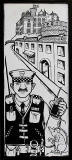
|
3. Edinburgh Expressions |
|
|
A |
|
|
"A big boy did it and run away." |
"This was used by uncouth youths (not me of course) who had thrown stones at street lights and broken them. When the local constable or some parent rapidly appeared on the scene, the answer to who did it was, ' A big boy did it and run away ' . " Bob Sinclair, Queensland, Australia: December 15,, 2009 |
|
" a coo's lick " |
a hasty wipe (of the face) "My Father used to refer to my hasty wiping of my forehead , rather than undertaking a proper washing of my face , as ''geing it a coo's lick ' (giving it a cow's lick). " Allan Dodds, Nottingham, Nottinghamshire, England: October 29, 2013 |
|
"This is what a lassie who was not too beautiful was said to have. Another expression was: 'a face like a melted wellie'. "
Terry Cox, Fairmilehead, Edinburgh:
June 22, 2014
|
|
|
"A goin' foot's aye gettin'." |
He who ventures out will surely find something. Bob Sinclair, Queensland, Australia: November 29, 2009 |
|
" a long drink of water" |
"someone who was tall and skinny" Bob Sinclair, Queensland, Australia: March 12 , 2010 |
|
"A penny hained is a penny gained." |
" My paternal grandmother used to say this: 'hain' presumably meant save." Allan Dodds, Nottingham, Nottinghamshire, England: Dec 1, 2009 |
|
"A penny to get in, tuppence for the hammer." |
" My father used to say this of flea pits (some of Edinburgh's Picture Houses). The hammer was presumably to kill the fleas. " Allan Dodds, Nottingham, Nottinghamshire, England: Dec 1, 2009 |
|
"A ’ fur coat and nae knickers!" |
"This was used pejoratively, mainly by women, of any woman who appeared to be putting on false airs and graces or being unjustifiably ostentatious in her appearance , as in: "See her, A ’ fur coat and nae knickers!" Kim Traynor, Tollcross, Edinburgh: September 2, 2009 and Bob Sinclair, Queensland, Australia: November 27, 2009 |
|
"Ach away wi' ye" |
"Said to somebody who was trying to flannel you. (Nothing to do with the McFlannels)" Bob Sinclair, Queensland, Australia: December 23, 2009 |
|
"Aff his heid" |
off his rocker, on Planet P " Allan Dodds, Nottingham, Nottinghamshire, England: Dec 20, 2009 |
|
I am not "Ah amnae daft" Bob Sinclair, Queensland, Australia: January 28, 2017 |
|
|
I'm afraid that I can only loan you a small amount on the item. I only heard this said a couple of times but it was in two separate pawnbrokers shops, one on the corner at Jane Street and the other at a pawnies on a corner at South Clerk Street. Bob Sinclair, Queensland, Australia: April 23, 2010 |
|
|
"Ah cannae hack it." |
I really do not want to even contemplate the subject under discussion. "What about a big plate o' mince and tatties?" "Sorry mate, but right now ah cannae hack it." Bob Sinclair, Queensland, Australia: February 6, 2010 |
|
"Ah couldn'ae call it tae mind" |
" I couldn't remember it" Bob Sinclair, Queensland, Australia: November 1, 2010 |
|
"Ah didnae catch that." |
I'm terribly sorry. I did not hear what you said. This was sometimes heard if a vehicle went past when you were having a conversation. Bob Sinclair, Queensland, Australia: April 20, 2010 |
|
"Ah don't mind if you don't mind" |
It's all right by me if it's all right by your. "Ah wis thinkin it might be an idea to go to the Store at Bread Street instead of the Provvy in Great Junction Street". "Well ah don't mind if you don't mind" Bob Sinclair, Queensland, Australia: April 17, 2010 |
|
"Ah fell oot ma pram when I heard that one." |
" Usually said when a joke had been told too often. " Bob Sinclair, Queensland, Australia: November 27, 2009 |
|
" I did not expect that. " Bob Sinclair, Queensland, Australia: September 19, 2013 |
|
|
"Ah hae ma doots" |
I have my doubts. This expressed the inclination to remain skeptical in spite of what one had been told. Allan Dodds, Nottingham, Nottinghamshire, England: April 1, 2010 |
|
I'll give him a really hard time " If ah clap eyes on him , ah'll gie him nantie." Bob Sinclair, Queensland, Australia: September 25, 2013 |
|
|
"Ah mean - Whit de ye dae?" |
A cry of exasperation. meaning, 'I'm lost. I really don't know what to say or do.' "I've tried everything. Ah mean - Whit de ye dae?" Bob Sinclair, Queensland, Australia: January 10, 2010 |
|
" Ah'm no " |
I am not "Ah'm no gonna dae that" Bob Sinclair, Queensland, Australia: January 28, 2017 |
|
"Ah never got nothin'." |
"Yes, us Scots were well educated. We didn't get anything either" Bob Sinclair, Queensland, Australia: December 15,, 2009 |
|
Am I supposed to believe that? Bob Sinclair, Queensland, Australia: September 28, 2013 |
|
|
"Ah wis fair taken aback" |
I was astonished. Bob Sinclair, Queensland, Australia: December 20, 2009 |
|
" Ah wis itchin' tae get in an' scratchin' tae get oot" |
"This was heard at a local flea pit (cinema)." Bob Sinclair, Queensland, Australia: March 12 , 2010 |
|
" Ah wis right pit oot |
I was really taken aback "Ah hud made aw that preparation , then they said they wisna comin ', Ah kin tell ye , ah wis right pit oot! " Bob Sinclair, Queensland, Australia: February 28, 2010 |
|
"Ah wis sair affrontit" |
I was most embarrassed. Bob Sinclair, Queensland, Australia: December 20, 2009 |
|
"Ah wisht ma granny saw ye now." |
Said when somebody looked like they had been dragged through a hedge backwards, or when they were doing something unusual or not considered good form, possibly a bairn licking a plate. Bob Sinclair, Queensland, Australia: Nov 29 + Dec 23, 2009 |
|
"Ah wouldnae gie ye tuppence ha'penny fur it." |
That's practically worthless. I don't know if this related to tuppence ha'penny single cigarettes, or to something else that cost tuppence ha'penny, perhaps the Evening News that was used to wrap up fish and chips. Bob Sinclair, Queensland, Australia: April 19, 2010 |
|
"Ah'll away tae ma bed and let ye get hame." |
" Said to inform visitors that they had overstayed their welcome. " Bob Sinclair, Queensland, Australia: November 27, 2009 |
|
"Ah'll away tae ma pit" |
I'm going to bed Bob Sinclair, Queensland, Australia: August 17, 2010 |
|
"Ah'll chum ye" |
I will accompany you Bob Sinclair, Queensland, Australia: September 5, 2010 |
|
"I heard this a lot in the office when I first came to Edinburgh in 1963. It was said by one of the girls to another who was about to set off to deliver messages around the office." Peter Stubbs, Edinburgh: September 5, 2010 |
|
|
"Ah'll dirl yer lug" |
I'll smack your ear Frank Wilson, Golden Beach, Queensland, Australia: Feb 26, 2010 |
|
I may have to reprimand you physically. "When I first heard this, I thought someone was going to give me an ice cream cone!" Bob Sinclair, Queensland, Australia: December 7, 2014 |
|
|
"Ah'll gie ye keppies." |
See keps above. "It's good to see the expression, ' keps '. We used to say, 'Ah'll gie ye keppies', but the idea's the same." Bob Sinclair, Queensland, Australia: March 15, 2010 |
|
"Ah'll gie ye somethin' tae greet aboot!." |
In my admonishing you, you certainly will have cause to cry. "The reason for the saying was often that the bairn was wingin'." Bob Sinclair, Queensland, Australia: February 2, 2010 |
|
"This ofttimes indicated to a persistent youngster that he had asked the question 'What for?' one time too many." Sometimes, it cam e across as ' Ah'll gie ye what for in a minute' ." Bob Sinclair, Queensland, Australia: Dec 4, 2009 + Jan 2, 2010 |
|
|
"This could be very threatening, actually, and quite unpleasant . " Kim Traynor, Tollcross, Edinburgh: February 4, 2010 |
|
|
I will escort myself from your premises. " I heard this expression again yesterday. It's an expression that I heard quite a few times when I was in Edinburgh. I remember this comment from people, who, being forced as visitors to watch TV said ' Ah'll let maself oot ' indicating, as politely as possible, that they were going home. " Bob Sinclair, Queensland, Australia: July 7, 2013 |
|
|
"Ah'll stand you a beer." |
I will buy you a beer Bob Sinclair, Queensland, Australia: December 25, 2009 |
|
" Ah'll tan yer hide." |
I'll give your backside a real belting. " Oftimes said as a threat to youngish persons of either gender who had been naughty " Bob Sinclair, Queensland, Australia: March 2 , 2010 |
|
"Ah'm bidin' my time" |
I am waiting patiently (before doing something) Bob Sinclair, Queensland, Australia: December 25, 2009 |
|
"Ah'm fine wi' that." |
That's perfectly all right with me "Do you want to think about going to the Pictures on Friday?" "Ah'm fine wi' that.". Bob Sinclair, Queensland, Australia: January 5, 2010 |
|
"Ah'm fit tae burst" |
"I really could not eat another thing" Bob Sinclair, Queensland, Australia: December 17, 2009 |
|
"Ah'm just goin' tae knock him up." |
"This was not an altercation. It just meant 'I'm going to wake him up or alert him as to the time of day'." Bob Sinclair, Queensland, Australia: January 1, 2011 |
|
I'm not stressing out over it Bob Sinclair, Queensland, Australia: July 10, 2013 |
|
|
"Ah've been payin' a visit" |
" I have just visited the lavatory." Bob Sinclair, Queensland, Australia: September15,, 2010 |
|
"Ah've got mair sense n ma wee finger than you hiv in yer whole heid " |
"Often said by the gentle sex in response to their husbands' claim to 'ken what they're talkin' aboot'." Bob Sinclair, Queensland, Australia: February 2, 2010 |
|
"Yes, my mother used that one" Allan Dodds, Nottingham, Nottinghamshire, England: February 4, 2010 |
|
|
"Ah've put it bye" |
I have put it aside "I heard this on a fortnightly visit to my Aunt's place. If my Uncle was trying to find something my Aunt did now want him to have just then, she would tell him that she had put it bye." Bob Sinclair, Queensland, Australia: March 15, 2010 |
|
"all ower the place like a mad wumman's breakfast |
"I first heard this expression when our family commented on somebody else's driving." Bob Sinclair, Queensland, Australia: March 24, 2014 |
|
"This
was said by my mother when she saw someone who was badly dressed.
OR
Terry Cox, Fairmilehead, Edinburgh:
June 22, 2014
|
|
|
"Are ye goin' for a brewy?" |
Would you like to partake of some liquid refreshment? Bob Sinclair, Queensland, Australia: December 17, 2009 |
|
" I think it was more usually: 'Are ye goin' for a bevvy?' " Kim Traynor, Tollcross, Edinburgh: December 23, 2009 |
|
|
" This was the retort to someone who had just made a remark that you objected to. We used it all the time at school in the 1970s. It seemed to make no sense at the time, and it was maybe thirty years later that I discovered there was a second line to it . Probably, nobody realised at the time , but it does make the expression more meaningful : The second line was: ' 'cos either way, you're going to lose some teeth! '. " Gordon Davie, Abbeyhill, Edinburgh: July 7, 2013 |
|
|
Are you trying to have me
on?
" Really hen, ah think you should stand for Parliament?" "Listen son, are ye tryin' tae knock a rise out o' me?" son = husband; opposite of hen Bob Sinclair, Queensland, Australia: January 12, 2010 |
|
|
"Are ye up for it?" |
Are you willing? "Generally , I heard this phrase used by older people when something bordering on the unethical had to be undertaken. Perhaps ' getting ' coal ." Bob Sinclair, Queensland, Australia: January 12, 2010 |
|
"Are you paralysed?" |
" My Aunt often used to say to my Uncle: ' Are you paralysed? ' , whilst he sat in his chair content to watch her make afternoon tea for the rest of us. " Allan Dodds, Nottingham, Nottinghamshire, England: October 15, 2008 |
|
" Are yous yins nae in bed yet? Well, get yer clobber aff an' intae bed" |
Get your clothes off and into bed. " This is a saying that ma da' used." Margaret Williamson (née Hay), Moline, Illinois, USA |
|
"
as
in:
Terry Cox, Fairmilehead, Edinburgh:
June 22, 2014
|
|
|
"As easy as fallin' off a dyke" |
something that could be easily accomplished Bob Sinclair, Queensland, Australia: December 17, 2009 |
|
"ashtray on a motorbike " |
useless person or thing EdinPhoto Guest Book: G M Rigg, New Zealand: June 8, 2009 |
|
"Auld age disnae come itsel' " |
Old age is usually accompanied by infirmities. "Ye'r seventy five and complaining o' sair feet. Ye, well old age disnae come itsel'." Bob Sinclair, Queensland, Australia: February 1, 2010 |
|
"Aw, come on." |
Verily , you must be joking! Bob Sinclair, Queensland, Australia: December 22, 2009 |
|
"Aw dinnae bother" |
Please do not put yourself to any trouble "This was said with equal emphasis on all the words, and was used sarcastically usually after many promises had been made to 'dae somethin aboot it'." Bob Sinclair, Queensland, Australia: March 2, 2010 |
|
" Aw gie us a brek ." |
Aw, give us a break. i.e. Desist "Generally this was used when somebody was going over the score about their exploits or incessantly harping on about the same subject" Bob Sinclair, Queensland, Australia: 23 November 2016 |
|
"Aw, Ref-er-ee!" |
This was one of the most frequent terms of abuse hurled at the Ref. at a football match. The words, "Aw, Ref-er-ee" were shouted out loud, and in slow motion, with each syllable pronounced distinctly. Kim Traynor, Tollcross, Edinburgh: December 23, 2009 |
|
"Awa' 'n claw ma humph!" |
"get lost!" or
"claw yer humph" was
"scratch your back",
George Ramsay, Spain + UK: October 5, 2011 |
|
" A wa ' ta e Freuchie and eat mice" OR JUST "A wa ' ta e Freuchie ." |
The meaning of this was "Get away with you!" Joyce Lamont Messer, Whanganui, N Island, New Zealand: Jan 17, 2008 |
|
" I understood that ' Awa tae Freuchie' meant : 'Away with you, you are joshing me! '' but the Friokheim Historical Society web site claims that the original expression referred to Friockheim in Germany. I guess that people thought that Friokheim was some sort of mythical place and to suggest going there was like saying go away as far as possible. George T Smith, Nanaimo , British Columbia, Canada : Apr 9, 2009 |
|
|
"Other web sites describe Freuchie as a
place of banishment from the Court when it was
held
in nearby Falkland Palace. Hence the expression 'Awa ta Freuchie
and eat mice
' or
George T Smith, Nanaimo , British Columbia, Canada : Apr 10, 2009 |
|
|
" When I first saw this entry, I was a bit startled to see a Scottish expression being supposedly derived from the name of a place in Germany that I’d never heard of. After a bit of google searching, I find that no German Friockheim seem s to exist. It doesn’t show up on Google or Google Earth . " Kim Traynor, Tollcross, Edinburgh: September 21, 2009 |
|
|
" (variously) 'Think again' OR 'Go away' OR 'Ohhh please , I think you are unwell. You are not right. Perhaps some medication might improve your brainpower', etc." Bob Sinclair, Queensland, Australia: June 20, 2015 " I 've just checked on the Internet , and was interested to see that ' Abdine Cold Relief Powders ' are still being sold. " Peter Stubbs, Edinburgh: June 20, 2015 |
|
|
"Away and bile yer heid" |
You do not understand and have no comprehension of the subject under discussion. In colloquial terms, 'Take a walk'. Bob Sinclair, Queensland, Australia: November 8, 2010 |
|
"Away an' chase yersel'." |
Don't give me any of your patter. This was a throw away remark in general household banter. Bob Sinclair, Queensland, Australia: March 15, 2010 |
|
"A ye ahint like the coo's tail" |
Always behind others in deed or in thought. " Is Alec no here yet?". "No . - Oh here he comes, aye ahint like the coo's tail . " Bob Sinclair, Queensland, Australia: March 3, 2010 |
|
" Aye , it's stamped wi' the heel o' a navvy's boot. ." |
"This was a rejoinder, sometimes said after a person had expressed an opinion that an item might be worth something . It brought the speaker down to earth. (Others might have heard it in a different context . ) Bob Sinclair, Queensland, Australia: July 9, 2012 |
|
"Away an' raffle yersel'." |
Please dinnae waste my time. This was an almost throw away remark in the household. Bob Sinclair, Queensland, Australia: March 16, 2010 |
|
Yes I know it's hard to live with / t o believe / etc. Bob Sinclair, Queensland, Australia: November 14, 2013 |
|
|
"A ye, that's right. Take off yer shoes and hum." |
Please don't take off your shoes. " This was said to visitors, after they had had a good feed and maybe a wee dram . Being inclined to stay on, they would say that they might take their shoes off. The host(s) , being aware of the smelly feet , would be inclined to say, "Aye, that's right take off your shoes and hum! " Bob Sinclair, Queensland, Australia: January 12, 2010 |
|
"Aye right!" |
Ironic, meaning 'no chance' - "Will you see to it?" - "Aye right" (implying 'do it yourself') Kim Traynor, Tollcross, Edinburgh: December 23, 2009 |
|
Kim Traynor added: "This is said, humorously, to be the only example in any language of two positives making a negative." Kim Traynor, Tollcross, Edinburgh: December 27, 2009 |
|
|
"Aye well " |
This was t he answer to everything, as frequently used as the French ' Ca va '.
- "I
see you had your mail stolen
.
-
"
I
see your auntie had a car accident
.
- " I hear your uncle had a leg amputated . Aye, well. "
-
"
I
see the cinema was closed down
.
-
I
heard your house burned down
.
- I see most of Edinburgh was obliterated . - Aye, well." |
|
B |
|
|
"Back tae auld claithes and porridge" |
Back to reality Bob Sinclair, Queensland, Australia: December 17, 2009 |
|
" Bearin' up " |
Doing all right, in spite of everything". "How are you, Sandy?" "Och, bearin' up, Alec, bearin' up." Bob Sinclair, Queensland, Australia: August 29, 2013 |
|
"Better an empty hoose than a dirty tenant" |
" My mother used to say this, perhaps after someone had vomited, passed wind or burped!" " Elizabeth Fraser (née Simpson) , Sydney, New South Wales, Australia |
|
"Better an empty hoose than ill tenants" |
" This might have been said when it might have been better for the person under consideration to have said nothing, rather than talk a load of rubbish. " Bob Sinclair, Queensland, Australia: December 21, 2009 |
|
"Better belly bust than good food wasted ." |
" My paternal grandmother would often say this to me when I refused to eat any more food from the plate. Oh the poverty! It never did me any harm." Allan Dodds, Nottingham, Nottinghamshire, England: October 15, 2008 |
|
"Bide yer wheesht!" |
"If I was crying as a child , my grandmother would say: ' Bide yer wheesht! ' , meaning stay quiet." Allan Dodds, Nottingham, Nottinghamshire, England: October 15, 2008 |
|
" black affronted " |
embarrassed I remember, one day, Father Lockhart knocked on our door for a visit, and our lounge room was completely bare and soot-filled as the chimney had just been swept. My mother was black affronted!"
Janette Mcdonough (née
Allan),
Melbourne, Victoria, Australia
|
|
"Black Hand Gang" |
Ron Goldie and his four brothers who lived at Elm Row, Leith Walk " Some people used to call us the "Black Hand Gang" for some strange reason. It might have been because we were always manky ." Ron Goldie, Peine, France: August 6, 2009 |
|
"bully o' the wash hoose" |
A lady of a tough nature and usually well proportioned (big). "Aye, here she comes - bully o' the wash hoose! Not one to be meddled with" Bob Sinclair, Queensland, Australia: December 29, 2009 |
|
C |
|
|
" C an ye gie me an uppy? " " C an ye heist me up? " |
Can you help me up - e.g. to scale a wall. " This was done by cupping the hands together and forming a stirrup into which the person being lifted placed his or her foot That’s a memory of an almost daily ritual that took place amongst the kids when someone suggested “ L et’s walk the dykes”. I remember the people of Elgin Street would always object and hammer on their windows if we were spotted. The East Thomas Street and East William Street residents couldn’t have cared less – another fine social distinction! " Kim Traynor, Tollcross, Edinburgh: September 2, 2009 |
|
"Can ye go a bike" |
Can you ride a bike? " It was in my later years in Edinburgh that I heard this." Bob Sinclair, Queensland, Australia: January 7, 2010 |
|
Can you ride a bike? " This expression that I remember from growing up in Edinburgh came to me , out of the blue and for no particular reason, last night." David Bain, Rotherham, South Yorkshire, England Here is a photo of David and his young sister on their Dad's motorbike, taken when the family lived on te camp site at Little France, Edinburgh. |
|
|
"Can you only see one colour?" |
"This was one of the comments shouted at the Referee at a football match. It referred to the other team's colour." Bob Sinclair, Queensland, Australia: December 19, 2009 |
|
"cats' concert" |
"Usually levelled at back green performers when they thought they were 'singing' It was really more like cats howling." Bob Sinclair, Queensland, Australia: March 9, 2010 |
|
"cat's lick" |
A quick face wash "Have ye washed yer face?" "Aye" "I think ye gaed it a cat's lick." Bob Sinclair, Queensland, Australia: March 9, 2010 |
|
" Caw canny " |
Take it easy (with something) "Caw canny wi' the sugar" Bob Sinclair, Queensland, Australia: December 17, 2009 |
|
"This would figure prominently in most people's recollections of childhood, especially when families had to ration their own provisions." Kim Traynor: Tollcross, Edinburgh: December 29, 2009 |
|
|
"Changes are lightsome" |
"The general meaning was that someone had managed to take advantage of the speaker." Bob Sinclair, Queensland, Australia: December 17, 2009 |
|
"Cheese 'n Rice!" |
" This was an acceptable substitute for the blasphemous, Jesus Christ! " Allan Dodds, Nottingham, Nottinghamshire, England: Dec. 28, 2008 |
|
" chocolate ashtray" |
useless person or thing EdinPhoto Guest Book: G M Rigg, New Zealand: June 8, 2009 |
|
" chocolate fireguard" |
useless person or thing EdinPhoto Guest Book: G M Rigg, New Zealand; June 8, 2009 |
|
"Christ didnae greet on the Cross" |
Something said by a parent or grandparent to a child who cried when hurt. " I've never heard this expression myself, but it encapsulates the Protestant ethic, the very antithesis of today's victim / entitlement culture ." Allan Dodds, Nottingham, Nottinghamshire, England: Sep 18, 2013 |
|
" ch um me" |
accompany me "I think this expression is peculiar to Edinburgh." Jim Smart, Bournemouth, Dorset, England: November 15, 2010 |
|
" I certainly had not heard the expression until I arrived in Edinburgh. I heard it used a lot here, by the 'Office Juniors'. The girls would then walk around 'in twos' as they delivered and collected messages around the office." Peter Stubbs, Edinburgh: November 20, 2010 |
|
|
"Cock or hen" |
"As a kid in the Meadows, you would come across a game of footy. If the sides had an even amount of players you would ask to join in by asking . 'C an I have a cock or a hen ?' The team captains would quietly decide which one was cock and which was hen. You then shouted your choice and joined the relevant side making one extra player. The next kid to ask for a game went straight on the team with least players. If nobody else asked after you joined you swapped sides at half time ." George Ramsay, Spain + UK: October 5, 2011 |
|
"Cook's Tour" |
"Often used in a cynical way to describe a quick whistle-stop tour." Bob Sinclair, Queensland, Australia: December 10, 2009 |
|
OR ahent |
"Mainly said by shepherds near Edinburgh, and a few dog owners, meaning that their dogs had to come to heel." Bob Sinclair, Queensland, Australia: December 17, 2009 |
|
" Was the word not 'ahent'?" Simon Capaldi, Sheriffhall, Midlothian, Scotland: July 6, 2013 |
|
|
"My late grandmother once recited a poem which began: "Come in a hint, you wanderin' tyke Did ever a body see the like?" That's all I can remember, but I have the impression that it's a long-suffering mother addressing her child who has returned from playing in not quite the clean state he went out in Does anybody else know this one?" Gordon Davie, Abbeyhill, Edinburgh: July 7, 2013 |
|
|
"My grandmother used to use the word 'ahent', meaning behind, as in "Come in ahent me" . It may be derived from the German 'hinter', meaning behind, as in hinterland." Allan Dodds, Nottingham, Nottinghamshire, England: July 7, 2013 |
|
|
Come in if your shoes are clean. "This expression sounds a bit English , but was often said while I was young in Edinburgh. It meant: ' Come in if your shoes are clean. ' ( You were not expected to take your shoes off and wash your feet , just to enter the house! ) " Bob Sinclair, Queensland, Australia: July 21, 2013 |
|
|
" Come into the body of the hall ." |
"I remember this being used in parallel with 'Come into the body of the kirk' (below). It was a bit of a dig at those with better houses that had a hall, rather than a lobby as the speaker probably had. " Bob Sinclair, Queensland, Australia: December 15, 2009 |
|
" Come into the body of the kirk ." |
"This was an invitation to somebody to join a group of people who were perhaps in discussion." Peter Stubbs, Edinburgh: September 22, 2009 |
|
" The Cuddy's Brig" |
" My grandfather used to refer to Euclid's theorem on the isosceles triangle, Pons Asinorum' (The Bridge of Asses) as 'The Cuddy's Brig'." Allan Dodds, Nottingham, Nottinghamshire, England: December 1, 2009 |
|
" Cuddy, can ye lick !" |
I see you're not offering me anything. "This might be said to somebody who had just eaten all the grapes." Bob Sinclair, Queensland, Australia: September 22, 2013 |
|
Bob added: "I often heard 'Cuddy, can ye lick!' used in our house, and have now ascertained from two other old Edinburgh people that their parents also used the expression, not infrequently, meaning 'That's right! Just sit there and eat everything and don't offer any to me!'. " Bob Sinclair, Queensland, Australia: September 23, 2013 |
|
|
"Cut the patter." |
This was usually said when somebody started exaggerating about something. Bob Sinclair, Queensland, Australia: March 15, 2010 |
|
D |
|
|
"Daft, but goin' about ." |
A gentle remark to indicate that the person under consideration was a brick short of a load but ' No too bad ' . Bob Sinclair, Queensland, Australia: February 22, 2010 |
|
" Dae a nash ." |
Get out of here and go somewhere else. "This is an expression from my youth that I continue to use today. 'After this pint, I'm going to dae a nash." Jimmy Cunningham, Gracemount, Edinburgh: September 27, 2009 |
|
" Deee-els Row-els! " |
"This was the street cry from the roll van of Dalziels of Airdrie , selling their rolls in Gilmerton , Edinburgh in the 1950s." David Bain, Craigmillar, Edinburgh: September 3, 2009 |
|
"D'ye mind!" |
Please desist Bob Sinclair, Queensland, Australia: November 29, 2009 |
|
"D'ye mind ... ?" |
Do you remember ... ? Bob Sinclair, Queensland, Australia: November 29, 2009 |
|
"D'ye want to see the back of my hand ." |
You'll get a clip across the earhole. "As a youngster, I wondered why this was said when I could see the back of everybody's hands at the table" Bob Sinclair, Queensland, Australia: December 21, 2009 |
|
didn't think or care to do anything about it "Ah said tae Angus that the back fence had cowped ower an wud need fixed but he didnae bother his buckie aboot it. " Bob Sinclair, Queensland, Australia: January 23, 2012 |
|
|
A remark announced to all and sundry when a referee gave the ' wrong ' decision at a fitba match. Bob Sinclair, Queensland, Australia: January 7, 2012 |
|
|
"Stop lying,
Bob Sinclair, Queensland, Australia: October 14, 2013 |
|
|
Same as next expression, but alternative spelling |
This was the reply that Allan Dodds sent to me when I told him that I planned to reply to some of his emails. Allan added: "This is an expression that my Granny would often say. I suppose ''Stay cool' would be an approx. modern translation." Allan Dodds, Nottingham , Nottinghamshire, England |
|
"Dinnae fass yersel'." |
Please don't worry "Ah've aw they folk comin' an no' a thing cooked." "Dinnae fass yersel, I'll gie ye a haund." Bob Sinclair, Queensland, Australia: January 9, 2010 |
|
"Dinnae fret." |
Don't upset yourself. Bob Sinclair, Queensland, Australia: April 19, 2010 |
|
"Dinnae get my back up." |
Don't make me angry. I think this expression may have come from the arched back of a cat when waiting for a fight. Bob Sinclair, Queensland, Australia: April 20, 2010 |
|
"Dinnae get on yer high horse wi' me" |
Please calm down; who do you think you are talking to? "Well if ah wis dain ' that , I wud hiv done it properly!" "Here, dinnae get on yer high horse wi ' me! . " Bob Sinclair, Queensland, Australia: March 2 , 2010 |
|
" Dinnae gie us ony o' yer lip." |
" Don't be smart with me.'" "This was ofttimes said by mum to a youngster who was trying to be smart. " Bob Sinclair, Queensland, Australia: 16 October 2016 |
|
"Dinnae gie us henners" |
" This was an expression that I knew. It was used by adults, in my day, in my area of Edinburgh, to indicate that somebody was exaggerating about one thing or another." Bob Sinclair, Queensland, Australia: December 29, 2009 |
|
"Come off it, I don't believe it." Him: "Och. Ah'm always daein' somethin' around the hoose." Her: "Aw come on, dinnae gies that." Bob Sinclair, Queensland, Australia: ' December 19, 2011 |
|
|
"Dinnae greet hen" |
" Don't cry mother / darlin' / dearie." Bob Sinclair, Queensland, Australia: May 10, 2010 |
|
"Dinnae knock yer pan in." |
" Don't exhaust yourself." Bob Sinclair, Queensland, Australia: September15,, 2010 |
|
"Dinnae mind me. I only live here!" |
Excuse me for breathing! "Ah'll just change tae the Light Programme."
"Oh dinnae mind me, ah only
live here!
Bob Sinclair, Queensland, Australia: January 27, 2010 |
|
"Dinnae start." |
Don't bother " A warning, generally to a man, that to verbalise might not be a good idea." Bob Sinclair, Queensland, Australia: December 15,, 2009 |
|
"Dinnae strain yersel'." |
A usually sarcastic comment made by the wife after the husband who had been reading the paper for the last few hours while she did the washing, fed the bairns, darned socks, did the ironing etc, said : "Ah'll make ye a cuppa tea". " Dinnae strain yersel , son ! " would be a ready rejoinder. Bob Sinclair, Queensland, Australia: February 20, 2010 |
|
" Dinnae tell me! " |
" This is another misleading statement. It really means 'Tell me everything!' e.g. 'See, Mary's daughter's expectin' twins - an' her no' married.' 'Aw, dinnae tell me!' " Bob Sinclair, Queensland, Australia: September 22, 2013 |
|
"Do you think I came down the Clyde on a banana boat?" |
"This had the same meaning as the water biscuit expression below, but may have been used in a different part of Edinburgh, or at a different time." Allan Dodds, Nottingham, Nottinghamshire, England: Nov 24, 2009 |
|
" Do you think I came down the Clyde on a water biscuit?" |
" I know that this one might sound as if it's from Glasgow, rather than Edinburgh, but my Mother would often say, when she perceived that someone (usually a salesman) was trying to put one over on her : " Do you think I came down the Clyde on a water biscuit? ". Allan Dodds, Nottingham, Nottinghamshire, England: Nov 24, 2009 |
|
"Do you think I'm Andrew Carnegie?" |
Do you think I'm that rich? "This one really threw me when I was young especially when it was said by my mother. I thought it was a reference to one of my father' s friends who had money, and would be able to give us some for whatever it was I wanted." Bob Sinclair, Queensland, Australia: November 29, 2009 |
|
"Does yer mother know yer out?." |
This was a put down, generally by young women on men. Bob Sinclair, Queensland, Australia: January 12, 2009 |
|
"Don't get on tae me." |
Stop picking on me. "This was generally said to a man being harassed by his wife for a job promised but not accomplished." Bob Sinclair, Queensland, Australia: January 8, 2009 |
|
depressed "I remember that my mother used to ask me if I was down in the dumps." Allan Dodds, Nottingham, Nottinghamshire, England: October 15, 2008 "She's down in the dumps. What's wrang wi' her? When she canna' get her way wi' things, she goes in a huff.". Margaret Williamson (née Hay), Moline, Illinois, USA: April 7, 2013 |
|
|
"Drawin' the fire" |
"This was the process of putting a newspaper or a piece of wud (wood) across the face of the fire to encourage an uplift, which would cause the fire to burn more fiercely. Our fireplace had a curved bit at the top and, the paper would be drawn into the fire and be taken up the lum in flames! " Bob Sinclair, Queensland, Australia: December 29, 2009 |
|
"Dry up and burst" |
You are too verbose, give us a break, shut up
"And another thing he did
was ..."
Bob Sinclair, Queensland, Australia: January 17, 2010 |
|
E, F |
|
|
" fair trachled " |
worn out through effort " I've just remembered that my Mother used to use the expression, 'fair trachled'." Allan Dodds, Nottingham, Nottinghamshire, England: October 13, 2013 |
|
" fair whapitootit " |
" I remember my mother saying she was 'fair whapitootit' meaning she was absolutely tired out. (I've no idea how it was spelt)"
Joyce Lamont Messe
r, Whanganui,
North Island, New Zealand
|
|
" fawin doon " |
" falling down or tripping over" Andy Sinclair, Edinburgh: 26 January 2016 |
|
" fell in tow with " |
" I've not heard this expression for years, but it is one that m y mother used when she meant that a person had 'taken up with' or ' become friendly with ' someone , often in her view not a particularly wise relation -ship."
Joyce Lamont Messe
r, Whanganui,
North Island, New Zealand
|
|
"Finders keepers, lose r s greeters" |
" T his is how the lads of my district used to say it. The finder keeps . The looser greets (cries). Often used to indicate that an item had been found and was not really being stolen - a boy's justification for his action. " Bob Sinclair, Queensland, Australia: December 15, 2009 |
|
"fit o' the stair" |
bottom of the stair "Just leave it at the fit o' the stair" Bob Sinclair, Queensland, Australia: February 28, 2010 |
|
"For the love of the wee man" |
"This was an exclamation when one is surprised or annoyed (the wee man being baby JC)" Bob Sinclair, Queensland, Australia: December 17, 2009 |
|
G |
|
|
"gan awa" |
going away Bob Sinclair, Queensland, Australia: December 20, 2009 |
|
"gas in a peep" |
1. gas on its lowest settings 2. "Ah' put her gas in a peep" = I'll bring her down to earth, or I'll fix her soon. Bob Sinclair, Queensland, Australia: January 14, 2010 |
|
"Get a pair o' specks, man!" |
"This was one of the comments shouted at the Referee at a football match." Bob Sinclair, Queensland, Australia: December 19, 2009 |
|
crouch, squat , from haunches Kim Traynor, Tollcross, Edinburgh: September 20, 2009 |
|
|
"I was once accosted by a complete stranger in Princes Street who, unprovoked, uttered " G et intae me, ah'm mental" to me. This was followed by a punch to the mouth which rendered the meaning immediately apparent." Allan Dodds, Nottingham, Nottinghamshire, England: Dec 23, 2008 |
|
|
Get into your bed Margaret Williamson (née Hay), Moline, Illinois, USA: April 2, 2014 |
|
|
be sacked Gordon Wright, Barnton, Edinburgh: July 18, 2014 |
|
|
to be punished at school with a leather strap A child would not refer to it by its proper name, the tawse. They would say, 'I got six o' the belt, the day'." Kim Traynor, Tollcross, Edinburgh: September 23, 2009 |
|
|
annoying me Allan Dodds, Nottingham, Nottinghamshire, England: Dec 25, 2009 |
|
|
Admonishing me " e.g. 'He's aye gettin on tae me aboot his piece - it disnae matter what ah gie him , it's no ' right' ( piece - lunch). " Bob Sinclair, Queensland, Australia: September 22, 2013 |
|
|
" Gie him/her the dumps . " |
Give him/her hits on the back to celebrate a birthday, one for each year of age. Kim Traynor, Tollcross, Edinburgh: September 2, 2009 |
|
" Gie him lallachy ." |
Give him a telling off or battering Bob Sinclair, Queensland, Australia: December 14, 2009 |
|
" Gie it a bye ." |
Give it a rest. I've heard enough. Bob Sinclair, Queensland, Australia: September 19, 2013 |
|
"Gie's a draw, eh!" |
Can I have an inhalation from your cigarette? Bob Sinclair, Queensland, Australia: December 22, 2009 |
|
"Gie's a fag" |
I wonder if you could oblige me with a cigarette. Bob Sinclair, Queensland, Australia: December 22, 2009 |
|
" Gie's a shot. ” |
Give me a turn, of a scooter, guider, cowboy pistol or whatever "A person might start by asking 'Can I have a shot?' but on growing more impatient watching the other person's enjoyment, they would more likely say insistently, "gie's a shot, then". Kim Traynor, Tollcross, Edinburgh: September 2, 2009 |
|
"Gie's yer body for a shuffle." |
" This was a very common expression used by lower class chaps at lower class dance halls . " Bob Sinclair, Queensland, Australia: December 21, 2009 |
|
"Gie's yer stump." |
Can I have the core of your apple? "If someone had the good fortune to have an apple and, if they were feeling generous, would leave a fair bit on the core of the apple!"
Elizabeth
Fraser (née Betty Simpson, Sydney, New South Wales, Australia:
|
|
" Gina Lollobrigida " |
A woman of 'easy virtue'. " I remember hearing the expression in Edinburgh in the 1960s when perhaps I was too young to fully comprehend it. I was amazed when it popped up in the 1990s in the script for Trainspotting ." This film is based on Irvine Welsh's novel of the same name, based in Edinburgh. David Scott, Doha, Qatar: October 18 +19 , 2009 |
|
"Ginger, yer balmy * "
*
Should this be spelt
|
" This was shouted by the youth of our district at ginger haired boys . Why ginger haired boys should be balmy, I never knew. Perhaps the connotation was that folk from the North were often red haired and that those from the North were a bit slow. " Bob Sinclair, Queensland, Australia: April 5, 2010 |
|
As I have very ginger hair I heard this rhyme a lot, but the version above is not complete The whole rhyme goes : ' Ginger , your bammy , you're awfy like your mammy ' . In my case this was true as I got my red hair from my mum . Bob Henderson, Burdiehouse, Edinburgh: April 6, 2010 |
|
|
" give it the go bye " |
" My Dad used to tell my brothers and me to ' give it the go bye ' . That was an instruction to behave and stop making such a racket. I still use this expression when my own two sons play up. " Jimmy Cunningham, Gracemount, Edinburgh: September 27, 2009 |
|
" Glesgae kiss " |
headbutt Terry Cox, Fairmilehead, Edinburgh: June 22, 2014 |
|
" Glesgae screwdrive r " |
hammer Terry Cox, Fairmilehead, Edinburgh: June 22, 2014 |
|
" Glesgae suitcase " |
bin liner Terry Cox, Fairmilehead, Edinburgh: June 22, 2014 |
|
" go the messages " |
grocery shopping Keith Main, London: December 19, 2008 |
|
"My mother would always buy a 'forpit' of potatoes when she 'went the messages'." Stuart Burgess, Devon, England: September 17, 2009 |
|
|
" 'going the messages ' / 'getting' the messages ' seems to have come over from the Netherlands because the Dutch have an exact equivalent. " Kim Traynor, Tollcross, Edinburgh: September 20, 2009 |
|
|
"God preserve us!." |
I don't believe it. T his was used by women to indicate frustration or amazement at some action by men. It could be that the men could not find something , or that they actually volunteered to do something." Bob Sinclair, Queensland, Australia: April 27, 2010 |
|
"goin' ti the game" |
going to watch the football match. " 'Goin' ti the Game' was similar to 'Goin' tae the Match'. It was the former that was used by the younger generation where I lived, in my day." Bob Sinclair, Queensland, Australia: December 11, 2010 |
|
"going through" |
going to Glasgow "This is an expression that I heard quite a lot when I first came to Edinburgh in 1963, and met others from different parts of Scotland. A frequent question was: 'Are you going through tonight?' Usually it was to see a football match in Glasgow." Peter Stubbs: September 5, 2009 |
|
"gone to the dogs" |
someone who has let himself go or neglected himself "My father used to point out to me people in cloth caps who visited the Northern Bar in Canonmills on their way to Powderhall Stadium for the greyhound racing He regarded this pursuit as degenerate, so he considered that someone of whom he said had 'gone to the dogs' had really lost their moral compass and was on the slippery slope of decline. ' Beyond the pale ' or ' beyond redemption ' is probably the best translation. " Allan Dodds, Nottingham, Nottinghamshire, England: Dec. 28, 2009 |
|
"Got a match ?" " Aye, your face and my arse!" |
" This might be said to someone who tried to 'cadge' a match" Bob Sinclair, Queensland, Australia: November 29, 2009 |
|
" I have been told of several Edinburgh words and expression that I have not added to the EdinPhoto web site because I considered them to be too crude, or not now PC - even though I found some to be amusing! Others, I have regarded as 'borderline', such as the one above. However, I'd not like to include anything that might be likely to cause any concern or offence. So can you please email me to let me know if you have any views on whether or not I should include any expressions like that above - then I'll take account of your comments. Thank you. Peter Stubbs: Edinburgh: December 27, 2009 |
|
|
"Yes, this was certainly said, but it was an extremely insulting remark and tended to be said by aggressive or menacing people who would be given a wide berth." Kim Traynor, Tollcross, Edinburgh: December 27, 2009 |
|
|
" Granny Teabried " |
" A slightly disparaging comment, usually by women commenting on the general appearance of another woman because of her state of dress. 'Aye, here she comes, Granny Teabried.' I did wonder if she could, perhaps, only afford tea and bread." Bob Sinclair, Queensland, Australia: June 28, 2015 |
|
" Guess whase deid " |
You'll never guess who has passed away . (A phrase oft used when viewing the Deaths column of a newspaper ) Bob Sinclair, Queensland, Australia: December 31, 2011 |
|
H |
|
|
"has a face as long as Leith Walk." |
is miserable Stuart Burgess, Devon, England: September 17, 2009 |
|
"is very thin." Bob Sinclair, Queensland, Australia: January 7, 2012 |
|
|
"Has the cat died?" |
This was said when a laddie's trousers were at half mast, usually having shrunk in time in the wash. It sometimes indicated a slight state of poverty. Bob Sinclair, Queensland, Australia: March 26, 2010 |
|
" Has the cat got your tongue?" |
Can't you answer the question? "Usually this meant a question had been asked of you and you did not want to give an answer. - Why the cat. I don't know . " Bob Sinclair, Queensland, Australia: November 27, 2009 |
|
" hatches, matches and dispatches " |
Births, Marriages and Funeral Notices in the Edinburgh Evening News . Bob Sinclair, Queensland, Australia: January 17, 2010 |
|
" haud yer wheesht " |
See hud yer wisst below. Stuart Burgess, Devon, England: September 20, 2009 |
|
"Have ye got a sore hand?" |
"This was usually said to a youngster who had made a 'piece' (sandwich) the size of a mountain." Bob Sinclair, Queensland, Australia: December 29, 2009 |
|
You eat like a horse (al the time). "I don't know if this was just a local expression in our part of Edinburgh or if it was more widely used After I left Edinburgh I never heard it used again , but it was used in Edinburgh in my day. You could ask others. " Bob Sinclair, Queensland, Australia: August 1, 2012 |
|
|
" hawd yir wheesht " |
See hud yer wisst below. Frank Ferri, Newhaven: May 21, 2012 |
|
"He had some gaul" |
He was very forward. Bob Sinclair, Queensland, Australia: December 22, 2009 |
|
"He could eat his way through Hanniker's midden" |
"Basically, he was glutton who would eat everything laid down to him and anything that was left. I never knew who Hanniker was . Perhaps someone else knows. " Bob Sinclair, Queensland, Australia: December 1, 2009 |
|
"He couldnae play for toffee" |
As a player, he was useless (e.g. at football) " Where might this expression have been born or first raised its head ? Maybe it was from half - time in a football match in older days where perhaps a block of McGowans toffee was broken up with a toffee hammer and the players got a bit each, but if you didn't get a game you couldn't play for toffee, the emphasis being on the word ' play ' . That's a stab in the dark - probably someone knows better." Bob Sinclair, Queensland, Australia: December 31, 2013 |
|
"I don't know how widely this expression would have been used - throughout Scotland? / Britain? It could also be applied to other activities. e.g. She could not act for toffee. I've looked on the Internet and not found an answer to where the expression might have originated, but I've found a comment that it may have been based on the US expression: 'He could not play for beans'. (beans being an example of something almost worthless)" Peter Stubbs, Edinburgh: December 31, 2013 |
|
|
"He hings his claes on the flair" |
He is in the habit of just dropping his clothes anywhere "When he comes back in frae work, he just hings his claes on the flair." Bob Sinclair, Queensland, Australia: February 6, 2010 |
|
"He wants his heid examined." |
"My Mother used to saythis of a person she thought was a bit unsound in his/her judgment, Derived from the Edinburgh Phrenological Society, which required that any applicant should have their head examined (for bumps indicating mental faculties) before being considered for admission to that august body." Allan Dodds, Nottingham, Nottinghamshire, England: April 7, 2010 |
|
"He was aye ailin' for something" |
He always wanted to have something to complain about, or he always seemed to be ill. Bob Sinclair, Queensland, Australia: December 22, 2009 |
|
" He was no wyss " |
He was not wise,
Bob Sinclair, Queensland, Australia: December 7, 2009 |
|
"He wis fair pleased wi' himsel'." |
"He was absolutely delighted. It could be that he had had a wee win on the pools, or had had his hand accepted in marriage, or had been given a promotion." Bob Sinclair, Queensland, Australia: January 1, 2011 |
|
"He wouldna even gie ye a kind thought" |
He was a miserable person. Bob Sinclair, Queensland, Australia: April 13, 2010 |
|
"He wouldna ken if his erse wis oan fire." |
He really has no idea. This is a variation on the expression below that Bob sent to me early last year. Bob Sinclair, Queensland, Australia: May 26, 2011 |
|
"He wouldna know if his hoose wis on fire." |
He really would have no idea. "Did you hear him say that Edinburgh City would beat Hearts? Dinna listen to him. He wouldna know if his hoose wis on fire." Bob Sinclair, Queensland, Australia: January 5, 2010 |
|
"I took this to mean: 'He was a sleepy head who was difficult to waken up.' I have no idea what the association with train oil was." Bob Sinclair, Queensland, Australia: January 5, 2010 |
|
|
" He's a bit o' a blaw ." |
He's full of his own importance "Did ye hear the man next door telling everybody what he'd done? "Aye, he's a bit of a blaw." Bob Sinclair, Queensland, Australia: April 27, 2010 |
|
... and here is another definition from Bob Sinclair! "His imagination runs riot." Bob Sinclair, Queensland, Australia: July 24, 2014 |
|
|
" He's a case for the polis." |
He should be locked up. Bob Sinclair, Queensland, Australia: March 2 , 2010 |
|
" He's a ham " |
He's pretending to be something that he is not. e.g. He's making out to be an actor, but he's kidding himself on." " My mother used to say , ' He's a ham .' Initially , I thought this was something to do with being ham fisted - and perhaps that was part of it. Later, I realised that it was being used in the same way as ' ham actor ' but was being applied more widely. i.e. to anybody who pretended to be something they were not, or stated that they were good at something when usually the reverse was true. " Bob Sinclair, Queensland, Australia: August 17, 2013 |
|
"He's a right chancer" |
He's a con artist Bob Sinclair, Queensland, Australia: December 17, 2009 |
|
"We used to say this ('He's off his head') when we were confounded by someone who was clearly talking complete nonsense." Allan Dodds, Nottingham, Nottinghamshire, England: Nov. 2, 2013 |
|
|
"He's awa' fir oil."
|
"He's no' aw' there. (He's gone to find something to oil his brain with!)" Bob Sinclair, Queensland, Australia: August 19, 2013 |
|
"He's awa' fur the messages." |
His mind is not quite with us Bob Sinclair, Queensland, Australia: November 29, 2009 |
|
"He's away ta-ta" |
He's away with the fairies Bob Sinclair, Queensland, Australia: March 2, 2010 |
|
"He's aye behind, like the coo's tail." |
He's slow Bob Sinclair, Queensland, Australia: January 17, 2010 |
|
This was usually said of a father or a grandfather bouncing a baby on his knee. Bob Sinclair, Queensland, Australia: December 31, 2011 |
|
|
"He's doon wi' the flu" |
He's in bed with the flu Bob Sinclair, Queensland, Australia: December 21, 2009 |
|
"He's feart fur the day he never saw" |
"Said about someone who was always negative about some action to be undertaken." Bob Sinclair, Queensland, Australia: December 17, 2009 |
|
He's very angry about it. Kim Traynor, Tollcross, Edinburgh: January 9, 2011 |
|
|
"He's goin' on like a two bob watch" |
His mouth is ahead of his brain. "What wis he on aboot?" "Ah dinnae ken; he's aye goin' on like a two bob watch. " (The inference was that a two bob watch was ahead of the real time.) Bob Sinclair, Queensland, Australia: February 1, 2010 |
|
"He's gone tae the dugs." |
He's gone to Powderhall dog track. Bob Sinclair, Queensland, Australia: November 30, 2009 |
|
His leg's not right "Aye, somethin's wrang wi' it. Sometimes this was said if the person concerned had their leg in a stookie or had braces or callipers on it." Bob Sinclair, Queensland, Australia: July 29, 2013 |
|
|
He' is very annoyed Bob Sinclair, Queensland, Australia: October 25, 2011 |
|
|
"He's got his heid screwed on." |
He's an astute thinker " Ah see Angus invested in that club and made a few bob. " " Aye, Angus is clever, right enough. He's got his heid screwed on (the right way). " Bob Sinclair, Queensland, Australia: April 17, 2010 |
|
"He's got plenty o' what the cat licked itsel' wi'." |
" He can't half talk. (Usually, it was to 'blow his own trumpet'.)" Bob Sinclair, Queensland, Australia: January 9, 2011 |
|
"He's just a wee laddie!" |
"Often said by mothers to protect their young from the wrath of fathers." Bob Sinclair, Queensland, Australia: December 23, 2009 |
|
"He's like a coo lookin' o'er a dyke." |
My, my, doesn't he look foolish
"That
laddie's
no' wise."
Bob Sinclair, Queensland, Australia: February 2, 2010 |
|
" He's no' right." |
It didn't mean he was wrong, it meant that he was no wyse. It could also mean that he was ill. Bob Sinclair, Queensland, Australia: February 22, 2010 |
|
The English equivalent of this expression would be "He's scored an own goal.'' The expression is used when someone 'ruins their chances' through their own actions, such as causing annoyance to a person who was going to do them a favour. Allan Dodds explains: " This expression derives from the literal situation of having a teatime session of about a gallon of ale, forgetting to eat and, having been chucked out of the pub at 10.30, feeling 'the munchies' coming on. Having identified a chip shop still open, a poke of chips would be purchased whereupon, shortly afterwards, the need to micturate would be felt. The challenging dual task of continuing to eat, combined with the need to relieve oneself, would often result in the situation in which the left hand held the chips whilst the right hand held the organ of micturation but still attempted to pick up the chips. It was easy to get the two tasks muddled: hence the expression. For all I know, the expression may survive today. Even if it does not, I still regard this as a classic Edinburgh expression that deserves to survive linguistically . " Allan Dodds, Nottingham, Nottinghamshire, England: July 3, 2012 |
|
|
He's had too much to drink and can't walk in a straight line. Margaret Williamson (née Hay), Moline, Illinois, USA: April 7, 2013 |
|
|
"He's tryin' to butter me up." |
He's trying to get round me. "Your man's real nice to you these days." "Aye, he's after something. He's tryin' to butter me up." Bob Sinclair, Queensland, Australia: January 12, 2010 |
|
" headin ' for a spreadin" |
on the way to severe punishment EdinPhoto Guest Book: G M Rigg, New Zealand: June 8, 2009 |
|
"Heid the ba" |
This was a reference to somebody 'a straw short of a bundle'." "Here comes heid the ba!"
Bob Sinclair, Queensland, Australia:
|
|
"Heiland Dancer" |
chancer Bob Sinclair, Queensland, Australia: February 2, 2010 |
|
"Help, ma Boab!" |
An exclamation when one is surprised or annoyed Bob Sinclair, Queensland, Australia: December 17, 2009 |
|
" Th is phrase appears to be pure ' Oor Wullie' , referring to his friend ‘Fat Boab’. It must have embedded itself in kids’ speech. I found myself saying it out loud , just the other day when crossing the road and a car came too close . But I know when I’m saying it that I’m mimicking ' Oor Wullie' . " Kim Traynor, Tollcross, Edinburgh: December 23, 2009 |
|
|
" ' Oor Wullie' was a Scottish comic strip, published initially by DC Thomson, Dundee, in their newspaper 'The Sunday Post'. Since 1940, 'Oor Wullie Annuals' have been published." Peter Stubbs: December 26, 2009 |
|
|
people going in single file (I only heard this a couple of times from my mother and I think it was probably a more used phrase in her mother's time . ) Bob Sinclair, Queensland, Australia: December 31, 2011 |
|
|
"Here's the wee society man!" |
Here's the insurance man. "Usually from the Pru (Prudential)" Bob Sinclair, Queensland, Australia: November 27, 2009 |
|
"Here's yer hat, what's yer hurry?" |
"Th is was used when the host took the umph after a guest who had not been long in the hoose said that he had to go." Bob Sinclair, Queensland, Australia: December 15 2009 |
|
"Hey hen, gie's a kiss tae the store horse comes." |
"This was a derisory chat-up line, referring to the St Cuthbert's milk delivery horses." David Bain: Rotherham, South Yorkshire, England: Sep 20, 2009 |
|
" Hey is for horses. not people" |
"This is a rebuke that my mother would use when she heard somebody not calling a person in the proper manner" Gordon Wright, Barnton, Edinburgh: July 18, 2014 |
|
"Here's tae us wha's like us!" followed by "Gey few and they're a' deid." |
Self congratulations from the partially inebriated.. Bob Sinclair, Queensland, Australia: November 29, 2009 |
|
Thank you to Allan Dodds for providing the second line, and for the translation "Here's to us, who's like us. Very few and they're all dead ." Allan Dodds, Nottingham, Nottinghamshire, England: Nov 29, 2008 |
|
|
" high heid yins " |
Those in positions of power Gordon Wright, Barnton, Edinburgh: July 18, 2014 |
|
" This was a n activity of elderly ladies who sat with their head and shoulder s leaning out of tenement windows to watch the world go by. They often laid a cushion on the sill on which they could rest their folded arms while chatting to neighbours in the street or at other windows. If several took up position at the same time, they could be likened to roosting pigeons." Kim Traynor, Tollcross, Edinburgh: February 8, 2009 |
|
|
" His face was trippin' him" |
He looked a bit glum " Donald looked oot o' sorts. His face was trippin' him." Bob Sinclair, Queensland, Australia: February 1, 2010 |
|
"His faither drove the pit pug." |
"This was used to take a speaker down a peg when they appeared pretentious. e.g. One person might say: "So what do you know about steam navigation?" Then another would respond: "His father drove the pit pug." Allan Dodds, Nottingham, Nottinghamshire, England: October 15 , 2008 |
|
"This expressed the basic Scottishness that we all share." Allan Dodds, Nottingham, Nottinghamshire, England: January 9, 2009. |
|
|
"H i-gee-wo ma cuddy ." |
" My Mother used to sing :
'
Hi-gee-wo ma
cuddy,
I do not know how to correctly spell all that! She also used to sing' Mat t hew, Mark, Luke and John, Hud the cuddy while I jump on'. She had many original versions of hymns and national anthems, none of which flattered either the church or the royal family. She was a woman ahead of her time! ."
Joyce Lamont Messer, Whanganui, North
Island, New Zealand:
|
|
"Him - he's got kipper feet." |
" Said of someone who was inclined to have big feet or be 'splay fitted ' i.e. to have feet at ninety degrees to each other" Bob Sinclair, Queensland, Australia: November 27, 2009 |
|
" Him? I kent his faither ." |
posh, said of someone who got a bit above themselves. " A certain kind of accent and outlook, such as that of Morningside, was known as ' pan loaf ' as in ' She's very nice, but a bit pan loaf ' , meaning either posh or thinking she's a bit better than she is. Another judgment of someone who's got a bit above himself was to say, ' Him? I kent his faither '. There are some in positions of authority today who we can say that about! " Stuart Burgess, Devon, England: September 17, 2009 |
|
"His coat's on a shoogly hook." |
He is in danger of losing his job. Peter Stubbs, Edinburgh: September 22, 2009 |
|
His feet are all over the place Bob Sinclair, Queensland, Australia: December 23, 2009 |
|
|
"Hawd yir wheest!" |
" Be quiet " Frank Ferri, Newhaven , Edinburgh |
|
"Hoos yersel" |
Are you feeling all right? Bob Sinclair, Queensland, Australia: November 29, 2009 |
|
HOUSE TO LET sign with an 'I' inserted by wee laddies. Bob Sinclair, Queensland, Australia: January 7, 2012 |
|
|
A mild, weak tea "That was an expression that my uncle used to describe the milky tea that I used to drink ." Bob Sinclair, Queensland, Australia: February 20 2017 |
|
|
" Haud, yer wheesht ." |
Keep quiet, keep your mouth shut.
Dorothy
Addison
(née
Jenkins
)
|
|
" ' Haud yer wheesht ' (or just 'Wheest!') was used all the time by adults when children were getting too noisy" Stuart Burgess, Devon, England: September 17, 2009 |
|
|
"Huv ye been?" |
Parents enquiring whether the children had been to the toilet. "In the early days, I wondered: 'been where?'." Bob Sinclair, Queensland, Australia: November 29, 2009 |
|
I |
|
|
"I cannae call it to mind." |
I can't remember it. Bob Sinclair, Queensland, Australia: April 20, 2010 |
|
"I could eat a scabby horse." |
I'm so hungry that .... Bob Sinclair, Queensland, Australia: December 5, 2009 |
|
"I d oot he/she will scratch an auld pow! |
"My mother used to use this expression. It meant they weren't long for this world, for some reason." Elizabeth Fraser (Betty Simpson): Sydney, NSW, Australia: July 6, 2010 |
|
"I huvnae got ma specks on" |
I do not have my spectacles on, with which to see. Bob Sinclair, Queensland, Australia: December 21, 2009 |
|
"I just played the daft laddie." |
" I remember that father used to use this expression. To 'play the daft laddie' meant pretending you did not understand what people were talking about (although in reality you did full well)." Allan Dodds, Nottingham, Nottinghamshire, England: July 13, 2012 |
|
"I look like Madge Wildfire." |
"When I was a young boy , I remember my mother on many occasion looking in the mirror and if she did not look as she would have liked she would say, 'I look like Madge Wildfire', she would also say that of other women she came across. I always wondered who this Madge Wildfire was. Then about 4 years ago I decided to start and read some of the classic books I should have read as a youngster. I began with Sir Walter Scott's ' Heart of Midlothian ' and would you believe there is a character in the story of dubious deeds, with wild, scary looks frequenting the High Street called 'MADGE WILDFIRE'. Now I know what my mother meant." Jimmy Meikle, Leith, Edinburgh: August 29, 2009 |
|
"I look like the wreck of Hesperus" |
I'm looking really untidy. Bob Sinclair, Queensland, Australia: December 21, 2009 |
|
"I'm awa tae ma pit." |
I'm retiring to my bed to sleep." Bob Sinclair, Queensland, Australia: January 17, 2010 |
|
"I'm goin' to shoot the craw" |
I'm going to leave the group "As a long standing radio ham I talk with people worldwide . Last night , the only person who understood me when I said I was ' going to shoot the craw ' was another amateur here in Edinburgh. " Bob Henderson, Burdiehouse, Edinburgh: July 19, 2010 |
|
"I met myself coming backwards" |
I was in a state of confusion. " We said this when we were going down the Waverley station steps and the wind was trying to hurl us backwards. At times it was one step down and three back up , or you got blown round and found yourself heading the wrong way " Bob Sinclair, Queensland, Australia: January 10, 2010 |
|
"I want disnae get" |
My grandmother used to say to me, if I ever said that I wanted something, "I want disnae get." Allan Dodds, Nottingham, Nottinghamshire, England: April 21, 2010 |
|
"I was black affrontit" |
I was really taken aback about what someone said about me. Bob Sinclair, Queensland, Australia: December 17, 2009 |
|
"I was meetin' myself comin' back." |
I've remembered another expression that my mother used a lot to express stress - similar to 'This is me since yesterday. It was the utterance: "I was meetin' myself comin' back". It expresses, almost surreally, the constant to-ing and fro-ing she engaged in, in an attempt to keep on top of things. Allan Dodds, Nottingham, Nottinghamshire, England: Mar 22, 2010 |
|
"I wis taken wi' her dress" |
I really liked her dress. Bob Sinclair, Queensland, Australia: December 25, 2009 |
|
" If ah clap eyes on him ..." |
If I catch sight of him ... "If ah clap eyes on him, ah'll gie him nantie ." Bob Sinclair, Queensland, Australia: September 25, 2013 |
|
I'm going to my bed. " My grandfather used to say that." Bob Sinclair, Queensland, Australia: December 6, 2009 |
|
|
"I'll get by" |
I'll survive Bob Sinclair, Queensland, Australia: December 29, 2009 |
|
My hand will connect with your ears Bob Sinclair, Queensland, Australia: December 29, 2009 |
|
|
"I'll lay it on one side, or I'll store it somewhere." Bob Sinclair, Queensland, Australia: April 7, 2015 |
|
|
"I'll warm your ears to ye!" |
S top whatever nonsense you are up to! "This was an expression that my mother would often use. The threat of a clip around the lughole was often warning enough." Elizabeth Fraser , Sydney, N SW , Australia June 29, 2009 |
|
"I'm going to tell my ma on you ." |
"This was usually the result of some bairn who had come off worse in an altercation or had their ball stolen. It was usually the Ma who was told. The husbands were at work." Bob Sinclair, Queensland, Australia: December 6, 2009 |
|
"I 'm hearin' but I'm no' heedin' |
(self explanatory) Dougie Cormack, near Ladybank, Fife (via Bob Sinclair) Jul 12, 2010 |
|
" I'm starvin'. I could eat a store horse." |
I'm so hungry, I could eat the co-op horse that pulls the milk cart. Maurice Dougan, Edinburgh: September 11, 2009 |
|
"in soapy bubble" |
in trouble EdinPhoto Guest Book: G M Rigg, June 8, 2009 |
|
"In the name o' the wee man" |
An expression of exasperation. "In the name o' the wee man, huv ye no' done it yet?" (Alternatively, little Jesus or the one down below.) Bob Sinclair, Queensland, Australia: April 17, 2011 |
|
" in the scud " |
naked Gordon Wright, Barnton, Edinburgh: July 18, 2014 |
|
" in the scuddie " |
naked Gordon Wright, Barnton, Edinburgh: July 18, 2014 |
|
"Is he tryin' tae knock a rise oot o' us." |
" Is that person trying to belittle us?" Bob Sinclair, Queensland, Australia: December 28, 2010 |
|
" Is the tide oot ?" |
The level of tea in my cup is somewhat low" (Usually said when the host had given short measure.) Bob Sinclair, Queensland, Australia: January 28 2017 |
|
" We're having a fair bit of precipitation." Bob Sinclair, Queensland, Australia: June 28, 2015 |
|
|
" It looks like somethin' that fell off a flittin'." |
'It' looks dishevelled "This was probably amongst the first of the Scottish unisex phrases , because 'it' could be used for the male or female of the species." Bob Sinclair, Queensland, Australia: April 27, 2010 |
|
"It sprung tae mind" |
I recalled it instantly. Bob Sinclair, Queensland, Australia: November 8, 2010 |
|
" It'll dae a turn " |
It will do for now. "Sometimes , the wife wanted her husband to throw out his old jumper. His reply was, 'I t'll dae a turn. ' Often it did an awful lot of turns. " Bob Sinclair, Queensland, Australia: December 5, 2010 |
|
"Whilst talking with a friend on the radio, I was reminded of this saying which was common in my youth, meaning: 'It's not much use just now, but I'm sure it will come in handy some time, and meanwhile it's costing nothing to leave it where it is'." Bob Henderson, Burdiehouse, Edinburgh: April 6, 2010 |
|
|
"This was shouted at ladies whose underslips were showing. (That dates me a bit!)" Paul Sutherland: Glasgow, Scotland: June 11, 2015 |
|
|
I don't know how I can cope Bob Sinclair, Queensland, Australia: 26 Apr 2017 |
|
|
"It wouldnae cut butter on a hot stove. |
This was said of a blunt knife Dougie Cormack, near Ladybank, Fife (via Bob Sinclair) Jul 12, 2010 |
|
"It will last a while longer." Bob Sinclair, Queensland, Australia: April 7, 2015 |
|
|
"It'll no be this the morn's morn" |
This was said after inordinate fun. Dougie Cormack, near Ladybank, Fife (via Bob Sinclair) Jul 12, 2010 |
|
" It's a doddle " |
It will be easy to do "Nae bother at a'. It's a doddle" Bob Sinclair, Queensland, Australia: December 22+30, 2009 |
|
"It's a poor erse that cannae rejoice." |
"During a summer vacation from my undergraduate studies, I worked for a chap who restocked cigarette machines in miners' welfare clubs in Fife. Due to poor diet , he was invariably afflicted by wind. But he never apologised for inflicting his gaseous effluvia on me as we shared his small van. On the contrary, he would retort, 'It's a poor erse that cannae rejoice'." Allan Dodds, Nottingham, Nottinghamshire, England: April 9, 2010 |
|
"It's a sair fecht!" |
It's a right struggle! Bob Sinclair, Queensland, Australia: December 20, 2009 |
|
"It's a sair fecht, a family" |
(self explanatory) Dougie Cormack, near Ladybank, Fife (via Bob Sinclair) Jul 12, 2010 |
|
"It's aye some kind of weather" |
" ... especially in Edinburgh or Leith where you could have four seasons in a couple of hours " Bob Sinclair, Queensland, Australia: December 5, 2009 |
|
"It's close today." |
The weather is somewhat humid. Bob Sinclair, Queensland, Australia: December 17, 2009 |
|
" It's coming tae something ..." |
"It's really bad ....
- It's coming tae somethin when the Store runs oot o' bread . - It's coming tae somethin when ah canny sit doon and read the paper fur five minutes ( I remember this when my uncle had just returned from work and his wife asked him to go and get the coal.) I've never used this expression myself, but it was used in my parents' day. " Bob Sinclair, Queensland, Australia: November 5, 2013 |
|
"It's got a mind o' its ain" |
" Usually , this was ascribed to some gadget which would not work the way it was supposed to." Bob Sinclair, Queensland, Australia: March 16, 2010 |
|
"It's near time we were away" |
It's time we left, now. "This is an expression I remember well " Bob Sinclair, Queensland, Australia: March 26, 2010 |
|
"It's never seen the light o' day." |
" This was sometimes a reference to money belonging to men who never opened their wallet. " Bob Sinclair, Queensland, Australia: December 23, 2009 |
|
"It's no' forgettin' tae rain." |
" There's a terrible lot of precipitation." Bob Sinclair, Queensland, Australia: December 28, 2010 |
|
"It's no' lost, what a friend gets." |
If a friend benefits, it's no real loss to you. " Ah gave ma pall ma comics" "Never mind son. It's no' lost, what a friend gets. " Bob Sinclair, Queensland, Australia: February 1, 2010 |
|
"It's sair tae bear." |
It's a terrible burden I have to carry. "Ye huvnae had yer coal delivered yet." "No, it's been three weeks noo, an' still nothin' - it's sair tae bear." Bob Sinclair, Queensland, Australia: December 20, 2009 + Apr 17, 2011 |
|
"It's the way his mother dresses him" |
It's not the fault of the wearer. It's the way his mother 'turned him out' (dressed him) "Take a look Jimmy! Huv ye ever seen the like! It's no his fault - it's the way his mother dresses him." Bob Sinclair, Queensland, Australia: January 5, 2010 |
|
" It's your turn for the back green." |
"It's your turn for hanging the washing out today." Bob Sinclair, Queensland, Australia: January 5, 2010 |
|
J |
|
|
" jings, gee wiz " |
OMG Andy Sinclair, Edinburgh: 26 January 2016 |
|
K |
|
|
"Keep a calm sooch" |
remain composed, don't get flustered Allan Dodds, Nottingham, Nottinghamshire, England: Jan 13, 2010 |
|
"Keep that up your jouk " pronounced 'jowk' |
Keep something hidden under your garments or , perhaps figuratively, keep something secret. George T Smith, British Columbia, Canada : Dec 19, 2008 |
|
" I remember hearing and using this phrase a lot, but more often as “stick that up your juke " . The meaning above rings true. The preferred method of concealing something stolen was indeed to tuck it under one’s jersey or coat - not that I remember many instances of stealing. I don't recall the figurative use that George mentions above. I remember it being pronounced 'duke', rather than 'jowk'. " Kim Traynor, Tollcross, Edinburgh: September 2, 2009 |
|
|
Do not become inclined to take offensive action! Bob Sinclair, Queensland, Australia: August 7, 2012 |
|
|
"Ken whit ah done?" |
Do you know what I did " This expression was usually employed as a conversational strategy if one hadn't met a person for a while - inform them of one's latest experiences in the hope that they would reciprocate. " Allan Dodds, Nottingham, Nottinghamshire, England: October 29, 2010 |
|
" This expression was often used by my aunt when my uncle returned home from work. The meaning could be different, depending on where the emphasis was put. - If it was on the 'ah' or 'done' or 'ah done', the sayer was usually looking for a pat on the back. - If it was said quietly with slight emphasis on the 'done', the sayer was usually in a soapy bubble (trouble), Bob Sinclair, Queensland, Australia: November 1, 2010 |
|
|
" kerry oot " |
"Take away liquid refreshment (though I have sometimes heard of a fish supper being spoken of in that way." Bob Sinclair, Queensland, Australia: July 24, 2014 |
|
" By the 1960s , the term "kerry oot" had evolved into the term ' Judas ', rhyming slang for ' Judas's kerry oot ' (Judas Iscariot in Biblical terms). Allan Dodds, Nottingham , Nottinghamshire, England, July 26, 2014 |
|
|
"Kid oan yer daft an' get a hurl." |
Plead ignorance, and hope to benefit from it. " I think this saying may have derived mainly from youngsters getting on a bus and kidding on that they did not know they had to pay. The saying migrated to older people such as husbands who 'didna ken they were supposed tae dae that'. "Aye, that's right son, kid oan yer daft an' get a hurl'" was the wife's usual reply. " Bob Sinclair, Queensland, Australia: July 28, 2011 |
|
Could you please add the price of my purchase to my mother's bill? Bob Sinclair, Queensland, Australia: January 7, 2012 |
|
|
"This was said at any juncture where one person was trying to push another aside , such as in store bargain days where one did tend to get shoved about a bit ." Bob Sinclair, Queensland, Australia: December 29, 2009 |
|
|
L |
|
|
" a lad o' pairts " |
somebody with talent Gordon Wright, Barnton, Edinburgh: July 18, 2014 |
|
Long may your chimney smoke
"Compliments of the season to you, and lang may yer lum reek. " Malcolm Lamb, Canada: Dec 15, 2008 |
|
|
" Last one oot's a hairy kipper" |
This was one of the cries at the end of the cinema and in other gathering places. Bob Sinclair, Queensland, Australia: March 12 , 2010 |
|
" latch key kids " |
"Children who had to fend for themselves after school until the parents came home from work; so-called from the unique metal latch-key which gave entry to Edinburgh tenement stairs. " See also latch key above. Kim Traynor, Tollcross, Edinburgh: September 25, 2009 |
|
"Leave the pattern on the plate." |
" Said to bairns who scraped every last morsel from their plate. Frequently, there was no pattern there to start with anyway. " Bob Sinclair, Queensland, Australia: December 23, 2009 |
|
" Let's walk the dykes ." |
Let's walk along the top of the walls between the back greens . " This involved a balancing act, walking along the top of the walls between the back greens of Elgin Street, East Thomas Street and East William Street. For us kids, each street had a different status. Elgin Street topped the hierarchy and East William came bottom. The women of Elgin Street would always object and rap on their windows if we were spotted. The East Thomas Street and East William Street residents couldn’t have cared less! " Kim Traynor, Tollcross, Edinburgh: September 2, 2009 |
|
"Look at the state o' that." |
My goodness, that person is in a terribly ragged state. Bob Sinclair, Queensland, Australia: March 15, 2010 |
|
"Look at the time and not a dish washed." OR "Look at the time and the bairn's dress is only half made. " OR "Look at the time. The Japanese fleet is in town and not a whore in the house." |
" These were all sayings that my gran used to come out with, all meaning that she was busy and behind schedule." Maurice Dougan, Edinburgh: September 11, 2009 |
|
Someone with big ears Margaret Williamson (née Hay), Moline, Illinois, USA: April 2, 2014 |
|
|
"Losh, man!" |
"A remark when surprised" Bob Sinclair, Queensland, Australia: December 23, 2009 |
|
M |
|
|
"I've never heard of the expression 'mi lane', but 'ma ain' (as in 'ma ain folk' - my own people) was an expression that we used all the time in the 1940s." "Ah wus left on ma ain" meant "I was left on my own, my friends having deserted me."
Allan Dodds, Nottingham,
Nottinghamshire, England
|
|
|
" Ma bahookie " |
Not likely - as in Ma granny below "meaning 'my backside'. I still say this today." Bob Sinclair, Queensland, Australia: February 2, 2010 |
|
" Ma granny " |
Not likely.
"Ah think oor team
will win on Saturday."
Bob Sinclair, Queensland, Australia: February 2, 2010 |
|
"Ma mither said to say she's no' in." |
"A dead giveaway for the man from the Pru, the rent collector or the Tally man. (Ours was from Parker's stores, near Bristo Place)
Bob Sinclair, Queensland, Australia: November 27, 2009 |
|
My own "Wis ye wi onybody" "Naw I wis on mi lane" Bob Sinclair, Queensland, Australia: August 29, 2013 |
|
|
"I've never heard of the expression 'mi lane', but ' ma ain' was an expression that we used all the time."
Allan Dodds, Nottingham,
Nottinghamshire, England
|
|
|
"Michty me!" |
Oh goodness me! "Michty me, is that the time?" Bob Sinclair, Queensland, Australia: December 23, 2009 |
|
"This is another expression, like 'Help, ma Boab', that originates not from Edinburgh but from the comic strip, "Oor Wullie' published in Dundee by DC Thomson. I don't know how widely used it would have been in Edinburgh. "Oor Wullie" Annuals were sold throughout Scotland, so I'd not be surprised to find a few of the expressions in them coming into use as slang in Edinburgh." Peter Stubbs, Edinburgh: December 27, 2009 |
|
|
"Mind yer feet on the lobby gas." |
" In the lobbies (hallways) in some houses, there was a piece of piping, with usually a gas tap, protruding which one had to be careful to avoid." Bob Sinclair, Queensland, Australia: November 27, 2009 |
|
"Mind yer heid" |
"A cry when someone looked likely to bang their head on something." Bob Sinclair, Queensland, Australia: December 20, 2009 |
|
"Mind yer own interference (with the emphasis on 'own') |
Just pay attention to your own business " What's that you're doing?" "Just mind your own interference!" (This was quite a frequent comment in our own family circle - Bob Sinclair ) Bob Sinclair, Queensland, Australia: February 11, 2010 |
|
"A Mothers' Meeting" |
In the eyes of the men , this was a clandestine meeting of women. They were, probably talking about matters which did not concern them . ( They should be in the hoose wurkin '. ) Bob Sinclair, Queensland, Australia: March 3, 2010 |
|
"Mrs Whurramajig" |
thingummyjig Dougie Cormack, near Ladybank, Fife (via Bob Sinclair) Jul 12, 2010 |
|
"My dogs are barking" |
My feet ache Keith Main, London: December 30, 2008 |
|
My feet are smelly Bob Sinclair, Queensland, Australia: January 12, 2010 |
|
|
" My head in my hands to play with " |
a slap " I got lost as a wee boy in the Big Mixie , off Orchard Brae. A police search was instigated! W hen I was located, oblivious to any fuss, my dad was so furious with me . I go t 'my head in my hands to play with', a funny Edinburgh expression meaning to get a slap ." Keith Main, London: December 19, 2008 'Yer heid in yer haunds tae play wi' ' was also a threat in, my day, usually preceded by a milder warning such a s : ' If ye dae this agin , ye'll be laughin' on the ither side o' yer face ', meaning ' you'll be crying ' after a well-deserved slap for continual misbehaviour.
Allan Dodds, Nottingham,
Nottinghamshire, England
|
|
N |
|
|
" No answer was the loud reply!" |
Generally, it was said after a missus had asked 'him' something like: 'Have you paid the rent?' twice and got no response. She then came up with the expression: 'No answer was the loud reply!' Bob Sinclair, Queensland, Australia: February 22, 2010 |
|
"Nae bother at a'." |
That's easily done. Bob Sinclair, Queensland, Australia: December 17, 2009 |
|
"Nae tother a' ba'." |
"My pals and I used this as a modified version of 'Nae bother at a'.' (above) ." Kim Traynor, Tollcross, Edinburgh: December 23, 2009 |
|
" The News " |
"Edinburgh Evening News" Bob Sinclair, Queensland, Australia: December 5, 2013 |
|
See also "Spachienews" Peter Stubbs, Edinburgh: December 12, 2013 |
|
|
"No sae bad" |
"This was a reply, meaning 'I'm not too bad, but I could be better.' " Bob Sinclair, Queensland, Australia: January 12, 2010 |
|
" No sae fass " |
Not bad "I remember from my youth. I think it meant ''N ot bad ' - in relation to the question 'Are you OK?' (about things in general)" Bob Sinclair, Queensland, Australia: January 19, 2011 |
|
O |
|
|
Oh dear me! I've done something wrong again." Margaret Williamson (née Hay), Moline, Illinois, USA: April 2, 2014 (This expression was used by the DC Thomson cartoon character, 'Oor Wullie'.) |
|
|
" on the batter " |
out drinking "Ah see yir father's oot on the batter."
Terry Cox, Fairmilehead, Edinburgh:
June 22, 2014
|
|
" on the peeve " |
out drinking "Ah see yir father's oot on the batter."
Terry Cox, Fairmilehead, Edinburgh:
June 22, 2014
|
|
" on the broo " |
"in receipt of Social Security, or NAB (National Assistance Board) as it was when I was wee."
Terry Cox, Fairmilehead, Edinburgh:
June 22, 2014
|
|
" on the panel " |
"in receipt of sickness benefit - Hence the joke: 'Two flies on a door: which one was sick? The one on the panel!
Terry Cox, Fairmilehead, Edinburgh:
June 22, 2014
|
|
"One look frae her and ..." |
She's a woman to be reckoned with. Bob Sinclair, Queensland, Australia: April 27, 2010 |
|
"Open yer eyes, Ref.!" |
"One of the comments shouted at the Referee at a football match." Bob Sinclair, Queensland, Australia: December 19, 2009 |
|
P |
|
|
"packed like herring in a barrel" |
tightly packed "If you caught the No. 17 single decker bus from Granton Square, you would get a seat, because it was one stop before where the wire workers got on. Once they had got on the bus, it was a fight if you wanted to get off as they were 'packed like herring in a barrel'. Bob Sinclair, Queensland, Australia: December 8, 2009 |
|
Taken aback "She was pit oot when Andra said he wasnae comin' tae tea. This does not mean that she was thrown out of her house!" Bob Sinclair, Queensland, Australia: October 3, 2011 |
|
|
"This was an expression used all the time in my family. It did not mean 'taken aback', but rather 'offended', or 'put out of sorts' in English. A 'put out' person might indeed have been taken aback but the onus on the person who had put the person out was to apologise later for their indiscretion."
Allan Dodds, Nottingham,
Nottinghamshire, England
|
|
|
"pittin' it on" |
inclined towards exaggeration (In a dance hall) " Look at him Talk about pittin' it on. He thinks he's a filum star!" Bob Sinclair, Queensland, Australia: February 28, 2010 |
|
"Plank yersel' down" |
Have a seat Bob Sinclair, Queensland, Australia: December 12, 2009 |
|
" I think Bob may have intended to say 'Plunk', not 'Plant'. See Plunk yersel' doon "
Allan Dodds, Nottingham,
Nottinghamshire, England
|
|
|
"play bonny" |
"This is a strange one. It's quite difficult to put across an exact meaning. It was said when observing someone engrossed in an idle pursuit. EITHER: it could be a blessing or encouragement to continue OR: it could be sarcastic, implying that the person was wasting their time." Kim Traynor, Tollcross, Edinburgh: September 23, 2009 |
|
"This was said at people’s doors when collecting for the (usually non-existent) Guy at Halloween. You would expect the adult to ask, ' Well, what can you do? ' and you had to follow up with a song, a poem, a magic trick or just a Beano-style joke. The reward came in the form of loose change, mostly coppers, apples and nuts. You did your own street , so they knew you . I can’t recall people turning us away . T hey gave very generously as a rule. It was one of the highlights of childhood to rush to one of the guisers’ homes with the heavy goodies wrapped in a cloth waiting to be eagerly counted. One was always surprised to find more than one expected and the biggest thrill came from stacking up the silver coins ." Kim Traynor, Tollcross, Edinburgh: September 21, 2009 |
|
|
"To 'plunk' was to deposit oneself on a seat with little or no ceremony; an action almost requiring an apology in case one had shown inconsideration for another person already seated. By my Mother's standards, 'plunking' was decidedly rude and evidence of being inconsiderate towards others who had established rights in their own minds. To be invited to 'plunk' oneself down was just basic manners and made 'plunking' socially acceptable by agreement, as in 'Just plunk yersel' doon next tae me'."
Allan Dodds, Nottingham,
Nottinghamshire, England
|
|
|
" Purr, purr, purr, three purrs in a thrum" |
"I remember my mother sitting with the cat on her lap 'singing' this to the cat. She said her mother used to 'sing that to her cat when she lived at Davidsons' Mains. A thrum, as far as I know, was the thread ends so perhaps her mother used to sew while the cat was on her lap. ( ** See below) I think this was just a song sung to sooth the cat. " Bob Sinclair, Queensland, Australia: March 3+6, 2010 |
|
** Thank you to Kim Traynor who wrote to tell me that 'Thrum' was an old Scots word for 'purr'. Kim a dded that the second verse of ‘Wee Willie Winkie’ star ts: 'Hey, Willie Winkie , are ye comin ' ben ? The cat's singin grey thrums to the sleepin' hen' Kim Traynor, Tollcross, Edinburgh: September 21, 2009 |
|
|
" Put it down the pan." |
Flush it down the toilet bowl. "See this. The dug coughed it up" "Never mind showin' it tae me - put it down the pan" Bob Sinclair, Queensland, Australia: March 2 , 2010 |
|
" The expression 'put it on the sneck' or 'just leave it on the sneck' is one that I heard many times in my childhood. It referred to the outside door of the house. Sneck was originally a door latch, so it meant 'leave the door open, but turn the lock so that the door can’t just shut itself and leave you locked out when you want back in '. ” Kim Traynor, Tollcross, Edinburgh: September 21, 2009 |
|
|
"Put the snib down" |
"The snib was on a window or door lock, to stop the window or door from shutting." " My stepfather used to say that. " Bob Sinclair, Queensland, Australia: December 6, 2009 |
|
Q |
|
|
"Queen Anne's dead!" |
"My Mother would often say 'Queen Anne's Dead' meaning that someone had just said the obvious or what everyone already knew. 'That's history' would be an accurate translation. " Allan Dodds, Nottingham, Nottinghamshire, England: April 8, 2010 |
|
Stop fooling around and do as your're told. Margaret Williamson (née Hay), Moline, Illinois, USA: April 2, 2014 |
|
|
" quite jecko " |
fine, ticketyboo "My mother often used an expression that I have never heard from anyone else. If she was asked how things were, she would say that everything was 'quite jecko', meaning everything was fine, ticketyboo." Terry Cox, Fairmilehead, Edinburgh: December 22, 2008 |
|
R |
|
|
"Right, all together now - one at a time." |
I first heard this from Tommy Powrie, a conductor on the 19 bus, when people were trying to cram on the last bus at Queensferry Street. The terminus was in Melville Street and by the time it got to Queensferry Street there was only room for a few. Bob Sinclair, Queensland, Australia: March 9, 2010 |
|
"r un round the table ... " |
"
If I asked my
Mother,
'
What's for tea?
'
' A run round the table and a kick at the cat! '. Jim Cairns , Dunfermline, Fife, Scotland: Dec 20, 2008 |
|
S |
|
|
" saft in the heid " |
"Not too bright, somewhat lacking in the top storey , etc." Bob Sinclair, Queensland, Australia: September 6, 2013 |
|
" a sair fecht " |
an accomplishment involving great effort or struggle Gordon Wright, Barnton, Edinburgh: July 18, 2014 |
|
" San Fairy Ann " |
" It doesn't matter" Thank you to Bob Sinclair who wrote: "I remember this expression being used in my youth in Edinburgh. I don't know whether it was also used elsewhere or not." I believe it comes from the French 'Ca ne fait rien' Bob Sinclair, Queensland, Australia: January 12+14, 2012 |
|
"saw him off" |
"He wisnae goin tae keep me back frae the washin' , so ah saw him off ." Bob Sinclair, Queensland, Australia: March 15, 2010 |
|
"See what the cat brought in." |
"I heard it first when one of our relatives got caught in a downpour and came in drookit (drenched). A somewhat derogatory remark , sometimes directed towards the upper classes." Bob Sinclair, Queensland, Australia: December 6, 2009 |
|
" My mother used to say this of a person wearing a dour expression." Allan Dodd, Nottingham, Nottinghamshire, England: Sep 7, 2013 Lots of people have sent me expressions that they remember being used in Edinburgh. I don't know how many of the expressions originated in or near Edinburgh, but I don't think there's much doubt about this one! - Peter Stubbs |
|
|
" She talks wi' a bool in her mooth" |
She thinks she's terribly well spoken. " Is there something wrong wi' that Fraser wumman?" "Not really, but she talks wi' a bool in her mooth." Bob Sinclair, Queensland, Australia: February 1, 2010 |
|
"She was aye bickerin'." |
She was always complaining about something. Bob Sinclair, Queensland, Australia: December 22, 2009 |
|
"She was vaccinated with a gramophone needle." |
" My father used to say this of a woman inclined to verboseness." Allan Dodds, Nottingham, Nottinghamshire, England: December 1, 2009 |
|
" She'd feel a draught in Hell." |
" My Mother was always complaining of the cold, to such an extent that my Grandmother would say of her : ' She'd feel a draught in Hell'." Allan Dodds, Nottingham, Nottinghamshire, England: April 17, 2010 |
|
"She'll get more to look at her than gie her anything." |
" Sometimes said about a lady of the night who had seen better days, or someone who was uppity." Bob Sinclair, Queensland, Australia: November 29, 2009 |
|
"She talks a load of nonsense." Bob Sinclair, Queensland, Australia: July 24, 2014 |
|
|
" She's a rather grumpy looking lady."
Laurie Thompson, Chipping Sodbury,
Gloucestershire, England:
|
|
|
" This is said about somebody who thinks she knows better than others, but is usually wrong. Sometimes, this was directed at youngsters. Generally the bairns were not sure of the exact meaning but knew enough to know that it was not a compliment, even if it was said in a gentle chiding manner." Bob Sinclair, Queensland, Australia: January 17, 2012 |
|
|
"She's gettin' on ma goat" |
She starting to annoy me Bob Sinclair, Queensland, Australia: December 22, 2009 |
|
"She's got a bee in her bonnet" |
She has a very determined streak about what she is pursuing. "She's got a bee in her bonnet about Mary McKay." Bob Sinclair, Queensland, Australia: December 17, 2009 |
|
" She's got a face like a city baker ' s Halloween cake. " |
She's not the best looking girl. Maurice Dougan, Edinburgh: September 11, 2009 |
|
"I hope this is self-explanatory." Bob Sinclair, Queensland, Australia: December 23, 2009 |
|
|
"She's got a face like the back end of a bus." |
She's a stern-faced lady. Bob Sinclair, Queensland, Australia: November 27, 2009 |
|
She's ugly. Kim Traynor, Tollcross, Edinburgh: December 23, 209 |
|
|
"She's got a voice like a foghorn" |
"This is an expression which I connect with the Forth. See haar above. We frequently heard the foghorns in the Forth , quite clearly , at the top of Easter Road , so that may have given the expression more currency in Edinburgh than elsewhere. " Kim Traynor, Tollcross, Edinburgh: December 28, 2009 |
|
"She's goin' her duster" |
She's letting off steam. "Is that Ma Henderson!?" "Aye, she's goin' her duster at that man of hers." Bob Sinclair, Queensland, Australia: December 19, 2009 |
|
"She's got a tip aboot hersel'." |
" That woman thinks herself better than the rest of us." Bob Sinclair, Queensland, Australia: December 25, 2010 |
|
"She's like the side o' a hoose now" |
This was an expression that my mother used when referring to another woman who had put on a lot of weight. David Sanderson, Lake Forest, California, USA: January 15, 2010 |
|
"The expression that I 'm more familiar with is: 'She's built like the side of a house'." Bob Sinclair, Queensland, Australia: February 2, 2010 |
|
|
" She's tuppence wanting in the shilling " |
"This may not be a uniquely Edinburgh expression , but my Mother often used to say of someone not quite all there in the intellectual department: ' She's tuppence wanting in the shilling ' ." Allan Dodds, Nottingham, Nottinghamshire, England: April 18, 2010 |
|
She was complaining or arguing very loudly. "This is one of the expressions that my mother used to use."
Laurie Thompson, Chipping Sodbury,
Gloucestershire, England:
|
|
|
" Skinny Malinky Longlegs wi' umbrella feet" |
A derogatory remark from children, directed at a tall, slender or thin person. "It was taken from a singing street rhyme." Bob Sinclair, Queensland, Australia: February 6, 2010 |
|
"Th e Porty version of this children’s chant was a bit more vulgar . When we went to the pictures, we sang: ‘ When the pictures started , Skinny Malinky f**ted'' Unfortunately, I can’t remember the last part of this chant, if it ever existed , as we all used to fall down in howls of laughter, as typical 6 - year - olds would do. Question Does anyone know the final line? I would be most obliged to see it in print .
Jim Smart, Bournemouth, Dorset, England
|
|
|
Reply 1 "As I recall, there was no line to follow the one that Jim quotes above. The chant went: ‘ Skinny Malinky long legs, umberelly feet Went tae the pictures and couldnae find a seat. When the pictures started , Skinny Malinky f**ted'." Ken Smith, Calgary, Alberta, Canada: November 16, 2010 |
|
|
Reply 2. " We always finished this street song by repeating the first line. There were loads of these ditties, not to be repeated if an adult was present." Bob Henderson, Burdiehouse, Edinburgh: November 17, 2010 |
|
|
Reply 3. agreeing with 'Reply 2' above "The 5th line was a repeat of the 1st line." Joyce Gardner (née Ward): Kelty, Fife, Scotland: November 17, 2010 |
|
|
" 'Spatch 'n News!" |
A call by Edinburgh newspaper sellers. "Edinburgh had two evening newspapers (Evening Dispatch and Evening News) until 1963. Vendors in Edinburgh used to sell both papers with the cry of “Spatch ‘n News! " Both titles also had their own Saturday evening sports paper." Steven Oliver, Duns, Borders, Scotland: September 25, 2009 |
|
"Stall gadgie" |
Wait a minute, mate "This is an expression from my youth that I continue to use today. e.g. After buying food at butchers, I popped into a busy pub for a pint and put my carrier bag down beside a table. A while later a guy who was leaving picked my bag up instead of his own. I shouted 'S tall gadgie , their ma sausages. ' He came back and we swapped bags ." Jimmy Cunningham, Gracemount, Edinburgh: September 27, 2009 |
|
"Stall yer mangin '. " |
Stop complaining. Jim Di Mambro, South Africa: December 5, 2008 |
|
"Stop playing with your food" |
Generally, eat it or leave it Bob Sinclair, Queensland, Australia: December 20, 2009 |
|
He's full of his own importance "Did ye hear the man next door telling everybody what he'd done? "Aye, he's a bit of a blaw." Bob Sinclair, Queensland, Australia: July 24, 2014 |
|
|
Bouncing a ball off a wall and catching it to a regular rhythm, usually accompanied by a rhyming verse. The game was over if the ball was dropped . Kim Traynor, Tollcross, Edinburgh: December 19, 2009 |
|
|
T |
|
|
"Take ma grave as quick" |
This was said when someone was doing something, was interrupted, then when they returned, found somebody else continuing the activity. e.g. Jimmy reading the paper, went to the toilet, returned and found Mary with her nose stuck in. "Take ma grave as quick" was a normal comment. Bob Sinclair, Queensland, Australia: February 2, 2010 |
|
"Close the door behind you." "When I was a lad, I was liable to run out of the house to play with my pals in the street. I used to hear my Mum shout: 'If you're going out, take that piece of wud wi' ye.'. It was a similar expression to 'Were you born in a field?'." Bob Sinclair, Queensland, Australia: February 2, 2010 |
|
|
"Remove the little black bits from the potatoes. If I offered to help , as a young lad in the kitchen , that's the job I got. I usually did less damage doing that , rather than anything else. " Bob Sinclair, Queensland, Australia: December 5, 2010 |
|
|
" Take the weight off yer feet ." |
Have a seat Bob Sinclair, Queensland, Australia: December 12, 2009 |
|
" tarry fingert " |
Someone who was 'tarry fingert' had a tendency to steal. Gordon Wright, Barnton, Edinburgh: July 18, 2014 |
|
" Tea Jennie " |
somebody who likes their tea Gordon Wright, Barnton, Edinburgh: July 18, 2014 |
|
" Teeny frae the neeps " |
I ' ve known of two ways this was used : 1. to decry somebody from the humble class 2. to have a go at somebody from the upper class Bob Sinclair, Queensland, Australia: March 9, 2010 |
|
"That'll put her gas on a peep" |
That'll take her
down a peg.
Allan Dodds, Nottingham, Nottinghamshire, England: January 8 2009 |
|
" As a child, my Mother's would often be slapped quite gratuitously across the face by her Grandmother, who would say: 'That's for naethin'. Just wait till ye dae somethin'!' " Allan Dodds, Nottingham, Nottinghamshire, England: Sep 18, 2013 |
|
|
"That's just the
right thing
for the job
or the situation
,
Bob Sinclair, Queensland, Australia: September 20, 2013 |
|
|
"That's grist to the mill" |
More for the
mill to grind.
Bob Sinclair, Queensland, Australia: December 22, 2009 |
|
"That's the cat's pyjamas" |
Isn't that wonderful! Bob Sinclair, Queensland, Australia: December 17, 2009 |
|
just after four/five/six/... o'clock "This drives my English wife mad - and I made the mistake of using it today, hence the memory jogger!"
Laurie Thompson, Chipping Sodbury,
Gloucestershire, England:
|
|
|
The game's over Gordon Wright, Barnton, Edinburgh: July 22, 2014 |
|
|
"Said to children who were misbehaving or wanted to stay out after dark" Bob Sinclair, Queensland, Australia: December 23, 2009 |
|
|
" Eric Gold tells me that when he lived in Arthur Street, his mum told him that the bogey man lived in the Park Keeper's house at the bottom of the street. Then his family moved to Craigmillar tells me that his mum told him that the bogey man had flit there as well! " Peter Stubbs, Edinburgh, December 26, 2009 |
|
|
" The door's never shut an' the kettle's aye oan." |
We will be delighted to see friends and family again soon. "My Granny Laird used this expression. She was born in Edinburgh in 1898 and lived in Dalry, Gorgie and Longstone. She lived a hundred yards from us and , as a wee boy, I was a frequent visitor to her house. Grannies were good for a scone or a few pennies , back in the days of my childhood. " Robert Laird, Longstone, Edinburgh: November 15, 2013 |
|
It's interesting to compare Granny Laird's expression above with the expression commonly attributed (probably quite unfairly) to residents of Morningside, Edinburgh: "Come in, you'll have had your tea!" Peter Stubbs, Edinburgh : November 15, 2013 |
|
|
The annual July holidays for manual workers in Edinburgh. This is usually the first two weeks in July. The corresponding Glasgow holiday is called 'The Fair'." Gordon Wright, Barnton, Edinburgh: July 18, 2014 |
|
|
"The nights are fair drawin' in" |
The daylight hours are becoming shorter Bob Sinclair, Queensland, Australia: December 27, 2009 |
|
"The other team's got twelve men on the field!" |
"This was one of the comments shouted at the Referee at a football match." Bob Sinclair, Queensland, Australia: December 19, 2009 |
|
" The Trades " |
The annual July holidays for manual workers in Edinburgh. This is usually the first two weeks in July. The corresponding Glasgow holiday is called 'The Fair'." Gordon Wright, Barnton, Edinburgh: July 18, 2014 |
|
"The weather's turned sour" |
"The weather has become miserable" Bob Sinclair, Queensland, Australia: November 10, 2010 |
|
"There's guid gear in sma' bulk." |
It's not always size that matters Bob Sinclair, Queensland, Australia: December 25, 2009 |
|
"There's nae such thing as bad beer." |
"In Bennett's Bar , where I worked as a student in the evening, a seasoned regular would often say, in response to a customer complaining about his pint: 'There's nae such a thing as bad beer'." Allan Dodds, Nottingham, Nottinghamshire, England: October 15 , 2008 |
|
" There's smoke comin' out yer granny . Ye need yer lum swept ." |
T here ' s smoke coming out of your chimney pot which had a rotating part (the granny ) on top. " If smoke came out it indicated that you needed your chimney swept ." Bob Sinclair, Queensland, Australia: November 29, 2009 |
|
"They'll be doon the nicht" |
They will be visiting us this evening Bob Sinclair, Queensland, Australia: December 21, 2009 |
|
"They'll soon be in the Poor Hoose" |
They are very short of money. It seems they might be removed from their house, things are that bad. Bob Sinclair, Queensland, Australia: Mau 22, 2010 |
|
"They're aye droppin' in." |
" They are always calling in at the house." Bob Sinclair, Queensland, Australia: December 25, 2010 |
|
"They're chewing the cud." |
They're having a conversation Bob Sinclair, Queensland, Australia: December 29, 2009 |
|
They are shifting their household goods before the rent man comes. Bob Sinclair, Queensland, Australia: December 23, 2009 |
|
|
"T his is me since yesterday . " |
" An expression used by harassed women if they were rushing about, busy " Jim Cairns , Dunfermline, Fife, Scotland: Dec 20, 2008 |
|
"This'll no' pay the rent and buy the weans' peenies" |
For instance, said when rising to start work again after a fly cup of tea. (Peenies are pinafores.) Dougie Cormack, near Ladybank, Fife (via Bob Sinclair) Jul 12, 2010 |
|
" took the bother " |
Took the trouble, took the time " I heard this again yesterday: 'My sister never even takes the bother to write to me, these days.' " Bob Sinclair, Queensland, Australia: March 20, 2014 |
|
" Toysforwoollenraaaaags! " (All one word, of course! ) |
The street cry of a rag and bone man in Craigmillar, 1956. David Bain, Craigmillar, Edinburgh: September 3, 2009 |
|
"Tuck in , yer at yer auntie's, and yer uncle's blind." |
" Often used to encourage young lads to eat up when visiting relatives, especially in hard times." Bob Sinclair, Queensland, Australia: November 29, 2009 |
|
Round-faces and a bit thick. This was used by children to indicate that someone was either dense or had a head that looked like a turnip." Bob Sinclair, Queensland, Australia: 7 Aug 2012 + 26 Apr 2017 |
|
|
"Twa sheeps ' heids are better than wan!" |
"This expression was used by David Bain, one of several people trying to identify the locations of some early photos on the EdinPhoto web site. David wrote: ' I can't work out why these particular photographs have generated such a welter of opinion and research. Then again, twa sheep's heids are better than wan! ' " David Bain, Craigmillar, Edinburgh: September 3, 2009 |
|
U |
|
|
"Uh think you were under the table when common sense was handed out" |
You don't have much common sense. "I heard this in Edinburgh, but don't know whether or not it originated from there." Bob Sinclair, Queensland, Australia: August 16, 2011 |
|
Way up there This was sometimes used as a humorous put down to somebody who had delusions of grandeur, or as a throw-away remark."
"Where's he
going to get the money for it?"
Bob Sinclair, Queensland, Australia: February 2, 2010 |
|
|
Yes. In the sky Allan Dodds, Nottingham, Nottinghamshire, England: February 4, 2010 |
|
|
Kim Traynor, Tollcross, Edinburgh: February 4, 2010 |
|
|
" up tae high doe " " up tae high doh " |
totally frustrated "She was up tae high doe; nane o' her bakin' had turned out right. Bob Sinclair, Queensland, Australia: December 24, 2011 |
|
extremely agitated Gordon Wright, Barnton, Edinburgh: July 18, 2014 |
|
|
" up to ninety " |
An expression used by harassed women: "I couldn't find my handbag . I was up to ninety" Jim Cairns , Dunfermline, Fife, Scotland: Dec 20, 2008 |
|
Allan Dodds added: Up to ninety' needs explaining. My mother used this expression a lot. I believe it refers either to blood pressure (diastolic 90) or heart rate (90 beats per minute). Up to ninety meant being stressed out, so probably the latter Allan Dodds, Nottingham, Nottinghamshire, England: March 17+22, 2010 |
|
|
up your jumper "This was most likely to be used when sneaking something out of Woolies by hiding it 'up yer juke'." Mandy Gibb, Edinburgh February 12, 2012 I have heard this expression used in Edinburgh, but Mandy Gibb (above) asks "Is it an Edinburgh expression?" I don't know the answer to that. Peter Stubbs, Edinburgh, February 12, 2012 |
|
|
"Use your hankie" |
"Often, young children wiped their nose with their sleeve. If in company, the mothers would say, 'Use your hankie'." Bob Sinclair, Queensland, Australia: December 22, 2009 |
|
V |
|
|
"Vassals of the Muir" "Vessels of Manure" |
Boroughmuir school pupils George T Smith, Nanaimo , British Columbia, Canada : January 13, 2009 |
|
"This comes from a Boroughmuir school song that begins 'We are the Vassals of the Muir'. The song was also known as 'Vessels of Manure'. There were other rude words to the song, but I cannot recall them." Stuart Burgess, Devon, England: September 17, 2009 |
|
|
Here are the full words of the song. Peter Stubbs: September 17, 2009 |
|
|
W |
|
|
We are waiting on he who must be obeyed. "Ma, can we no' start dinner"
Ma (somewhat cynically):
Bob added: "I know that the Isle of Muck had a Laird, but I'm not sure about a Lord." Bob Sinclair, Queensland, Australia: February 2, 2010 |
|
|
We are all in the same situation. "During the war years , in Leith, most working class people were all Jock Tamson's bairns . We were heading aimlessly in any direction that our governments and people in authority would tell us to go. " Frank Ferri, Newhaven, Edinburgh: October 27, 2009 |
|
|
My understanding of this expression is that it means : "W e are all God's children ". EdinPhoto Guest Book: G M Rigg, New Zealand: November 4, 2009, |
|
|
This expression is not just an Edinburgh saying. Many of us believe that it means "W e are all God's children ".
EdinPhoto Guest Book: Patricia
Mcdonald,
|
|
|
Wikipedia describes this as a Lowland Scots Northumbrian English phrase. - often said to mean " We are all the same under the skin. " - it could mean: "We are all God's children." - also used when people think one of their number is showing off, or considers himself better than his peers.: "Who does he think he is? We're all Jock Thomson's bairns." Extracts from Wikipedia: Peer Stubbs, Edinburgh: November 4, 2009 |
|
|
" I dou bt it’s got much to do with God (although I suppose that’s the ultimate sentiment behind it). It implies you shouldn’t rise above your station in life. A name like Jock Tamson conjures up an ordinary man, like a farm labourer or a ploughman, hence the idea that 'we’re all basically ordinary, so stop trying to be so high and mighty' – a very Presbyterian attitude intended as a put-down. Some say that it has a very negative affect on Scottish society because it curbs people’s aspirations to do better for themselves. " Kim Traynor, Tollcross, Edinburgh: December 23, 2009 |
|
|
"John Thomson was a minister at Duddingston kirk , Edinburgh. He was a landscape artist. His study was in a tower beside Duddingston Loch. Walter Scott was an Elder at his church, and he was also a close friend of the painters Turner and Raeburn. The story goes that Thomson was so well liked in the parish that even those who were not Church of Scotland members would say 'We are all Jock Tamson's bairns'. In our house, my father used the expression in an egalitarian manner, meaning ''We are all human beings'. Gordon Wright, Barnton, Edinburgh: July 18, 2014 |
|
|
"We aw cracked up." |
We split our sides laughing. "He's five foot five! Well, when he told us he wis joinin' the Polis, we all cracked up." Bob Sinclair, Queensland, Australia: February 2, 2010 |
|
" W e were just having a wee natter" |
"This was sometimes a housewife's excuse for having overstayed her time anywhere - in the eyes of her husband." Bob Sinclair, Queensland, Australia: December 23, 2009 |
|
"weel kent face" |
Somebody who is instantly recognisable. "There's the priest from the RC church." "Aye, a weel kent face, right enough!" Bob Sinclair, Queensland, Australia: February 2, 2010 |
|
"Well, for all that ..." |
" This was a response, when somebody ha d detailed a point of view to another . In other places, I ' ve heard it expressed differently . In Edinburgh :
- '
Well
,
for all that
...'
or
Elsewhere :
- 'Well,
in spite of that
...'
Bob Sinclair, Queensland, Australia: January 2, 2010 |
|
"Well, I never heard the like (of that)" |
" This phrase made its way into conversation in Edinburgh, indicating astonishment of somebody hearing news: e.g. 'She got into all sorts of trouble; the doctor and polis came and her man was called back from work, then the polis took him away.' 'Well, I never heard the like.' " Bob Sinclair, Queensland, Australia: January 2, 2010 |
|
"Whae died and made you boss?" |
"My Auntie Maggie sometimes said this to her husband after he said what they were going to have for tea, she being the cook . " Bob Sinclair, Queensland, Australia: December 21, 2009 |
|
Who has died? "This was said to me by my uncle Johnny when, some time after buying my first pair of longs . After a number of washes, the troosers had shrunk and were at ' half mast ' , that is the ankles were showing." Bob Sinclair, Queensland, Australia: March 10, 2011 |
|
|
" Whar's yur Willie Shakespeare now? " |
"That's what my old Uncle Jimmy McGregor used to shout after every rendition of a Burns poem at the frequent family gatherings. As a child, I thought Willie Shakespeare was some friend of Uncle Jimmy, and always expected him to turn up! Uncle Jimmy used to climb Arthur's Seat every year on his birthday. He died, aged 98."
Joyce Lamont Messe
r, Whanganui,
North Island, New Zealand
|
|
Oft said when you were being shown somebody else's 'lovely photos ' especially if it was ' her '. Bob Sinclair, Queensland, Australia: December 31, 2011 |
|
|
"What are ye rattlin' on aboot?" |
"Try to be a bit more explicit in your speech, so that I might understand you." or more simply - "What?" Bob Sinclair, Queensland, Australia: May 10, 2010 |
|
"What did yer last servant die of?" |
A remark, most often by women, to indicate to their spouse that they were not in fact a servant, and that there was some evidence that he was trying to drive her into an early grave. Bob Sinclair, Queensland, Australia: December 20, 2009 |
|
" What like is it? " |
What is it like? "It took me a long time, on moving 'South' to stop saying 'What like is it?' instead of 'What is it like?' But then, we in Portobello thought:
'Up your back and doon your
belly
was poetry of the highest order.
Jim Smart, Bournemouth, Dorset, England: November
21
, 2010
|
|
" W hat ye gawking at?" |
What are you looking at? (Is something wrong?) This was usually said by young ladies to young men. The gent's answer was: "Ah dinnae ken, the label's fawn off." Bob Sinclair, Queensland, Australia: December 22, 2009 |
|
" What's he cried? " |
What is he called? "I heard this more in my parents ' time than mine. Generally , it was some of the older people who used this expression . " Bob Sinclair, Queensland, Australia: December 5, 2013Than |
|
Thank you to Allan Dodds for reminding me about an email that he sent to me in 2009. Allan wrote: " I think you'll find that I gave you the two meanings of 'cried' a couple of years ago. It appears under ' cry '. " Allan Dodds, Nottingham, Nottinghamshire, England: Dec 8, 2013 |
|
|
" W hat's that when it's at hame?" |
What have you
got there?
OR
Bob Sinclair, Queensland, Australia: December 11, 2010 |
|
"What's wrong wi' yer eye?" |
"An intimidating response to the perception that one was being stared at." Allan Dodds, Nottingham, Nottinghamshire, England: November 9, 2009 |
|
"Where are ye fur the day?" |
Where are you going today? Bob Sinclair, Queensland, Australia: January 10, 2010 |
|
"Where did they get him?" |
One of the comments shouted at the Referee at a football match. Bob Sinclair, Queensland, Australia: December 19, 2009 |
|
"Where do you stay?" |
Where do you live? Kim Traynor, Tollcross, Edinburgh: September 2, 2009 |
|
"Where's Ma?" "She's away tae the Fit o' the Walk tae get the time.." |
" This was said when either faither didnae ken where she was or didnae want to say. " Bob Sinclair, Queensland, Australia: March 22, 2010 |
|
"Where's the fire?" |
Has a catastrophe arisen? "This was often said by mothers or fathers in houses where boys or girls came in, shoveled down their food, and were on the point of rushing out again without so much as ' bye your leave ' ." Bob Sinclair, Queensland, Australia: January 12, 2009 |
|
"What are you afraid of?" Bob Sinclair, Queensland, Australia: January 7, 2012 |
|
|
" Whit does yer man dae?" |
What occupation does your husband follow? " Whit does yer man dae?" "He does nothing. He's on the brew" Bob Sinclair, Queensland, Australia: February 1, 2010 |
|
" Whit's that got tae dae wi' the price o' eggs?" |
What's that got to do with anything? " A comment added when somebody added something meaningless to the topic of conversation" Bob Sinclair, Queensland, Australia: February 1, 2010 |
|
This was an intimidating question , indicating that one was perceived as staring at the accuser. Allan Dodds, Nottingham, Nottinghamshire, England: March 15, 2011 |
|
|
"
Who do you think I am
-
|
" This was a response to somebody who suggested that you might buy something that you could not possibly afford." (Andrew Carnegie was a Scottish born multi-millionaire steel magnate and philanthropist.)" Frank Ferri, Newhaven , Edinburgh |
|
"winging a bird" |
accompanying a young lady in various activities. Sometimes it had the connotation of either going steady or being engaged. Bob Sinclair, Queensland, Australia: January 8, 2010 |
|
"My Mother, when wearied of shopping up town on a Saturday afternoon, would complain that she was ‘Worn down to ma chinstrap . " Allan Dodds, Nottingham, Nottinghamshire, England: January 31, 2011 |
|
|
This was said when somebody occupied your chair, though you only got up for a moment. Bob Sinclair, Queensland, Australia: January 7, 2012 |
|
|
X, Y, Z |
|
|
"Ya big Jessie" |
You are a bit soft " It's possible that this did not emanate from Edinburgh, but I remember the generation before me using it." Bob Sinclair, Queensland, Australia: October 14, 2010 |
|
"This did not mean that you could not help your relatives, but, that you were stuck with them - they were a fact of life. This I heard from an older Edinburgh person. In my day , the expression had changed to - 'Y e can avoid yer friens , but no ' yer rellies ' , the meaning was similar though. " Bob Sinclair, Queensland, Australia: January 17, 2012 |
|
|
"Ye cannae see green cheese but yer een reels" |
You can't see something that another person has without wanting it yourself. "Ah wud like curtains like Maggie got" "Ye ken your trouble. Ye cannae see green cheese but yer een reels." Bob Sinclair, Queensland, Australia: December 25, 2009 |
|
Joyce Lamont Messer wrote: "Suddenly, out of the dim and distant past, that expression 'Ye ken yer ain ken best' came into my head . Does it mean , as my memory seems to think, 'you know your own thoughts best' ? I don't think the 'ken' was 'kin' as in ' you know your own family best' - which in my experience of families would be a bit unlikely. So I think I'd go for the former meaning. It would be interesting to know if others have heard this expression and what they think it means. Joyce Lamont Messer, Whanganui, North Island, New Zealand : January 8, 201 3 I don't know to what extent this was an Edinburgh expression, as opposed to one that was used elsewhere in Scotland. However, I've added the expression to this page to see if anybody comes up with any answers to the question that Joyce asks above. Peter Stubbs, Edinburgh: January 8, 2013 |
|
|
"Ye know whit thought did" |
Away and think again. This was a vexed statement for most bairns, generally proffered by their mothers. "Ma, ah just thought an might go out and play fitba'." "Aye well, ye know whit thought did. Ye've got yer homework te dae first."
Bob Sinclair, Queensland, Australia:
March 16 + 22, 2010
|
|
" Ye make a better door than a windae " |
It is extremely hard for one to see past you. "Usually said when one was trying to see something on the other side of the person blocking ones view, or obstructing the light from a window, when the lady of the house was, for example, trying to sew." Bob Sinclair, Queensland, Australia: February 6, 2010 |
|
"Ye'll be a man before your mother" |
You will be a man before your mother is a man. (She never will be.) "This was usually said, with a sigh, by a father to a somewhat hopeless laddie as a form of backhanded encouragement to keep trying." Bob Sinclair, Queensland, Australia: February 2, 2010 |
|
"Ye'll be all right if there's a flood - ye'r wearin' canal barges." |
" This was a joke aimed at anybody with somewhat large shoes." Bob Sinclair, Queensland, Australia: October 14, 2010 |
|
"I suppose you will do it when it suits you." Bob Sinclair, Queensland, Australia: September 20, 2013May 12, 2015 |
|
|
"Ye'll get a skelpit dock" |
You will get your bum (bottom) smacked. Frank Wilson, Golden Beach, Queensland, Australia: Feb 26, 2010 |
|
Th ere might be worse in there. " This expression originally came to me from Frank Wilson whose brother (and others) used the phrase, when his auntie ruffled Frank ' s hair . The brothers lived in Dumbiedykes for a few years . It may have been one of the more localised phras es. " Bob Sinclair, Queensland, Australia: August 18, 2014 |
|
|
"Ye'll have had yer tea then" |
"This was actually said in my family as an Edinburgh greeting to someone who called unexpectedly around five o'clock." Allan Dodds, Nottingham, Nottinghamshire, England: January 10, 2010 |
|
" Ye'll no be stayin' then ? " |
"This was an indication that it was about time that you should be leaving, particularly if tea time was imminent. It wasn't so much a question, more a statement, even if there was an inflection in the voice. Bob Sinclair, Queensland, Australia: December 24, 2010 |
|
"Ye'r a bletherin' skate." |
You are talking a load of rubbish." Bob Sinclair, Queensland, Australia: April 27, 2010 |
|
"Ye'r haundless" |
You are not capable of doing anything. Bob Sinclair, Queensland, Australia: April 19, 2010 |
|
"Ye'r hearty when ye laugh" |
Sarcasm in response to someone being a bit frugal with an offer of some . It indicated that a hearty laugh from the giver was anything but hearty. " Ah need ten shillings to pay the rent man . " "Ah'll give ye fourpence an do wi'oot a pint o' beer". "Yer hearty when ye laugh" (ah don't think). Bob Sinclair, Queensland, Australia: May 6, 2010 |
|
"Yer faither will give it tae ye (when he comes in)." |
"And it wasn't a present. Usually, it was an admonition in the form of a belt across the backside." Bob Sinclair, Queensland, Australia: December 25, 2009 |
|
" Ye'r fond " or "Aye, ye'r fond" |
"You must feel obliged to do it. e.g. SANDRA: " There's snow piled up 4 feet high down my pathway. I can't shift it." ALEC : "Nae bother hen. Ah'll shift it." ALEC's DAD : "Aye, Ye'r fond." Bob Sinclair, Queensland, Australia: May 18, 2014 |
|
"Yer kindness is like yer feet, crushin'." |
You are not really a kind person. "This came from my mothers mouth and may have been a saying from Davidsons Mains where her mother lived adjoining farming land. It was a remark to indicate to the partner that one kind act did not make up for what the other partner had to contend with during the rest of the year. Who said sarcasm was dead? Bob Sinclair, Queensland, Australia: April 15, 2010 |
|
"Ye'r lovely, tell yer mother." |
You are a lovely bairn. (Now go and tell your mother.) "A fond remark, somewhat humorous, to encourage a youth." Bob Sinclair, Queensland, Australia: December 25, 2009 |
|
"Yer lum's up." |
" This was said to anybody who had a chimney fire. It was a treat to see one at night as it was like a big squib and there was always the bonus of seeing the firemen come out to sort it out. The most spectacular ones were in tenements, I suppose because of the length of the flues. I wonder if they still happen, or do so few people have coal fires these days? " Stuart Burgess, Devon, England: September 30, 2009 |
|
"Yer mother goes fer rolls in her baries" or is it "Yer mother goes fur rolls in her baffies" ? No! |
A derogatory expression, suggesting strongly that the other bairn's household was poor. Frank Wilson, Golden Beach, Queensland, Australia: Feb 26, 2010 |
|
Kim Traynor wrote: "What are baries? I'm wondering if this is a mistype for ‘baffies’ meaning ‘slippers’ . She’d be in her slippers, with her curlers still in under her headscarf and no doubt wearing her pinnie (kitchen apron) as well!" Kim Traynor, Tollcross , Edinburgh: May 19, 2010 |
|
|
Bob Sinclair wrote: " Kim seems to have trouble with 'baries' - perhaps he never went around in BARE FEET. The relevance of the expression was that the person being spoken about was that poor that she could only go for rolls - a staple food in those days - in her baries. So , no - it is not a mistype." Bob Sinclair, Queensland, Australia: August 3, 2010 |
|
|
You are getting carried away with your own verbosity. Bob Sinclair, Queensland, Australia: September 28, 2013 |
|
|
"Yer sock's got a tattie in it." |
There's a hole in your sock (usually at the heel) Bob Sinclair, Queensland, Australia: November 29, 2009 |
|
This was said when somebody was up much earlier than usual. Bob Sinclair, Queensland, Australia: December 31, 2011 |
|
|
" You can make a kirk (or a mill) o' it " |
A remark could be used in quite a few circumstances - serious or otherwise. e.g. - "That's all there is for dinner - you can make a kirk or a mill o' it." - Or if presented with a bit of bad luck - ditto. - Or, if you were just not happy when presented with a particular circumstance you would be told to ... Elizabeth Fraser (née Betty Simpson): July 12, 2010 (2 emails) |
|
Thank you to Kim Traynor for explaining:
"
Thomas
Chalmers, in his speech to the Assembly of the newly created Free Church
of Scotland, in 1843, said they could 'make a kirk or a mill of it'.
Kim Traynor, Tollcross , Edinburgh: July 30, 2010 |
|
|
" You couldna hear him behind an Abernethy biscuit! " |
A remark directed at a speaker, indicating that the speaker was a mumbler Bob Sinclair, Queensland, Australia: February 6, 2010 |
|
"You'll get more to look at you than give you anything. |
Give up; forget it. "On the way back from school, Jimmy Baird and I used to sing Flannigan and Allen songs. We thought we were good. I told mum that we were going to be singers. The response was as the above. Bob Sinclair, Queensland, Australia: January 8, 2010 |
|
"You'll have to make a kirk (or mill) of it." |
You'll have to make the best of it. Bob Sinclair, Queensland, Australia: December 29, 2009 |
|
" You're het! " |
" When a game was being played , such as hide and seek, the one who was ' out ' was het (it), and had to go and find the rest ." Bob Sinclair, Queensland, Australia: December 21, 2009 |
|
"You're hearty when you laugh" |
You are not over-generous Dougie Cormack, near Ladybank, Fife (via Bob Sinclair) Jul 12, 2010 |
|
"You're in your auntie's ." |
Encouragement to behave well. e.g. " Sit nice , remember you're in your auntie's ." OR "Eat up, you're in your auntie's ." George T Smith, British Columbia, Canada : Dec 19, 2008 |
|
"You're no' puttin' that one on me." |
You're not blaming me for that. "Here, hen, it was you who invited my drinking pal down for the night, wasn't it?" "What! You're not puttin' that one on me!" Bob Sinclair, Queensland, Australia: January 21, 210 |
|
You people over there! "Many children in my day used expressions like this, forming plural of the second person." Allan Dodds, Nottingham, Nottinghamshire, England: Sep 3, 2013 |
|
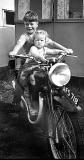
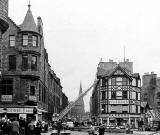
|
"Ah seen something" |
I saw something "That's what many children used to say." Allan Dodds, Nottingham, Nottinghamshire, England: Dec 25, 2009 |
|
"D'ye ken what ah done?" |
Do you know what I did? "Bad grammar such as that above, which I remember kids using, could be considered as dialect." Allan Dodds, Nottingham, Nottinghamshire, England: December 1, 2009 |
|
"I have went ..." |
I have gone ... Bob Sinclair, Queensland, Australia: December 25, 2009 |
|
"I still hear similar expressions today, from various parts of Scotland, particularly from football commentators and football players speaking live on the radio." Peter Stubbs, Edinburgh: December 27, 2009 |
|
|
"Kids at school would say , 'The bell's went ' instead of 'The bell's gone'." Kim Traynor, Tollcross , Edinburgh: December 29, 2009 |
|
|
"Nobody never told me nothing" |
"This type of 'double-negative' was often said and heard by children in my day. Not so common, but also heard, were examples of 'triple negatives' " Nobody never not told me nothing" Bob Sinclair, Queensland, Australia: December 29, 2009 |
|
"See what you've gone and went and done" |
See what you've done "I remember that construction well." Allan Dodds, Nottingham, Nottinghamshire, England: Dec 25, 2009 |
|
Kim Traynor wrote: "I believe the expression that Allan remembers would have been either: "Now, see what you've gone and done" or "Now, see what you've went and done." Kim Traynor, Tollcross , Edinburgh: May 19, 2010 |
|
|
The expressions that Kim refers to above were certainly frequently used, and still are. I've often heard the 2nd expression (the incorrect grammar) used by football commentators and footballers! However, I believe that the point that Allan was making was that he had, in fact, heard the longer expression that he refers to used. Peter Stubbs, Edinburgh: May 30, 2010 |
|
|
4. Edinburgh Sweets, Drinks, Snacks and Cakes |
|
|
A |
|
|
Aniseed balls |
small round, reddish-brown sweets which felt very hot in the mouth. These were bought at Smith’s in East Thomas Street. Kim Traynor, Tollcross, Edinburgh: September 25, 2009 |
|
B |
|
|
Who remembers Barley Sugar Twists, and the chocolate versions of them with chocolate going through the middle. Mal Acton: January 4, 2013 |
|
|
Does anyone remember Berwick Cockles? Peter Stubbs: June 1 3 , 2010 |
|
|
Allan Dodds replied: " I remember Berwick Cockles well . They were sold at 83 Pitt Street. They had a beautiful creamy mint flavour and a lovely texture that made them dissolve on the tongue of you kept them in your mouth for long enough without chewing ." Allan Dodds, Nottingham , Nottinghamshire, England: June 16, 2010 |
|
|
Who made it? Bob Sinclair, Queensland, Australia: January 12 2010 |
|
|
Beech Nut chewing gum was made b y Lifesavers Inc., New York. I only ever chewed the spearmint version. They also manufactured a fruit version. I never saw that over here. Allan Dodds, Nottingham, Nottinghamshire, England: January 10, 2010 |
|
|
As well as Beach Nut chewing gum, I remember Wrigley's Spearmint and Juicy Fruit gum becoming available around 1950. Also, Double Bubble gum appeared on the market at a later date. These were all American imports. Allan Dodds, Nottingham, Nottinghamshire, England: January 15, 2010 |
|
|
Boilings |
Our greengrocer also used to carry sweeties and had boilings in a big jar. They were hard and of different colours (a bit like barley sugar in consistency) and a quarter of those was a real treat. They died out a bit when fruit gums appeared on the market . Bob Sinclair, Queensland, Australia |
|
Broken toffee |
loose fragments of toffee in random shapes which I suppose came from damaged bars of McCowan’s toffee. These were bought at Smith’s in East Thomas Street. Kim Traynor, Tollcross, Edinburgh: September 25, 2009 |
|
My stairman remember s broken toffee as bits of Mc Cowan's, in the 1970s Kim Traynor, Tollcross, Edinburgh: September 25, 2009 |
|
|
C |
|
|
"These are some of the cakes and buns that I used to enjoy as a boy, but never see now: - Paris Bun (my favorite) - Tipsy Cake - Cream Bun - Apple Charlotte - Rock Cake - Bath Buns and here's one that you can still get, but they can be hard to find: - Bran Scones. George Ritchie , North Gyle, Edinburgh : November 24, 2014 |
|
|
Thank you to George for writing again, adding: 1. My wife tells me 'Tipsy Cakes are still available.'
2.
We've just had a
bash at making Paris Buns,
George Ritchie , North Gyle, Edinburgh : December 22 , 2014 |
|
|
Carols |
I remember Carols. They were made by Duncans and came in a roll. They were, as I remember, a chocolate covered toffee, but I am ready to stand corrected. Bob Sinclair, Queensland, Australia: August 8 2010 |
|
Cherry Lips |
cherry gum drops like little smiles . These were bought from Lilly Bryce's (?), a shop in Little King Street opposite the church hall. GM Rigg, Edinburgh: Message in EdinPhoto guest book: January 12, 2009 |
|
Here are Cherry Lips, for sale in 2010: Peter Stubbs: June 1 3 , 2010 |
|
|
Chocolate Box |
Duncans, chocolate manufacturers in Edinburgh had a chocolate box, but I'm not sure if that is what it was called. It was a bit like a Cadbury's Milk Tray box. Bob Sinclair, Queensland, Australia: August 8 2010 |
|
Chocolate Cup |
Mackies had three cakes which as a lad I thought were marvellous. Their Scotch Finger , Chocolate Cup and Vanilla Slice were out of this world. I am sure that those from near the shops and others who knew of Mackies Dump in the back lane off Rose Street would attest to this Bob Sinclair, Queensland, Australia: April 23, 2010 |
|
Cinnamon sticks |
brown, chewy, twig-like sticks covered with cinnamon , like ‘Lucky Tatties’. These were bought at Smith’s in East Thomas Street Kim Traynor, Tollcross, Edinburgh: September 25, 2009 |
|
These were actual sticks of cinnamon which we used to light and smoke at around age eight. Honestly, I never inhaled! Allan Dodds, Nottingham, Nottinghamshire, England: January 10, 2010 |
|
|
Conversation Lozenges |
A kind of paste-like smooth lozenge which had the corners 'chopped off'. They came in soft colours like pink, white, yellow and possibly others. They had little sayings on them, like 'I Love You', 'Be my Friend', and the like. Bob Sinclair, Queensland, Australia: January 22, 2010 |
|
D |
|
|
After commenting on his sugar piece, James Rafferty added: "By the way our penny was usually spent on a Penny Dainty from Reynolds sweet shop at the top of Fleshmarket Close."
James Rafferty, Falkirk, Stirlingshire,
Scotland:
|
|
|
Double Bubble Gum |
Double Bubble Gum is mentioned in the comments about Beech Nut Chewing Gum above |
|
" I think ' Double Bubble Gum' was one of the pink gums which seemed to take for ever to chew , and had with it a transfer that you could put on the back of your hand. " Bob Sinclair, Queensland, Australia: January 12 2010 |
|
|
I always looked forward to when the rep ('traveller' as he was then known) called to 83 Pitt Street with new dummy chocolates for window display. My Grandmother would then give me all the old ones to play with and I used to set up my own sweetie shop in her back shop. Instead of containing a chocolate , the wrappers contained a piece of wood, but I bet few people know th at. Today , Thornton ' s use dummies of their top of the range luxury chocolates . The dummies are made out of plastic and are indistinguishable from the real thing. Allan Dodds, Nottingham, Nottinghamshire, England: March 7, 2010 |
|
|
Duncan's Hazelnut Whirls |
Duncans also made plain chocolate bars and had a Walnut 'Cup'. Bob Sinclair, Queensland, Australia: January 12 2010 |
|
Duncan's Merrols |
" I wonder if anyone remembers Duncan's Merrols. They were buttery-flavoured , hard on the outside, soft and chewy inside. Edinburgh schoolchildren got a Coronation mug and a roll of Merrols in 1953. My mug didn't make it home from South Bridge School . I accidentally knocked it against J & R Allan's window and it broke into pieces. The Merrols didn't make it home either! " Jim Cairns, Dunfermline, Fife: June 18, 2010 |
|
E, F |
|
|
Fairy Cones |
cornets filled with mallow and topped with hundreds & thousands These were bought from a tiny sweet shop shoehorned in at the top of Greenside, opposite where Millets used to be. GM Rigg, Edinburgh: Message in EdinPhoto guest book: January 12, 2009 |
|
Fairy Drops |
multi coloured sweetened puffed rice in a poke These were bought from the small shop at the bottom of Little King Street. GM Rigg, Edinburgh: Message in EdinPhoto guest book: January 12, 2009 |
|
Floral Gums |
honeysuckle scented fruit gum drops , shaped like wee pails These were bought from Lilly Bryce's (?) , a shop in Little King Street opposite the church hall. GM Rigg, Edinburgh: Message in EdinPhoto guest book: January 12, 2009 |
|
Here are Floral Gums, for sale in 2010: Peter Stubbs: June 1 3 , 2010 |
|
|
Flying Saucers |
These were sherbet-filled discs in an assortment of pale colours - blue, yellow, pink and green. The shiny, brittle, pure sugar skin was moulded into the classic shape of 1950s UFO’s, as seen in Ray Harryhausen’s sci-fi movie, ‘Earth Versus The Flying Saucers’. They could be bought in any newsagent’s in the Easter Road area . Very much a sweet of its time! Kim Traynor, Tollcross, Edinburgh: October 2, 2010 |
|
'Fry's Five Boys' Chocolate Bars |
One of my favourite sweets , sold at 83 Pitt Street , was the 'Fry's Five Boys' chocolate bar. On the back were pictures of a boy with five different facial expressions entitled: 'desperation', ' pacification', ' expectation', ' acclamation' 'realisation '. Presumably the bar was dropped when kids' literacy became so poor that they were unable to understand the narrative! Allan Dodds, Nottingham, Nottinghamshire, England: October 21, 2008 |
|
Here is a postcard, showing the bar. Please click on the image below to enlarge it. Peter Stubbs: June 12, 2010 |
|
|
Allan Dodds replied: " Your illustration comes from a time long past. In the 1950s , the five boys looked more like we ourselves did then. Perhaps there exists a more modern version ." Allan Dodds, Nottingham, Nottinghamshire, England: October 21, 2008 |
|
|
'Fry's 5 Centre' |
"Fry's 5 Centre - whatever happened to that?" James McEwan, Duddingston Mills, Edinburgh: May 22, 2010 |
|
G |
|
|
Gobstoppers |
These were large, round , sucky sweets that seemed the size of a billiard ball in your mouth and took ages to suck down. They were good value for money. They came in various colours, but the fun of them was that they changed colour as they reduced in size. This led to the unattractive habit of kids taking them out of their mouth every so often to check what colour they were at that particular moment. These were bought in any (decent) corner shop Kim Traynor, Tollcross, Edinburgh: September 25, 2009 |
|
Golden Wonder |
These were the first thin potato crisps on the market and eaten with pride as a home-grown product , invented by an Edinburgh man. The y were bought at Sempill’s in West Montgomery Street or from their tray which was brought to the west gate of Leith Walk Primary School during morning breaks. Kim Traynor, Tollcross, Edinburgh: September 25, 2009 |
|
H |
|
|
Ha'penny Chew |
We had to be content with a Ha'penny Chew if we couldn't afford a Penny Dainty. Allan Dodds, Nottingham, Nottinghamshire, England: January 10, 2010 |
|
Humbugs |
B lack and silver striped boiled sweet with, if I recall correctly, a mint flavour . Kim Traynor, Tollcross, Edinburgh: September 25, 2009 |
|
I |
|
|
Ice Lollies |
We schoolchildren used to love the home-made ice lollies and ice cream in the 1950s, from Nick's Tuck Shop, opposite St Mary's Street in the Canongate. Liz Miller, St Brelade, Jersey, Channel Islands: June 7, 2010 |
|
'Ice Pole' ' Icy Pole ' |
My wife ( then Margaret Rhind) rem embers the American Bookshop in Commercial Street , Leith where you could get a cylinder of flavoured ice on a stick. The blue ones were the best, she said. As you sucked away you were usually left with clear ice near t he bottom. She could never figure out why a bookshop sold Ice Poles. Bob Sinclair, Queensland, Australia: January 22, 2010 |
|
I knew a different type of the same thing, but they were wider and either had a stepped , blimped top or a slightly curved top . They were supposed to have pure orange juice or other flavour in them. Moreover they were a bit more expensive Bob Sinclair, Queensland, Australia: January 22, 2010 |
|
|
'Imps' |
A tiny extremely strong liquorice pellet - like sweet. I once bought a packet of them, to suck on in the Bassy pictures. After three I knew why they had a warning on them that too many ingested might lead to diarrhoea . Too right! Bob Sinclair, Queensland, Australia: January 22, 2010 |
|
J |
|
|
Jubblies |
" I was recently reminded that when we attended our Saturday morning matinee at our chosen cinema we would buy a 'Joobilee', a frozen orange drink in one of those tetra pack type of boxes. They cost thrupence. " GM Rigg, Edinburgh: Message in EdinPhoto guest book: January 12, 2009 |
|
Speaking about shopping in Harcus' shop in North Fort Street, Bob Leslie wrote: "After the 'penny Dainty and 'penny Vantis , t hey later introduced the 'Jubbly' , an orange drink which they would also freeze for you. It's a wonder we had any teeth left!" Bob Leslie: October 13, 2012 |
|
|
Gus Coutts added: "Several times in the last couple of years contributors have referred to an orange juice drink as a 'Jubilee'. At last, in yesterday's submissions Bob Leslie (above) has referred to the se drinks by their proper name of 'Jubbly' as as in Del Boy's 'Lovely Jubbly' I clearly remember them being sold in the milk machines which used to be sited outside shops selling mainly flavoured milk in waxed cartons I 've often wonder ed just how long outdoor vending machines would survive intact today . It's difficult to imagine that cigarette vending machines used to be wheeled out into tobacconists' doorways after closing time . They wouldn't last 5 minutes nowadays." Gus Coutts, Duddingston, Edinburgh: October 19, 2012 |
|
|
K, L |
|
|
Lem Fizzes |
" I eagerly waited for Friday pay day when all the wage earners in my Grannie’s house would bring us in sweets : - Lem Fizzes - sherbet fountains - liquorice - Fry’s 5 Boys chocolate - Penny Dainties - McGowan’s toffee " to name but a few. Stuart Lyon, Blackford, Edinburgh: June 18, 2012 |
|
"I remember liquorice root - roughly three-inch long dried twig- like sections of (presumably!) the natural liquorice plant, that were sold in some sweet shops . These were chewed to extract the liquorice flavour, and discarded when nothing remained except a soggy bunch of tasteless fibres . It was no trouble keeping regular in those days!" Laurie Thompson, Chipping Sodbury, Gloucestershire, England:, Jun 26, 2014, |
|
|
Liquorice
sticks
|
" We schoolchildren used to love liquorice sticks which we dipped into a 'poke' of fizzy sherbet. We got them in the 1950s from Nick's Tuck Shop opposite St Mary's Street in the Canongate." Liz Miller, St Brelade, Jersey, Channel Islands: June 7, 2010 |
|
Lucky Bags |
sweets bought in a paper bag, not knowing what you'd find inside. I think they included a small plastic toy. Kim Traynor, Tollcross, Edinburgh: September 2, 2009 |
|
Lucky Dip |
You handed over thruppence in a news - agents and could put your hand into a large cardboard barrel and bring something out. I remember, I used to think this was an expensive business! Kim Traynor, Tollcross, Edinburgh: September 2, 2009 |
|
cinnamon -covered toffee patties costing 1 penny . If you were really lucky , would contain a silver thrupenny bit , wrapped in paper . These were bought from the small shop at the bottom of Little King Street. GM Rigg, Edinburgh: Message in EdinPhoto guest book: January 12, 2009 |
|
|
Here are Lucky Tatties and Tiny Tatties, for sale in 2010: Peter Stubbs: June 1 3 , 2010 |
|
|
" Does anyone remember the Lucky Tattie ? You ate around it then you came across some tin figure which was meant to be a lucky charm. " Claire Culley (née Williams), North Island, New Zealand: November 29, 2013 |
|
|
M |
|
|
McCowan's Liquorice Bar |
This was a liquorice bar , black on both sides with a white strip through the middle. However it was not as popular as the toffee block which you sometimes needed a heavy hammer to break. The boys of our district used to buy them at McColl's at the Embassy and try to break them on the wooden backs of the seats . I believe that the sweetie shop on one side of the Embassy that took over from the paper shop was Birrells, which was eventually taken over by McColl's, who then had shops on either side of the Embassy. Bob Sinclair, Queensland, Australia: January 3, 2010 |
|
McCowan's Toffee |
Bars of toffee in white wrappers with the brand name in green and the famous brown ‘Hieland Coo’ logo. These were bought at Cunningham’s in South Elgin Street. Kim Traynor, Tollcross, Edinburgh: September 25, 2009 |
|
I remember:
- Banana Toffee
Dougie Cormack, near Ladybank, Fife (via Bob Sinclair) Jul 12, 2010 |
|
|
Mackay's Petticoat Tails |
Thin shortbread in the shape of a fan. Bob Sinclair, Queensland, Australia: December 25, 2009 |
|
N, O, P |
|
|
Parma Violets |
My grandmother used to sell Parma Violets, a lovely, small, intensely flavoured sweet. Swizzles have just recently re-introduced them. Allan Dodds, Nottingham, Nottinghamshire, England: January 10, 2010 |
|
I'm not familiar Peanut Brittle, but it sounds to me like hard toffee with peanuts in it. Allan Muir who used to live at Ferry Road Avenue wrote: " I also recollect the Sunday morning walk to get peanut brittle for my parents from Divernos at Granton . T o save time my brother and I used to walk down the old railway line to Granton . " Allan Muir, Saudi Arabia: November 2, 2012 |
|
|
Penny Dainty |
A small rectangular toffee chew which was a staple of the ‘penny tray’ in most newsagents. The glossy wrapper was green with a lattice design in thin black lines, terminated by a red border and a twist of white paper at both ends. These were bought at Smith’s in East Thomas Street. I considered them to be an inferior toffee to McCowan's - less smooth with gritty bits in them. Kim Traynor, Tollcross, Edinburgh: September 25, 2009 |
|
Penny Lollies |
These were bought from McConachies' wee sweetie shop, Abbeyhill Eleanor Dzivane, January 27, 2009 |
|
Puff Candy |
We schoolchildren used to love the home-made ice lollies and ice cream in the 1950s, from Nick's Tuck Shop, opposite St Mary's Street in the Canongate. Puff Candy was another favourite, Liz Miller, St Brelade, Jersey, Channel Islands: June 7, 2010 |
|
Q |
|
|
A quarter of sweets |
Sweets were sold by weight. One asked for a quarter of whatever sweets one wanted, then 4oz would be weighed out. Kim Traynor, Tollcross, Edinburgh: September 25, 2009 |
|
Thank you to Matt Rooney for mentioning that there are still some manufacturers that make the old types of sweet and sell them either individually or in bulk. One such company has a website named ' A Quarter of'. The web site includes lots of info on the old sweets and illustrations of the sweets and their wrappers. Just try following the links on the red bar at the top of thier web page . Acknowledgement: Matt Rooney, Ayrshire, Scotland: June 16+17, 2010 |
|
|
R |
|
|
rhubarb rock |
The stick of rock lived up to its name in appearance. Bob Sinclair, Queensland, Australia: January 22, 2010
|
|
Here is Rhubarb Rock, for sale in 2010: Peter Stubbs: June 1 3 , 2010 |
|
|
- Scottish Breakfast Rolls - Butteries |
While sitting reminiscing over a glass or two of "Scottish Medicine" recently, the conversation turned to "Scottish Things Missed". One thing discussed was the Scottish breakfast roll , and although our local Tesco tries hard to console us with their "Scotch Breakfast Rolls", they can't quite replicate the basic morning roll found in Edinburgh also remember variants on the basic roll theme - "Butteries" (pronounced "Bu'eries", with a glottal stop replacing the double letter "t"), and a particular favourite of mine, the "well-fired" (ie, black upper-crusted) version of the basic roll. The former roll was flatter, denser, more golden, and - yes - more buttery - than the basic roll, and was very tasty. Laurie Thompson, Chipping Sodbury, Gloucestershire, England:: Jan 1, 2015 |
|
Rolls - Well Fired Rolls |
As regards the well-fired rolls (which my mum insisted would make our hair curl), I always suspected that they were in fact mistakes, just normal rolls accidentally over-baked, but then sold to the discerning roll-eater as an intentional delicacy, by the market-smart bakers. I liked them anyway, and would still buy them if our local Tesco could make them, despite gloomy forecasts by the health-police later in life that suggested that the carbon in the well-fired rolls' crusts could have carcinogenic implications (a bit like barbecued sausages, which I also like). Laurie Thompson, Chipping Sodbury, Gloucestershire, England:: Jan 1, 2015 |
|
Does anybody remember small , hard , reddish-pink sweets from the 1950s, called Rosebuds? These were made, I think, of the same sugary stuff that a stick of rock is made of, and were probably flavoured with rosewater. Laurie Thompson, Chipping Sodbury, Gloucestershire, England:: Jun 22, 2014 |
|
|
S |
|
|
Scotch Finger |
Mackies had three cakes which as a lad I thought were marvellous. Their Scotch Finger , Chocolate Cup and Vanilla Slice were out of this world. I am sure that those from near the shops and others who knew of Mackies Dump in the back lane off Rose Street would attest to this Bob Sinclair, Queensland, Australia: April 23, 2010 |
|
sherbet dab |
a bag of sweet sherbet powder, generally with a 'liquorice dab' in it. "Suck dab, insert in bag, repeat till finished." George T Smith , Nanaimo, British Columbia, Canada : Dec 4, 2008 |
|
My wife informs me that the best sherbet was sold by a shop on the corner of Commercial Street and Dock Street. It was stronger than most and the shopkeeper sold it in a cone made out of newspaper. (Later on they used wee bags . ) Sometimes , you got a liquorice outer to suck in the sherbet but often you used your index finger and went into school a member of the 'red index finger gang'. The tongue was a dead giveaway if your mother asked you what you had been eating. Bob Sinclair, Queensland, Australia: January 22, 2010 |
|
|
Snowball |
(1) an ice cream, with a marsh m allow base in between wafers, with a layer of ice cream on top and then another single wafer. (2) a marshmallow, about the same shape as the top half of a ball. which was covered in stippled or smooth dark chocolate. ( 3 ) a round plain cake, the inner covered in fine coconut. Bob Sinclair, Queensland, Australia: December 8, 2009 |
|
Soor Dook |
A tart hard sweety Jim Duncan, New Brunswick, Canada,: May 22, 2009. |
|
Soor Plooms |
Soor Plooms were my favourites, a very sharp/tart tasting, round green sweet. Annie Turner’s shop in Bath Street , Porty, used to sell them, along with ’you name it, she and her husband , Tommy, sold it’! Annie worked very hard all of life, and tragically died, before being able to retire and reap the benefits of her efforts. Jim Smart, Bournemouth, Dorset, England: November 20, 2010 |
|
Spangles |
Spangles were very popular as they had a nice fruity taste. Allan Dodds, Nottingham, Nottinghamshire, England: January 15, 2010 |
|
Stick of rock |
"a cylindrical stick of pure flavoured sugar, usually coated shocking pink or pale green , sold in various lengths in a tight cellophane wrapper. It was the same as traditional seaside rock, but made locally so it was known as Edinburgh Rock. As it was eaten, the words ' Edinburgh Rock ' remained constantly visible throughout its reducing length. It was a common sight to see small children sucking a stick of rock on the street or even in their go-carts. It must have been the curse of NHS dentistry in its early years . It seemed to disappear overnight some time in the 1960s." Kim Traynor, Tollcross, Edinburgh: September 25, 2009 |
|
Who remembers Sticky Licky (liquorice). Mal Acton: January 4, 2013 |
|
|
" If you got to the point when you wanted something to eat. my chum , Betty Miller from White Horse Close and I would stand in the street and yell up to my mother : 'Throw me doon a piece'. It would then fly thu ' the air, wrapped in newspaper - white bread butter and sugar. Did anyone else get fed this way ?" June Robertson, Arroyo Grande, California, USA: January 30, 2012 |
|
|
" I often had a sugar piece - and not sliced bread either - a big thick slice, it was Remember plain bread or pan bread? I'd get sent tae the shop to get the bread and I'd be nibbling it on the way home. By the time I got home, there'd be big chunks oot the middle! " Betty Hepburn (née Boland), Waikanae, Kapiti Coast, New Zealand: Jan 30, 2012 |
|
|
"A sugar piece must have been popular . Ours came from a great height as we lived on the top flat in 233 High Street. We used to go to the gable end at Anchor Close and shout up . Down came the piece and that was us for another few hours"
James Rafferty, Falkirk, Stirlingshire,
Scotland:
|
|
|
Sweety cigarettes |
"soft white chews in the shape of cigarettes with one end painted lipstick red to make the m look like real lit cigarettes. Is it any wonder that so many kids took up smoking so early in life? " Kim Traynor, Tollcross, Edinburgh: September 25, 2009 |
|
Swiss Milk Tablet |
Generally, these were made by the mums of the district, using Carnation Milk. Bob Sinclair, Queensland, Australia: January 22, 2010 |
|
T, U |
|
|
" My gr andmother, who made the toffee doddles for her sweetie shop at 83 Pitt Street, also made tablet on the premises to sell alongside the doddles. The cloth sacks of brown sugar used to be colonized by mice . She spent much of her time removing mouse droppings from the sugar. Of course, everything was boiled for about fifteen minutes and no health hazard was present. " Allan Dodds, Nottingham, Nottinghamshire,, England: March 5, 2009 |
|
|
"My aunt used to buy tablet at Mrs Veitch's shop in Crosscauseway. George T Smith, Nanaimo , British Columbia, Canada : January 7, 2010 |
|
|
" See also recollections from Elliot Laing, whose nana, Mrs O'Malley had a sweet shop in Cowgate, Edinburgh from which she sold tablet and other sweets " George T Smith, Nanaimo , British Columbia, Canada : January 7, 2010 |
|
|
"Tablet is a long-time favourite of mine - i n small quantities! Being exiled in the far south, it has been a rare treat. However a few years back, during a visit to Edinburgh, I bought - I think in Jenners Scottish souvenirs section - a small thin booklet called Traditional Scottish Cookery by Margaret Fairlie, priced then at 80p, which has a very simple recipe for tablet (or as the author oddly calls it ' taiblet ' - a pronunciation I've never heard). Followed to the letter, but leaving out the optional extras - coconut, walnuts, vanilla essence, etc - the recipe delivers tablet just like mother used to make, every time! However, given the government's current drive against sugar because of its link to obesity and diabetes, I have no doubt that tablet will soon become a Class 1 banned substance!" Laurie Thompson, Chipping Sodbury, Gloucestershire, England:: Jun 22, 2014 |
|
|
This was a type of toffee. (There was also a nut that was called a tiger nut.) Dougie Cormack, near Ladybank, Fife (via Bob Sinclair) Jul 12, 2010 |
|
|
"I remember Tiger Nuts. They were sold in the shop that sold peanuts in their shells in Lauriston Place. They had a lovely milky flavour, as I recall." Allan Dodds: Nottingham, Nottinghamshire, England: September 23, 2011 |
|
|
Toffee Apples |
After writing about toffee doddles below, Allan Dodds added: "I've just remembered that my grandmother used to make toffee apples from the same mixture as the doddles. She would simply put a stick into an apple and then dip it in the boiling sugar. They were truly scrumptious. " Allan Dodds, Nottingham, Nottinghamshire, England: January 5, 2010 |
|
"My aunt used to buy toffee apples at Mrs Veitch's shop in Crosscauseway. The toffee apples were a 'brammer' if they were plain toffee, but I found that the ones rolled in grated coconut tended to catch my teeth." George T Smith, Nanaimo , British Columbia, Canada : January 7, 2010 |
|
|
Toffee Cups |
" These were bought from McConachies' wee sweetie shop at Abbeyhill" Eleanor Dzivane, January 27, 2009 |
|
" I still remember the toffee cups - toffee lollies in a paper cup - sold at the school gate at Craigmillar Primary School in 1956 . The man sold them from a big hand basket; the same kind of basket rolls were sold from, as I recall." David Bain, Craigmillar, Edinburgh September 3, 2009 |
|
|
" My grandmother used to make 'toffee doddles' in her sweetie shop at 83 Pitt Street (now Dundas Street). They consisted of brown sugar boiled with water with a small amount of vinegar added to lend piquancy. When boiled sufficiently and without stirring, she would pour the caramelized liquid onto a marble table top and whilst it was still very hot would roll it with her bare hands into a long sausage. Then she would cut inch long pieces off with a pair of large scissors, rotating the roll a third of a turn between each cut. This produced around 24 pyramid-shaped 'doddles' which she sold at 2d per quarter. I ate many doddles in my childhood and only my teeth bore the consequences!" Allan Dodds, Nottingham, Nottinghamshire, England: March 5, 2009 |
|
|
"I remember the "Toffee Doddle" shop, close to Ards Radio in Great Junction Street. In the mid 1950's after swim classes at Doctor Bells we would all head to this shop a few doors along before taking the bus back to school. The choice of sweets was immense." Bruce Johnstone: June 14, 2010 |
|
|
Toffee Pans |
foil tartlet - sized trays of toffee with lolly pop stick s in them These were bought from a tiny sweet shop shoehorned in at the top of Greenside, opposite where Millets used to be. GM Rigg, Edinburgh: Message in EdinPhoto guest book: January 12, 2009 |
|
Toffee Doddles |
I was reminded of another favourite sweetie, reading the recollections, when someone mentioned toffee doddles. They lasted for ages as they were hard boiling sweets." GM Rigg, Edinburgh: Message in EdinPhoto guest book: January 12, 2009 |
|
Trebor Mints |
These are apparently about to be re-launched. Allan Dodds, Nottingham, Nottinghamshire, England: January 15, 2010 |
|
Tudor Crisps |
These were an early rival to Golden Wonder’s monopoly. These were bought from a shop-keeper’s tray at the school-gates of Broughton Secondary in McDonald Road during morning breaks . Kim Traynor, Tollcross, Edinburgh: September 25, 2009 |
|
V |
|
|
Vanilla Slice |
Mackies had three cakes which as a lad I thought were marvellous. Their Scotch Finger , Chocolate Cup and Vanilla Slice were out of this world. I am sure that those from near the shops and others who knew of Mackies Dump in the back lane off Rose Street would attest to this Bob Sinclair, Queensland, Australia: April 23, 2010 |
|
I’ll bet this brings back a few memories. It was a fizzy drink, which consisted of a fruit tablet put in some water and charged with oxygen to aerate it. It was really great if you had a penny. There were not many to spare then, but we were happy. Dave Ferguson, Blairgowrie, Perth & Kinross, Scotland: February 14 2012 |
|
|
"
Auld granny Smith
remember her
?
From Dave Ferguson's poem: "When We Were Lads" |
|
|
George Smith wrote, concerned about this drink being described above as Vantis, when the name was, in fact 'Vantas'. I've now corrected the spelling above. George wrote: I searched Google and found it confirms my memory of Vantas. I remember buying drinks for a penny from a shop on the 'circle' in Hutchison. They came from a largish machine on the counter which had a glass water holder and some sort of gas (CO2?) cylinder attached. I remember, too, a similar contrivance in a shop on Viewforth ('Aunties'?)" George Smith, Nanaimo, Vancouver Island, British Columbia, Canada: Dec 1, 2013 |
|
|
Victory V Lozenges |
These were very popular sweets in the 1950s. They contained menthol, so were recommen d ed a cure for a cold. Allan Dodds, Nottingham, Nottinghamshire, England: January 15, 2010 |
|
These were pale, beige, nippy sweets. From my memory, I believe that they were 'off ration' during the war.
Elizabeth Fraser (née Betty Simpson,
Sydney,
|
|
|
W |
|
|
"In the late-1940s / early-1950s, I used to like Wallnut Whips. I always used to remember them as Duncan's Wallnut Whips, but my friend remembers them as Fry's. Can you please tell me who is right? " Julia Tiplady: November 19, 2013 |
|
|
"Hi Julia: I think YOU are right . I also remember Duncan's Walnut Whips. Details on Wikipedia are not always 100% accurate, and this Walnut Whip Wikipedia page needs further citation and editing. However, it certainly suggests that you are right. It mentions that Walnut Whips were launched by Duncan's of Edinburgh in 1910. I've never heard of Fry's Walnut Whips, but I have heard of Nestl é 's and Rowntre e's Walnut Whips. This Rowntrees Wikipedia page explains that: - Rowntree's took over Duncan in 1948 - Rowntree's merged with John Mackintosh & Co in 1987 to become Rowntree Mackintosh. - Rowntree Mackintosh is now owned by Nestl é . Peter Stubbs, Edinburgh: November 19, 2013 |
|
|
X, Y, Z |
|
|
Zubes |
I remember an advert on an Edinburgh bus that s aid: "Hoarse? Go suck a Zube". It was accompanied by a depiction of a zebra. Another ad said : "Zubes are good for your tubes". A Craven A cigarette advert said "Do not affect the throat" Mmm. Allan Dodds, Nottingham, Nottinghamshire, England: January 16, 2010 |
|
Sweets from Dundee |
|
|
Kim Traynor, who sent some of his memories of sweets in Edinburgh, above, added:
"
I
read in a book published
in 1869 that Dundee was the centre for manufacture of confectionary with a
world-wide reputation.
Between that and the comics, Dundonians created a 'Heaven on Earth' for Scottish kids." Kim Traynor, Tollcross, Edinburgh: October 2, 2010 |
|
|
5. Other Comments Received |
|
Thank you Thank you to all who have contributed to the lists above. It's good to have first-hand examples of how the words were used from people who remember them being used, rather than examples taken from official dictionaries. I was interested to read some of the comment from people who sent examples of Edinburgh slang to me. Please see below. |
|
Other Comments Received 1. Sweary Wurds |
|
George T Smith wrote: "From my recollection , even in St Leonards and Dumbiedykes in the 19 30s , adults were careful not to use sweary wurds in front o' bairns . " George T Smith, Nanaimo , British Columbia, Canada : Dec 19, 2008 |
|
Other Comments Received 2. Rhyming Slang |
|
Jim Cairns wrote: "My Dad used rhyming slang a lot, but not the Cockney stuff. Rhyming slang is still used in Edinburgh today." Jim Cairns , Dunfermline, Fife, Scotland: December 20, 2008 |
|
Other Comments Received 3. Local Words |
|
George T Smith wrote: "I'm still delving into the recesses of my memory for little bits of slang and place names. I find in discussion with Ken Smith , now living in Calgary , that several of the slang terms we remember from Edinburgh have very localised meanings , and we only lived about a half mile apart in Edinburgh. " George T Smith, Nanaimo , British Columbia, Canada : Dec 27, 2008 |
|
Other Comments Received 4. Songs |
|
Margaret Williamson wrote " Here are a couple of wee songs that we used to sing" Ma Wee Man's a Miner Ma wee man's a miner He works in Abbeyhill He goes tae the pub oon a Saturday An, gets hissel' a gill Goes tae the kirk oon Sunday A half an hoor late Pulls the buttons aff ee's shirt An' pits them in the plate Singing one, two, three aleery (Sing three times and yer done!) Round an' Round the Radical Road Round and round the Radical Road The rady (?) wee rascal ran. If you can tell me how many 'R' are in that I'll call ye a clever wee man. ANSWER: There are no 'R's in 'that'. Margaret Williamson (née Hay), Moline, Illinois, USA: April 7, 2013 |
|
Variation 'Round and Round the Radical Roa d ' (above) appears to be an Edinburgh variation on the rhyme that was popular elsewhere in Britain 'Around the Rugged Rocks'. Around the Rugged Rocks Around the rugged rocks, The ragged rascal ran. Peter Stubbs, Edinburgh: April 5, 2014 |
|
Other Comments Received 5. Words to Include |
|
Jim Cairns wrote: "My Dad used rhyming slang a lot, but not the Cockney stuff. Rhyming slang is still used in Edinburgh today." Jim Cairns , Dunfermline, Fife, Scotland: December 20, 2008 |
|
To date, I've included, on the lists above, most of the words and expressions that people have sent to me, except where I felt that any might cause offence, e.g. too crude or not now considered politically correct. However, I'm now trying to concentrate on the slang and colloquial words and phrases originating from Edinburgh, or those that people in Edinburgh might have used themselves and heard used, in preference to those that would have been more widely used throughout Scotland and Britain. I found the following comments, received from Kim Traynor, to be particularly helpful in when I considered the scope of the lists above. Kim responded to a suggestion that the lists above should include words like 'taen' - i.e. the way that 'taken' was pronounced by some people in Edinburgh. Kim wrote " 'T aen' is just the English word ' taken ' with the ’k’ dropped . If you post words like th at, just because they might be normal Scots speech, you’ll end up with a webpage the size of the Scots Dictionary! I’d have thought the guiding principle should be that a word was a local word or expression that people in Edinburgh habitually used , and one that conveys something culturally about objects, people, attitudes and surroundings etc. Otherwise, you could end up with the word ‘wee’ for little . Hey, that's not a bad idea! But seriously, the word only has real value in a phrase or expression given as an example, such as ‘the wee hours’ meaning the hours after midnight before normal waking time. " Kim Traynor, Tollcross, Edinburgh: December 27, 2009 |
|
Other Comments Received 6. Accents |
|
Frank Ferri wrote: " For no particular reason, I have been pondering people' s accents in Edinburgh and other districts . t Today , we are used to hearing English, Irish, Polish, Asian and even West Indian accents as we go about our daily business , and we take it all for granted . But, do you remember the day when anyone of these would have been very unique or not even heard at all? Now, there is very little variance of accent , whether you live in the City or 20 or 30 miles outside its boundaries . But, in my time, Leith had its very own distinct accent and dialect , and to a certain extent still has . Even Newhaven differed You only had to go as far as Straiton or Penicuik and you knew you were in foreign territory . Dalkeith, Danderhall, Musselburgh, West Calder and Kirknewton all had their own accents. Even in the late -19 40s , when the council estate was built at Burdiehouse, although part of Edinburgh, residents in that area were influenced by mining areas such as Bilston and Rosslyn . Today you would have to travel much further out of the city to notice much difference in accent. I may be wrong, but even Fife, Dundee and Aberdeen are perhaps not as distinctive as they once were - all contaminated , I guess , by the cosmopolitan society we now live in, and by movies, the media, new technology and the world village we now live in . Just a thought !" Frank Ferri, Newhaven, Edinburgh: March 5, 2012 |
|
Other Comments Received 7. Rhyming Slang |
|
Jim Cairns wrote: "My Dad used rhyming slang a lot, but not the Cockney stuff. Rhyming slang is still used in Edinburgh today." Jim Cairns , Dunfermline, Fife, Scotland: December 20, 2008 |
|
To date, I've included, on the lists above, most of the words and expressions that people have sent to me, except where I felt that any might cause offence, e.g. too crude or not now considered politically correct. However, I'm now trying to concentrate on the slang and colloquial words and phrases originating from Edinburgh, or those that people in Edinburgh might have used themselves and heard used, in preference to those that would have been more widely used throughout Scotland and Britain. |
|
Other Comments Received 8. Pronunciation |
|
To date, I've included, on the lists above, most of the words and expressions that people have sent to me, except where I felt that any might cause offence, e.g. too crude or not now considered politically correct. However, I'm now trying to concentrate on the slang and colloquial words and phrases originating from Edinburgh, or those that people in Edinburgh might have used themselves and heard used, in preference to those that would have been more widely used throughout Scotland and Britain. I found the following comments, received from Kim Traynor, to be helpful when I was considering the scope of the lists above. Kim responded to a suggestion that the lists should include words like 'taen' - i.e. the way that 'taken' was pronounced by some people in Edinburgh. Kim wrote " 'T aen' is just the English word ' taken ' with the ’k’ dropped . If you post words like th at, just because they might be normal Scots speech, you’ll end up with a webpage the size of the Scots Dictionary! I’d have thought the guiding principle should be that a word was a local word or expression that people in Edinburgh habitually used , and one that conveys something culturally about objects, people, attitudes and surroundings etc. Otherwise, you could end up with the word ‘wee’ for little . Hey, that's not a bad idea! But seriously, the word only has real value in a phrase or expression given as an example, such as ‘the wee hours’ meaning the hours after midnight before normal waking time. " Kim Traynor, Tollcross, Edinburgh: December 27, 2009 |
|
Other Comments Received 9. Scope of the List |
|
Thank you to Tom Inglis, who grew up in Clydebank, for sending me his comments on a couple of words in the list - The Pineapple and sannies - and for also commenting on the scope of the list. Tom wrote: "I think that many of the words and phrases listed are common to the central belt of Scotland and not exclusively to Edinburgh. " Tom Inglis, formerly Clydebank, Scotland |
|
I'm sure that Tom is correct in saying that many of the words in the list would have also been used more widely across the central belt of Scotland. Which Words and Expressions to Include on the List? I don't have any fixed rules to follow in deciding whether or not to include particular words in the list, but there are a few principles that I try to follow, without spending too much time in tracing the origins of words: - Some words and expressions are clearly not Scottish in origin. e.g. they may have come into use in Edinburgh after being first heard on American film or on TV programmes based elsewhere in Britain. I would not normally include these in the list. - Other words and expressions were probably quite widely used throughout Britain. If I recognise any from my own childhood, when I grew up in West Yorkshire, I am unlikely to use them in the Edinburgh list. - If an expression is Scottish, but appears to have been taken from literature or music, e.g. a Burns poem or a folk song, and was not in general use in Edinburgh, then I would be unlikely to include it in the list. - If a word or expression appears to be Scottish, but is one that I would associate more strongly with another part of Scotland - e.g. West of Scotland or Aberdeenshire, rather than Edinburgh - then I would be unlikely to include it in the list. - However, if the word or expression appears to be Scottish or more local origin, and does not fall into any of the above categories, I would be likely to include it in the Edinburgh List above. This includes many words and expressions that I have not personally heard used but am told were in common use in areas of Edinburgh that had overcrowded houses and lots of children playing in the streets. If people give me examples of how they remember the words and expressions being used, then I feel that they deserve to be included in the list. - By including such words and expressions, I hope that it might jog other people's memories of the times and events when they were growing up in Edinburgh. Peter Stubbs, Edinburgh: January 3, 2012 |
|
6. Questions |
|
Question 1. |
|
Newspapers Michael Bottom writes: "Do you knew of any edinburgh slang for ' newspaper ' ? . I ' ve found ' wittins ' which is Doric ." Michael Bottom, Heriot-Watt University Student Association: July 15, 2009 |
|
If you can help to answer Michael's question, please email me, then I'll pass your message on to him. Thank you. - Peter Stubbs: |
|
Update I've not yet been told of any slang words used in Edinburgh for newspapers, other than those referring to Saturday evening sports editions: ' The Pink ' and ' The Green '. Peter Stubbs: November 3, 2009 |
|
Question 2 . |
|
Broughton
John Dickie of Broughton History Society wrote: " I’m working on the June 2009 edition of the Broughton History Society’s newsletter. The last edition included Robert Garioch’s poem , ' Fi ’ baw in the Street ' , in which he used four nicknames : - Cockie Dudgeons - The Sandies - The Coup - Puddocky. I suggested it would be good to collect together as many local place nicknames as we can, as they are a part of Broughton’s history and it would be a pity if they were all gradually forgotten. So , I've been asking some Society members and others to comment on Garioch's nicknames, and also if they can remember any others. " John Dickson, Broughton, Edinburgh: May 12, 2009 |
|
If you'd like to suggest more colloquial names, slang or expressions to be added to the lists above, please email me . Thank you. - Peter Stubbs: |
|
Question 3 . |
|
Lads and Lasses Bob Sinclair wrote: " T he young , highly talented youth of my day had oversize jacket s , greasy hair, pimples, oversize shoes and either wrinkled trousers or drainpipe trousers which showed bright red socks beneath, often with a hole in them . They had a ' league ' for birds." |
|
Bob gave the league table with 'scores' of 1 to 12. I don't know how many of the terms uses near the start of this table would be considered politically correct now, so I'll just list the lower part of the table that Bob sent to me:
"
6.
passable
10.
stotter
|
|
Bob added: "Now lasses it is your turn . What did the youth league for laddies consist of ? - he smells ? - he has to ask his mother first ? - he canny dance? Come on give us all a laugh! Bob Sinclair, Queensland, Australia: December 15, 2009 |
|
Reply If you'd like to reply to Bob's question, please email me , then I'll pass on your message to him. Thank you. Peter Stubbs: December 18, 2009 |